Human Rights Watch Urges Malaysia to Halt Forced Deportation of Myanmar Refugees Amid Rising Persecution
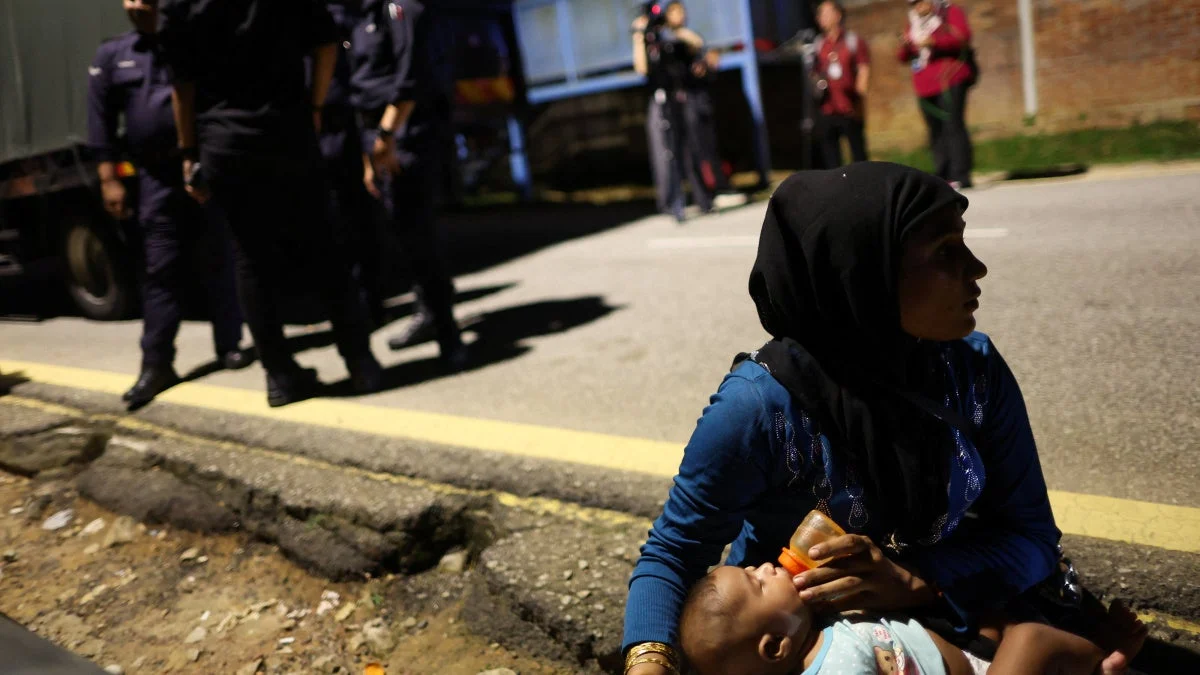
The Malaysian government is facing intense international pressure to reverse its recently announced plans to forcibly repatriate approximately 5,000 Myanmar nationals currently held in immigration detention centers. Human Rights Watch (HRW) issued a stern warning this week, stating that such a move would violate international law and expose vulnerable individuals to systemic persecution, torture, and potentially death at the hands of the Myanmar military junta. The call for a policy reversal comes after a series of official announcements in July 2026 that signaled a hardening stance by the administration of Prime Minister Anwar Ibrahim toward the hundreds of thousands of refugees seeking sanctuary within Malaysia’s borders.
The controversy reached a flashpoint on July 23, 2026, when Malaysia’s Deputy Foreign Minister informed Parliament that the government intended to deport 5,000 Myanmar nationals. This was followed on July 29 by a statement from Prime Minister Anwar Ibrahim, who confirmed that Myanmar’s authorities had agreed to the return of 5,000 ethnic Rohingya. Human rights advocates argue that "agreement" from the Myanmar junta—the very entity responsible for the displacement of these populations—is not a guarantee of safety but rather a precursor to further abuse. Bryony Lau, deputy Asia director at Human Rights Watch, emphasized that Malaysia has a long history of hosting those fleeing atrocities and should maintain its role as a regional leader rather than becoming an accomplice to the junta’s brutality.
A Growing Humanitarian Crisis: Statistics and Demographics
The scale of the refugee population in Malaysia is significant, though precise figures remain elusive due to the lack of a formal national registration system for decades. According to data from the Office of the United Nations High Commissioner for Refugees (UNHCR), there are more than 215,000 registered refugees and asylum seekers in Malaysia as of mid-2026. Of these, approximately 194,000 are from Myanmar, including 126,000 ethnic Rohingya who have fled what international bodies have characterized as acts of genocide.
Despite their registration with the UNHCR, these individuals live in a state of legal limbo. Malaysia is not a signatory to the 1951 Refugee Convention or its 1967 Protocol, meaning that it does not legally recognize the status of refugees. Under the Malaysian Immigration Act, any person entering or staying in the country without a valid permit is considered an "undocumented migrant." This legal framework allows authorities to conduct frequent immigration raids that do not distinguish between economic migrants, victims of human trafficking, and bona fide refugees fleeing war zones. As of June 30, 2026, statistics provided to Parliament by the Home Minister revealed that 22,166 people were being held in immigration detention centers, with nearly half originating from Myanmar.
Chronology of Policy Shifts and the Rise of the DPP System
The current crisis is the culmination of several years of shifting policy and increasing friction between the Malaysian government and international humanitarian agencies. To understand the gravity of the July 2026 announcements, it is necessary to examine the timeline of events leading to this juncture:
- February 2021: The Myanmar military seizes power in a coup, sparking a nationwide civil war and a massive surge in refugees.
- 2019 – Present: The Malaysian government denies the UNHCR access to immigration detention centers, preventing the agency from verifying asylum claims or assisting those already recognized as refugees.
- January 2026: Malaysia initiates the Refugee Registration Document (Dokuman Pendaftaran Pelarian, or DPP) system. This move is designed to transition refugee management from the UNHCR to the Malaysian National Security Council (MKN).
- May 2026: An online petition calling for the removal of Rohingya refugees gains traction in Malaysia, accompanied by a surge in xenophobic rhetoric and disinformation campaigns on social media.
- July 9, 2026: The Home Minister reports that a pilot scheme for the DPP system processed 128 Rohingya detainees. Only 78 were granted refugee status, and only 25 were deemed eligible to work.
- July 23-30, 2026: Official announcements are made regarding the planned deportation of 5,000 individuals to Myanmar, while the government instructs the UNHCR to temporarily halt its own registration activities.
The introduction of the DPP system, governed by the unpublished National Security Council directive known as MKN 23, represents a fundamental shift in how Malaysia handles displaced persons. While the government claims the system is intended to improve oversight and eliminate fake documentation, HRW and other monitors have raised concerns regarding its transparency. The system lacks clear criteria for refugee status determination that align with international standards, such as the right to appeal, confidentiality of data, and protection against discrimination.
The Principle of Nonrefoulement and International Obligations
The primary legal concern cited by Human Rights Watch is the principle of nonrefoulement. Under customary international law, governments are strictly prohibited from returning individuals to a country where they face a clear risk of persecution, torture, or other serious human rights violations. While Malaysia often points to its non-signatory status regarding the 1951 Convention to justify its domestic policies, the principle of nonrefoulement is considered a binding norm of international law that applies to all states regardless of treaty status.
Since the 2021 coup, the situation in Myanmar has deteriorated into a complex landscape of violence. The military junta has been accused of widespread war crimes and crimes against humanity, including the arbitrary arrest of tens of thousands of civilians and the use of scorched-earth tactics against ethnic minorities. Simultaneously, the Arakan Army, an ethnic Rakhine armed group, has engaged in fierce battles with the military, leading to further displacement and reports of abuses against the Rohingya population in Rakhine State.
In May 2024, the UNHCR issued explicit guidance stating that individuals fleeing Myanmar are likely in need of international refugee protection. HRW argues that by proceeding with deportations, Malaysia is willfully ignoring these warnings and the documented reality that thousands of returnees have died in custody or disappeared upon returning to Myanmar in previous years.
Domestic Pressure and the Climate of Hostility
The decision to deport 5,000 Myanmar nationals does not exist in a political vacuum. It is deeply intertwined with a rising tide of xenophobia and public hostility toward refugees within Malaysia. In mid-2026, social media platforms became breeding grounds for hate speech, with vigilante groups and online influencers blaming the Rohingya community for various social and economic ills.
This climate of animosity has been exacerbated by frequent immigration raids. These operations, often publicized by the government to show a "tough on crime" stance, have fostered a sense of fear among refugee communities. Human Rights Watch notes that the government’s rhetoric often fuels this fire instead of dampening it. By framing the UNHCR as an external body that interferes with national sovereignty and by portraying refugees as a security threat, the administration has found a populist justification for its deportation plans.
The DPP system’s pilot results have also raised alarms. With only a fraction of the 128 detainees in the pilot program receiving protection, questions remain about the fate of the thousands of others who may fail to meet the government’s internal criteria for "refugee" status. If the government proceeds with the deportation of those not recognized under the DPP, it risks sending hundreds of legitimate asylum seekers back into the hands of their oppressors.
Broader Implications and the Call for Regional Leadership
The forced return of refugees from Malaysia has significant implications for the Association of Southeast Asian Nations (ASEAN). As a key member of the bloc, Malaysia’s actions are seen as a barometer for the region’s commitment to the "Five-Point Consensus," a peace plan intended to address the crisis in Myanmar. By coordinating deportations with the Myanmar junta, Malaysia effectively grants the military regime a level of legitimacy that contradicts ASEAN’s broader diplomatic efforts to isolate the coup leaders.
Human rights organizations argue that Malaysia is at a crossroads. It can either continue down a path of summary deportations and xenophobic policy-making or it can establish a robust, fair, and transparent domestic framework for refugee protection. Establishing such a system would require granting the UNHCR full access to detention centers and ensuring that the DPP system operates under international legal standards.
"The Malaysian government is fueling hostility towards refugees when it should be building support for and trust in its new refugee registration system," said Bryony Lau. The international community, including the United Nations and various human rights monitors, continues to urge the Anwar Ibrahim administration to halt all planned returns to Myanmar. They emphasize that until Myanmar achieves a stable, civilian-led government that respects the rights of all ethnic groups, no return can be considered safe, voluntary, or dignified.
As the deadline for the proposed deportations approaches, the eyes of the global community remain on Kuala Lumpur. The decision made in the coming weeks will not only determine the fate of 5,000 individuals but will also define Malaysia’s human rights legacy for years to come. For now, the thousands of Myanmar nationals held in detention centers remain in a state of high-stakes uncertainty, caught between a country that no longer wants them and a homeland that seeks to destroy them.

Related Posts

Human Rights Watch Calls for Investigation into Death of Detainee Following Removal from Najaf Hospital by Iraqi Drug Police
Human Rights Watch Urges UN Security Council to Extend Lebanon Peacekeeping Mission Amid Escalating Conflict and Humanitarian Crisis