
Trump Accuses China of 2020 Election Interference Amidst Widespread Contradictions and Denials
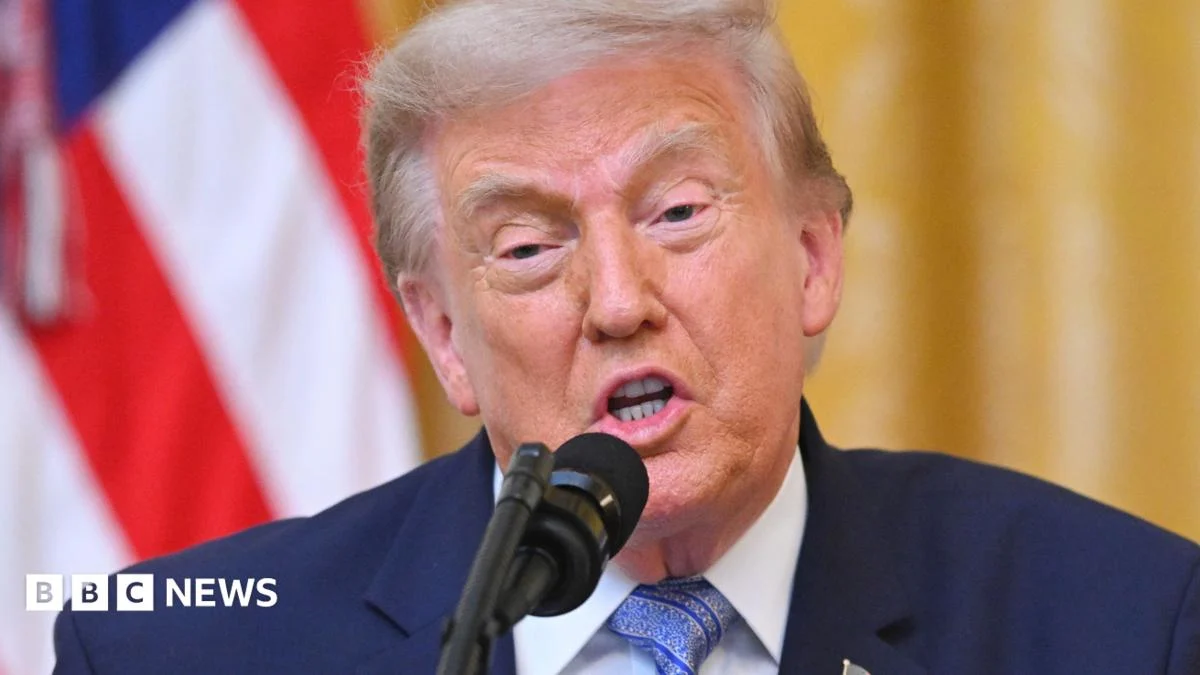
In a rare primetime address delivered from the White House, former US President Donald Trump levied a series of explosive allegations, accusing China of orchestrating interference in the 2020 presidential election and asserting "shocking vulnerabilities" within American voting systems. The half-hour speech, broadcast three months before crucial midterm elections, saw Trump claim to have declassified hundreds of intelligence files that, he contended, supported his narrative that Beijing actively sought to sway the election in favor of his opponent, Joe Biden. These assertions, however, immediately clashed with the unanimous conclusions of the US intelligence community and were vehemently rejected by China, rekindling a contentious debate over election security and foreign meddling that has characterized American politics since the 2020 contest.
The Primetime Address: Unsubstantiated Claims and Declassified Files
Speaking from a podium flanked by members of his top team, though without offering journalists the opportunity to pose questions, President Trump unfolded a narrative steeped in allegations of foreign malfeasance and domestic negligence. Central to his claims was the assertion that China had engaged in the "illicit acquisition" of an astounding 220 million American voter files, replete with personal information. He further alleged that voter data in 18 states had been "bought, stolen or hacked by China," and pointed an accusatory finger at "those responsible for sounding the alarm" for allegedly failing to disclose this purported discovery to government officials or Congress.
The White House concurrently released hundreds of pages of intelligence documents during Trump’s address. Many of these documents were heavily redacted, a common practice for classified materials, and news organizations, including the BBC, immediately began the arduous process of reviewing them for verifiable insights. Trump’s speech itself provided no direct, verifiable evidence that China had utilized this information to alter voting systems or influence election outcomes, a crucial distinction given that a significant amount of voter registration data is publicly available through various state and local channels, as highlighted by organizations like the National Conference of State Legislatures (NCSL).
The timing of Trump’s address added another layer of intrigue. It came on the heels of a new Washington Post-Ipsos poll indicating a drop in his approval rating to 37%, with many voters expressing pessimism about the rising cost of living and the ongoing war with Iran. While these domestic concerns were tangentially mentioned in his wide-ranging remarks, the primary focus remained on the integrity of past and future elections, a theme that has consistently resonated with his base.
Intelligence Community’s Rebuttal and Historical Context
The gravitas of Trump’s allegations was immediately undercut by the established consensus of the US intelligence community. A comprehensive 2021 report by the US National Intelligence Council, the principal intelligence assessment body for the Director of National Intelligence, concluded with "high confidence" that China did not interfere in the 2020 presidential election. The report unequivocally stated: "We assess that China did not deploy interference efforts and considered but did not deploy influence efforts intended to change the outcome of the US presidential election."
The reasoning behind this assessment, as detailed in the intelligence report, was particularly salient: China "did not view either election outcome as being advantageous enough for China to risk blowback if caught." This pragmatic calculus, according to intelligence analysts, steered Beijing away from direct intervention, even as it harbored preferences regarding the election’s outcome. This stands in stark contrast to the intelligence community’s findings regarding the 2016 election, which Trump won, where Russia was found to have engaged in a concerted and multi-faceted campaign of election meddling. This Russian interference included sophisticated hacking operations targeting political organizations, extensive social media influencing campaigns designed to sow discord and spread disinformation, and even the funding of on-the-ground electioneering activities. The clear distinction between the proven actions of Russia in 2016 and the unproven allegations against China in 2020 forms a critical backdrop to the current debate.
Furthermore, the US Cybersecurity and Infrastructure Security Agency (CISA), a component of the Department of Homeland Security responsible for protecting critical infrastructure, including election systems, famously declared the 2020 election "the most secure in American history." CISA, in a joint statement with election officials across the country, categorically stated that "there is no evidence that any voting system compromised or altered ballots, changed votes or was otherwise degraded in any way." This official assessment directly contradicts the very premise of Trump’s claims regarding systemic vulnerabilities and foreign manipulation.
China’s Vehement Denial and Diplomatic Implications
In Beijing, China’s Foreign Ministry swiftly and strongly refuted Trump’s allegations, labeling them as "entirely fabricated." Foreign Ministry spokesman Lin Jian articulated China’s official stance, stating that Trump’s claims were "malicious smears" that had "long been proven to be groundless." This diplomatic pushback is not new; China has consistently denied any involvement in US elections, viewing such accusations as part of a broader anti-China narrative often employed by certain American political factions.
The re-emergence of these accusations at a high-profile level carries significant diplomatic implications. US-China relations are already fraught with tension across a spectrum of issues, including trade imbalances, human rights concerns in Xinjiang and Hong Kong, territorial disputes in the South China Sea, and the geopolitical status of Taiwan. Introducing unsubstantiated claims of election interference by a former US president has the potential to further strain an already delicate relationship, fueling distrust and making cooperation on global issues even more challenging. The timing, just weeks before a potential G20 summit where leaders from both nations might interact, adds another layer of complexity to the international landscape.
Broader Claims on Election Infrastructure and Specific State Allegations
Beyond the China-centric accusations, Trump broadened his critique to encompass the entire fabric of US election infrastructure. He alleged that American voting machines are "extremely exposed" to interference by various foreign adversaries, specifically naming Russia, China, and Iran. While shortcomings in US election infrastructure have indeed been well-documented, particularly after the 2016 election, many states and localities have invested heavily in upgrading systems, implementing paper trails, and enhancing cybersecurity protocols. These efforts were a direct response to the lessons learned from previous incidents of foreign meddling.
Trump also invoked specific instances to bolster his narrative of systemic fraud. He alleged that a state investigation by Michigan law enforcement uncovered a voter registration fraud scheme orchestrated by a Democratic-affiliated group. He claimed that the FBI had constrained Michigan authorities from taking action before the statute of limitations expired, describing it as "pay, play and cheat." However, similar to his broader claims, he provided no concrete evidence during his speech that votes or tabulations were actually changed, or that voting machines were hacked as a result of this alleged scheme.
Separately, Trump stated that the Department of Homeland Security (DHS) had identified 278,000 non-citizens registered to vote. While the presence of non-citizens on voter rolls can occur due to various administrative errors or outdated data, Trump did not present any evidence to indicate that these individuals had actually cast ballots or had any quantifiable impact on the outcome of any election. The distinction between registration and actual voting is critical in assessing the true scope of any potential issue.
Legislative Proposals and Political Repercussions
Towards the conclusion of his address, Trump reiterated his call for the passage of the SAVE America Act, a legislative proposal aimed at fundamentally altering US election procedures. This act, which has been stalled in the Senate for months, proposes a ban on most forms of mail voting, mandates proof of citizenship for voter registration, and requires photo identification to cast a ballot. These provisions are central to the Republican platform for election reform, often framed as measures to enhance security and prevent fraud.
Trump encouraged Americans to contact their representatives in Congress and urge support for the SAVE America Act. However, the path to its passage remains highly improbable. Unless Republicans are willing to abandon longstanding Senate procedures, such as the filibuster, and secure significant bipartisan support – which is currently lacking – such efforts are almost certainly doomed to fail. Democrats and many election experts argue that such measures would disproportionately disenfranchise eligible voters, particularly minorities, the elderly, and those with limited access to state-issued identification, while offering negligible benefits in terms of actual fraud prevention.
The speech immediately ignited concerns among Democrats, who view it as a deliberate attempt to sow doubts about the security and legitimacy of upcoming elections. Senate Majority Leader Chuck Schumer posted on social media shortly after the speech, stating, "Let’s be clear – in America, voters choose their leaders, not the other way around." He added, "Democrats will fight like hell to make sure every American voter can cast their ballot freely, without obstruction or interference from Donald Trump." Former Vice-President Kamala Harris echoed these sentiments on X (formerly Twitter) moments before Trump’s remarks, suggesting he "wants you to lose confidence in our electoral system so you stay home this November." The implication is that by eroding public trust in the electoral process, Trump aims to depress turnout among non-supporters and energize his base.
Media Criticism and Post-2020 Legal Challenges
In a characteristic move, Trump also directed criticism at major media outlets, including ABC, NBC, and CNN, for their decision not to carry his speech live on television. He suggested that these networks should have their broadcast licenses revoked, a sentiment he has expressed on numerous occasions regarding media organizations he perceives as biased or unfair. This highlights the ongoing tension between the former president and mainstream media, often portrayed by him as purveyors of "fake news."
The address also served as a stark reminder of the tumultuous period following the 2020 election. After his loss to Joe Biden, Trump and his allies launched dozens of unsuccessful legal challenges in state and federal courts across the country, seeking to overturn the election results. These lawsuits, predicated on widespread claims of voter fraud and irregularities, were overwhelmingly rejected by judges, including those appointed by Trump himself. Crucially, no evidence of widespread fraud or systemic irregularities sufficient to alter the outcome of the election was ever found or substantiated in any court of law.
Conclusion: A Continuing Battle for Electoral Trust
Donald Trump’s primetime address stands as a potent reminder of the ongoing battle for trust in America’s electoral system. His claims of Chinese interference and systemic vulnerabilities in the 2020 election, delivered with considerable fanfare, directly contradict the consensus findings of the US intelligence community and numerous official election integrity assessments. While such allegations resonate deeply with a segment of the American populace, they lack the verifiable evidence that would typically underpin such serious charges.
The speech’s timing, just ahead of the midterm elections, underscores its political utility, aiming to energize a base that remains skeptical of election outcomes and to potentially influence the narrative surrounding future contests, including the 2028 presidential election. However, it also deepens the partisan divide over election administration and further strains international relations with China. As the nation navigates these complex challenges, the fundamental question remains: how to foster widespread confidence in democratic processes amidst persistent, unsubstantiated claims that threaten to undermine their very foundation. The review of the declassified documents and the ongoing political discourse will continue to shape this critical debate.

Related Posts
Zambia on Edge: Opposition Leader Arrested Amid Allegations of Insurrection Plot and Election Tensions

Rescuers search for survivors of powerful Indonesia earthquake

