The Duty of Decades Examining State Accountability and the Legal Consequences of Longstanding Climate Knowledge
The landscape of climate litigation is undergoing a fundamental shift as the focus expands from the culpability of private corporations to the legal obligations of sovereign states. For years, public discourse and legal challenges primarily targeted the "Carbon Majors"—the handful of fossil fuel companies whose internal documents revealed they understood the catastrophic potential of their products as early as the 1970s. However, a growing body of legal scholarship and recent international judicial opinions suggest that the focus is narrowing on a different set of actors: the governments that possessed similar knowledge yet continued to subsidize, permit, and promote the extraction of coal, oil, and gas. This shift posits that the failure of states to act on foreseeable risks is not merely a political oversight but a breach of international legal duties that carries significant implications for liability and reparations.
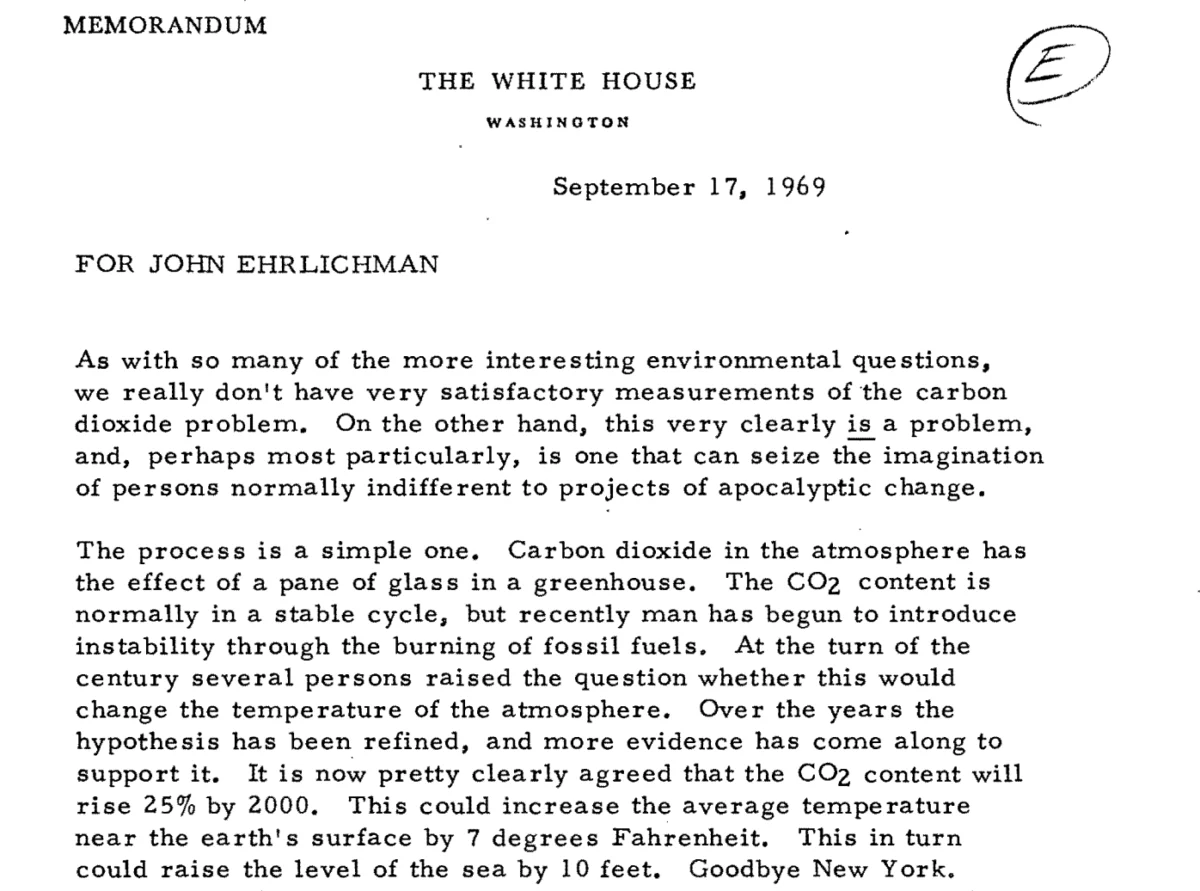
The Center for International Environmental Law (CIEL) has highlighted that while much is known about when the private sector recognized the climate threat, the timeline of state awareness is equally critical. This historical record is now being weaponized in international courts to argue that states have been in breach of their "due diligence" obligations for decades. When a state becomes aware of a significant risk to the environment or human rights, international law dictates a duty to prevent that harm. The core of the current legal debate rests on a singular, pivotal question: at what point did the knowledge held by governments transform into a binding legal obligation to phase out fossil fuels?
The Evolution of Judicial Recognition
In mid-2024, the International Tribunal for the Law of the Sea (ITLOS) issued a landmark advisory opinion that fundamentally altered the parameters of state responsibility. The tribunal affirmed that states have a specific obligation to protect the marine environment from the impacts of climate change, including the absorption of anthropogenic greenhouse gas emissions. Crucially, the opinion clarified that these duties are not new; they have been in effect since the risks of climate change became foreseeable.
This ruling provided a framework for the International Court of Justice (ICJ), which is currently considering its own advisory opinion on the obligations of states in respect of climate change. The ICJ’s deliberations are expected to address the "temporal" aspect of responsibility—essentially determining the date at which states could no longer claim ignorance of the harm caused by fossil fuel combustion. By establishing this date, the court could effectively open the door for compensation claims from vulnerable nations against major emitters, covering decades of environmental degradation and economic loss.
A Chronology of State Awareness and Inaction
The historical record of government knowledge regarding climate change is extensive and dates back more than half a century. Understanding this timeline is essential for establishing the duration of a state’s breach of duty.
The Early Warnings (1950s–1960s)
As early as 1957, scientists Roger Revelle and Hans Suess published a paper noting that human beings were conducting a "great geophysical experiment" by returning to the atmosphere the organic carbon stored in sedimentary rocks over hundreds of millions of years. By 1965, the United States government received a formal warning. The Environmental Pollution Panel of President Lyndon B. Johnson’s Science Advisory Committee issued a report titled "Restoring the Quality of Our Environment," which explicitly stated that carbon dioxide emissions from fossil fuels were "causing significant changes" to the atmosphere that could lead to the melting of the Antarctic ice cap and rising sea levels.
The Scientific Consensus (1979–1988)
In 1979, the National Academy of Sciences in the U.S. released the Charney Report, which concluded that a doubling of atmospheric CO2 would lead to a global warming of between 2 and 3.5 degrees Celsius. This was followed by the first World Climate Conference in Geneva, where scientists from 50 nations called on governments to "foresee and prevent potential man-made changes in climate." By 1988, the establishment of the Intergovernmental Panel on Climate Change (IPCC) and the testimony of NASA scientist James Hansen to the U.S. Senate signaled that the era of theoretical speculation had ended; climate change was officially recognized as a present and growing threat.
The Era of Formal Commitment (1992–Present)
The 1992 United Nations Framework Convention on Climate Change (UNFCCC), signed at the Rio Earth Summit, saw nearly every nation on Earth acknowledge the need to stabilize greenhouse gas concentrations. Despite this formal recognition, global fossil fuel production has continued to rise. According to the 2023 Production Gap Report, governments still plan to produce more than double the amount of fossil fuels in 2030 than would be consistent with limiting warming to 1.5°C.
Supporting Data: The Economic and Environmental Gap
The legal argument for state responsibility is bolstered by data showing the disparity between government rhetoric and government action. While states pledged to reduce emissions, their financial structures often incentivized the opposite.
According to the International Monetary Fund (IMF), global fossil fuel subsidies reached a record $7 trillion in 2022. This figure includes both explicit subsidies (undercharging for supply costs) and implicit subsidies (undercharging for environmental costs and foregone consumption taxes). For many legal experts, these subsidies represent a proactive "exacerbation" of climate harm.
Furthermore, data from the Climate Trace project and the International Energy Agency (IEA) show that despite the rapid growth of renewable energy, fossil fuels still account for roughly 80% of global primary energy consumption—a percentage that has remained stubbornly high for decades. The legal implication is that states did not merely fail to stop private actors; they used public funds and policy levers to ensure the continued dominance of the very products they knew were destabilizing the global climate.
The Principle of Due Diligence and State Responsibility
In international law, the concept of "due diligence" requires states to take all reasonable measures to prevent activities within their jurisdiction from causing significant transboundary harm. This is often referred to as the "no-harm rule."
The CIEL researchers argue that once a state was informed of the risks fossil fuels posed, its due diligence obligation was triggered. This required a transition away from a fossil-based economy. The failure to do so—and the continued approval of new oil and gas projects—constitutes a "wrongful act" under the Articles on Responsibility of States for Internationally Wrongful Acts (ARSIWA).
Legal analysts suggest that the defense of "economic necessity" or "gradual transition" is becoming less tenable in court. If a state knew in 1990 that continued emissions would lead to the destruction of small island nations or the loss of arable land in the Global South, every year of continued fossil fuel promotion after that date adds to the state’s total liability.
Global Reactions and Diplomatic Friction
The move toward holding states accountable has created a clear divide in international diplomacy. The Commission of Small Island States on Climate Change and International Law (COSIS), led by nations like Antigua and Barbuda and Tuvalu, has been the primary driver behind the ITLOS and ICJ petitions. For these nations, state accountability is not a theoretical legal exercise but a matter of national survival.
In contrast, many industrialized nations and major emerging economies have expressed caution. During the ITLOS hearings, several high-emitting countries argued that climate change should be managed through political negotiations (like the Paris Agreement) rather than judicial mandates. They contend that the UNFCCC framework is the "lex specialis" (specialized law) that supersedes general international law obligations. However, the ITLOS opinion rejected this view, stating that specific environmental treaties do not absolve states of their broader obligations under the Law of the Sea or general international law.
Analysis of Implications: A New Era of Reparations?
The implications of establishing a "date of knowledge" for states are profound. If the ICJ or other regional courts (such as the European Court of Human Rights, which recently ruled against Switzerland in a landmark climate case) establish that states have been in breach of their duties since the early 1990s, the financial ramifications could be staggering.
- Loss and Damage Funding: The "Loss and Damage" fund established at COP27 has largely been framed as an act of solidarity or charity. A legal finding of state responsibility would transform these payments from voluntary aid into mandatory reparations for legal wrongs.
- Domestic Litigation: National courts often look to international rulings for guidance. A clear statement on state responsibility from the ICJ could bolster domestic lawsuits where citizens sue their governments for failing to protect their constitutional rights to a healthy environment.
- Policy Shifts: To mitigate future liability, states may be forced to accelerate the decommissioning of fossil fuel infrastructure. If continuing to permit a new coal mine or oil field is viewed as a "willful exacerbation" of a known harm, the legal risk for the state may eventually outweigh the economic benefits of the project.
The transition from discussing "what companies knew" to "what governments knew" marks a maturation of the climate justice movement. It recognizes that while companies provide the supply, it is the state that provides the legal, financial, and regulatory framework that allows that supply to exist. As the world’s highest courts weigh in, the historical record of government inaction is no longer just a subject for historians—it is the foundation of a new era of global legal accountability. The silence of previous rulings on the specific timing of these duties is rapidly being filled by evidence of decades of awareness, suggesting that the window for states to avoid liability is closing.

Related Posts
Constitutional Court of South Africa Bars Shell Oil Exploration in Landmark Victory for Environmental and Community Rights

The Battle for Saldanha Bay: South Africa’s Ambitious Ocean Economy Strategy Faces Legal and Environmental Reckoning