The Crisis of Scale in Global Climate Diplomacy: How the Expansion of UN COPs Challenges Effective Action
The annual United Nations Climate Change Conference, known as the Conference of the Parties (COP), has evolved from a technical gathering of government scientists and diplomats into a massive global spectacle that draws tens of thousands of participants from every corner of the globe. Every November, world leaders, negotiators, corporate executives, activists, and celebrities descend upon a host city for a two-week period of intense deliberation and networking. While the diversity of stakeholders reflects a growing global recognition of the climate crisis, a critical question has emerged among policy experts: has the sheer scale of these events become an obstacle to their original purpose?
A recent analysis by the European Capacity Building Initiative (ecbi), authored by experts including Benito Müller, Anju Sharma, Jen Allan, Matthias Roesti, and Luis Gomez-Echeverri, suggests that the "fear of missing out" (FOMO) is driving a cycle of expansion that may be hindering effective international cooperation. As participation numbers skyrocket, the logistical burden on host nations increases, and the core task of climate negotiation risks being overshadowed by the peripheral activities of a "climate trade fair."
The Evolution of the COP: From Berlin to Dubai
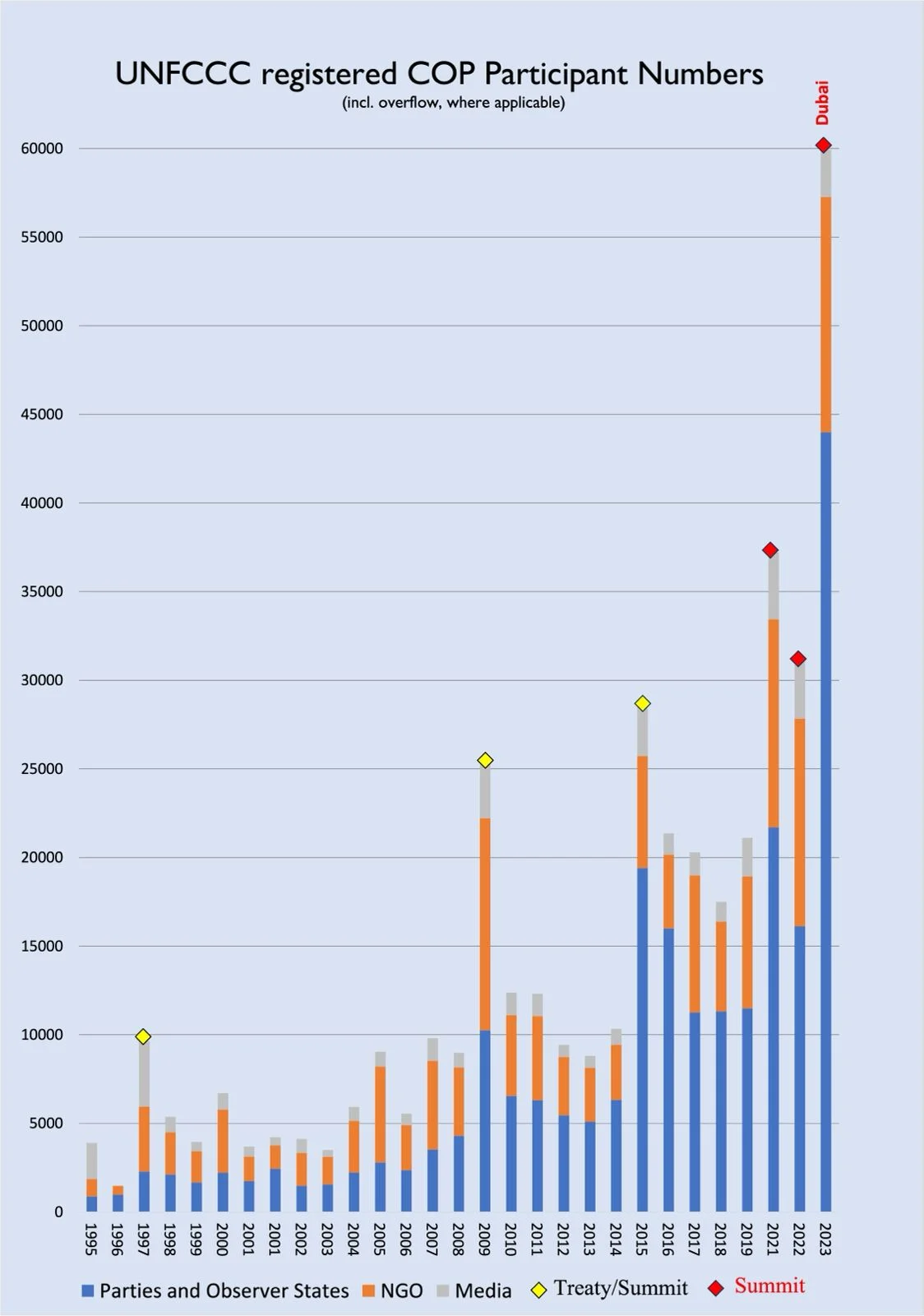
The trajectory of the UNFCCC process began with the 1992 Rio Earth Summit, which established the framework for international climate cooperation. The first official Conference of the Parties (COP1) was held in Berlin in 1995, attracting approximately 3,900 participants. At that time, the meetings were primarily focused on establishing the ground rules for emissions reporting and defining the responsibilities of developed versus developing nations.
Throughout the late 1990s and early 2000s, the conferences remained relatively modest in scale. Even the landmark COP3 in Kyoto, Japan, which resulted in the first legally binding emissions reduction treaty—the Kyoto Protocol—saw fewer than 10,000 attendees. For nearly two decades, the COP remained the domain of technical experts and high-level diplomats.
However, the ecbi analysis identifies a recurring trend: a "doubling effect" following major treaty milestones. After the 2015 Paris Agreement (COP21), which saw participation jump to over 30,000, interest in the annual summits accelerated. By the time COP26 was held in Glasgow in 2021, following a one-year hiatus due to the COVID-19 pandemic, attendance reached nearly 40,000. This trend culminated in COP28 in Dubai (2023), which shattered all previous records with over 85,000 accredited participants.
Data Analysis: The Quantifiable Growth of Participation
The surge in attendance is not merely a reflection of increased government interest, but a shift in the composition of the attendees. According to UNFCCC registration data, the growth can be categorized into three primary groups:
- Party Delegations: National governments have significantly expanded their teams. While small island nations may send fewer than 10 delegates, larger economies like Brazil, China, and the United States now frequently bring delegations numbering in the hundreds, including specialized staff for finance, technology, and legal affairs.
- Observer Organizations: This category, which includes NGOs, academic institutions, and intergovernmental organizations, has seen the most dramatic growth. In the early years, observers were largely environmental activists. Today, they include trade unions, indigenous groups, and faith-based organizations.
- The Private Sector and Lobbyists: Recent COPs have seen a massive influx of business executives and industry lobbyists. At COP28, it was reported that over 2,400 individuals tied to the fossil fuel industry were granted access, a figure that has sparked significant debate regarding the influence of vested interests on climate policy.
The ecbi report highlights that after each "success" or "landmark" COP, the subsequent meeting experiences a surge in attendance as stakeholders realize the high stakes of the implementation phase. This "Paris Effect" has transformed the COP into a mandatory stop on the global corporate and political calendar.
The Logistical and Financial Burden of Mega-Summits
The sheer volume of participants creates a massive logistical challenge for host countries. Only a handful of nations possess the infrastructure—hotel capacity, transport networks, and secure conference venues—to host 80,000 people simultaneously. This restricts the pool of potential host countries, often favoring wealthier nations or those with significant state resources, which can lead to concerns about regional equity in the UNFCCC process.
The financial costs are equally staggering. Hosting a modern COP can cost a government hundreds of millions of dollars. These funds go toward security, the construction of "Blue Zones" (managed by the UN for official negotiations) and "Green Zones" (open to the public and civil society), and the digital infrastructure required to broadcast the event globally.
Furthermore, the environmental footprint of the conference itself has become a point of contention. The carbon emissions generated by tens of thousands of people flying across the globe to discuss carbon reduction creates a perceived "hypocrisy gap" that critics of the process are quick to exploit. While the UNFCCC and host nations often purchase carbon offsets, the symbolic weight of a high-carbon event remains a challenge for the movement’s credibility.
The FOMO Factor: Diplomacy vs. Networking
The ecbi experts argue that the "fear of missing out" has shifted the focus of the COP. For many attendees, the primary value of the conference is no longer the formal negotiations taking place in the plenary halls, but the "side events" and networking opportunities that occur in the hallways and pavilions.
This has led to the creation of a "two-tier" conference:
- The Negotiating COP: A smaller, technical series of meetings where diplomats argue over text, finance targets, and compliance mechanisms.
- The Climate Fair: A massive exhibition where companies announce sustainability initiatives, NGOs launch reports, and celebrities make appearances.
While the "Climate Fair" aspect is vital for building global momentum and cross-sector partnerships, critics argue it can distract from the urgent work of the negotiators. The noise and spectacle of the larger event can create a sense of progress that is not always reflected in the formal outcomes of the treaty process.
Official Responses and Perspectives on Reform
The debate over the size of the COP has reached the highest levels of the UN. Simon Stiell, the Executive Secretary of the UNFCCC, has acknowledged the need for the process to be more efficient. In recent statements, Stiell has emphasized that while inclusivity is a core tenet of the UN, the primary goal of the COP must remain the delivery of ambitious climate action.
Many smaller nations, particularly Least Developed Countries (LDCs) and Small Island Developing States (SIDS), have expressed mixed feelings. On one hand, the large-scale event provides them with a platform to speak directly to the world’s media and corporate leaders. On the other hand, their small delegations are often overwhelmed by the sheer scale of the event, making it difficult for them to cover all the simultaneous negotiating tracks and side events.
Proposed reforms from various think tanks and the ecbi report include:
- Biannual Negotiations: Moving the high-level political summits to every two years, while holding smaller technical meetings in the intervening years.
- Regional Hubs: Supplementing the global COP with regional summits to reduce the need for long-haul travel and allow for more localized policy focus.
- Virtual Participation: Enhancing digital access to allow experts and activists to participate without being physically present.
- Stricter Accreditation: Implementing more rigorous vetting for attendees to ensure that those present are contributing directly to the goals of the Paris Agreement.
Broader Impact and the Path Forward
The expansion of the UN climate conferences is a double-edged sword. It serves as a testament to the fact that climate change is no longer a niche environmental issue but a central pillar of global economics and security. The presence of thousands of businesses and civil society members indicates a broad-based "all of society" approach that is necessary to transition the global economy.
However, the ecbi report serves as a timely warning. If the COP continues to grow at its current rate, it risks becoming unmanageable. The focus on quantity—more attendees, more pavilions, more announcements—must not come at the expense of quality. The success of the UNFCCC process will ultimately be measured not by the number of people who attend the summits, but by the speed at which global emissions decline.
As the international community prepares for future COPs in Brazil and beyond, the pressure to reform the format of these summits will likely intensify. Striking the balance between inclusivity and efficiency remains the central challenge for the future of climate diplomacy. The goal is to move beyond the FOMO-driven expansion and return to a focused, results-oriented process that can meet the urgent demands of a warming planet.

Related Posts
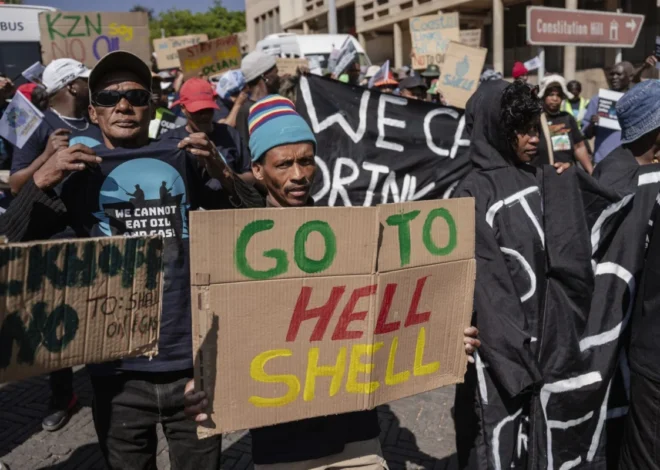
Constitutional Court of South Africa Bars Shell Oil Exploration in Landmark Victory for Environmental and Community Rights
The Battle for Saldanha Bay: South Africa’s Ambitious Ocean Economy Strategy Faces Legal and Environmental Reckoning