Systematic Suppression of Press Freedom in Yemen Intensifies Following Assassination of Al Arabiya Journalist and Arbitrary Detentions
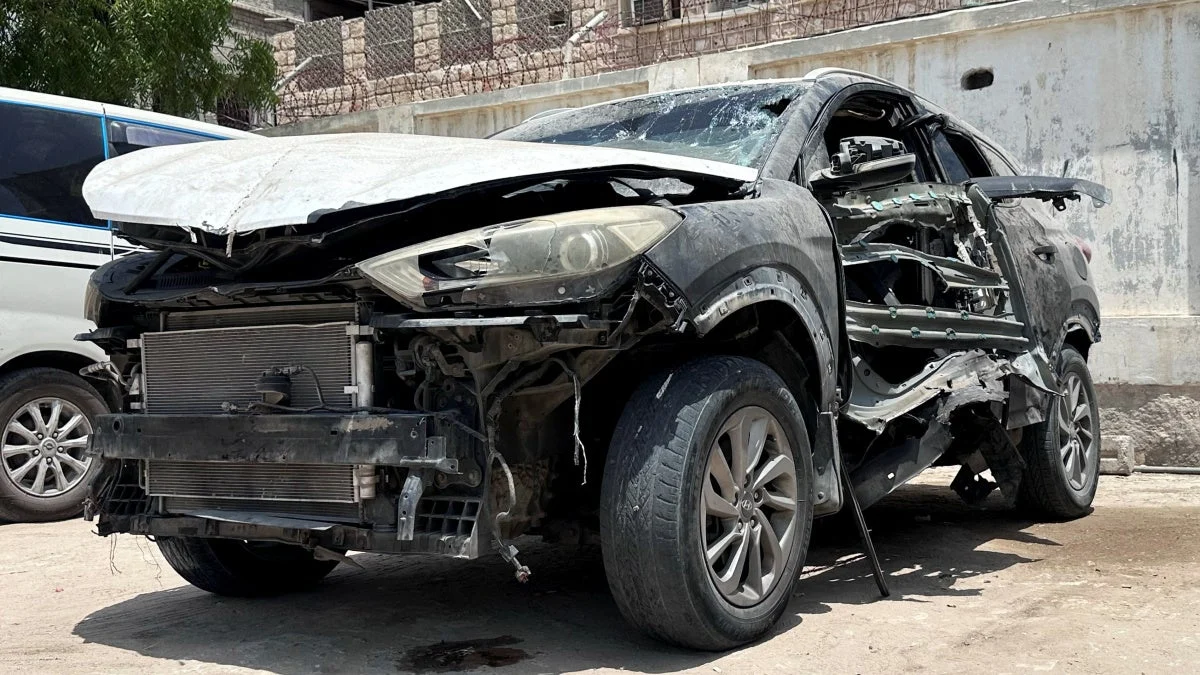
The landscape for media professionals in Yemen has reached a critical and perilous juncture following a series of violent targeted attacks and arbitrary detentions that span the country’s fractured political geography. On June 24, 2026, the media community was plunged into mourning following the assassination of Muhammad Aidha, a prominent journalist who had served as a correspondent for the Saudi-owned news outlets Al Arabiya and Al Hadath since 2019. Aidha was killed in the eastern port city of Mukalla, located in the Hadramawt governorate, when an explosive device planted in his vehicle detonated. The targeted nature of the attack underscores the extreme risks faced by those reporting from the ground in a nation where the rule of law has been systematically eroded by over a decade of conflict.
The violence against the press is not limited to assassinations but extends to state-sponsored intimidation and the suppression of dissent. Only three days after the death of Aidha, on June 27, security forces in the Marib governorate—an area largely controlled by the internationally recognized government—detained journalist Hamoud Haza. Haza was seized while performing his professional duties, covering a public event. According to accounts provided to Human Rights Watch, Haza was held incommunicado for two days. His release was only secured after he was coerced into signing a formal pledge stating he would refrain from criticizing the internationally recognized government or its Minister of Information. This incident highlights a disturbing trend where even administrative authorities use detention as a tool to enforce a favorable narrative and silence investigative journalism.
A Chronology of Targeted Violence Against the Media
The assassination of Muhammad Aidha is not an isolated incident but rather the latest chapter in a long-standing campaign of violence directed at media workers in Yemen. The Yemeni Journalists Syndicate (YJS) has been vocal in its condemnation, noting that Aidha’s death adds to an alarming list of "crimes and violations" intended to terrorize the press. The Syndicate specifically referenced the previous assassinations of Rasha al-Harazi and Saber al-Haidari in the temporary capital of Aden.
In November 2021, Rasha al-Harazi, who was pregnant at the time, was killed in a car bombing that also severely injured her husband, fellow journalist Mahmoud al-Atmi. Similarly, in June 2022, Saber al-Haidari, a journalist working for Japanese media, was killed in a near-identical fashion when an improvised explosive device (IED) attached to his car exploded in Aden. These incidents suggest a sophisticated and recurring tactic of using vehicle-borne explosives to eliminate high-profile media figures, a method that allows perpetrators to strike in broad daylight while maintaining a degree of anonymity.
The National Organization of Yemeni Reporters (SADA) has compiled harrowing data regarding the safety of journalists since the escalation of the civil war in 2015. Their records indicate that over 90 journalists and media workers have been killed over the last decade. SADA’s leadership characterizes this death toll as a deliberate strategy by warring factions to "impose a complete media blackout" and to "entrench a culture of impunity" where the murder of a reporter carries no legal consequence.
Systematic Abuses by Houthi Authorities in Sanaa
While journalists in government-held and Southern Transitional Council (STC) areas face the threat of bombings and arbitrary arrests, those operating in Houthi-controlled territories, including the capital Sanaa, face a different but equally severe set of perils. In March 2026, Houthi forces reportedly abducted journalist Salah al-Deen al-Rawhani from his residence in Sanaa. Since his abduction, al-Rawhani has been subjected to enforced disappearance, with his family and legal representatives receiving no information regarding his whereabouts or his physical condition.
The International Federation of Journalists (IFJ) has frequently called for the release of al-Rawhani and several other media workers held in Houthi prisons. The Houthi movement, also known as Ansar Allah, has a documented history of using the judiciary to pass harsh sentences against journalists. In 2020, Houthi-controlled courts sentenced four journalists to death on charges of "espionage" and "treason" related to their reporting, though they were eventually released in a prisoner exchange in 2023. The abduction of al-Rawhani suggests that the cessation of such high-profile trials has not signaled an end to the policy of arbitrary detention and disappearance.
Findings of the 2025 Human Rights Watch Report
In September 2025, Human Rights Watch (HRW) published a comprehensive report titled "We Pray to God by Torturing Journalists," which documented the systematic nature of violations committed by all warring parties in Yemen. The report concluded that the Houthi forces, the Southern Transitional Council, and the Yemeni government have all engaged in grave abuses with total impunity.
The HRW investigation found that journalists are frequently targeted not only for what they publish but also for their perceived political affiliations. The report detailed instances of:
- Enforced Disappearances: Where authorities refuse to acknowledge the detention of a journalist, leaving families in a state of perpetual psychological distress.
- Torture and Ill-treatment: Journalists in custody have reported being subjected to physical beatings, sleep deprivation, and psychological abuse intended to extract "confessions" or to break their resolve.
- Economic Sabotage: The seizure of equipment, the shuttering of media outlets, and the withholding of salaries for journalists working in state-run media who refuse to follow the party line.
This systematic approach to dismantling the free press has turned Yemen into one of the most dangerous environments globally for media professionals. According to the Reporters Without Borders (RSF) World Press Freedom Index, Yemen consistently ranks near the bottom, reflecting a total absence of safety and legal protection for reporters.
International Legal Framework and the Obligation to Protect
The ongoing attacks on journalists in Yemen constitute clear violations of both International Humanitarian Law (IHL) and International Human Rights Law (IHRL). Under IHL, which governs the conduct of armed conflict, journalists are classified as civilians. As long as they do not take a direct part in hostilities, they are entitled to the same protections as any other non-combatant. The deliberate targeting of a journalist is a war crime.
Furthermore, IHRL guarantees the rights to liberty, security of person, and freedom of expression. The practice of "incommunicado" detention, as seen in the case of Hamoud Haza, and enforced disappearance, as seen with Salah al-Deen al-Rawhani, are strictly prohibited under international treaties to which Yemen is a party. The use of coerced "pledges" to restrict future speech is also a violation of the right to freedom of expression, as it creates a "chilling effect" that discourages other journalists from pursuing investigative stories.
Legal experts argue that the failure of the Yemeni government and other de facto authorities to investigate these crimes is a breach of their international obligations. The lack of a functioning, independent judiciary means that even when the perpetrators of bombings or abductions are known, they are rarely brought to justice.
Analysis of the Strategic Implications of a Media Blackout
The escalation of violence against journalists serves a specific strategic purpose for the various factions involved in the Yemeni conflict. By eliminating or intimidating local reporters, warring parties can control the flow of information to the international community and their own domestic populations.
- Narrative Control: In a fragmented war, control over the narrative is as important as control over territory. Journalists who report on corruption, human rights abuses, or military failures threaten the legitimacy of the groups in power.
- Deterrence: The high-profile nature of assassinations like that of Muhammad Aidha serves as a warning to other journalists. The message is clear: no matter who you work for, you are not safe.
- Isolation: When local journalists are silenced, international news agencies lose their "eyes and ears" on the ground. This results in Yemen becoming a "black hole" for information, making it easier for atrocities to go unnoticed and for the humanitarian crisis to be ignored by the global public.
The "culture of impunity" mentioned by the National Organization of Yemeni Reporters is perhaps the most damaging long-term consequence of this violence. When a society accepts that those who speak the truth can be killed without consequence, the foundations of future democratic governance and social reconciliation are destroyed.
Calls for Accountability and Future Outlook
The international community, including the United Nations and various human rights organizations, has repeatedly called for an end to the targeting of media workers in Yemen. However, these calls have largely gone unheeded. Human Rights Watch and the Yemeni Journalists Syndicate have issued specific demands to the relevant authorities:
- To the Yemeni Government: Conduct a prompt, impartial, and transparent investigation into the killing of Muhammad Aidha in Mukalla. All previous attacks in government-controlled areas, including the bombings in Aden, must be reinvestigated with the goal of holding the masterminds—not just the low-level operatives—accountable.
- To the Houthi Authorities: Immediately disclose the whereabouts of Salah al-Deen al-Rawhani and all other detained journalists. They must cease the practice of enforced disappearance and release all media workers held for exercising their right to free speech.
- To the Southern Transitional Council: Stop the harassment and arbitrary detention of journalists in the southern governorates and ensure that media outlets can operate without fear of closure or physical retaliation.
The future of journalism in Yemen remains bleak as long as the conflict persists and the international community fails to impose meaningful consequences on those who target the press. The death of Muhammad Aidha is a somber reminder that in the absence of accountability, the pen is often at the mercy of the bomb. For the 90-plus journalists who have lost their lives since 2015, justice remains elusive, and for those still working in the field, every day is a gamble with their lives. The preservation of what remains of the Yemeni media landscape is essential not just for the sake of the journalists themselves, but for the eventual rebuilding of a society that values transparency, truth, and the fundamental rights of its citizens.

Related Posts
Human Rights Watch Calls for Investigation into Death of Detainee Following Removal from Najaf Hospital by Iraqi Drug Police
Human Rights Watch Urges UN Security Council to Extend Lebanon Peacekeeping Mission Amid Escalating Conflict and Humanitarian Crisis