Boeing MQ-28 Ghost Bat Makes Farnborough Debut Following Landmark Integration in Exercise Valiant Shield 2026
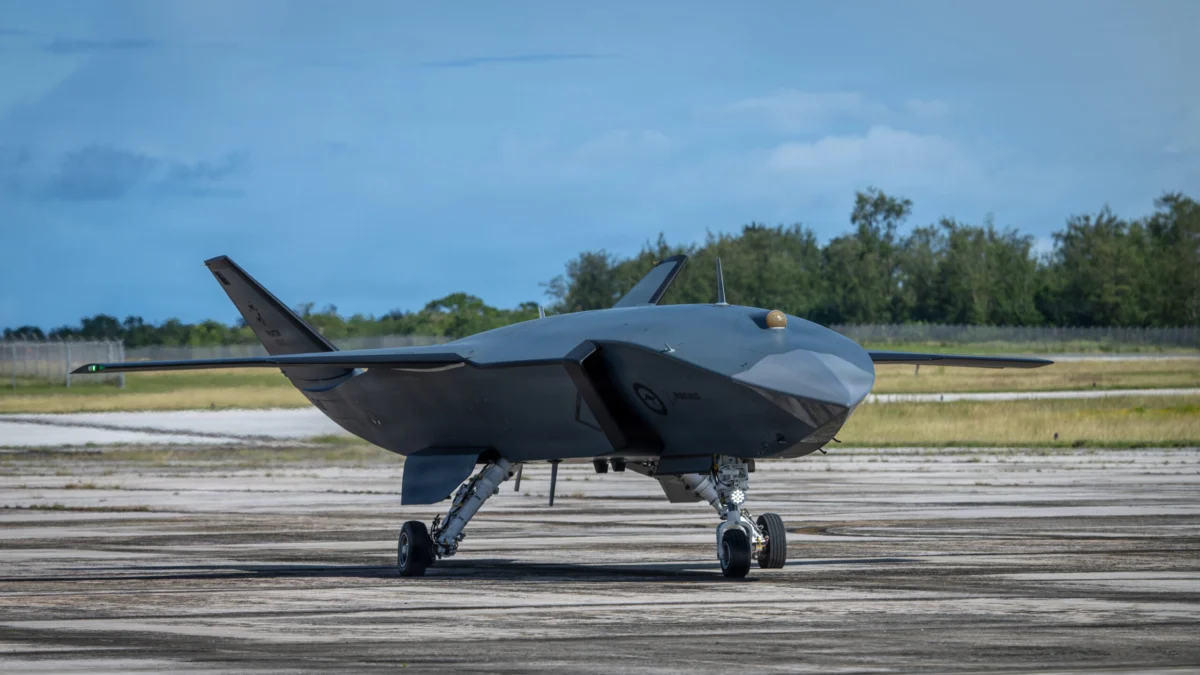
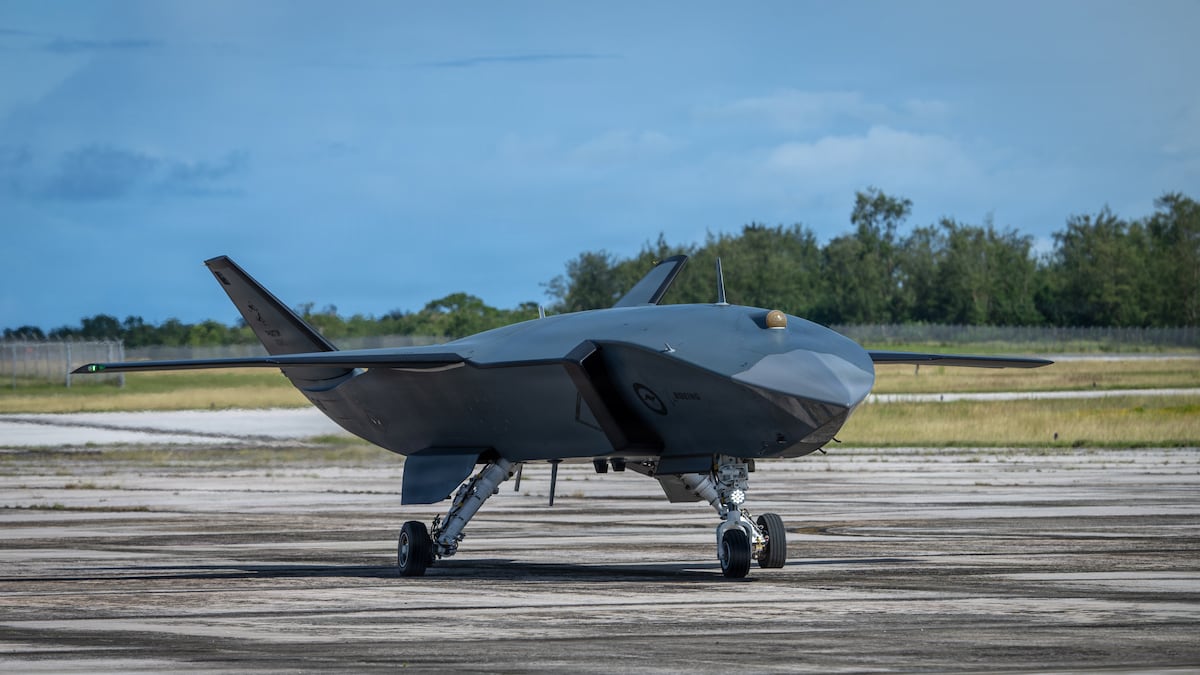
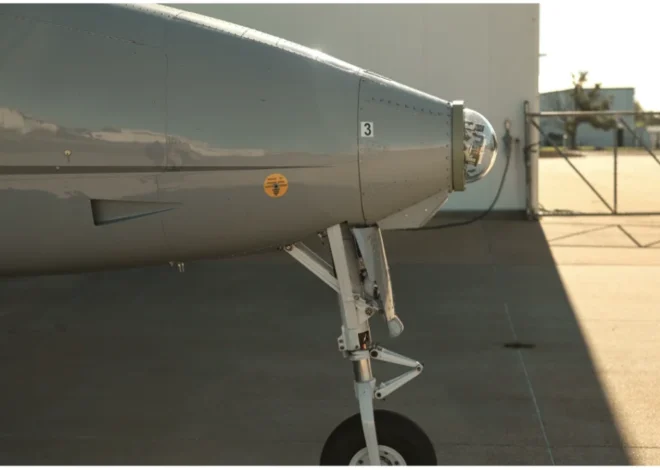
Under an uncharacteristically intense London sun, the sleek, charcoal-grey airframe of the Boeing MQ-28 Ghost Bat stood as a centerpiece at the Farnborough International Airshow this week. To a casual observer, the aircraft’s low-profile silhouette and swept-wing design might suggest a new variant of a light fighter jet. However, the absence of a cockpit canopy signals a fundamental shift in the future of aerial combat. The Ghost Bat is a Collaborative Combat Aircraft (CCA), a category of unmanned systems designed to fly alongside crewed fighters, and its presence at one of the world’s premier aerospace exhibitions marks its transition from a developmental prototype to a combat-proven platform.
The MQ-28’s debut at Farnborough follows a period of rapid operational testing and significant milestones. Earlier this month, Boeing officials confirmed that the Ghost Bat became the first CCA to participate in a large-scale, multinational joint operational exercise. This participation took place during Exercise Valiant Shield 2026, a biennial training event held in the Western Pacific’s Mariana Island Range Complex. The inclusion of the MQ-28 in such a complex environment provides a glimpse into how the United States and its allies intend to project power and maintain air superiority in contested environments, particularly in the Indo-Pacific region.
Operational Milestones and Exercise Valiant Shield 2026
Exercise Valiant Shield 2026 served as a critical proving ground for the MQ-28. During the maneuvers, the Ghost Bat operated in tandem with U.S. and coalition forces, specifically integrating with F-35A and F-35B Lightning II stealth fighters. This integration was not merely a flight demonstration; the aircraft supported the U.S. Air Force’s Experimental Operation Unit (EOU), a specialized group tasked with developing the tactics, techniques, and procedures for autonomous wingmen.
The exercise focused on high-end combat scenarios, including multi-domain operations involving the Navy, Air Force, Army, and Marine Corps. The Ghost Bat’s role involved extending the sensor range of crewed aircraft, providing an additional layer of electronic warfare capability, and acting as a force multiplier in simulated high-threat environments. By operating as a "loyal wingman," the MQ-28 allowed human pilots to remain at a safer distance from enemy air defenses while the uncrewed platform pushed forward to gather intelligence and identify targets.
Steve Parker, President and CEO of Boeing Defense, Space and Security, emphasized the significance of these tests. "Having the MQ-28 participate in such a significant military training exercise is a first, and this is just the start of demonstrating how advanced human-machine teaming extends the reach and awareness of crewed platforms," Parker stated. He further noted that the platform has effectively moved beyond the concept phase, declaring it "combat capable" following the successful completion of integrated missions.
Technical Capabilities and the AMRAAM Live-Fire Test
The Ghost Bat’s journey to Farnborough was paved by a series of technical achievements that distinguish it from previous generations of unmanned aerial vehicles (UAVs). Unlike traditional drones used primarily for surveillance or counter-insurgency, the MQ-28 is designed for high-speed, high-G maneuvers characteristic of modern air-to-air combat.
A defining moment in the aircraft’s development occurred shortly before Exercise Valiant Shield, when the Ghost Bat successfully conducted a live-fire demonstration. During the test, the aircraft launched an AIM-120 Advanced Medium-Range Air-to-Air Missile (AMRAAM), successfully intercepting and destroying a target drone. This capability is central to the CCA philosophy: providing a low-cost, attritable platform that can carry and deploy sophisticated weaponry, thereby increasing the "magazine depth" of a fighter formation without risking additional human lives.
The MQ-28’s physical and performance specifications are tailored for modern theater requirements:
- Range: The aircraft boasts a range of more than 2,000 nautical miles (approximately 3,700 kilometers), allowing it to provide persistent support during long-range missions common in the Pacific theater.
- Altitude: It can operate at a ceiling of over 40,000 feet, keeping pace with high-performance crewed fighters.
- Modular Design: One of the Ghost Bat’s most innovative features is its 8.5-foot modular nose section. This allows ground crews to rapidly swap out payloads—including radar, infrared search and track (IRST) sensors, or electronic warfare suites—depending on the specific mission requirements.
- Dimensions: Boeing describes the aircraft as having the length of a trainer aircraft but the full wingspan and stealth characteristics of a modern fighter, enabling it to maintain a low radar cross-section.
The Strategic Context of Collaborative Combat Aircraft
The emergence of the Ghost Bat is part of a broader strategic shift within the U.S. Air Force and allied nations, such as Australia, toward the Collaborative Combat Aircraft program. The CCA initiative seeks to address two primary challenges: the rising cost of fifth- and sixth-generation crewed fighters and the increasing sophistication of near-peer adversaries’ anti-access/area-denial (A2/AD) capabilities.
The U.S. Air Force has signaled its intent to acquire a fleet of at least 1,000 CCAs, with the goal of pairing two uncrewed aircraft with each of its 200 Next-Generation Air Dominance (NGAD) fighters and 300 F-35s. By utilizing "attritable" aircraft—systems that are sophisticated enough to be effective but inexpensive enough to be lost in combat without catastrophic financial or operational impact—military planners hope to overwhelm enemy defenses through sheer numbers and distributed lethality.
The competition in this sector is intensifying. In June 2026, the U.S. Air Force awarded the first production contracts for its CCA program to Anduril and General Atomics. Anduril’s entry, the FQ-44A "Fury," and General Atomics’ FQ-42A were also showcased in model form at Farnborough. While Boeing’s MQ-28 originated as a partnership with the Royal Australian Air Force (RAAF), its performance in U.S.-led exercises suggests it remains a formidable contender for future tranches of the CCA program and international exports.
Advancements in Human-Machine Teaming
As the hardware for autonomous flight matures, the industry is simultaneously addressing the "human" side of the equation. Managing a "swarm" or a flight of uncrewed wingmen places a significant cognitive load on a fighter pilot who is already navigating complex combat environments.
At Farnborough, BAE Systems unveiled a new helmet-mounted display system designed specifically to assist pilots in commanding drone wingmen. The technology uses augmented reality and advanced data fusion to present information from multiple uncrewed platforms in an intuitive format. The goal is to allow the pilot to act as a "mission commander" rather than a remote pilot, issuing high-level commands to the CCAs while the aircraft’s onboard artificial intelligence handles the specifics of flight path and sensor optimization.
The development of these control interfaces is essential for the operational success of platforms like the Ghost Bat. Without seamless integration, the presence of multiple drones could become a distraction rather than an asset. The successful integration seen in Exercise Valiant Shield indicates that the software and communication links required for this teaming are reaching a level of maturity suitable for active duty.
Chronology of the MQ-28 Ghost Bat Development
The path to the MQ-28’s current status has been one of the fastest development cycles in modern aerospace history:
- February 2019: Boeing and the Australian Government announce the "Loyal Wingman" project at the Avalon Airshow.
- May 2020: The first fuselage is completed, marking a milestone in digital engineering and rapid prototyping.
- February 2021: The MQ-28 completes its first successful flight at the Woomera Range Complex in South Australia.
- March 2022: The Royal Australian Air Force officially names the aircraft the "MQ-28A Ghost Bat."
- 2023-2025: Intensive sensor testing and flight envelope expansion take place, including ferry flights to the United States for collaborative testing.
- Early 2026: The Ghost Bat successfully demonstrates its ability to fire an AIM-120 missile.
- June 2026: The aircraft participates in Exercise Valiant Shield, marking its entry into multinational joint operations.
- July 2026: The MQ-28 makes its public debut at the Farnborough International Airshow.
Implications for Future Air Combat
The successful demonstration of the Ghost Bat’s capabilities has profound implications for global defense procurement and aerial doctrine. First, it validates the "digital thread" approach to manufacturing. Boeing utilized a digital twin of the MQ-28 to simulate thousands of flight hours before the first physical airframe was ever built, significantly reducing the time and cost associated with traditional flight testing.
Second, the MQ-28 represents a shift toward a more modular and flexible force structure. The ability to swap nose cones and mission systems means that a single fleet of Ghost Bats can be repurposed from reconnaissance to electronic attack or kinetic strike within hours. This flexibility is vital for responding to rapidly evolving threats in a theater as vast as the Pacific.
Finally, the Ghost Bat’s development highlights the growing importance of defense collaboration between AUKUS partners (Australia, the United Kingdom, and the United States). While the aircraft was designed and built by Boeing Defence Australia, its integration into U.S. Air Force units demonstrates a high degree of interoperability that will be a cornerstone of future Western military strategy.
As the Farnborough Airshow concludes, the MQ-28 Ghost Bat departs not just as a display piece, but as a symbol of a new era in aviation. The transition from experimental prototypes to combat-capable, autonomous wingmen is no longer a prospect for the distant future; it is a current reality. With production contracts being finalized and tactics being honed in the Pacific, the roar of a jet engine may soon no longer be synonymous with a pilot in the cockpit, but rather with an intelligent, uncrewed partner flying on the wing.

Related Posts
Pentagon Forges Landmark Seven-Year Agreements with Boeing and RTX to Accelerate Standard Missile-3 Production and Stabilize Defense Supply Chains
Boeing Unveils Ultra Low-Cost Seeker to Enhance Missile Inventory and Combat Cost Challenges in Modern Warfare