
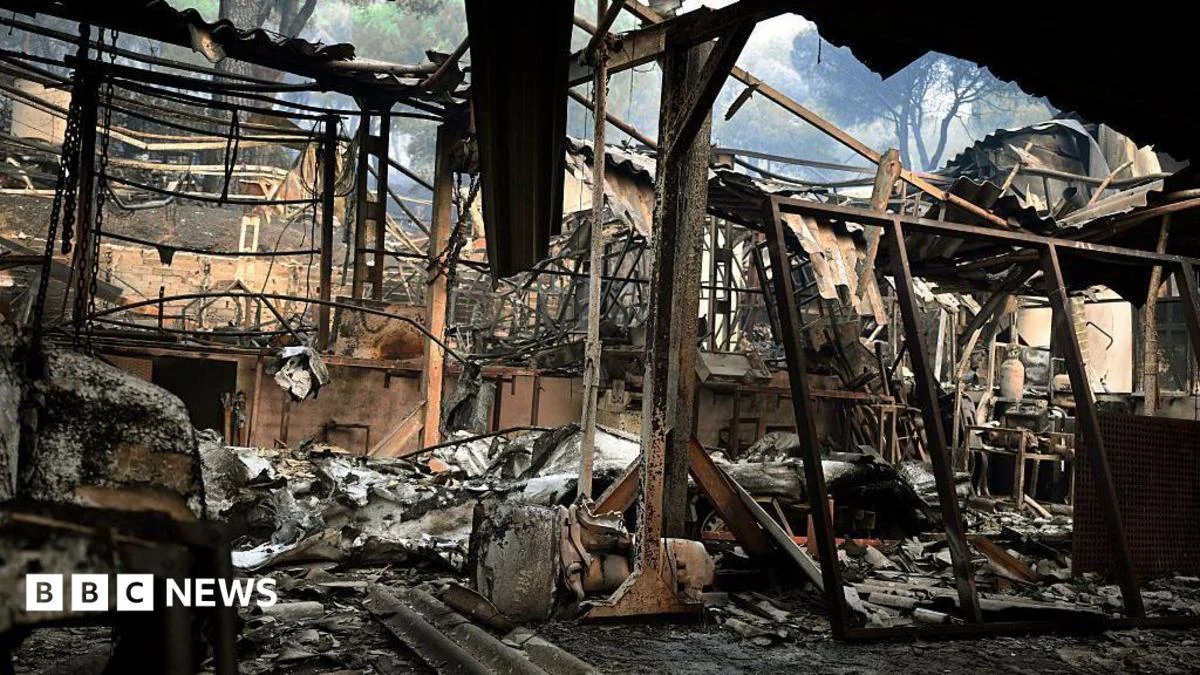
Spain Grapples with Unprecedented Wildfires Amidst Extreme Heatwave, Evacuations Mount Across Multiple Regions
Spain is currently battling a series of devastating wildfires, exacerbated by a relentless heatwave that is pushing temperatures towards 40C in several areas. The state meteorological agency, Aemet, has issued dire warnings, indicating that the "fire danger level will continue to rise to extreme levels," significantly impeding firefighting efforts across the Iberian Peninsula. This prolonged period of intense heat is forecast to last at least until Sunday, presenting a formidable challenge to emergency services and leaving communities on edge. The scale of the current conflagrations has prompted regional leaders to declare it an unparalleled catastrophe, with tens of thousands evacuated and vast swathes of land consumed by flames.
Intensifying Heatwave and Extreme Fire Danger
The meteorological conditions gripping Spain are a critical factor in the severity and spread of the ongoing wildfires. Aemet’s forecasts paint a grim picture, with temperatures expected to consistently approach or exceed 38-40C in many regions, particularly in the south and central parts of the country. Even mountainous areas, typically cooler, are not spared, with the Madrid region, for instance, under a red weather warning and expecting temperatures around 35C in its higher elevations and 38C in other communities. This extreme heat, coupled with low humidity and often strong winds, creates a highly volatile environment where small ignitions can rapidly escalate into uncontrollable infernos. The extended duration of the heatwave, predicted to last at least a week, means sustained pressure on the landscape and human resources. The dry conditions have left forests and scrubland akin to tinderboxes, making any spark a potential disaster.
A Nation Under Siege: Evacuations and Devastation
The human cost and material damage wrought by these fires are immense. In the Madrid region alone, the fires have necessitated the evacuation of more than 56,500 people since outbreaks began last week. An additional 27,797 residents have been instructed to stay at home, demonstrating the widespread disruption to daily life. Isabel Díaz Ayuso, the regional president of Madrid, highlighted the severity of the crisis by describing the wildfires as "the biggest natural catastrophe in the history of Spain," further stating that the flames had transformed affected areas into a "war zone." Four municipalities in the Madrid region remained under lockdown orders, with another twelve communities having undergone mandatory evacuation.
Beyond Madrid, the crisis extends to other provinces. Significant evacuations have also been reported in Ávila, Toledo, and Valencia. In Ávila, the devastation is particularly stark, with over 50,000 hectares burned since the onset of the wildfires. This specific blaze has been identified by the minister for ecological transition, Sara Aagesen, as the largest in the country’s recent history, underscoring the unprecedented nature of the current situation. Across Spain, the total area affected by the fires has reached approximately 77,000 hectares (190,000 acres), a figure that continues to fluctuate as firefighting efforts progress and new outbreaks occur.
The province of Valencia also faced its own significant challenges, with a fire that erupted on July 25 near the town of Vall D’Uixo forcing the evacuation of some 16,000 people from 20 municipalities. While the government of Valencia has since lifted the lockdown order for Vall D’Uixo, the incident serves as a reminder of the widespread and persistent threat these fires pose.
A Timeline of Crisis and Response
The current wave of wildfires began to intensify last week, coinciding with a significant spike in temperatures across Spain. Initially, localized outbreaks rapidly gained momentum, fueled by the prevailing hot and dry conditions. The speed and intensity of the fires quickly overwhelmed local resources, prompting calls for national assistance. By the early days of the week, the sheer scale of the blazes, particularly in the Madrid and Ávila regions, led to the mass evacuations that garnered national and international attention.
The peak of the crisis saw numerous communities facing immediate danger, with emergency services working around the clock to contain the flames and ensure public safety. President Ayuso’s dramatic descriptions reflected the desperate situation on the ground. As the week progressed, a glimmer of hope began to emerge amidst the continued struggle. On Monday night, Interior Minister Fernando Grande-Marlaska reported "relatively positive progress" in firefighting efforts. This sentiment was echoed by Ayuso on X (formerly Twitter), who stated that the situation was "improving little by little" and that some residents might soon be permitted to return home, signaling a potential shift from crisis management to consolidation.
Official Assessments and Shifting Strategies
Despite the initial optimism from some officials, the situation remains precarious. Interior Minister Fernando Grande-Marlaska, while expressing satisfaction with the Monday night operations, conceded that "weather conditions are not helping us at all." He maintained a cautiously optimistic tone, stating, "we must be positive; we have the emergency under control," but the caveat regarding the weather highlights the ongoing vulnerability. The national government’s delegation in Madrid provided a more sobering assessment, indicating that the fire in the region "remains active and uncontrolled." Their immediate strategy focuses on "surveillance and cooling the affected areas in anticipation of the forecast worsening of weather conditions," suggesting that the battle is far from over and vigilance remains paramount.
In Ávila, where the largest fire in recent history has raged, the government’s representative, Nicanor Sen, noted a "quite favourable" evolution overnight. However, he also confirmed the presence of "small flare-ups" that are now under close monitoring by emergency services, underscoring the unpredictable nature of such large-scale blazes and the potential for rapid re-ignition. These conflicting reports from different regions and officials reflect the dynamic and complex nature of the crisis, where localized successes can be overshadowed by ongoing challenges elsewhere.
The Unfolding Ecological and Socio-Economic Impact
The ecological devastation caused by these wildfires is profound and will have long-lasting consequences. Forests, which serve as crucial carbon sinks and biodiversity hotspots, have been incinerated. The loss of vegetation leads to severe soil erosion, particularly with subsequent heavy rainfall, increasing the risk of landslides and desertification. Wildlife habitats have been destroyed, resulting in significant loss of animal life and disruption to fragile ecosystems. Air quality has also been severely impacted across large areas, with smoke plumes visible for hundreds of kilometers, posing health risks to residents.
Economically, the fires represent a significant blow. Agricultural lands, including vineyards, olive groves, and pasture for livestock, have been destroyed, impacting the livelihoods of countless farmers and rural communities. The cost of firefighting operations, including the deployment of thousands of personnel and specialized aerial assets, runs into millions of euros. Furthermore, the damage to infrastructure, including power lines, roads, and homes, will necessitate extensive and costly reconstruction efforts. The tourism sector, a cornerstone of the Spanish economy, could also face repercussions, particularly in regions where natural landscapes have been scarred.
Socially, the displacement of tens of thousands of people creates immense stress and trauma. Evacuees face uncertainty about their homes and livelihoods, and the psychological impact of witnessing their communities consumed by flames can be profound. The strain on emergency services, including firefighters, police, and healthcare workers, is immense, as they operate under extreme conditions for extended periods. The long-term recovery for affected communities will require substantial government support and community resilience.
Spain’s Enduring Vulnerability: Climate Change and Forest Management
Spain’s Mediterranean climate inherently makes it susceptible to wildfires, particularly during its hot, dry summers. However, the increasing frequency and intensity of extreme heatwaves are widely attributed to climate change. Scientific consensus points to a clear trend: global warming is creating longer, hotter, and drier periods, extending the wildfire season and making fires more difficult to control. Spain has experienced several record-breaking heatwaves in recent years, each contributing to the cumulative drying of vegetation and increasing the overall fire risk.
Beyond climate factors, land management practices also play a role. Rural depopulation in some areas has led to a decrease in traditional agricultural activities that historically helped maintain firebreaks and clear undergrowth. The accumulation of biomass in neglected forests can provide abundant fuel for fires. While Spain has invested significantly in firefighting capabilities, the scale and ferocity of modern wildfires often overwhelm even advanced resources, necessitating a shift towards more proactive forest management and prevention strategies. Environmental organizations and experts have consistently highlighted the need for integrated approaches that combine effective suppression with sustainable land use, controlled burns, and public awareness campaigns.
Regional Solidarity and Broader European Context
The wildfire crisis is not confined to Spain. Neighboring Portugal is also grappling with its own significant blazes, with firefighters tackling a large fire on three active fronts in the eastern Guarda area. This regional synchronization of fire events underscores the broader climatic challenges facing Southern Europe. In such situations, the European Union’s Civil Protection Mechanism often comes into play, allowing member states to request and provide mutual assistance, including specialized firefighting aircraft, ground teams, and equipment. While the current reports do not explicitly detail international aid, such mechanisms are typically activated during large-scale, cross-border emergencies, demonstrating a collective European response to shared environmental threats.
The Road Ahead: Resilience and Reconstruction
As Spain moves from the immediate firefighting phase to assessment and recovery, the challenges ahead are immense. The ongoing heatwave means that even with "positive progress," the threat of new ignitions and flare-ups remains. The focus on surveillance and cooling affected areas is critical to prevent further devastation.
In the long term, Spain faces the daunting task of rebuilding communities, restoring ecosystems, and developing more robust strategies to mitigate the impacts of future wildfires. This will involve significant investment in ecological restoration, supporting affected populations, and adapting land management practices to a changing climate. The current crisis serves as a stark reminder of the urgent need for comprehensive climate action and resilient community planning to protect both lives and the invaluable natural heritage of Spain. The resilience shown by emergency services and affected communities, coupled with national and potentially international support, will be crucial in navigating the arduous path to recovery.

Related Posts
Zambia on Edge: Opposition Leader Arrested Amid Allegations of Insurrection Plot and Election Tensions
Rescuers search for survivors of powerful Indonesia earthquake

