
Shell Internal Documents Reveal Strategy to Offload Environmental Liabilities in the Niger Delta Through Strategic Asset Divestment
Internal documents recently surfaced from Shell Petroleum Development Company (SPDC) suggest that the energy giant’s long-term strategy to divest its onshore assets in the Niger Delta was significantly motivated by a desire to evade the mounting costs of decommissioning aging infrastructure and remediating decades of environmental degradation. These documents, which emerged during United Kingdom court proceedings and were detailed in a comprehensive report by Amnesty International, provide a rare glimpse into the internal deliberations of one of the world’s largest oil companies regarding its legacy in Africa’s most populous nation. The revelations center on a 2013 internal presentation which explicitly questioned whether the company possessed the "appetite" to address what it described as the "open-ended problem" of oil spill liabilities and the massive scale of required environmental restoration.
The core of the controversy involves Shell’s ongoing efforts to sell its remaining onshore oil business in Nigeria to the Renaissance consortium—a group of five mostly local companies—for a deal valued at approximately $1.3 billion, with additional payments that could bring the total higher. For years, civil society organizations and local communities in the Niger Delta have accused Shell of "cutting and running." They argue that by offloading these assets to smaller domestic firms, Shell is effectively transferring enormous environmental and social liabilities to entities that may lack the financial reserves or technical expertise to manage the cleanup of one of the most polluted ecosystems on Earth.
The 2013 Policy Forum and the "Open-Ended Problem"
The internal documents cited in recent legal filings date back to June 2013, during a Shell policy forum on Nigeria. At this meeting, executives reviewed the company’s strategic options for managing liabilities associated with past oil spills. One specific presentation highlighted the staggering scale of the damage, identifying approximately 375 square kilometres of mangrove forests—an area equivalent to the size of a major international city—that had been impacted by oil spills within Shell’s areas of operation.
The language used in the internal briefing was notably frank. It framed the environmental crisis not as a mandatory corporate responsibility, but as a financial risk to be managed or mitigated through divestment. The presentation asked whether Shell had the "appetite" to continue managing these "open-ended" liabilities, suggesting that the cost of cleaning up the Niger Delta was viewed as a potential drain on future profits. This internal admission stands in contrast to the company’s public-facing statements, which have frequently attributed the majority of oil spills in the region to third-party interference, such as sabotage and "bunkering" (oil theft), rather than infrastructure failure or operational negligence.
A Chronology of Shell’s Presence in the Niger Delta
Shell’s history in Nigeria is inextricably linked to the country’s development and its environmental struggles. Understanding the weight of these internal documents requires a look at the timeline of the company’s operations:
- 1936: Shell-D’Arcy (the precursor to Shell Nigeria) is granted an exploration license covering the entire mainland of Nigeria.
- 1956: Oil is discovered in commercial quantities at Oloibiri in the Niger Delta.
- 1958: Nigeria exports its first cargo of crude oil.
- 1990s: Growing international scrutiny follows the protests of the Ogoni people, led by activist Ken Saro-Wiwa, who accused Shell of environmental devastation and human rights abuses.
- 2006: A Nigerian court orders Shell to pay $1.5 billion to the Ijaw people for environmental damage, a ruling the company contested.
- 2011: A landmark United Nations Environment Programme (UNEP) report concludes that the environmental restoration of Ogoniland could take up to 30 years and require an initial fund of $1 billion, highlighting the massive scale of decommissioning costs.
- 2013: Internal Shell documents discuss the "appetite" for handling liabilities, coinciding with an acceleration of asset sales to domestic firms.
- 2021: The UK Supreme Court rules in Okpabi v Royal Dutch Shell that Nigerian communities can sue the parent company in English courts for the actions of its Nigerian subsidiary.
- 2024: Shell announces the sale of SPDC to the Renaissance consortium, pending final regulatory approval from the Nigerian government.
Supporting Data on Environmental Degradation and Gas Flaring
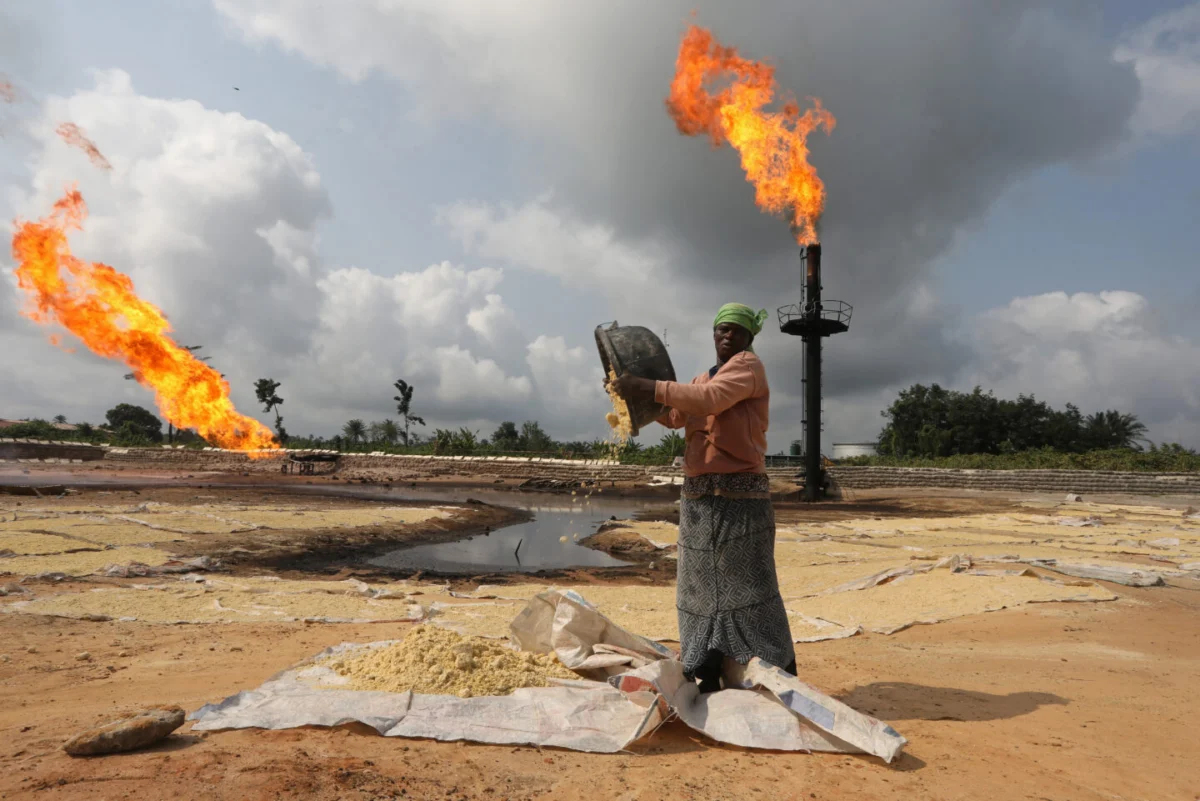
The environmental impact of decades of oil extraction in the Niger Delta is well-documented, but recent data suggests the situation may be worsening as assets change hands. According to satellite data and reports from Climate Home News, gas flaring—the practice of burning off the natural gas associated with oil extraction—has surged in areas where Shell has sold its interests. While Shell’s corporate targets include the elimination of routine flaring, the local firms that have acquired these assets often operate with older technology and less stringent environmental oversight.
Furthermore, data from the Nigerian Oil Spill Monitor indicates that thousands of individual spill incidents have been recorded in SPDC-operated areas over the last decade. While Shell maintains that over 90% of these spills are caused by theft or sabotage, independent researchers and organizations like Amnesty International argue that aging, corroded pipelines are a primary cause of leaks. The internal documents’ reference to 375 square kilometres of damaged mangroves underscores the cumulative effect of these spills, which destroy local fishing grounds and contaminate drinking water for millions of residents.
The financial implications of decommissioning are equally significant. Under Nigerian law, oil companies are required to set aside funds for the eventual decommissioning of wells and pipelines. However, critics argue that the regulatory framework is opaque and that the funds currently earmarked by Shell and its successors are insufficient to cover the true cost of safely dismantling thousands of kilometers of pipelines that crisscross the fragile delta wetlands.
Stakeholder Reactions and Official Responses
The release of the internal documents has sparked a wave of reactions from human rights groups, legal experts, and the company itself. Amnesty International’s Head of Business and Human Rights, Mark Dummett, stated that the documents prove Shell has been "acutely aware" of the vast scale of its pollution for over a decade. "Shell’s strategy has been to profit from the oil as long as possible and then walk away, leaving a toxic legacy for the people of the Niger Delta to deal with," Dummett said.
In response to the allegations, Shell has maintained that its divestments are part of a broader corporate strategy to focus on deepwater oil and integrated gas, which have a lower carbon intensity. A spokesperson for Shell stated that the company remains committed to its environmental obligations and that all divestments are conducted in full compliance with Nigerian law. The company also emphasizes that it continues to contribute to the SPDC Joint Venture’s share of the cleanup costs in Ogoniland, as recommended by the UNEP report.
The Renaissance consortium, the buyer of Shell’s onshore assets, has publicly stated its intention to operate the assets responsibly and to invest in the local communities. However, industry analysts remain skeptical about whether the consortium has the balance sheet required to address the "open-ended" liabilities identified in Shell’s 2013 presentation.
Analysis of Implications: The "Responsibility Gap" in the Energy Transition
The Shell case highlights a growing global concern known as the "responsibility gap" in the global energy transition. As International Oil Companies (IOCs) under pressure from Western investors and climate regulations move to "clean up" their portfolios, they are increasingly selling their most carbon-intensive and environmentally hazardous assets to smaller, less transparent private firms or National Oil Companies (NOCs).
This trend poses several risks:
- Environmental Accountability: Smaller firms often lack the technical capacity to manage complex environmental remediation or the capital to survive large-scale litigation.
- Transparency: While IOCs like Shell are subject to rigorous reporting requirements and public scrutiny in Europe and North America, the firms purchasing their legacy assets often operate with much less transparency.
- Human Rights: Communities in the Niger Delta may find it increasingly difficult to seek justice or compensation when the responsible party is a local entity with limited assets, compared to a global giant with deep pockets.
From a journalistic and legal perspective, the Shell documents provide critical evidence for future litigation. They suggest that the decision to divest was not merely a portfolio adjustment but a calculated move to limit exposure to environmental debt. As the Nigerian government decides whether to grant final approval for the sale to Renaissance, the international community is watching to see if "Big Oil" will be allowed to exit legacy markets without first ensuring that the environmental "open-ended problem" is fully funded and resolved.
The situation in the Niger Delta serves as a cautionary tale for the global extractive industry. It demonstrates that the true cost of oil is not just the price per barrel, but the multi-generational cost of the infrastructure left behind. As the world moves toward a greener economy, the question of who pays for the cleanup of the fossil fuel era remains one of the most significant and unresolved challenges in international law and corporate ethics.

Related Posts
Constitutional Court of South Africa Bars Shell Oil Exploration in Landmark Victory for Environmental and Community Rights

The Battle for Saldanha Bay: South Africa’s Ambitious Ocean Economy Strategy Faces Legal and Environmental Reckoning