President Javier Milei Arrives in Israel, Immediately Visits Western Wall Amid Heightened Regional Tensions
President Javier Milei of Argentina commenced his third official visit to Israel on Sunday by making an immediate pilgrimage to the Western Wall, Judaism’s holiest site, in Jerusalem. The visit, occurring during a period of significant regional instability and heightened security, underscores the deep and symbolic relationship between Argentina and Israel, a bond Milei has consistently championed. This arrival marks another significant moment in the Argentine president’s staunch pro-Israel stance, which has been a defining feature of his foreign policy since taking office.
The president’s arrival at Ben Gurion Airport in Tel Aviv, shortly before noon local time, was met with considerably less fanfare than his previous visits. Unlike the "rockstar" receptions he experienced in February 2024 and June 2025, this time, the crowds were notably smaller, a reflection of the prevailing atmosphere of tension and caution gripping the nation. Despite the subdued public greeting, the significance of Milei’s presence was not diminished. His visit is slated to include unprecedented honors and participation in the 78th anniversary celebrations of Israel’s Independence Day.
Upon disembarking, President Milei, clad in his characteristic black leather jacket and wearing a kippah, proceeded directly to the Western Wall. The site, a remnant of the ancient Jewish Temple complex, is a place of profound spiritual significance and a potent symbol of Jewish heritage and connection to the land. In an era marked by the ongoing conflict with Hamas and escalating regional tensions, particularly with Iran, Milei’s immediate act of prayer at the Wall served as a powerful visual testament to his solidarity with the Israeli people.
The security presence surrounding Milei’s visit was extensive, with heavily armed guards and visible security measures highlighting the precarious geopolitical climate. Dozens of individuals gathered to greet him, their cheers of "Javier!" and "Presidente!" interspersed with Hebrew chants, a testament to the warmth and appreciation felt by many in Israel for his unwavering support. Milei acknowledged the greetings with a raised hand, a gesture of connection with those present.
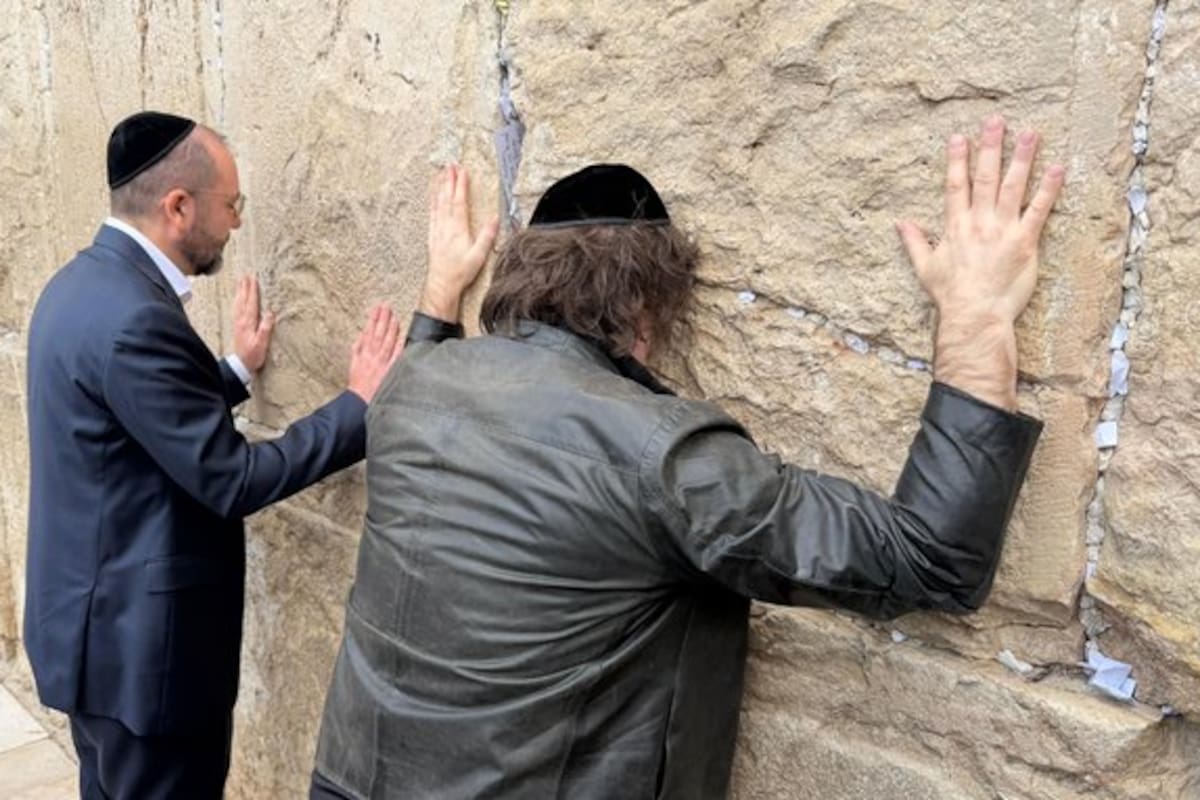
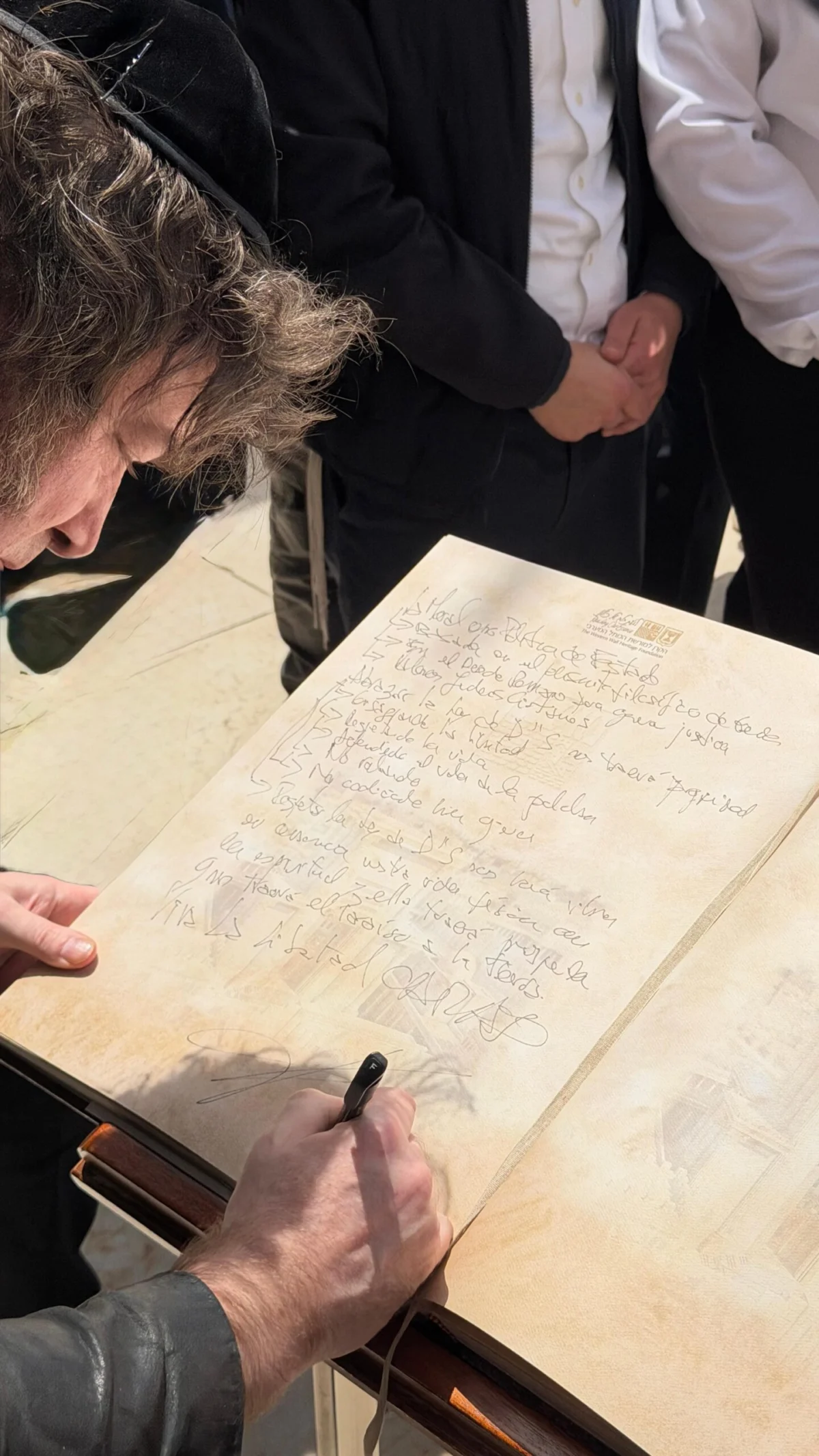
Accompanied by the Rabbi of the Kotel (Western Wall) and Argentina’s Ambassador to Israel, Axel Wahnish – who also serves as Milei’s spiritual guide – the President engaged in a lengthy and evidently emotional prayer. This moment of personal reflection and spiritual observance at such a historically charged site further amplified the symbolic weight of his visit. Following his prayer, Milei signed a guestbook before quickly departing in one of the two black Audi sedans belonging to his entourage, opting to forgo immediate statements to the press. His sister, Karina Milei, who also participated in the prayer on the women’s side of the Wall while dressed in black, was present, as were Foreign Minister Pablo Quirno and Minister of Justice Juan Bautista Mahiques, underscoring the high-level nature of the delegation.
Transition to Enhanced Security and Lodging
Following his visit to the Western Wall, the Argentine delegation proceeded to their accommodation. This year, the President is not staying at the traditional King David Hotel but has opted for the Waldorf Astoria Jerusalem. This decision, according to informed sources speaking to La NACION, was driven by heightened security concerns. The Waldorf Astoria, a luxurious five-star establishment, was reportedly chosen due to its advanced security infrastructure, with sources noting it is "the only one with a bunker on every floor," a clear indication of the perceived threat level. The Waldorf Astoria, a historic landmark itself, was built in 1929 and has previously hosted numerous dignitaries, including U.S. President Joe Biden, further emphasizing its suitability for high-profile state visits.
A Region on Edge: The Shadow of Conflict
The backdrop to Milei’s visit is a region teetering on the brink of wider conflict. The fragile truce with Iran, a key adversary of Israel, was nearing its expiration, with Iranian Parliament Speaker Mohammad Bagher Ghalibaf issuing a stark warning that hostilities could resume "at any moment." Ghalibaf’s statement, broadcast on Iranian state television shortly before Milei’s arrival, underscored Tehran’s distrust of the United States and highlighted the volatile nature of the current standoff. This regional instability, characterized by proxy conflicts and direct confrontations, casts a long shadow over diplomatic efforts and intensifies the security considerations for visiting leaders.
Diplomatic Engagements and the "Isaac Accords"
President Milei’s agenda in Israel is packed with significant diplomatic engagements. Later on Sunday, he was scheduled to meet with Israeli Prime Minister Benjamin Netanyahu at the Premier’s office. The discussions were expected to focus on strengthening bilateral ties, with a particular emphasis on signing agreements related to air transport and artificial intelligence. The air transport agreement is anticipated to formalize the already announced direct flight route between Tel Aviv and Buenos Aires by the Israeli national airline, El Al.
A key initiative to be formalized during the visit is the "Isaac Accords," a proposal championed by President Milei aimed at bolstering diplomatic and economic ties between Israel and Latin American nations. This initiative reflects Milei’s broader vision of forging stronger alliances within the Western Hemisphere, with Israel as a central partner. The signing ceremony for these accords was expected to be attended by key Israeli ministers, including those responsible for Foreign Affairs, Finance, and Transport, as well as the U.S. Ambassador to Israel and the Director General of El Al, signifying the broad international support for this initiative.

A Timely Boost for Netanyahu Amidst Political Pressures
President Milei’s visit arrives at a critical juncture for Prime Minister Benjamin Netanyahu, who faces intense domestic and international scrutiny. Internationally, Netanyahu is under fire, with allegations of war crimes brought against him by the International Criminal Court. Domestically, his government has been criticized for perceived concessions to international pressure, particularly from the United States under former President Donald Trump, regarding a ceasefire in Lebanon.
Recent events have amplified these pressures. According to reports by AXIOS, Prime Minister Netanyahu was reportedly "shocked" by a social media post from his former ally, Donald Trump, which suggested that Israel was refraining from further military action in Lebanon due to U.S. prohibitions. This public statement, which led to some Israeli media outlets characterizing Netanyahu as a "puppet" of the U.S. president, prompted clarifications from the White House. Hours before Milei’s arrival, Trump attempted to mitigate the fallout with a post on his Truth Social platform, praising Israel as a "great ally" of the United States and a nation that "knows how to win."
The political landscape in Israel is further complicated by the ongoing protests and discontent among communities in the north of the country. These communities feel betrayed by the ten-day ceasefire agreement with Lebanon, reportedly brokered under pressure from both Trump and Iran. Their frustration has led to organized strikes, reflecting a deep sense of insecurity and a lack of confidence in the government’s handling of the escalating regional threats.
Adding to the pressure on Netanyahu, dozens of protestors gathered outside his Jerusalem residence and the homes of other far-right coalition ministers on Sunday morning. Their demands centered on the establishment of a commission to investigate the government’s role and preparedness for the Hamas attacks of October 7, 2023. This brutal assault, which resulted in the deaths of 1200 people and the taking of over 200 hostages, represented a profound national humiliation for Israel. Critics argue that Netanyahu has never fully accepted responsibility for the intelligence and security failures that preceded the attack, making the call for accountability a persistent and politically sensitive issue.
Milei’s Visit: A Symbol of Unwavering Support
In this complex and volatile environment, President Milei’s visit serves as a powerful symbol of unwavering support for Israel. His consistent and vocal advocacy for the Jewish state, coupled with his commitment to deepening bilateral ties, provides a crucial diplomatic and moral boost to Prime Minister Netanyahu and the Israeli people. The personal nature of his gestures, from his immediate prayer at the Western Wall to his embrace of initiatives like the "Isaac Accords," underscores a profound personal conviction that transcends typical political alliances. As Argentina and Israel navigate these challenging times, Milei’s visit reinforces a message of solidarity and shared values, offering a beacon of support amidst regional turmoil. The coming days will see further discussions and agreements aimed at solidifying this robust partnership.

Related Posts

The Electric Vehicle Battery Health Debate Emerges as Argentina’s EV Market Accelerates

President Donald Trump Confirms Secret Departure from Turkey Amidst Assassination Threat