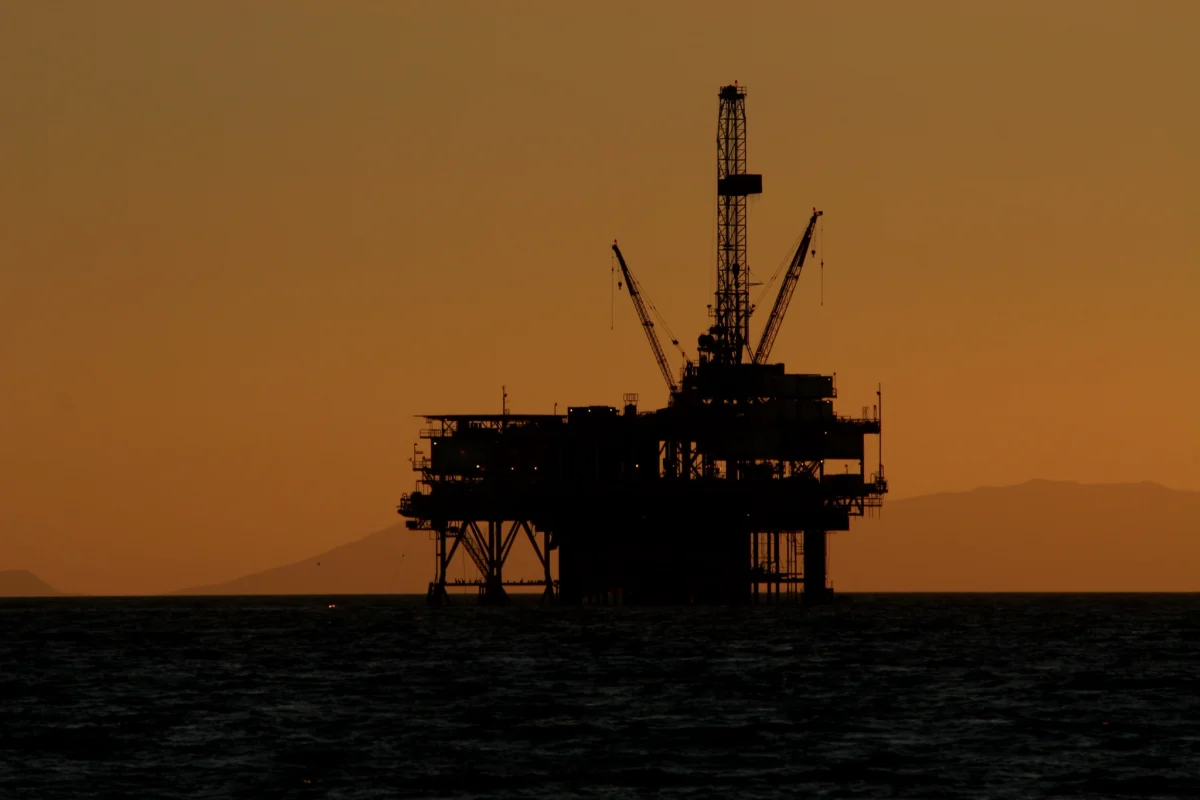
Global Energy Crisis and the Santa Marta Summit Colombia and Brazil Spearhead a New Geopolitical Coalition to Phase Out Fossil Fuels
The global energy landscape is currently undergoing a seismic shift as a direct result of the ongoing conflict in the Middle East, a crisis that Colombian Environment Minister Irene Vélez Torres suggests could serve as a catalyst for a "new geopolitical balance." Speaking ahead of a high-level summit in Santa Marta, Colombia, Vélez Torres outlined a vision for a coalition of nations dedicated to an accelerated phase-out of fossil fuels, bypassing the often-stalled consensus-based negotiations of the United Nations framework. As the conflict involving Iran continues to disrupt global supply chains, particularly through the vital Strait of Hormuz, the economic imperative for energy security is increasingly aligning with the environmental necessity of decarbonization.
Next month, delegates from approximately 45 nations will convene in the Caribbean city of Santa Marta for the first dedicated conference on the transition away from fossil fuels. This meeting follows the perceived shortcomings of COP30, where a push by 80 nations failed to establish a binding roadmap for the elimination of coal, oil, and gas. The Santa Marta summit represents a strategic pivot toward "minilateralism," where like-minded countries seek to implement technical and financial frameworks for transition without waiting for the unanimous approval of major fossil fuel producers.
The Catalyst of Crisis: Energy Security in the Shadow of Conflict
The urgency of the Santa Marta summit is underscored by the severe disruption of global energy markets triggered by the war in the Middle East. Recent data indicates that approximately 20 percent of the world’s liquefied natural gas (LNG) and a significant portion of its oil supply pass through the Strait of Hormuz. With this maritime artery compromised, energy prices have experienced extreme volatility, particularly impacting Asian markets that rely heavily on Middle Eastern exports.
This instability has fundamentally altered the discourse surrounding renewable energy. Historically framed primarily as an environmental concern, the transition to wind, solar, and green hydrogen is now being championed as a cornerstone of national security and economic stability. Minister Vélez Torres noted that the current crisis provides "more relevance" to the transition movement, offering a unique window to "materialize a new geopolitical balance." By reducing dependence on volatile fossil fuel markets controlled by a handful of petrostates, the proposed coalition aims to create a more resilient and decentralized global energy architecture.
While the coalition remains informal for now, Vélez Torres indicated that the Santa Marta conference would serve as a foundation for "shared visions" that could eventually coalesce into a formal international body. The strategy is to build momentum through action rather than rhetoric, demonstrating that a post-fossil fuel economy is not only possible but economically advantageous in an era of geopolitical instability.
A Chronology of Stalled Progress: From COP28 to the Present
The road to Santa Marta has been defined by a series of incremental gains and significant frustrations within the United Nations Framework Convention on Climate Change (UNFCCC). The "transitioning away from fossil fuels" language first gained international recognition at COP28 in Dubai, marking a historic acknowledgment of the root cause of climate change. However, translating that language into a functional, time-bound roadmap has proven exceptionally difficult.
At COP30, hosted by Brazil, the international community faced a deadlock. While a majority of nations supported a clear phase-out plan, the UN’s requirement for consensus allowed a small number of oil-producing states to block the inclusion of specific timelines and targets for coal, oil, and gas reduction. In response to this stalemate, André Corrêa do Lago, Brazil’s top climate diplomat and the COP30 president, proposed a voluntary roadmap. This document, expected to be finalized in the second half of this year, aims to bypass the consensus trap by providing a framework that countries can adopt and implement individually.
The timeline leading up to the Santa Marta summit and the subsequent COP31 has become a critical period for climate diplomacy. The Santa Marta meeting is designed to bridge the gap between the stalled UN talks and the practical implementation of energy shifts. It seeks to provide the technical support and financing mechanisms that developing nations need to move away from fossil fuels without compromising their economic growth.
The Brazilian Roadmap and the Path to COP31
Brazil’s role in this transition is pivotal. As the outgoing COP30 president, Brazil is leveraging its diplomatic weight to ensure that the momentum for a fossil fuel phase-out does not dissipate. André Corrêa do Lago has emphasized that the voluntary roadmap is not intended to replace the UN process but to influence it. By creating a document that reflects the "positions, figures, and concerns of various countries," Brazil hopes to set a new standard for national climate commitments (Nationally Determined Contributions, or NDCs).
However, the path to COP31, which is to be co-hosted by Australia and the Pacific Islands, is fraught with diplomatic tension. Australian Climate Change and Energy Minister Chris Bowen has vowed to keep the fossil fuel transition at the forefront of the agenda, particularly given the existential threat climate change poses to Pacific island nations. Conversely, Turkish COP president Murat Kurum has signaled a different priority, rejecting a singular focus on fossil fuels and emphasizing the "development priorities" of nations. This ideological split highlights the challenges of achieving a global consensus and reinforces the Colombian and Brazilian strategy of building a "parallel process" that can move at a faster pace.
Scientific Urgency and the Threat of Tipping Points
The drive for an accelerated transition is not merely a matter of political or economic strategy; it is a response to increasingly dire scientific warnings. Carlos Nobre, a renowned Brazilian climate scientist, has warned that the window to prevent catastrophic climate tipping points is closing rapidly. Nobre points to the potential collapse of the Amazon rainforest and the thawing of Arctic permafrost as events that could trigger irreversible global heating.
According to Nobre, a "super-rapid" energy transition is essential to keep global temperatures within the limits set by the Paris Agreement. The Santa Marta summit aims to address this urgency by focusing on the "honest space" where technical and financial cards are put on the table. This includes discussing the massive capital reallocation required to shift from fossil fuel subsidies to renewable energy infrastructure. Global investment in clean energy reached an estimated $1.7 trillion in 2023, but experts argue this must triple by 2030 to meet climate goals.
Domestic Political Risks: The Threat of Policy Reversal
Despite the international leadership shown by Colombia and Brazil, both nations face significant internal challenges that could derail their climate agendas. Both countries are heading toward pivotal elections, where "anti-climate" movements have gained traction by promising to prioritize immediate fossil fuel revenues over long-term environmental goals.
In Colombia, the administration of President Gustavo Petro has taken the bold step of halting all new contracts for coal, oil, and gas exploration. This policy, while lauded by environmentalists, has faced fierce domestic opposition. Far-right candidate Abelardo de la Espriella has campaigned on a platform of resuming production and expanding into shale gas fracking, arguing that the current "experiment" with energy transition jeopardizes Colombia’s economic sovereignty.
Minister Vélez Torres acknowledged these "great political risks of a relapse" but argued that the creation of an international bloc would provide a "sense of continuity" that transcends individual national administrations. The goal is to institutionalize the transition so thoroughly that it becomes difficult for future governments to reverse course without facing significant international isolation and economic consequences.
Similarly, in Brazil, the political climate remains polarized. While the current government has prioritized the protection of the Amazon and the energy transition, powerful agricultural and industrial lobbies continue to push for expanded fossil fuel extraction, including exploration near the mouth of the Amazon River. The success of the "Santa Marta coalition" depends largely on its ability to demonstrate that the energy transition is a permanent economic shift rather than a temporary political trend.
Implications for a New Global Order
The efforts led by Colombia and Brazil suggest a significant evolution in international relations. The traditional "North-South" divide in climate negotiations is being replaced by a more complex landscape where middle-income, biodiversity-rich nations are taking the lead in defining global policy. By focusing on "energy security" as a primary driver, these nations are attempting to win over skeptics who view climate action as a luxury of the developed world.
The Santa Marta summit will be a litmus test for this new strategy. If the 45 participating nations can agree on concrete mechanisms for technical assistance and finance, it could create a blueprint for other regions to follow. This "coalition of the willing" approach represents a departure from the universalism of the UN process, favoring speed and ambition over total consensus.
As oil and gas prices remain high due to the conflict in the Middle East, the economic argument for the Santa Marta coalition is at its strongest. The transition is no longer just about saving the planet; it is about shielding national economies from the volatility of a world at war. Whether this "new geopolitical balance" can survive domestic political shifts and international diplomatic hurdles remains to be seen, but the Santa Marta summit marks a definitive attempt to rewrite the rules of global energy engagement.
In the words of André Corrêa do Lago, the objective for the coming year is clear: "We have to show the world what alternatives are viable. We have to work together and not let those who are betting on a general disaster divide those who are searching for solutions." The outcome of the talks in Santa Marta may well determine whether the global response to the current energy shock leads to a renewed reliance on old fuels or a decisive leap into a new era of energy independence.

Related Posts
Constitutional Court of South Africa Bars Shell Oil Exploration in Landmark Victory for Environmental and Community Rights
The Battle for Saldanha Bay: South Africa’s Ambitious Ocean Economy Strategy Faces Legal and Environmental Reckoning