Türkiye’s COP31 Presidency Forges Strategic Alliance with IEA to Accelerate Global Clean Energy Transition Amidst Historic Energy Crisis
In a landmark move aimed at reshaping the global energy landscape, Türkiye’s COP31 presidency has formalised a strategic partnership with the International Energy Agency (IEA). This collaboration is designed to fast-track the transition to clean energy systems at a time when the world is grappling with what experts describe as the most severe energy crisis in modern history. The announcement, made during a high-level summit hosted by the IEA in Paris, underscores a pivotal shift in climate diplomacy, positioning energy security and green industrialisation as the twin engines of the upcoming United Nations climate negotiations.
Murat Kurum, Türkiye’s Minister of Environment, Urbanisation, and Climate Change, detailed the scope of the partnership alongside IEA Executive Director Fatih Birol. The alliance will focus on four critical areas: enhancing global energy supply and security, accelerating electrification, fostering green industrialisation, and addressing the specific emissions profiles of emerging economies. The partnership comes as the geopolitical landscape remains volatile, with the ongoing conflict involving Iran causing significant disruptions to global oil and gas markets, thereby forcing a re-evaluation of energy dependency.
A Response to Global Energy Volatility
The backdrop of this strategic alliance is a world in the throes of an unprecedented energy supply shock. The IEA has characterised the current situation as the "biggest energy crisis in history," surpassing the oil shocks of the 1970s in both scale and complexity. Fatih Birol noted that the agency is monitoring national responses to the crisis with intense scrutiny, observing whether governments will retreat toward carbon-intensive fuels for short-term stability or lean into renewables to ensure long-term autonomy.
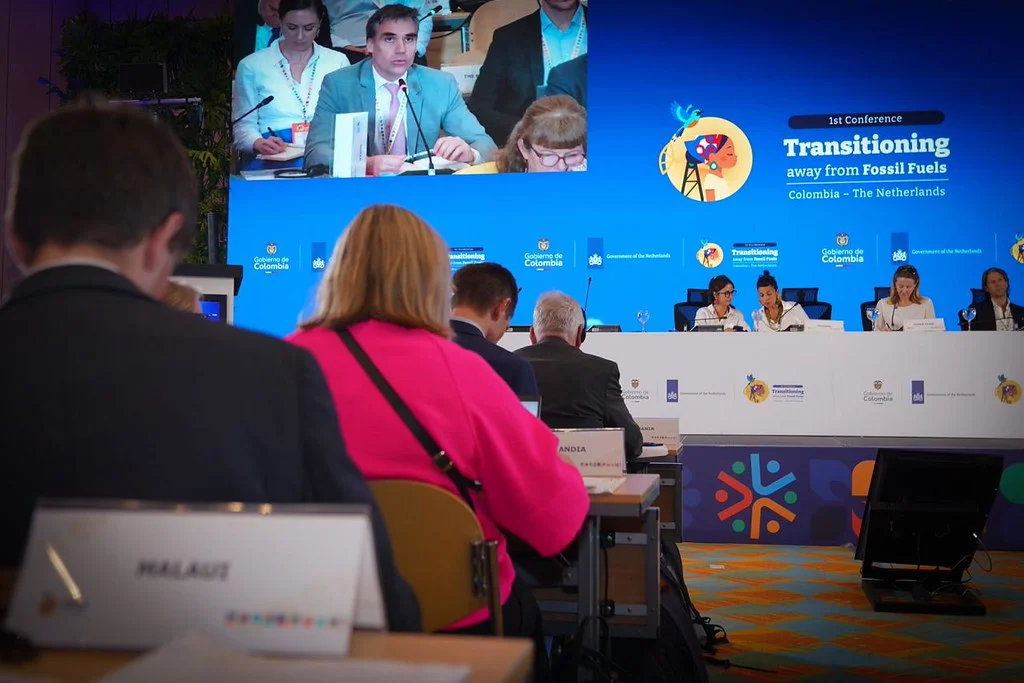
The Paris summit followed the conclusion of the Santa Marta conference in Colombia, the first global gathering specifically focused on the transition away from fossil fuels. At that meeting, numerous delegations argued that the inherent volatility of fossil fuel prices—exacerbated by regional conflicts—is no longer just an environmental concern but a primary risk to national security and economic stability. By partnering with the IEA, Türkiye’s COP31 presidency aims to provide a technical and policy-driven roadmap that allows nations to decouple their economic growth from fossil fuel fluctuations.
Clean Cooking and the Social Dimension of the Transition
One of the most significant pillars of the Türkiye-IEA partnership is the prioritisation of clean cooking solutions. Despite decades of industrial progress, approximately 2.3 billion people—predominantly in sub-Saharan Africa and parts of Asia—still rely on biomass, charcoal, and kerosene for cooking. This reliance results in millions of premature deaths annually due to household air pollution and contributes significantly to black carbon emissions.
Minister Kurum pledged to bring clean cooking to the "centre of the global agenda" during the COP31 proceedings. The IEA is already spearheading efforts in this sector, coordinating a major summit in July 2026 alongside the governments of Kenya, the United States, and Norway. The strategy involves a multi-modal approach, promoting not only electric and solar-powered stoves but also the use of fossil gas (LPG) as a transitional bridge to reduce the immediate health impacts of traditional biomass.
The partnership will leverage IEA data to help Türkiye develop a framework for scaling these technologies in the Global South. By framing clean cooking as both a health imperative and a climate solution, the COP31 presidency intends to bridge the gap between energy access and decarbonisation goals.
Addressing Waste and the Circular Economy
A unique feature of Türkiye’s climate agenda is its focus on waste management and "garbage emissions." This initiative, which has been a signature priority of the Turkish presidency and championed by First Lady Emine Erdoğan, seeks to address the methane and carbon dioxide released by landfills and inefficient waste processing.
Under the new agreement, the IEA will conduct specialised research into the impact of waste recycling on climate change. This data will inform the COP31 Action Agenda, providing a scientific basis for policies that integrate waste-to-energy technologies and circular economy principles into national climate pledges. For Türkiye, the goal is to demonstrate that managing the tail-end of the consumption cycle is as critical as managing the source of energy production.
Chronology of Recent Climate Diplomacy
The path to the Türkiye-IEA partnership has been marked by a series of high-stakes diplomatic shifts. In late 2025 and early 2026, the global community witnessed a divergence in energy strategies. While the Santa Marta summit in Colombia advocated for an aggressive phase-out of fossil fuels, the UAE’s exit from the OPEC oil cartel earlier this week sent shockwaves through the industry.
Sultan Al Jaber, the COP28 President and CEO of Adnoc, notably missed the Paris gathering. His absence was felt as he simultaneously announced his firm’s ambition to expand production across oil, gas, and chemicals, even as it invests in renewables. This highlights the "dual-track" reality of many energy-producing nations, a tension that the COP31 presidency will have to navigate as it seeks to build a global consensus.
Furthermore, the transition from COP29 to the upcoming COP31 represents a shift from setting targets to implementing them. At COP29, a financial goal was established for wealthy nations to provide $300 billion annually by 2035 to developing countries. Türkiye has positioned its presidency as the "implementation COP," focusing on how this capital will actually be deployed.
The Widening Finance Gap and "Bleaker" Projections
The urgency of the Türkiye-IEA alliance is underscored by increasingly dire climate projections. Alok Sharma, the UK’s COP26 President, delivered a sobering assessment at the Paris summit, stating that the global emissions trajectory is "much bleaker" today than it was during the 2021 Glasgow negotiations.
Current UN data indicates that the world has effectively missed the window to limit warming to 1.5°C above pre-industrial levels. Projections now suggest a temperature rise of between 2.6°C and 3.1°C, a scenario that would lead to catastrophic environmental and economic consequences. Sharma warned that the transition away from fossil fuels remains a hollow promise without a massive infusion of capital into developing markets.
Currently, the vast majority of clean energy investment is concentrated in China, Europe, and the United States. Hard-to-abate sectors, such as steel, cement, and heavy shipping, remain severely underfunded. "If you want to transition away from fossil fuels, you need to provide the finance," Sharma remarked, echoing sentiments that have become a rallying cry for the Global South.
A New Mechanism for Climate Finance
Recognising the bottleneck in climate funding, Minister Kurum announced that Türkiye is working on a "new mechanism" to match specific climate projects with appropriate financing sources. The goal of this mechanism is to streamline the bureaucratic hurdles that often prevent developing nations from accessing international climate funds.
This initiative aligns with the views of Laurent Fabius, the architect of the Paris Agreement, who attended the Paris meeting. Fabius emphasised that without concrete financial steps, climate summits risk becoming "all talk" with no implementation. The Türkiye-IEA partnership will likely serve as the technical backbone for this mechanism, using IEA’s analytical tools to verify the viability and impact of projects seeking funding.
Implications for Global Energy Governance
The strategic alliance between Türkiye and the IEA signals a maturation of the COP process. By involving a technical watchdog like the IEA so deeply in the presidency’s agenda, Türkiye is attempting to move climate negotiations away from purely political rhetoric toward data-driven energy policy.
For the IEA, the partnership is an opportunity to assert its influence as the primary coordinator of the global energy transition. For Türkiye, it is a chance to exert leadership on the world stage, bridging the interests of the developed and developing worlds. The focus on green industrialisation suggests that Türkiye views the transition not just as a burden of emissions reduction, but as an opportunity for economic renewal.
As the world looks toward the next UN climate summit, the success of the COP31 presidency will likely depend on its ability to turn the current "historic energy crisis" into a catalyst for structural change. The partnership with the IEA provides the technical foundation, but the political challenge of securing $300 billion in annual funding and managing the decline of fossil fuels in a volatile geopolitical environment remains the ultimate test for global diplomacy.

Related Posts
Constitutional Court of South Africa Bars Shell Oil Exploration in Landmark Victory for Environmental and Community Rights
The Battle for Saldanha Bay: South Africa’s Ambitious Ocean Economy Strategy Faces Legal and Environmental Reckoning