
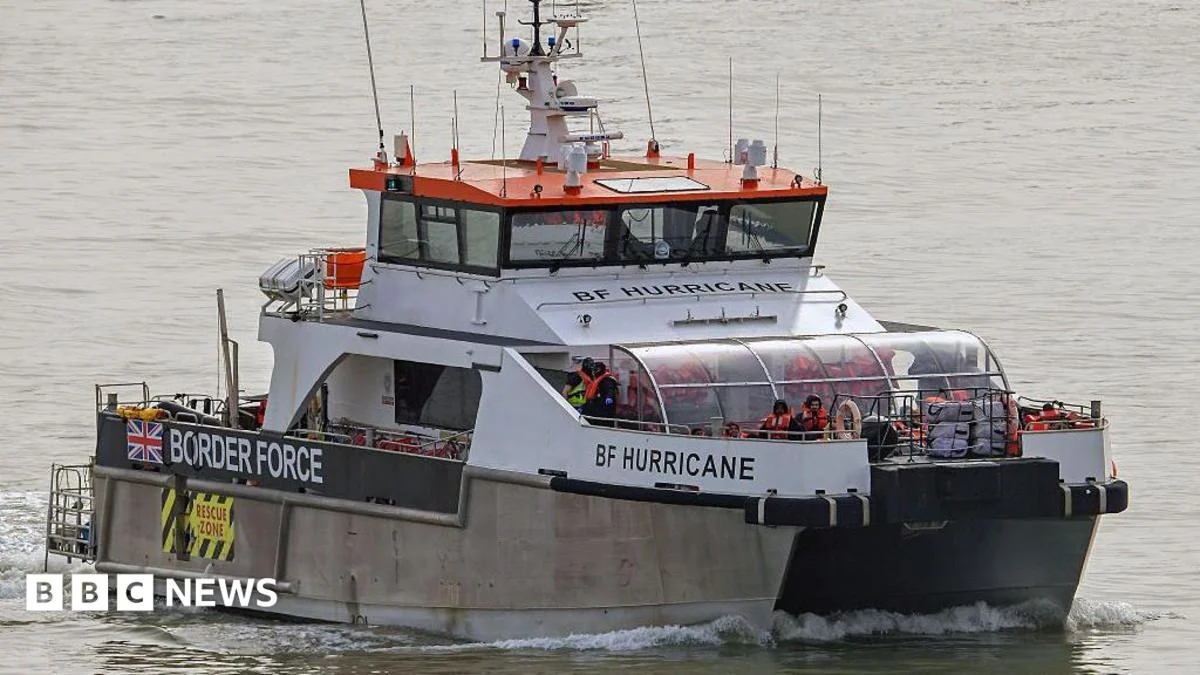
More than 150 migrants rescued after boat catches fire in Channel
A Perilous Journey Unfolds: A Chronology of Events
The sequence of events leading to the dramatic rescue began on Monday night, highlighting the complex and often tense interactions between migrants, people smugglers, and European maritime authorities.
-
Initial Attempt and Refusal of Aid (Monday Night): The French maritime prefecture of the Channel and North Sea reported that the boat departed from France on Monday evening. During the overnight hours, French patrol boats located the vessel and offered assistance. However, according to the prefecture, "five people on board the vessel required rescue" at that time, but "the remaining people on board refused the assistance offered by the French patrol boats." French authorities further elaborated in a statement: "Determined to reach the United Kingdom, migrants crossing the Channel in small boats refused assistance offered by French emergency services, accepting it only in situations of extreme emergency." Due to the "structural fragility" of the makeshift boats typically used for these crossings, and the refusal of those on board to accept assistance, French authorities initially decided not to intervene further, respecting the principle of non-coercion in international waters unless immediate danger was evident. This decision underscores the difficult operational challenges faced by rescue services, balancing humanitarian obligations with the migrants’ expressed intent to reach the UK.
-
The Blaze and Distress (Tuesday Morning): The situation drastically changed on Tuesday morning. At approximately 08:30 local time (07:30 BST), the engine of the migrant boat caught fire. The fire quickly escalated, leading to a rapid deterioration of the "vessel’s integrity," transforming a precarious journey into an immediate life-threatening emergency. The swift spread of the fire and the evident structural compromise left those on board with no option but to accept external aid, triggering a full-scale distress response.
-
Multi-National Rescue Operation: Upon receiving the distress call, a coordinated rescue effort was immediately launched by both French and UK maritime authorities. Rescue boats and vessels from both nations were dispatched to the scene, located within the French search and rescue region. French assets included two patrol boats, which were instrumental in the initial phase of the rescue. From the UK, the RNLI Eastbourne lifeboat, a volunteer-crewed vessel renowned for its life-saving operations, joined the effort, alongside UK Border Force vessels BSC Contender and BSC Courageous. The joint operation was a testament to the established protocols for search and rescue in the Channel, which mandate cooperation regardless of national borders when lives are at risk. In total, French boats rescued 103 migrants, while British vessels brought 54 to safety, demonstrating the seamless collaboration under emergency conditions.
-
Arrival and Aftermath in Boulogne-sur-Mer: All 157 rescued individuals were subsequently transported to the port of Boulogne-sur-Mer in France. They were expected to arrive there at approximately 12:30 local time (11:30 BST) on Tuesday. Upon arrival, the migrants would undergo medical assessments to ensure their well-being, followed by administrative processing by French authorities. This typically involves identification, registration, and initial interviews to ascertain their circumstances and potential asylum claims. The fact that all were taken to France aligns with international maritime law, which generally dictates that rescued individuals should be disembarked at the nearest safe port, which in this case was in France.
The Treacherous Waters: Context of Channel Crossings
The English Channel, one of the world’s busiest shipping lanes, represents a formidable natural barrier, making any unauthorized crossing inherently dangerous. The incident on Tuesday serves as a stark reminder of the extreme risks undertaken by those attempting to reach the UK via small boats.
-
Geography and Dangers: The Channel is approximately 21 miles (34 km) wide at its narrowest point, but its waters are notoriously cold, with strong currents, unpredictable weather, and heavy maritime traffic. Small, inflatable boats, often overcrowded and poorly equipped, are ill-suited to navigate these conditions. Hypothermia, capsizing, and collisions with larger vessels are constant threats. The reliance on flimsy vessels, often sourced through illicit smuggling networks, further compounds the danger, as tragically demonstrated by the engine fire.
-
Motivations and People Smuggling: Migrants attempting these crossings often cite a complex mix of "push" and "pull" factors. Many are fleeing conflict, persecution, or severe economic hardship in their home countries, seeking asylum and a better life. The UK is often perceived as a desirable destination due to language, perceived economic opportunities, or existing family ties. The routes are facilitated by sophisticated and ruthless people-smuggling gangs, who exploit vulnerable individuals, charging exorbitant fees for perilous journeys, and showing little regard for human life. These criminal networks are a primary target for law enforcement on both sides of the Channel.
-
Historical Trends and Data: The phenomenon of small boat crossings has escalated dramatically in recent years, becoming the predominant method for irregular entry into the UK.
- In 2020, approximately 8,400 migrants arrived in the UK via small boats.
- This figure surged to around 28,500 in 2021.
- The numbers peaked in 2022, with over 45,000 recorded arrivals.
- However, Home Office figures indicate a significant downward trend in the current year, with numbers down about 43% compared to the same period last year. Despite this decline, the total number of arrivals remains substantial, and the recent incident highlights that the problem persists.
- Last Wednesday alone saw 752 migrants arrive in the UK, making it the busiest day for crossings so far this year. The summer months typically see higher numbers due to more favourable weather conditions, though the Channel’s unpredictability always poses a threat.
-
Fatalities and Previous Incidents: The Channel has witnessed numerous tragedies. In November 2021, at least 27 people drowned when their dinghy capsized near Calais, marking one of the worst incidents on record. Other incidents involving capsizing, hypothermia, or overcrowded boats have resulted in multiple deaths, serving as grim reminders of the inherent risks. These fatalities underscore the humanitarian imperative to address the root causes of irregular migration and to provide safer, legal pathways for those seeking protection.
Political Fallout and Policy Responses
The incident immediately reignited the fervent political debate in the UK surrounding illegal migration, border security, and international cooperation. It occurred just a day after Prime Minister Andy Burnham reiterated his government’s commitment to tackling the issue.
-
Prime Minister Andy Burnham’s Stance: During a visit to Dover on Monday, Prime Minister Andy Burnham pledged that his government would be "relentless" in curbing the number of people arriving in the UK on small boats. He acknowledged that "people want to see this issue addressed" and highlighted progress made, including the doubling of enforcement officers on both sides of the Channel specifically tasked with disrupting people-smuggling gangs. However, he also emphasized the need to build "a system that offers safe routes for people," acknowledging the dual challenge of enforcement and humanitarian responsibility. Since Burnham became prime minister a fortnight ago, the number of migrants arriving in the UK on small boats has already surpassed 2,000, illustrating the persistent nature of the challenge despite government efforts.
-
The UK-France Bilateral Agreement: In April, the UK and France solidified a significant £662 million (773 million euro) deal aimed specifically at stopping illegal migrants from crossing the Channel. This three-year agreement represents a substantial investment in joint efforts and includes several key components:
- Enhanced Policing: Deployment of riot-trained police officers to French beaches to tackle violence and "hostile crowds" associated with migrant encampments and departure points.
- Advanced Surveillance: France committed to deploying millions of pounds worth of drones and two helicopters as part of a sophisticated system to intercept people smugglers and illegal migrants before they launch their boats.
- Financial Leverage: A controversial clause in the agreement allows UK ministers to redirect or withdraw about £100 million in funding after a year if specific, albeit undisclosed, targets for stopping journeys are not met by the French authorities. This condition highlights the pressure on both governments to demonstrate tangible results.
-
Opposition Voices: Conservatives, Liberal Democrats, Reform UK: The political discourse in the UK is highly charged, with various parties offering distinct approaches to the migration crisis.
- The Conservatives have been critical of the current Labour government, asserting that it has not delivered on its promises regarding migration control. They often advocate for stricter border controls and more robust deterrence measures.
- The Liberal Democrats have called for a different approach, urging the government to increase efforts to improve relationships with European partners, particularly France, and to significantly cut down the asylum backlog within the UK. They argue that efficient processing and international cooperation are key to managing migration effectively and humanely.
- Reform UK leader Nigel Farage seized on the incident, posting on X: "We must put a stop to this. Our plan will save lives." Earlier in the week, his party outlined a radical proposal that, if in government, it would deploy the Royal Navy to actively "ward off" crossings in the Channel. This hardline stance resonates with a segment of the electorate demanding more aggressive intervention.
-
The Broader International Context (Ceuta): The domestic UK debate has also been influenced by recent international events, notably the crisis in the Spanish exclave of Ceuta. Just last Thursday, tens of thousands of migrants swam into Ceuta from Morocco, overwhelming local authorities and drawing international attention to the broader European migration challenges. Such events underscore that migration is a continent-wide issue, not confined to the Channel, and often involves complex geopolitical dynamics.
Challenges and Implications
The Channel fire incident, while successfully mitigated by rescue efforts, brings into sharp focus several ongoing challenges and implications for migration policy, international relations, and humanitarian concerns.
-
The Dilemma of Search and Rescue: The French authorities’ initial reluctance to intervene due to the migrants’ refusal of aid, followed by a full-scale rescue when extreme danger became apparent, illustrates a profound dilemma. Maritime law mandates saving lives at sea, but authorities also grapple with the perception that rescue operations might inadvertently act as a "pull factor," encouraging more crossings. This tension between humanitarian obligation and deterrence strategy is a constant feature of the Channel migration debate. Humanitarian organisations, such as Doctors Without Borders or the UNHCR (though not directly quoted in the source, their general stance is well-known), consistently advocate for the primacy of saving lives and condemn policies that might delay or complicate rescue efforts.
-
Effectiveness of Deterrent Measures: Despite significant financial investment and increased enforcement, the fact that such dangerous crossings continue raises questions about the long-term effectiveness of current deterrent measures. While Home Office figures show a reduction in overall crossings this year, incidents like the boat fire demonstrate that the inherent risks do not fully deter individuals desperate to reach the UK. The ongoing demand for these dangerous routes suggests that the "safe routes" Prime Minister Burnham mentioned are either insufficient or not widely accessible.
-
Humanitarian Concerns and Calls for Safe Routes: Beyond the political and security dimensions, the incident serves as a poignant reminder of the human cost of irregular migration. The vulnerability of those undertaking these journeys, often with limited resources and facing extreme danger, underscores calls from human rights advocates for more comprehensive and compassionate approaches. Many argue that expanding safe and legal routes for asylum seekers and migrants would not only reduce the power of people-smuggling gangs but also prevent future tragedies at sea.
-
Future of UK-French Cooperation: The joint rescue operation highlights the essential and often effective cooperation between French and UK authorities in emergencies. However, the underlying political rhetoric and the conditional funding within the bilateral agreement suggest ongoing points of friction. Sustained, trust-based cooperation is crucial for tackling people-smuggling networks and managing the Channel, but this relationship is often tested by domestic political pressures in both countries. The incident may further strain the relationship if either side perceives the other as not doing enough to prevent crossings.
-
Public Opinion and the Ongoing Debate: Events like the Channel boat fire profoundly influence public opinion. While there is broad consensus on the need to save lives, there is also strong public demand for governments to control borders and deter illegal migration. The dramatic nature of this rescue, juxtaposed with the political pledges and policy debates, will likely intensify public scrutiny and keep the issue of Channel crossings at the forefront of the political agenda in the UK and beyond. The incident reinforces the complex, multifaceted nature of migration, demanding nuanced policy responses that balance security concerns with humanitarian principles.

Related Posts
Zambia on Edge: Opposition Leader Arrested Amid Allegations of Insurrection Plot and Election Tensions
Rescuers search for survivors of powerful Indonesia earthquake

