Russian Intelligence Linked to Targeted Disinformation Campaign Against French Presidential Contender Raphaël Glucksmann
The integrity of the upcoming French presidential election has come under intense scrutiny following revelations that a sophisticated disinformation campaign, allegedly orchestrated by Russia’s military intelligence agency, the GRU, has targeted center-left Member of the European Parliament (MEP) Raphaël Glucksmann. The disclosure, made by Glucksmann himself on the social media platform X, marks a significant escalation in concerns regarding foreign interference in European democratic processes. As France prepares for a pivotal electoral cycle, the intersection of geopolitical hostilities and domestic political maneuvering has placed national security agencies on high alert.
The Allegations and the Intelligence Briefing
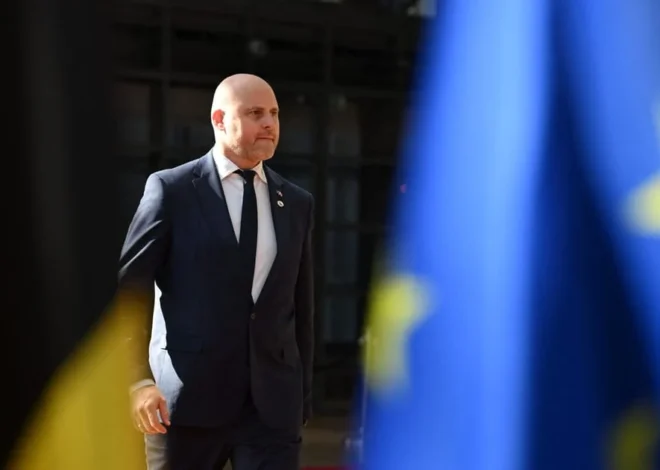
Raphaël Glucksmann, a prominent figure in the European Parliament and a vocal critic of the Kremlin, confirmed on Tuesday that he had been formally notified by the French Secretariat-General for National Defence and Security (SGDSN) regarding a coordinated effort to undermine his political standing. According to the intelligence provided to Glucksmann, the operation was not merely a series of organic social media attacks but a systematic campaign under the direct control of the GRU—Russia’s Main Intelligence Directorate.
The campaign reportedly employed classic disinformation tactics: the fabrication of documents, the use of automated bot networks to amplify inflammatory narratives, and the strategic leakage of misleading information intended to damage the reputation of the MEP. Glucksmann, who is widely expected to announce his candidacy for the French presidency in the coming weeks, has long been a thorn in the side of Moscow, particularly regarding his staunch advocacy for Ukraine and his investigative work into human rights abuses.
A Pattern of Interference: The Broader Landscape
The targeting of Glucksmann is not an isolated incident but rather the latest in a series of alarming reports concerning foreign influence operations within the French political sphere. Just last week, it was reported that former Prime Minister Édouard Philippe—a confirmed presidential candidate and a leading voice of the center-right—had also been subjected to a Russian-backed disinformation campaign.
These incidents underscore a broader trend of "hybrid warfare" that French authorities have been tracking with increasing concern. The tactics mirror those observed in previous election cycles across the European Union and the United States, where state-sponsored actors attempt to exacerbate domestic social divisions and erode public trust in electoral institutions.
Furthermore, the threat is not exclusively emanating from Moscow. Earlier this year, reports surfaced alleging that an Israeli firm had targeted local candidates from the left-wing France Unbowed (La France Insoumise) movement, particularly those known for their outspoken pro-Palestinian advocacy. These disparate reports of foreign interference from multiple international actors suggest that the French political landscape is currently a high-priority theater for global influence operations, complicating the efforts of the French government to maintain a "clean" democratic process.
Chronology of Escalating Tensions
The timeline of foreign interference in French politics has accelerated significantly over the past twenty-four months:
- Early 2024: Investigative reports emerge detailing the involvement of private Israeli firms in data-scraping and psychological operations targeting municipal candidates in France.
- Mid-2024: The SGDSN issues multiple warnings regarding the increasing sophistication of Russian "copycat" websites that mimic reputable French media outlets to spread pro-Kremlin narratives.
- November 2024: Reports surface indicating that Édouard Philippe’s campaign staff had been alerted by intelligence services to a sustained attempt to compromise their communications and public image.
- December 2024: Raphaël Glucksmann publicly confirms his receipt of an official intelligence briefing concerning a direct GRU-led operation targeting his political activities.
Data-Driven Analysis of Disinformation Operations
The scale of these operations is supported by data from the European Digital Media Observatory (EDMO) and similar cybersecurity research groups. According to recent white papers, the volume of state-sponsored disinformation targeting French elections has increased by approximately 40% since the beginning of the ongoing conflict in Ukraine.
Key metrics for these operations include:
- Bot Amplification: Research indicates that roughly 65% of the disinformation campaigns identified in 2024 utilize "botnets"—networks of hijacked social media accounts—to create an artificial perception of consensus around extremist or polarizing topics.
- Infrastructure: State-backed actors have shifted away from simple social media trolling toward the creation of "mirror sites." These websites utilize domain names nearly identical to established news outlets like Le Monde or Le Figaro to lend a veneer of credibility to fabricated content.
- Targeted Micro-Campaigns: Rather than focusing on a single issue, modern operations are increasingly hyper-local, targeting specific candidate platforms or personal controversies to trigger reactionary voting patterns.
Official Responses and Counter-Measures
The French government has responded with a combination of defensive posturing and legislative tightening. The SGDSN, which reports directly to the Prime Minister, has been tasked with overseeing the "Viginum" agency—a body created specifically to detect and analyze digital interference from abroad.
While the Elysée Palace has remained tight-lipped regarding specific ongoing investigations, government spokespersons have reiterated that any attempt to manipulate the democratic process is considered a matter of national security. "The sovereignty of our election is non-negotiable," a spokesperson noted in a recent briefing. "We are working in close cooperation with European partners and the relevant technology platforms to identify and neutralize these threats before they can influence the public discourse."
For their part, the targeted candidates have emphasized the importance of transparency. Raphaël Glucksmann’s decision to go public with the intelligence briefing serves as a preventative strategy. By acknowledging the campaign, he effectively neutralizes the element of surprise and allows his team to debunk fraudulent claims before they gain traction in the mainstream media.
Broader Implications for French Democracy
The implications of these campaigns extend far beyond the personal political fortunes of Glucksmann or Philippe. At stake is the public’s ability to discern fact from state-manufactured fiction. When intelligence agencies—whether Russian, Israeli, or otherwise—target domestic elections, they create a "chilling effect" where legitimate political discourse is drowned out by noise and suspicion.
Furthermore, these operations exacerbate the existing polarization within the French electorate. By tailoring disinformation to specific segments of the population—such as targeting pro-Palestinian voters or those concerned with the economic impact of the war in Ukraine—foreign actors can effectively "weaponize" domestic grievances.
The reliance on these tactics suggests that the "digital battlefield" is now a permanent feature of European electoral cycles. For the French electorate, this requires a heightened level of media literacy. Analysts argue that the responsibility for countering these threats lies not only with the intelligence services but with social media platforms and the public at large. Without more robust verification protocols and increased transparency from the major tech conglomerates, the ability of foreign powers to sway public opinion will likely continue to grow.
Looking Toward the Future
As the French presidential election approaches, the role of intelligence services in monitoring these threats will become even more critical. The government is reportedly considering new legislation that would impose stricter transparency requirements on political advertising and the use of artificial intelligence in campaign materials.
However, the challenge remains the agility of the adversaries. As soon as one network of bots is dismantled, new, more sophisticated infrastructure is typically deployed in its place. The case of Raphaël Glucksmann stands as a stark reminder that in the modern era, the integrity of the ballot box is increasingly dependent on the resilience of the digital networks that carry the democratic debate.
The upcoming election will serve as a litmus test for France’s ability to defend its democratic institutions against a global environment where information is increasingly used as a weapon of war. As the political calendar moves forward, the scrutiny on the candidates, their campaigns, and the digital ecosystem surrounding them will only intensify, making the 2025 election cycle one of the most closely watched—and potentially volatile—in recent French history.