Marine Corps Accepts Final MV-22B Osprey Marking the End of Production and Shift Toward Fleet Modernization
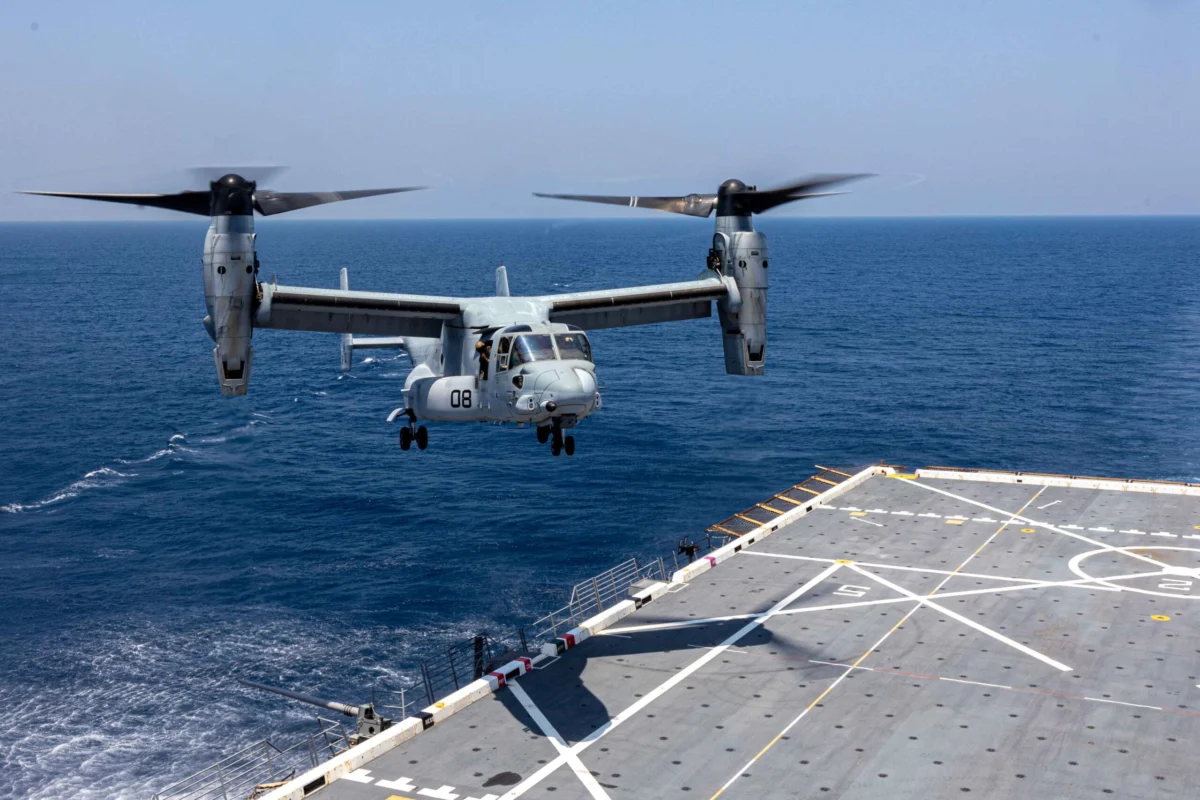
The United States Marine Corps officially entered a new era of aviation logistics and operational readiness this Tuesday with the acceptance of the 359th MV-22B Osprey, marking the final delivery of the tiltrotor aircraft under the service’s program of record. This milestone concludes a multi-decade procurement phase for the Marine Corps, shifting the focus of the V-22 Joint Program Office (PMA-275) from manufacturing to the long-term sustainment, safety enhancement, and modernization of a fleet expected to remain in service through at least 2055.
The delivery of the final aircraft represents more than just a logistical conclusion; it signifies the full integration of a platform that has redefined the Marine Air-Ground Task Force (MAGTF). Since its introduction, the Osprey has bridged the gap between the vertical lift capabilities of a helicopter and the high-speed, long-range performance of a fixed-wing turboprop. Lt. Gen. William Swan, the Marine Corps’ deputy commandant for aviation, emphasized the strategic weight of the platform, noting that the MV-22B has fundamentally altered the way commanders conceptualize combat power and distribution. According to Swan, the Osprey provides a "decision space" previously unavailable to leadership, allowing for the rapid connection of sea-based platforms, austere land bases, and widely distributed forces across vast distances.
A Legacy Born of Necessity: Historical Context and Development
The origins of the V-22 program can be traced back to the aftermath of Operation Eagle Claw in 1980, the failed attempt to rescue American hostages in Iran. The mission’s failure, partly attributed to the limitations of existing rotary-wing aircraft in terms of range, speed, and sand-tolerance, prompted the Department of Defense to seek a revolutionary solution. The resulting Joint-service Vertical take-off/landing Experimental (JVX) program began in 1981, led by a partnership between Bell Helicopter and Boeing Helicopters.
The first Osprey prototype took flight in 1989, but the program faced nearly two decades of technical hurdles, political scrutiny, and tragic developmental accidents. Despite calls for its cancellation in the early 1990s, the Marine Corps remained steadfast in its requirement for an aircraft that could fly twice as fast and carry three times the payload of the aging CH-46 Sea Knight it was designed to replace. The MV-22B finally achieved Initial Operational Capability (IOC) in 2007, quickly seeing its first combat deployment in Iraq’s Al Anbar province.
Operational Milestones and Global Impact
Since achieving operational status, the Osprey has become the workhorse of Marine Corps aviation. According to data provided by the V-22 Joint Program Office, the platform has completed more than 114 deployments and surpassed 683,300 flight hours. Perhaps most tellingly, the Osprey now accounts for approximately 75% of all Marine Corps rotary-wing support, illustrating its dominance in transport, casualty evacuation, and tactical insertion missions.
The aircraft’s utility has extended far beyond traditional combat. Bell-Boeing officials highlighted a diverse portfolio of high-stakes missions, including:
- The 2009 Rescue of Captain Richard Phillips: Ospreys were utilized during the aftermath of the Maersk Alabama hijacking by Somali pirates.
- Humanitarian Assistance and Disaster Relief (HADR): The platform was instrumental in the 2022 earthquake response in Haiti and more recent relief efforts following seismic activity in Venezuela. Its ability to land in debris-strewn areas without a runway while carrying tons of medical supplies made it indispensable.
- Counter-Terrorism Operations: The Osprey played a central role in Operation Inherent Resolve, facilitating the movement of special operations forces and supplies across Iraq and Syria to defeat ISIS.
Technical Specifications and Performance Data
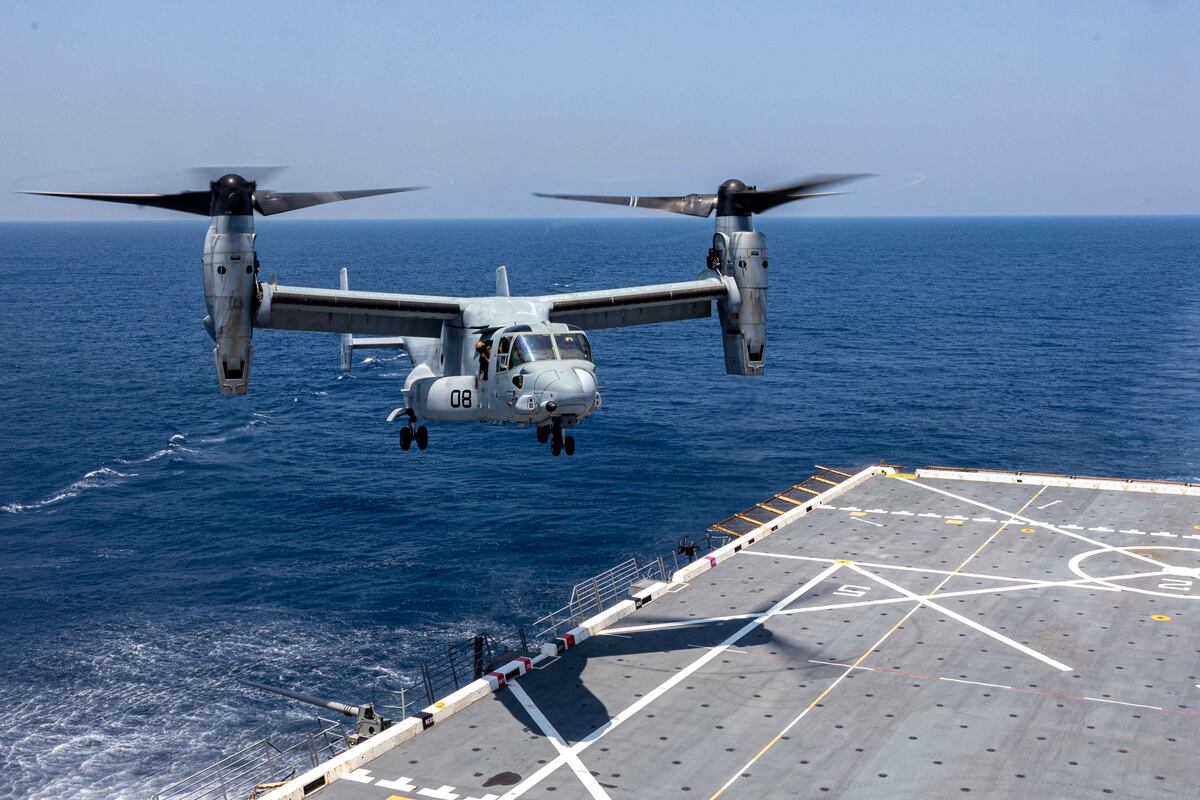
The MV-22B’s unique design features twin 38-foot pro-rotors driven by Rolls-Royce Liberty AE1107C engines. This configuration allows the aircraft to take off and land vertically like a helicopter. Once airborne, the nacelles rotate 90 degrees forward, converting the aircraft into a high-speed turboprop.
| Feature | Specification |
|---|---|
| Maximum Speed | 280 knots (approx. 322 mph) |
| Combat Radius | 426 nautical miles |
| Payload Capacity | 24 combat-equipped Marines or 20,000 lbs of internal cargo |
| Ferry Range | Over 2,100 nautical miles with auxiliary tanks |
| Service Ceiling | 25,000 feet |
This combination of speed and range is critical for the Marine Corps’ evolving doctrine of Expeditionary Advanced Base Operations (EABO), which requires small units to operate from remote islands or littoral zones, often far from traditional logistics hubs.
Addressing Safety and the GAO Findings
Despite its operational success, the Osprey’s tenure has been marked by significant safety concerns. Since 2000, accidents involving the V-22 across all branches have resulted in the deaths of more than 60 service members. The most recent major incident occurred in late 2023, when an Air Force CV-22 crashed off the coast of Japan, killing eight airmen. This tragedy led to a months-long grounding of the entire fleet across the Marine Corps, Navy, and Air Force.
Investigations into these accidents have often pointed to the "hard clutch engagement" (HCE) issue—a mechanical phenomenon where the clutch releases and then re-engages rapidly, causing a power surge that can damage the drivetrain. While the services have implemented a "wear life" limit on the input plate assembly to mitigate this, a permanent redesign of the gearbox is still in development.
Further complicating the program’s reputation was a 2025 Government Accountability Office (GAO) report. The watchdog found that the various branches of the military—the Marine Corps, Air Force, and Navy—had frequently failed to share critical maintenance and safety data with one another. This siloed approach meant that "red flags" identified by one service were not always communicated to others, potentially delaying safety interventions. In response, the V-22 Joint Program Office has pledged to centralize data management and streamline communication between the services to ensure fleet-wide transparency.
The Road to 2055: Sustainment and Modernization
With the final delivery of the 359th MV-22B, the Marine Corps is transitioning into a comprehensive modernization phase. The primary vehicle for this transition is the Common Configuration-Readiness and Modernization (CC-RAM) program. Currently, the Marine Corps fleet consists of various "blocks" or versions of the aircraft; CC-RAM aims to standardize the fleet to the latest configuration, simplifying maintenance and training.
Key areas of modernization include:
- Nacelle Improvements: Redesigning the nacelle structures and wiring harnesses to improve reliability and reduce the maintenance hours required per flight hour.
- Pro-Rotor Gearbox (PRGB) Redesign: Working toward a long-term fix for the clutch and gearbox issues that have plagued the platform.
- Digital Interoperability: Upgrading cockpit avionics and communication suites to ensure the Osprey can function as a data node within the Pentagon’s Joint All-Domain Command and Control (JADC2) framework.
- Enhanced Survivability: Integrating advanced missile warning systems and electronic warfare suites to protect the aircraft in contested environments.
The Marine Corps intends to keep the Osprey operational for another three decades. This longevity is essential because a direct successor—likely a derivative of the Future Long-Range Assault Aircraft (FLRAA) program—is not expected to be fully integrated into the Marine Corps for many years.
Strategic Implications and Future Outlook
The conclusion of the MV-22B production line marks a pivotal moment for the defense industry, particularly for the Bell-Boeing joint venture. While the Marine Corps has completed its buy, the Navy is still receiving its CMV-22B variant, which is replacing the C-2A Greyhound for the carrier onboard delivery (COD) mission. Additionally, international interest remains a factor, with Japan currently being the only foreign military sales (FMS) customer operating the platform.
For the Marine Corps, the Osprey remains the "connective tissue" of the force. As the Pentagon shifts its focus toward the Indo-Pacific, the vast distances of the theater make the Osprey’s range its most valuable asset. The ability to launch from a San Antonio-class amphibious transport dock and deliver a platoon of Marines to a remote island hundreds of miles away remains a capability unmatched by any other rotary-wing platform in the world.
However, the end of production also places a heavy burden on the sustainment infrastructure. Without new aircraft entering the fleet to replace those lost to attrition or combat damage, the readiness of the existing 359 aircraft becomes paramount. The Marine Corps must now balance the high operational tempo required by global commitments with the intensive maintenance needs of a complex tiltrotor system.
In the words of Lt. Gen. Swan, the Osprey is no longer an experimental luxury but a foundational assumption of modern Marine operations. As the program shifts from the factory floor to the maintenance hangar, the goal remains the same: ensuring that when a commander calls for the speed and reach of a tiltrotor, the MV-22B is ready to answer.

Related Posts
Pentagon Forges Landmark Seven-Year Agreements with Boeing and RTX to Accelerate Standard Missile-3 Production and Stabilize Defense Supply Chains
Boeing Unveils Ultra Low-Cost Seeker to Enhance Missile Inventory and Combat Cost Challenges in Modern Warfare