JD Vance says Epstein had connections to CIA and Mossad
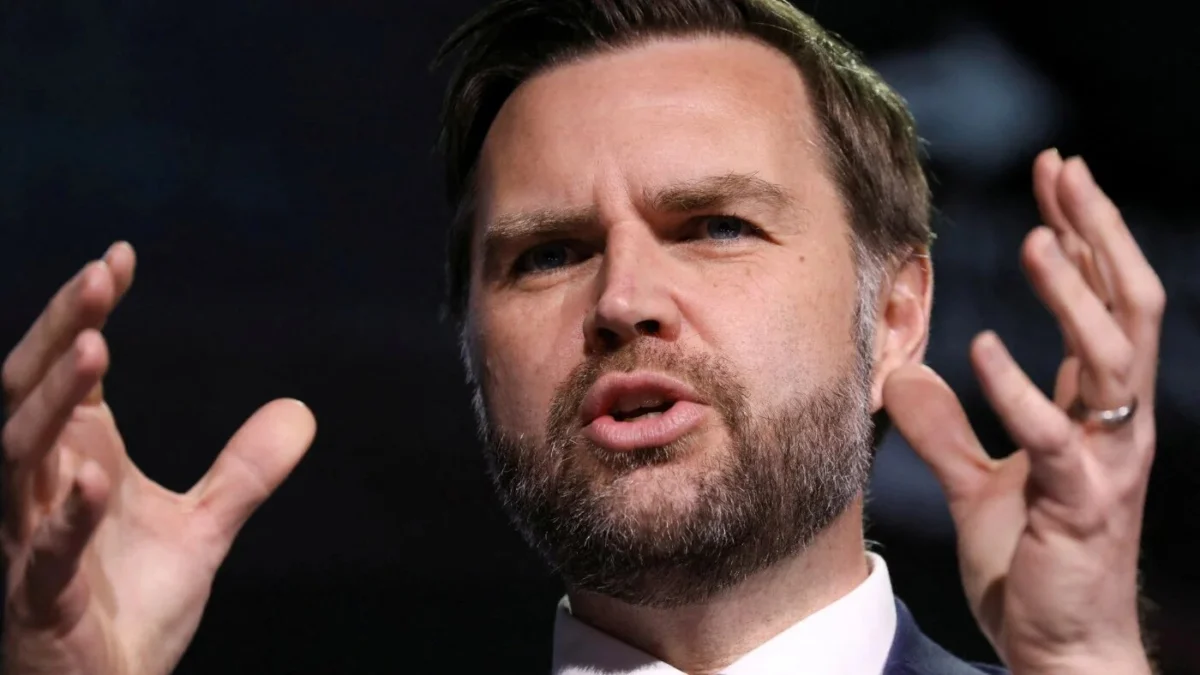
US Vice President JD Vance has ignited a firestorm of speculation and controversy, asserting on Monday that convicted paedophile financier Jeffrey Epstein maintained connections to the “highest levels” of both American and Israeli intelligence. Speaking on podcaster Joe Rogan’s widely listened-to program, Vance, who self-identifies as an “OG Epstein conspiracy theorist,” directly addressed the long-standing theories surrounding Epstein’s enigmatic network and the sources of his influence. These claims, coming from a sitting Vice President, add unprecedented weight to allegations that have long circulated in fringe circles and investigative reports, now echoing through mainstream political discourse.
Vance’s statements did not stop at Epstein’s intelligence ties; he further alleged a concerted, well-funded campaign by elements within the Israeli government to manipulate American public opinion and derail ongoing negotiations with Iran. This claim is particularly pertinent given the recent breakdown of a memorandum of understanding (MoU) between the US and Iran, which Vance himself reportedly spearheaded, leading to renewed hostilities between the two nations. The Vice President specifically cited a recent Time magazine article detailing an alleged Israeli influence operation targeting the "MAGA base" and implicating a former Trump campaign advisor in this effort.
Epstein’s Enigmatic Network and Intelligence Speculation
Jeffrey Epstein, whose 2019 arrest on sex trafficking charges and subsequent death in federal custody sent shockwaves globally, cultivated a vast and intricate web of powerful acquaintances. His private island, Little Saint James, and his various residences served as meeting grounds for an array of global elites, including former US President Bill Clinton, British royal Prince Andrew Mountbatten-Windsor, pro-Israel billionaire Les Wexner, and British politician Peter Mandelson. The sheer breadth and influence of his contacts, coupled with the nature of the allegations against him, have long fueled suspicions that Epstein was not merely a wealthy sex offender but a figure potentially gathering compromising information for an undisclosed entity.
The notion of Epstein serving as an intelligence asset has been a persistent undercurrent in investigations into his activities. Vance’s assertion on the Joe Rogan podcast that Epstein "clearly had connections to the highest levels of American intelligence" and "clearly had connections to the highest levels of Israeli intelligence" elevates these theories to an official level rarely seen. When Rogan suggested that "most people think he was Mossad," referring to Israel’s external intelligence agency, Vance broadened the scope, replying, "Mossad or CIA or some other deep state, whether in America or Israel or some other country… or both." The term "deep state" generally refers to a body of unelected government officials and sometimes private individuals who are believed to secretly manipulate or control government policy.
Vance further elaborated on the alleged Israeli connections, specifying that Epstein’s ties were to “elements of the Israeli deep state that were left of centre,” singling out former Israeli Prime Minister Ehud Barak. Barak is known to have visited Epstein on multiple occasions, a fact that has drawn scrutiny in the past. Vance contrasted this with the right-of-centre elements of Israeli politics, stating, “It wasn’t like he was super connected to the right of centre of Israeli politics.” These distinctions, coming from a US Vice President, suggest a detailed understanding or at least a firm belief in the nuances of Israeli political and intelligence structures allegedly involved with Epstein.
Documented Ties and FBI Memos
While categorical proof of Epstein actively working for an intelligence agency remains elusive, various documents and anecdotal accounts have sustained these theories. The recently unsealed "Epstein files" have provided further fodder for such speculation, revealing details about the financier’s financial contributions to several Israeli groups. These include the Friends of the Israeli Defence Forces (FIDF), an organization dedicated to providing support for Israeli soldiers, and the Jewish National Fund (JNF), a settler organization focused on land development in Israel. Such funding, while not proof of intelligence work, indicates a clear engagement with prominent Israeli institutions and figures. The files also allude to his ties with members of Israel’s overseas intelligence services.
Perhaps one of the most compelling pieces of evidence cited in support of the intelligence asset theory is an FBI memo from October 2020. This document, produced by the bureau’s Los Angeles field office, reported that one of its sources had come to believe Epstein "was a co-opted Mossad agent." The memo reportedly described the disgraced paedophile as having been "trained as a spy" for Israel’s intelligence service. This internal FBI assessment, even if based on a source’s belief rather than definitive proof, lends significant credence to the long-held suspicions and now, Vance’s public claims.
The historical context of intelligence agencies utilizing compromised individuals or those with extensive networks for information gathering is well-established. The potential for Epstein, with his access to global elites and penchant for recording their activities, to accumulate a vast amount of compromising information – often referred to as kompromat – over many years has been a central tenet of the intelligence asset theories. Such material could be invaluable for leverage, influence, or blackmail, making Epstein an attractive, albeit morally reprehensible, asset for any intelligence service.
The US-Iran Deal and Allegations of Israeli Interference
Beyond the Epstein revelations, Vance used his platform on the Joe Rogan podcast to voice grave concerns about alleged foreign interference in US foreign policy, particularly concerning Iran. The Vice President described a “very discreet extremely well-funded campaign to try to derail the negotiation and try to derail the deal” with Iran. This claim is particularly charged given his stated role in recent, delicate diplomatic efforts.
According to the article, Vance had spearheaded negotiations with Iran, which culminated in a memorandum of understanding (MoU) signed just last month. However, this nascent agreement has reportedly "fallen apart," leading to a resumption of hostilities, with the US and Iran once more exchanging strikes. This dramatic and rapid deterioration of relations provides a critical backdrop to Vance’s allegations of sabotage.
Vance asserted, “There are certain influencers in America who are being paid in order to attack the deal,” explicitly mentioning funding that originated from Israel. He referenced a recent Time magazine article detailing an “Israeli influence operation targeting the MAGA base.” This operation reportedly involves Brad Parscale, a digital advisor for Donald Trump’s 2020 presidential campaign, who is allegedly being paid $1.5 million a month to execute this campaign. Vance directly linked this operation to the personal attacks he has faced, stating, "lists a bunch of people who have quite literally been paid by a former Trump campaign person, who is himself paid by certain elements within the Israeli government, and those people are attacking me quite viciously."
These claims suggest a direct and deliberate effort by elements within the Israeli government to sway American public opinion and political decisions regarding Iran, specifically targeting a key demographic within the US political landscape. Vance explicitly stated his conviction: "I know beyond a shadow of a doubt that there have been people within the Israeli government who are trying to, like, actually shift us away from that policy because they want to continue the military campaign." This implies a profound disagreement and potentially an active conflict of interest between certain Israeli factions and the stated US policy goals regarding Iran.
Broader Implications and Political Ramifications
Vance positioned himself as "the reasonable moderate" in what he described as "this massive pro-Israel, anti-Israel debate in the United States of America." He lamented being widely accused of being an antisemite for his views, a charge he dismissed as "insane." These comments underscore the intensely polarized nature of discussions surrounding US-Israel relations and US policy in the Middle East.
When pressed by Rogan on whether the US would have engaged in the most recent war with Iran without Israeli influence, Vance unequivocally replied, "yes, yes I do." However, he also clarified his stance on Iran’s nuclear ambitions, stating, "I think the president, separate from any influence from Israel, believes very strongly, and again I agree with this, that Iran should not have a nuclear weapon." This indicates a complex position where he agrees with the core objective of preventing Iranian nuclearization but believes external influence has steered the US towards military confrontation over diplomatic resolution.
Rogan further probed into the possibility of blackmail, asking if Israel was using the Epstein files or other compromising information to coerce President Donald Trump. Vance dismissed this idea as "crazy," stating, "The idea that Donald Trump is being blackmailed is crazy to me." This rejection, while not absolving the intelligence asset theory, specifically pushes back against the notion of current blackmail over Trump, suggesting that any leverage derived from Epstein’s activities might be directed elsewhere or used in different ways.
The Vice President’s statements carry significant weight, coming from such a high office. They have the potential to strain diplomatic relations between the United States and Israel, as they directly accuse elements of the Israeli government of interfering in US domestic policy and attempting to prolong military conflict. Such allegations could also fuel anti-establishment sentiment and erode public trust in government and intelligence agencies, both domestically and internationally.
The claims also highlight the increasing role of alternative media platforms, such as Joe Rogan’s podcast, in disseminating politically sensitive information and directly engaging high-ranking officials in discussions that might traditionally be confined to more formal news channels. This shift in information dissemination further complicates the landscape of public discourse and accountability.
While Vance’s assertions are forceful, official responses from the implicated parties, particularly the Israeli government and US intelligence agencies like the CIA and FBI, have not been immediately available or forthcoming. Any formal denial or acknowledgment would significantly shape the public perception and diplomatic fallout from these extraordinary claims. The coming days and weeks will undoubtedly reveal the full extent of the ripple effects from these pronouncements by a sitting US Vice President, challenging long-held assumptions about covert operations, foreign influence, and the true nature of power in global politics.

Related Posts

Over 150 Israeli Settlers Storm Al-Aqsa Compound and Perform Prayers, Violating Status Quo Under Police Protection.

UN Report Highlights Over 900 Obstacles Hampering West Bank Aid Amid Escalating Humanitarian Crisis