Japan Enacts Controversial Flag Desecration Law Amid Warnings of Constitutional Erosion and Threats to Freedom of Expression
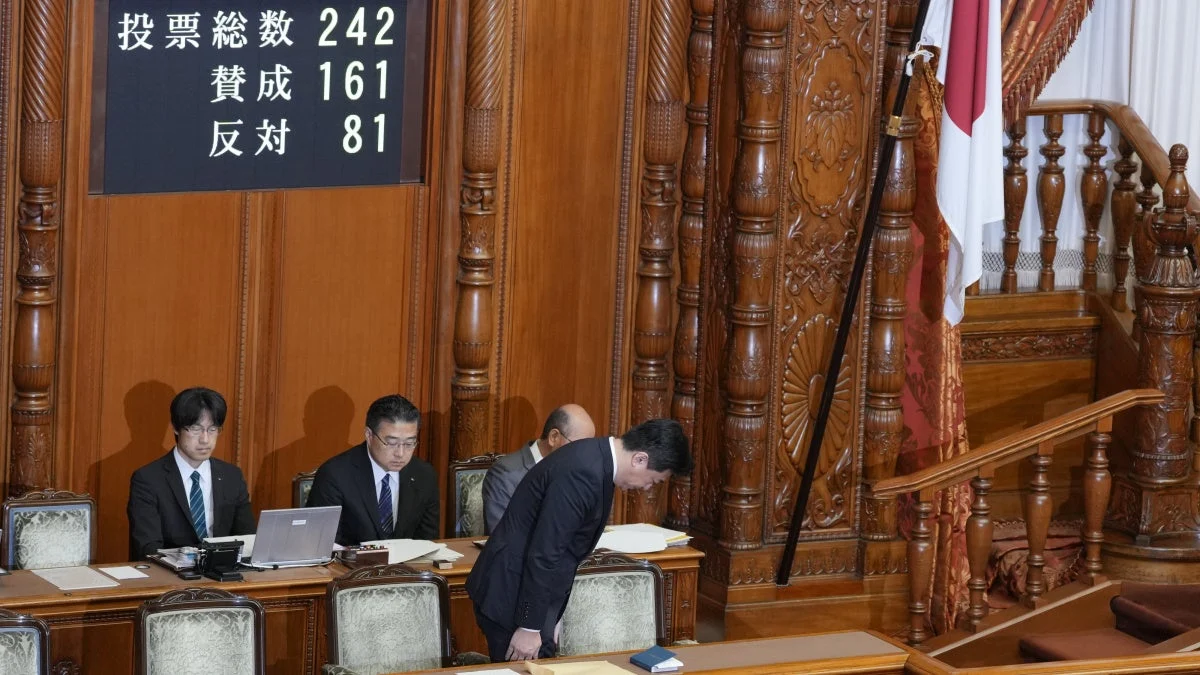
The Japanese Diet took a historic and polarizing step on July 17, 2026, by officially adopting a flag desecration law that criminalizes the act of damaging, removing, or defacing the national flag of Japan. The legislation, which has sparked a firestorm of criticism from human rights advocates, legal scholars, and civil liberties organizations, marks a significant shift in Japan’s approach to symbolic speech and national identity. Human Rights Watch (HRW) and other international observers have characterized the move as a direct violation of the right to freedom of expression, warning that the law could be used as a tool to stifle political dissent and weaken the democratic foundations of the nation.
The bill’s passage was secured through the combined support of the ruling Liberal Democratic Party (LDP), its coalition partner the Japan Innovation Party, and three additional opposition parties. This broad legislative consensus in the Diet’s upper house followed the successful passage of the bill in the lower house on June 30, signaling a determined effort by the current administration to codify protections for national symbols. Under the new law, individuals found guilty of "publicly damaging, removing, or defacing" the Hinomaru (the national flag) in a "way or situation that evokes significant discomfort or disgust in people" face severe penalties, including up to two years in prison or a maximum fine of 200,000 yen (approximately US$1,250). These penalties are identical to those found in Article 92 of Japan’s existing Penal Code, which, until now, only criminalized the desecration of foreign national flags to maintain diplomatic courtesy.
Legislative Framework and the Definition of Desecration
The core of the controversy lies in the specific language used within the statute. The law does not merely prohibit the destruction of government property; rather, it targets the "manner" in which the flag is treated and the "emotional response" it elicits from the public. Legal experts have pointed out that the phrases "significant discomfort" and "disgust" are inherently subjective, leaving vast room for interpretation by law enforcement and the judiciary. This ambiguity is a primary concern for Human Rights Watch. Teppei Kasai, senior Asia program officer at HRW, stated that the law "poses a direct threat to the right to freedom of expression" and "sends a message that puts everyone’s basic liberties at risk."
By aligning the penalties with Article 92, the Japanese government argues it is correcting a "legal imbalance" where foreign symbols were afforded more protection under Japanese law than the nation’s own flag. However, critics argue that the context of the two laws is fundamentally different. While Article 92 is intended to prevent international incidents and protect diplomatic relations, the new law governs the relationship between the Japanese state and its own citizens, specifically their right to protest and express dissatisfaction with the government through symbolic acts.
Chronology of the Bill’s Passage
The road to the July 17 enactment was marked by rapid legislative movement despite significant pushback from the legal community.
- Early 2026: Discussions within the LDP and the Japan Innovation Party intensified regarding the need for "patriotic protections" in response to perceived increases in disrespectful acts toward national symbols during public demonstrations.
- June 25, 2026: During a pivotal Diet session, constitutional scholars were called to testify. Yoko Shida, a prominent voice in Japanese constitutional law, warned lawmakers that the bill was "extremely likely" to be ruled unconstitutional. She emphasized that the act’s broadness would inevitably infringe upon various constitutional rights.
- June 26, 2026: Several bar associations, including the Japan Federation of Bar Associations (Nichibenren), issued formal statements opposing the bill, citing concerns over the chilling effect on political speech.
- June 30, 2026: The lower house passed the bill, moving it to the House of Councillors (the upper house).
- July 9, 2026: A petition signed by nearly 150 criminal law researchers was submitted to the government, arguing that the law violated the principle of "nullum crimen, nulla poena sine lege" (no crime, no punishment without a law) due to its vague definitions.
- July 17, 2026: The upper house officially adopted the law, concluding the legislative process.
Constitutional and International Law Implications
The enactment of the flag desecration law brings Japan into a potential legal conflict with both its own constitution and its international treaty obligations. Article 21 of the Japanese Constitution explicitly guarantees freedom of assembly and association as well as speech, press, and all other forms of expression. Hisashi Sonoda, an expert in criminal law, has written extensively on the matter, noting that punishing an action based on the "discomfort" it causes others is a "serious violation" of these constitutional protections.
On the international stage, Japan is a party to the International Covenant on Civil and Political Rights (ICCPR). Article 19 of the ICCPR protects the right to freedom of expression, which the United Nations Human Rights Committee has clarified includes symbolic acts such as flag burning or defacement. According to the Committee’s General Comment No. 34, legal restrictions on expression are only permissible if they are "necessary and proportionate" to protect national security or public order. The Committee has been explicit in stating that causing offense to patriotic sentiment or engaging in speech regarded as "deeply offensive" does not constitute a valid justification for criminal punishment.
The UN has previously expressed specific concern regarding laws that criminalize the desecration of flags and symbols, viewing them as disproportionate measures that often serve to protect the "honor" of the state at the expense of the fundamental rights of the individual.
Comparative Analysis: The Shadow of Regional Precedents
Human rights organizations have drawn chilling parallels between Japan’s new law and similar measures implemented in authoritarian or semi-autonomous regions to quell dissent. Most notably, the situation in Hong Kong serves as a cautionary tale. In recent years, the Hong Kong government has aggressively utilized the National Flag and National Emblem Ordinance to target pro-democracy activists.
The data from Hong Kong illustrates how such laws can be weaponized:
- August 2019: Five activists were arrested for throwing the Chinese national flag into Victoria Harbour during a period of intense civil unrest.
- December 2019: A 13-year-old girl was sentenced to 12 months of probation for the act of burning a flag, a move that international observers cited as an extreme reaction to a juvenile’s symbolic protest.
- 2020: Student activist Tony Chung received a four-month prison sentence for "insulting" the national flag during a 2019 protest.
- Historical Context: The late veteran activist Koo Sze-yiu was convicted at least eight times under these laws, demonstrating how flag desecration statutes can be used to repeatedly incarcerate high-profile critics of the state.
Critics of the Japanese law argue that by creating a legal mechanism to punish "disgust-inducing" acts, the Diet has provided future governments with a "ready-made tool" to silence protesters who might use the flag to highlight grievances against state policies or historical injustices.
Expert Reactions and Public Sentiment
The reaction from the Japanese legal and academic community has been overwhelmingly negative. The collective opposition from 150 criminal law researchers is a rare level of consensus in the field. These experts argue that the law fails to meet the "clarity" requirement of criminal statutes. If a citizen cannot reasonably predict whether their action—such as drawing on a flag or displaying it upside down—will cause "significant discomfort" to a hypothetical observer, the law fails to provide the necessary legal certainty required in a democratic society.
While proponents of the law, including members of the LDP, argue that the flag is a sacred symbol of the Japanese people and that its protection is essential for national unity, the opposition maintains that true national strength lies in the ability to tolerate dissent. "The Japanese government should demonstrate to the world that Japan’s democracy is strong enough to tolerate dissent," Kasai emphasized.
Broader Implications for Japanese Democracy
The passage of this law is seen by many political analysts as part of a broader trend toward social conservatism and the strengthening of state authority in Japan. It raises questions about the future of political activism, particularly among youth and marginalized groups who may use unconventional methods to gain public attention for their causes.
Furthermore, the law could have a "chilling effect" on the arts and media. Artists, filmmakers, and journalists may self-censor to avoid potential prosecution if their work involves the use of the national flag in a provocative or critical manner. The ambiguity of the "discomfort" clause means that the threat of legal action could be used to pressure galleries or publishers to pull controversial content.
As the law takes effect, the focus now shifts to the Japanese judiciary. Many legal scholars anticipate that the first prosecution under this new statute will be met with a vigorous constitutional challenge. The Supreme Court of Japan may eventually be forced to decide whether the "honor" of a national symbol outweighs the fundamental right of a citizen to express political dissatisfaction. Until such a ruling is made, the flag desecration law remains a contentious pillar of Japan’s legal code, standing at the intersection of national pride and individual liberty.

Related Posts

Human Rights Watch Calls for Investigation into Death of Detainee Following Removal from Najaf Hospital by Iraqi Drug Police

Human Rights Watch Urges UN Security Council to Extend Lebanon Peacekeeping Mission Amid Escalating Conflict and Humanitarian Crisis