Israeli Settlers Establish Three New Outposts in Occupied West Bank, Fueling Regional Tensions and Undermining Peace Prospects
Israeli settlers established three new outposts on Palestinian-owned land in the occupied West Bank on Sunday, as reported by the Wafa news agency, marking a significant escalation in settlement activities that continue to draw international condemnation and further complicate the already volatile political landscape. The establishment of these outposts, which are illegal under both international law and, in many cases, even Israeli law, underscores a persistent pattern of land annexation and expansion that profoundly impacts Palestinian communities and the viability of a future Palestinian state.
The Latest Incidents: A Coordinated Push
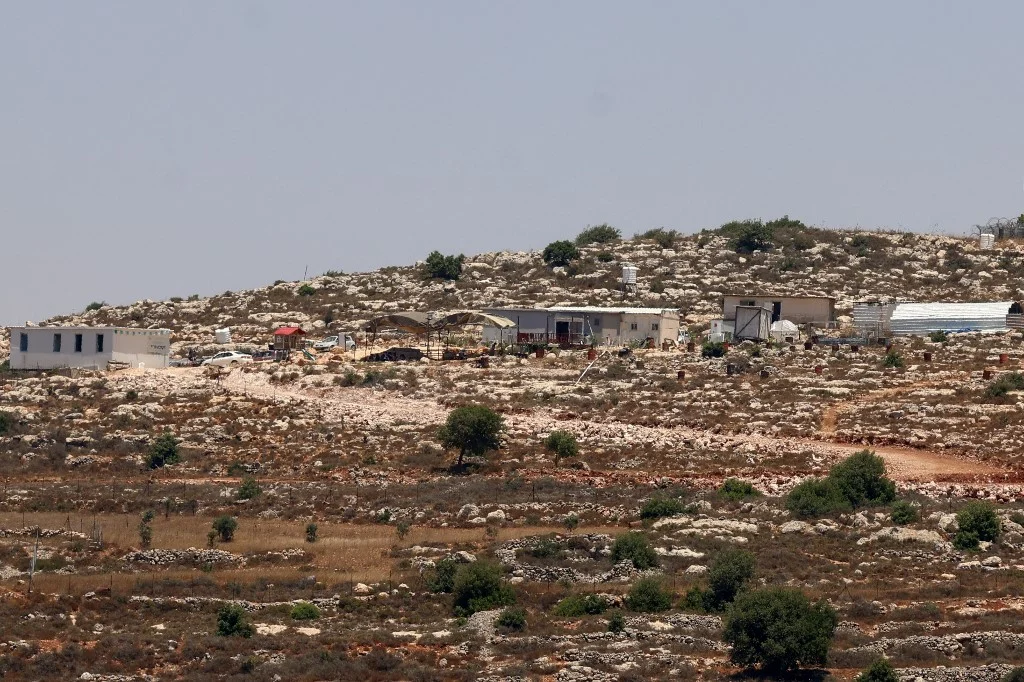
The events unfolded throughout Sunday, demonstrating a seemingly coordinated effort to expand Israeli presence in key areas of the West Bank. The most prominent incident involved dozens of settlers erecting a tent, bringing water tanks, and deploying storage containers to Tel al-Asur, a strategic location situated between the towns of al-Mughayyir and Deir Jarir, east of Ramallah. Local sources, speaking to Wafa, highlighted that this particular area has been a flashpoint for escalating violent settler attacks, systematic land seizures, and continuous settlement expansion, indicating a clear pattern of encroachment preceding this latest establishment.
Earlier on Sunday, similar activities were reported in two other critical locations. Settlers established outposts on land belonging to Deir Istiya, an area north of Salfit, a city known for its rich agricultural lands and olive groves, which are frequently targeted for settlement expansion. Concurrently, another outpost was erected on land near Umm Safa, northwest of Ramallah, further fragmenting Palestinian territorial contiguity and restricting the movement and development of local residents. These actions are not isolated but fit into a broader strategy of establishing facts on the ground, often preceding official recognition by the Israeli government.
A Pattern of Expansion: The Wall and Settlement Resistance Commission Report
These latest incidents are part of a worrying trend documented by Palestinian monitoring groups. According to the Wall and Settlement Resistance Commission, Israeli settlers established a staggering 42 outposts on Palestinian-owned land in the first half of 2026. While the year 2026 might appear unusual for a current report, this data, as presented by the Commission, highlights the rapid pace of expansion. The majority of these outposts, the Commission notes, are pastoral, indicating a strategy of seizing agricultural and grazing lands, thereby disrupting Palestinian livelihoods and control over their traditional territories.
The geographical distribution of these outposts reveals a widespread effort across the West Bank. The report detailed 13 new outposts in the Hebron governorate, a region particularly susceptible to settler-related violence due to the presence of radical settler groups within the city itself. Ramallah governorate saw the establishment of nine outposts, while Nablus and Bethlehem governorates recorded eight and four respectively. This systematic expansion, spanning major Palestinian population centers, not only consumes vital land resources but also creates new points of friction and conflict, increasing the risk of violence against Palestinian civilians.
The Broader Context: Settlements and International Law
Understanding the significance of these outposts requires a clear definition and an examination of their legal status. In international law, all Israeli settlements in the occupied Palestinian territories, including East Jerusalem, are considered illegal. This position is affirmed by numerous United Nations Security Council resolutions, including Resolution 2334 (2016), which explicitly states that Israel’s settlement activity "constitutes a flagrant violation under international law and a major obstacle to the achievement of the two-state solution and a just, lasting and comprehensive peace."
Under Israeli law, a "settlement" is a community explicitly approved and built by the government. An "outpost," however, is typically established without official government authorization, often by individual settlers or settler groups, on hilltops or strategic locations. While initially considered illegal by the Israeli government itself, many outposts eventually receive retroactive legalization, often through a lengthy political process driven by settler lobbies and right-wing political factions. This process often involves the provision of infrastructure, security, and municipal services, effectively transforming unauthorized encampments into de facto settlements. The establishment of an outpost is often a precursor to further expansion, with settlers gradually building permanent structures and infrastructure, thereby making their removal increasingly difficult.
Historical Overview of Settlement Activity
The expansion of Israeli settlements in the West Bank has been a continuous process since Israel occupied the territory in the 1967 Six-Day War. Initially, settlements were established for security reasons, often along strategic ridges. Over time, their purpose evolved to include ideological and religious motivations, aiming to establish a permanent Jewish presence throughout Judea and Samaria, the biblical names for the West Bank.
Key milestones in this expansion include:

- Post-1967: Initial military outposts gradually became civilian settlements.
- 1970s-1980s: Labor and Likud governments both supported settlement expansion, albeit with different justifications.
- Oslo Accords (1990s): The agreements divided the West Bank into Areas A, B, and C. Area C, comprising over 60% of the West Bank and containing most Israeli settlements, remained under full Israeli security and administrative control, making it particularly vulnerable to settlement expansion and outpost establishment.
- Early 2000s (Second Intifada): Despite the Roadmap for Peace, settlement construction continued, often through the proliferation of unauthorized outposts.
- Recent Decades: Successive Israeli governments have overseen continued growth, with a notable acceleration in recent years, particularly under right-wing administrations, which often view settlement expansion as a national priority.
Escalating Tensions and Violence
The establishment of new outposts is not merely a matter of land appropriation; it is frequently accompanied by a rise in violence and intimidation against Palestinian communities. Local sources reported that the Tel al-Asur area had already faced "escalating violent settler attacks, land seizures and settlement expansion." These attacks can range from destruction of crops and olive trees, harassment of farmers, damage to property, and even physical assaults. Such actions are often aimed at forcing Palestinians off their land, creating a climate of fear, and consolidating settler control over larger areas.
The presence of outposts often leads to increased friction over access to land, water resources, and movement. Palestinian villagers frequently find their access to agricultural lands blocked or restricted by settlers and Israeli security forces, severely impacting their livelihoods and food security. The expansion also leads to the construction of settler-only roads, bypass roads, and security zones, further fragmenting Palestinian territory and impeding free movement between towns and villages.
Reactions and Condemnations
The establishment of new outposts invariably draws strong condemnation from the Palestinian Authority (PA) and the international community.
- Palestinian Authority: The PA consistently denounces such actions as illegal and a direct assault on the prospects for a two-state solution. They frequently call on the international community to intervene and hold Israel accountable for its violations of international law. PA officials often describe these outposts as "land theft" and a deliberate attempt to create irreversible facts on the ground, undermining any future negotiations. They stress that these actions exacerbate an already tense situation and deprive Palestinians of their fundamental rights to land and self-determination.
- United Nations: The UN has repeatedly affirmed that all Israeli settlement activities are illegal under international law and constitute a major impediment to peace. The UN Secretary-General and various UN bodies frequently issue statements expressing concern over settlement expansion and its detrimental impact on the humanitarian situation and the prospects for a viable Palestinian state.
- European Union: The EU maintains a firm stance that Israeli settlements are illegal under international law and an obstacle to peace. They often call on Israel to halt all settlement construction and to dismantle outposts. However, the EU’s ability to enforce these pronouncements is often limited, leading to frustration among Palestinians and their advocates.
- United States: While historically critical of settlement expansion, the US position has varied across administrations. While generally affirming the illegality of settlements, recent US administrations have at times adopted a more ambiguous stance, leading to concerns that such policies embolden further expansion. Nevertheless, the official US position, reiterated by the State Department, is that settlement expansion undermines the viability of a two-state solution.
Israeli Stance and Legal Framework
The Israeli government, particularly its current right-wing coalition, often defends settlement activity by citing historical and religious ties to the land, as well as security concerns. They distinguish between authorized settlements, which they consider legal under Israeli law, and unauthorized outposts. However, the process of legalizing outposts often reveals a deliberate policy of gradual annexation.
The legal framework within Israel often involves a complex interplay of military orders, land registration procedures, and Supreme Court rulings. While some outposts are eventually demolished due to court orders, many others manage to gain retroactive approval, often by being reclassified as "neighborhoods" of existing settlements or by exploiting ambiguities in land ownership laws. The "Regulation Law," passed in 2017 but later struck down by the Supreme Court, was a controversial attempt to retroactively legalize thousands of settler homes built on private Palestinian land. Despite the legal challenges, the political will to expand settlements remains strong within significant segments of the Israeli government.
Implications for Peace and Stability
The continuous establishment of new outposts and the expansion of settlements carry profound implications for regional peace and stability, particularly for the prospects of a two-state solution.
- Erosion of the Two-State Solution: Each new outpost further fragments Palestinian territory, making the creation of a contiguous, viable, and sovereign Palestinian state increasingly difficult, if not impossible. The physical reality created by settlements undermines the very premise of a two-state solution, which envisions two states living side-by-side in peace and security.
- Increased Conflict and Instability: The constant encroachment on Palestinian land and the accompanying violence breed resentment, anger, and a sense of hopelessness among Palestinians, fueling cycles of conflict and extremism.
- Humanitarian Impact: For Palestinians living in affected areas, settlement expansion means loss of land, restricted access to resources, destruction of livelihoods, and a constant threat of displacement. It contributes to a deteriorating humanitarian situation and undermines economic development.
- Undermining International Law: The international community’s failure to effectively curb settlement expansion risks eroding the credibility of international law and institutions. If violations are not met with meaningful consequences, it sets a dangerous precedent for other conflicts.
- Future of Negotiations: The expansion of settlements makes any future peace negotiations significantly more challenging, as it removes crucial bargaining chips and creates a greater sense of distrust between the parties. Palestinian negotiators consistently state that continued settlement expansion makes a return to meaningful talks impossible.
The Human Cost
Beyond the geopolitical implications, the establishment of outposts has a tangible and often devastating human cost. Palestinian families, many of whom have lived on their land for generations, face constant threats to their homes, farms, and way of life. The psychological toll of living under the shadow of continuous expansion, coupled with the threat of violence and dispossession, is immense. Access to essential services, education, and healthcare is often hampered by restrictions on movement and the presence of checkpoints designed to protect settlements. The erosion of their land base also stifles Palestinian economic growth and reinforces their dependence on external aid.
In conclusion, the establishment of three new Israeli outposts in the occupied West Bank on Sunday, as part of a wider trend of rapid expansion, represents a serious challenge to international law, peace efforts, and the daily lives of Palestinians. These actions deepen the occupation, heighten tensions, and push the prospect of a viable two-state solution further out of reach, demanding urgent attention and decisive action from the international community to uphold its own resolutions and promote a just and lasting peace in the region.

Related Posts
Over 150 Israeli Settlers Storm Al-Aqsa Compound and Perform Prayers, Violating Status Quo Under Police Protection.
UN Report Highlights Over 900 Obstacles Hampering West Bank Aid Amid Escalating Humanitarian Crisis