The Escalating Tension Between Federal Surveillance and Digital Free Speech: ICE’s Evolving Role in Monitoring Online Criticism
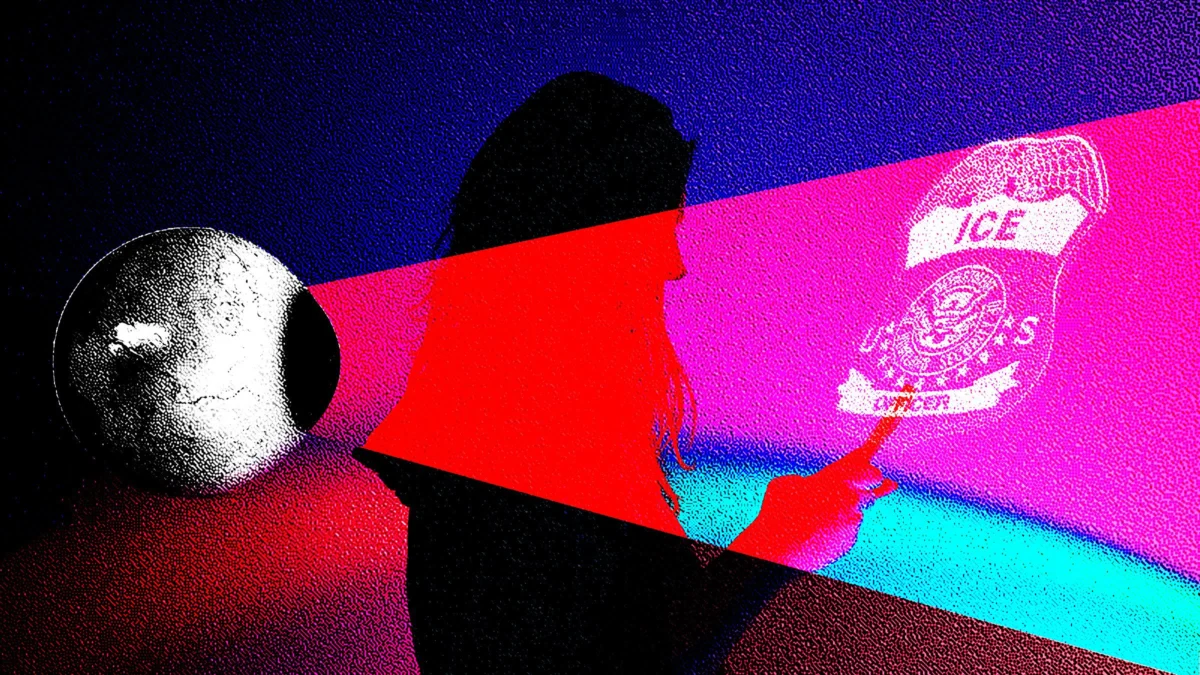
During the June primaries in Syracuse, New York, the democratic process was interrupted by an unusual federal intervention. As voters cast their ballots, agents from Immigration and Customs Enforcement (ICE) arrived at a polling site, not to oversee election security, but to locate Paigelynne Gonyea, a local poll worker. The agents sought to confront her regarding an Instagram post she had allegedly authored in January—a post they characterized as "doxing" a federal official.
The encounter, which occurred in full view of the public, serves as a flashpoint in a growing national debate over the boundaries of federal authority, the protection of online speech, and the mission creep of agencies traditionally tasked with immigration enforcement. For Gonyea, the experience was a stark introduction to a new, aggressive strategy by the Department of Homeland Security (DHS) to suppress online dissent under the guise of officer protection.
The Anatomy of the Confrontation
The post that triggered the federal visit was not an original threat, but rather an act of digital amplification. Gonyea had shared content crediting the Minnesota Star Tribune for identifying Jonathan Ross, an ICE agent involved in the fatal shooting of Renee Good in Minneapolis earlier this winter. Her post called for his indictment—a form of protected political expression that, in her view, fell well within the bounds of the First Amendment.
When agents approached her at the polling site, they presented a warning notice drafted by the ICE Office of Professional Responsibility (OPR). The document alleged that it was "unlawful to threaten to assault, kidnap and/or murder" federal officials in an effort to impede their duties. It further demanded that Gonyea remove the post and "discontinue" the behavior. Faced with a choice between self-censorship and a formal admission of wrongdoing, Gonyea refused to sign the document. "My signature would have been an admission of guilt," she stated. "I refused to sign it."
The Shifting Mandate of the Office of Professional Responsibility
The involvement of the Office of Professional Responsibility has raised significant questions among civil liberties experts and legal observers. Historically, OPR functions as an internal watchdog, tasked with investigating allegations of misconduct against ICE employees and contractors, inspecting detention centers, and managing security clearances.
However, internal agency documents and court filings suggest a pivot in the OPR’s focus. Rather than exclusively policing the conduct of agents, the office is increasingly directing its resources toward the surveillance of private citizens who criticize the agency online. According to a court declaration filed in April, OPR investigated 131 cases of "doxing and threats directed towards ICE employees" between January 2025 and March 2026.
This shift toward "external threats" appears to be part of a broader, centralized push within the DHS. On March 25, then-acting director of ICE, Todd Lyons, signed a memorandum mandating that the agency "invest in the agency’s capabilities" to mitigate emerging online harassment. This strategic shift has materialized in the form of administrative subpoenas sent to technology companies, demanding the disclosure of personal data—including names, IP addresses, and phone numbers—of individuals who post critical content about the agency.
The First Amendment and the Limits of "Doxing"
The federal government’s broad interpretation of "doxing" has become a point of contention. While traditional definitions of doxing involve the malicious publication of private, non-public information (such as home addresses or Social Security numbers), the government has recently attempted to expand this definition to include the documentation of public officials performing their official duties.
Legal experts warn that this expansion risks criminalizing constitutionally protected activity. "It takes a lot to actually convict someone for their speech, and it’s only possible in very limited circumstances," explains Laura Moraff, a staff attorney at the ACLU’s Speech, Privacy, and Technology Project. "People do have a First Amendment right to criticize the government and to do that online and to do that anonymously."
The government has met resistance in court. In several instances where administrative subpoenas were challenged, the DHS withdrew its requests rather than litigate the constitutionality of its actions. For instance, in a case involving an anonymous user designated as "Doepodslurp," the government retracted a subpoena after the poster’s legal counsel argued that the demand for identifying information constituted an unconstitutional chilling effect on free speech.
Statistical Discrepancies and Agency Accountability
The narrative of increased danger to ICE agents, frequently cited by administration officials to justify this surveillance, has faced scrutiny. A 2025 analysis by the Los Angeles Times challenged the claim that attacks on ICE agents had surged by 1,000 percent, finding little data to support such a staggering figure.
Furthermore, critics argue that the resources diverted to monitoring social media might be better spent on the OPR’s traditional oversight duties. An analysis by the Project on Government Oversight (POGO) found that, while the agency’s interest in online monitoring grew, its physical inspection of detention facilities plummeted. In 2025, ICE published only 102 inspection reports, a significant decline from the 192 reports produced in 2023.
During an April hearing before the House Appropriations Committee, Todd Lyons emphasized the agency’s commitment to internal oversight and facility inspections. However, he remained silent regarding the OPR’s role in tracking online posters. This lack of transparency has drawn sharp criticism from groups like the Foundation for Individual Rights and Expression (FIRE). "I can’t imagine that he would willingly go before Congress and say, ‘Yeah, we’re speech police, that’s what you’re funding,’" says Adam Steinbaugh, a senior attorney at FIRE. "It’s critical that the legislative folks also be looking under the hood."
A Broader Pattern of Surveillance
The incident in Syracuse is not an isolated event but part of a larger trend of administrative overreach. In July 2025, the Department of Homeland Security updated its privacy notice for the ICE Intelligence Records Systems to explicitly include the collection of social media posts, account information, and location data of individuals deemed to be making "credible threats."
This policy change essentially codified the agency’s ability to build dossiers on citizens based on their digital footprint. For many privacy advocates, this represents a dangerous precedent, where federal agencies use administrative tools to bypass the procedural hurdles of the criminal justice system. By labeling criticism as "threats," the agency can exert pressure on individuals without the burden of proving criminal intent in a court of law.
The Road Ahead: Implications for Democracy
The implications for the American public are twofold. First, there is the immediate concern of self-censorship; when citizens believe that a critique of a federal agency will result in a visit from federal agents, they are less likely to exercise their right to speak. Second, there is the erosion of institutional accountability. When an office designed to hold an agency accountable instead functions as an instrument of that agency’s political defense, the checks and balances intended to prevent abuse of power are severely weakened.
As for Paigelynne Gonyea, the path forward involves a legal battle that she believes extends beyond her personal predicament. By choosing to challenge the administration’s actions in court, she is positioning herself at the center of a fundamental test of the First Amendment in the digital age.
"I know that this issue is going to be bigger than me," Gonyea said. "This is literally about protecting all Americans’ right to free speech."
As the judiciary prepares to weigh in on these administrative subpoenas and the scope of OPR’s authority, the outcome will likely define the parameters of government surveillance for years to come. Whether the courts will uphold the broad investigative powers claimed by the DHS or reaffirm the primacy of protected speech remains to be seen. In the interim, the tension between federal security mandates and the rights of the individual remains a defining characteristic of the current political landscape.

Related Posts
The Las Vegas Cybersecurity Summit and the Escalating Threat of Autonomous Digital Exploitation
New York City Council members and privacy advocates launch legislative campaign to ban biometric facial recognition at public entertainment venues