
IRGC Declares Strait of Hormuz "Fully Sealed" and "Highly Perilous" Amid Escalating Tensions with US
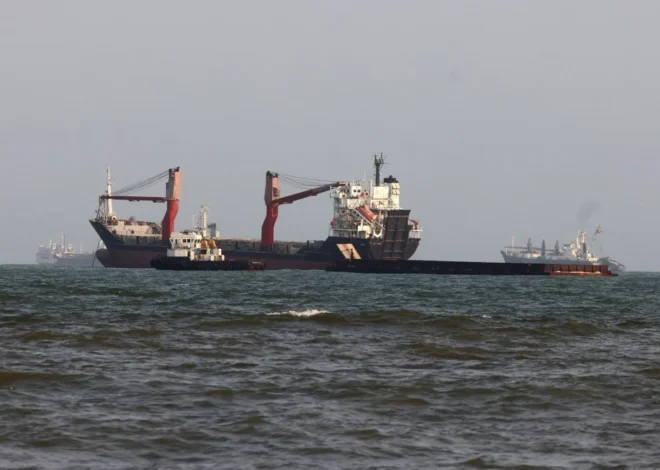
Iran’s Islamic Revolutionary Guard Corps (IRGC) Navy has issued a stark declaration, asserting that the Strait of Hormuz, a vital global maritime chokepoint, has been "fully sealed off" and rendered "highly perilous" due to what it describes as the "crimes of the US military." This assertive statement, reported by state broadcaster IRIB, marks a significant escalation in rhetoric and potentially in actions, threatening to severely disrupt international shipping and global energy markets. The IRGC Navy further stated its intent to block "not a single shipment of chemical fertilizer nor even a drop of oil or gas" from leaving the region until Washington ceases its "acts of aggression," signaling a potential blockade that would have profound international implications. This announcement follows earlier claims by Iran’s state broadcaster, quoting the IRGC, that it had intercepted four ships attempting to traverse the Strait and that two oil tankers had reportedly exploded after striking mines within the critical waterway.
IRGC’s Unilateral Declaration and Its Broad Implications
The IRGC Navy’s "unequivocal announcement" effectively constitutes a unilateral declaration of control over a strait that is universally recognized as international waters, essential for global trade and energy security. The claim that the strait is "fully sealed off" and "highly perilous" due to US actions is a direct challenge to the principle of freedom of navigation, a cornerstone of international maritime law. Should Iran attempt to enforce this declaration through physical means, it would precipitate a major international crisis, potentially involving naval confrontations and severe economic disruption.
The threat to halt all shipments of oil, gas, and even chemical fertilizers underscores the breadth of Iran’s stated intentions. The Strait of Hormuz is the world’s most important oil transit chokepoint, with approximately 20% of the world’s total petroleum liquids consumption and a significant portion of liquefied natural gas (LNG) transiting through it annually. According to data from the U.S. Energy Information Administration (EIA), in 2022, an average of 21 million barrels of crude oil, condensates, and refined petroleum products flowed through the Strait per day. Any significant interruption to this flow would inevitably trigger a sharp surge in global energy prices, destabilize economies reliant on these shipments, and send ripples through interconnected global supply chains.
Chronology of Reported Incidents and Rising Tensions
The IRGC’s latest statements build upon a series of reported incidents and a backdrop of long-standing tensions in the Persian Gulf.
- Earlier Reports of Interceptions: Prior to the "fully sealed" declaration, Iran’s state broadcaster reported that the IRGC had stopped four ships attempting to transit the Strait of Hormuz. The identities, flags, and cargo of these vessels were not immediately disclosed, nor were the specific circumstances of their alleged interception or their current status. Such actions, if confirmed, would represent a direct violation of international maritime law, which guarantees innocent passage through straits used for international navigation.
- Claims of Mine Explosions: Concurrently, the IRGC claimed that two oil tankers exploded after striking mines in the waterway. This claim is particularly alarming, evoking memories of past "tanker wars" and recent incidents involving suspected limpet mine attacks on commercial vessels in the Gulf region. Independent verification of these claims, including the nature of the explosions, the type of mines, and the perpetrators, is crucial but often challenging in such a sensitive geopolitical environment. The attribution of such attacks, especially without irrefutable evidence, remains a point of contention and often fuels further cycles of accusation and counter-accusation.
- Pattern of Maritime Incidents: These reported events are not isolated. Over recent years, the Gulf region has witnessed numerous maritime incidents, including attacks on tankers, drone strikes, and seizures of vessels, often attributed by Western powers to Iran or its proxies. Iran, in turn, frequently accuses the US and its allies of provocative actions and maintains that its naval activities are purely defensive and aimed at protecting its national interests and territorial integrity.
The Strategic Imperative of the Strait of Hormuz
The Strait of Hormuz is a narrow waterway connecting the Persian Gulf to the Arabian Sea and the broader Indian Ocean. At its narrowest point, it is only about 21 nautical miles (39 kilometers) wide, with the shipping lane itself being only two miles wide in either direction. This geographical constriction makes it exceptionally vulnerable to disruption.
- Global Energy Lifeline: Beyond crude oil, the Strait facilitates the passage of a substantial volume of refined petroleum products and LNG. Major oil producers like Saudi Arabia, Iran, UAE, Kuwait, and Iraq rely on this strait for their exports, while a significant portion of the world’s energy consumers, particularly in Asia (China, India, Japan, South Korea), depend on its uninterrupted flow.
- Economic Vulnerability: The sheer volume of trade passing through the Strait means that any sustained disruption would have catastrophic economic consequences. Shipping insurance premiums typically skyrocket during periods of heightened tension, increasing the cost of goods and impacting global inflation. Rerouting vessels around the Arabian Peninsula, if feasible, would add significant time and expense, further burdening global supply chains already strained by various geopolitical and economic factors.
- International Law: Under the United Nations Convention on the Law of the Sea (UNCLOS), the Strait of Hormuz is recognized as a strait used for international navigation, granting all ships and aircraft the right of transit passage, which allows for unimpeded passage through such straits. Iran, while a signatory to UNCLOS, has not fully ratified it and has at times asserted its right to regulate passage, particularly for warships, challenging the universal interpretation of transit passage.
Historical Context of US-Iran Antagonism
The IRGC’s latest declaration is deeply rooted in decades of animosity between Iran and the United States, exacerbated by recent developments.
- Post-Revolution Hostility: Relations between Washington and Tehran deteriorated sharply after Iran’s 1979 Islamic Revolution, which saw the overthrow of the US-backed Shah. The subsequent hostage crisis at the US embassy cemented a relationship defined by mistrust and confrontation.
- The Tanker War (1980s): During the Iran-Iraq War (1980-1988), the Gulf region witnessed the "Tanker War," where both sides attacked each other’s oil tankers and those of neutral countries, drawing the US Navy into protecting international shipping. This period saw direct naval engagements between US and Iranian forces.
- Nuclear Deal and Sanctions: The 2015 Joint Comprehensive Plan of Action (JCPOA), or Iran nuclear deal, offered a brief respite, lifting some international sanctions in exchange for curbs on Iran’s nuclear program. However, the US withdrawal from the deal in 2018 under the Trump administration and the subsequent re-imposition of stringent sanctions, particularly targeting Iran’s oil exports, reignited tensions. These "maximum pressure" sanctions have severely crippled Iran’s economy, leading Tehran to view US actions as economic warfare.
- Regional Proxy Conflicts: Both nations are deeply entangled in proxy conflicts across the Middle East, from Yemen to Syria and Iraq, further fueling mutual suspicion and hostility. The US military presence in the Gulf, aimed at protecting regional allies and ensuring freedom of navigation, is viewed by Iran as a provocative and destabilizing force.
- Recent Escalations: The killing of Iranian General Qassem Soleimani by a US drone strike in 2020 and subsequent Iranian retaliatory missile strikes on US bases in Iraq brought the two nations to the brink of open conflict, underscoring the fragility of peace in the region.
International Responses and Calls for De-escalation
While official responses from all parties were still developing, the IRGC’s declaration is expected to elicit strong condemnation and calls for de-escalation from the international community.
- United States: The US is likely to reiterate its commitment to freedom of navigation and the protection of international shipping. The US Fifth Fleet, headquartered in Bahrain, maintains a robust presence in the Gulf and would likely enhance its vigilance. Statements from the Pentagon and State Department would likely emphasize the illegality of any blockade and warn against actions that threaten global commerce. Any confirmation of US "acts of aggression" by the IRGC would be vehemently denied, with the US likely characterizing its presence as a deterrent and a guarantor of regional stability.
- United Nations: The UN Secretary-General and the Security Council would likely express grave concern, urging all parties to exercise maximum restraint and resolve disputes through diplomatic channels, upholding international law.
- International Maritime Organization (IMO): The IMO, responsible for the safety and security of international shipping, would likely issue advisories to mariners regarding the heightened risks in the Strait of Hormuz, potentially recommending increased security measures or alternative routes where feasible, though options are limited.
- Shipping Industry: International shipping associations would likely condemn any threats to free passage, warning of potential disruptions, increased insurance premiums, and the need for enhanced security protocols. Shipowners and operators would face difficult decisions regarding transit through the strait, balancing commercial interests with crew safety.
- Major Energy Importers: Countries heavily reliant on Gulf oil and gas, such as China, India, Japan, and European nations, would express serious concerns over energy security. They would likely exert diplomatic pressure on both Iran and the US to de-escalate and ensure the unimpeded flow of energy resources.
Economic Repercussions on Global Markets
The immediate economic impact of such a declaration, even if not fully enforced, is significant.
- Oil Price Volatility: The mere threat of a blockade can trigger speculative buying in oil markets, leading to immediate price spikes. A sustained or actual blockade would cause prices to skyrocket, potentially pushing crude oil well beyond historical highs, with devastating effects on global inflation and economic growth.
- Insurance Premiums: War risk insurance premiums for vessels operating in the Gulf would surge, making shipping prohibitively expensive for some operators and driving up the cost of goods for consumers globally.
- Supply Chain Disruptions: Beyond energy, the Strait of Hormuz is also a transit point for other commodities and manufactured goods. Any disruption could cascade through global supply chains, affecting industries from automotive to electronics.
- Impact on Iran: While threatening global energy markets, a blockade would also harm Iran’s own economy, which relies heavily on oil and gas exports, even under sanctions. Such an action could further isolate Iran internationally and intensify economic pressure from the global community.
Geopolitical Ramifications and Regional Stability
The IRGC’s declaration carries profound geopolitical risks, potentially destabilizing an already volatile region.
- Risk of Escalation: A direct confrontation between Iranian forces and international navies in the Strait of Hormuz carries an extremely high risk of rapid escalation into a broader conflict, drawing in regional powers and potentially leading to a full-scale war.
- Diplomatic Stalemate: Such actions would further complicate any prospects for de-escalation or revival of the nuclear deal, pushing diplomatic efforts into an even deeper quagmire.
- Regional Alliances: US allies in the Gulf, such as Saudi Arabia and the UAE, would likely view Iran’s actions as a direct threat to their security and economic interests, potentially strengthening their resolve to counter Iranian influence and reinforcing their strategic alignment with the United States.
- Internal Dynamics in Iran: The IRGC’s assertive posture might also be intended for a domestic audience, signaling strength and defiance in the face of international pressure and economic hardship, potentially rallying support for the regime.
Analysis of IRGC’s Stance and Capabilities
The IRGC, a powerful military and economic force within Iran, operates independently of the regular Iranian armed forces and reports directly to the Supreme Leader. Its naval arm specializes in asymmetric warfare, utilizing fast attack craft, missile boats, mines, and anti-ship missiles to challenge larger, more technologically advanced navies.
- Asymmetric Warfare Doctrine: The IRGC’s strategy is often based on the premise that it cannot match the conventional naval power of the US or its allies in a direct confrontation. Instead, it aims to exploit vulnerabilities through swarming tactics, mine warfare, and the threat of missile attacks to deter or disrupt larger forces.
- Motivational Factors: The IRGC’s declarations are likely driven by a combination of factors:
- Retaliation for Sanctions: A response to the severe economic pressure exerted by US sanctions.
- Assertion of Sovereignty: A demonstration of Iran’s perceived right to control its immediate maritime environment.
- Bargaining Chip: A tactic to gain leverage in future negotiations with Western powers.
- Domestic Posturing: To project strength internally amidst economic hardship and political dissent.
The Future of Maritime Security in the Gulf
The IRGC’s announcement underscores the persistent fragility of maritime security in the Persian Gulf. The international community faces a complex challenge: how to uphold the principle of freedom of navigation and ensure global energy security without inadvertently triggering a wider conflict.
- De-escalation Imperative: Diplomatic efforts will be paramount to de-escalate the situation, requiring clear communication channels and a willingness from all parties to step back from the brink.
- International Cooperation: Enhanced international cooperation in maritime security, including intelligence sharing and coordinated patrols, may become even more critical to safeguard commercial shipping.
- Long-term Solutions: Ultimately, a lasting resolution would require addressing the underlying political grievances and security concerns that fuel the US-Iran antagonism, a task that has proven exceptionally difficult over the past four decades. The Strait of Hormuz remains a flashpoint, a critical artery for global commerce, and a stark reminder of the interconnectedness of geopolitics, energy, and international security.

Related Posts
Over 150 Israeli Settlers Storm Al-Aqsa Compound and Perform Prayers, Violating Status Quo Under Police Protection.
UN Report Highlights Over 900 Obstacles Hampering West Bank Aid Amid Escalating Humanitarian Crisis