Investigation Into Israeli Military Strikes on Journalists in Southern Lebanon Reveals Evidence of Deliberate Targeting and Potential War Crimes
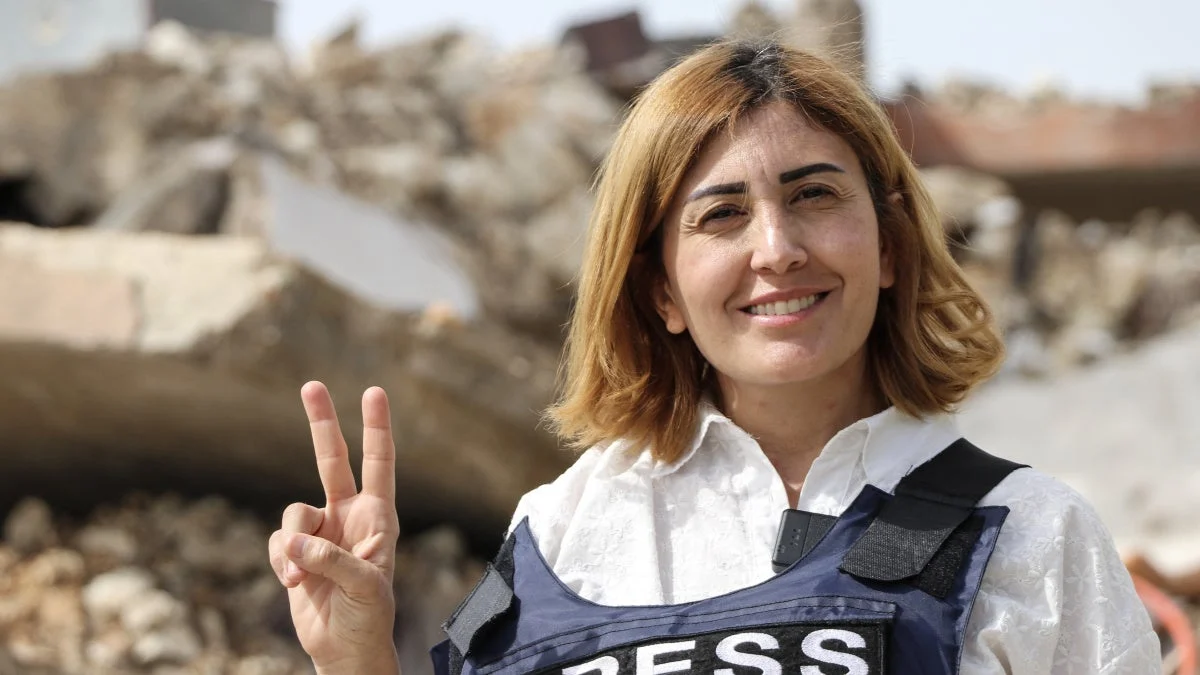
A comprehensive investigation by Human Rights Watch has concluded that the Israeli military’s April 22, 2026, attacks in southern Lebanon, which resulted in the death of one journalist and the severe injury of another, involved apparently deliberate strikes on civilians and civilian objects. The human rights organization stated today that these actions constitute war crimes under international humanitarian law. The incident took place in the southern town of al-Tiri and claimed the life of Amal Khalil, a reporter for the Lebanese daily news outlet al-Akhbar, while leaving freelance camera operator Zainab Faraj with life-altering injuries.
The findings released by Human Rights Watch (HRW) suggest a pattern of conduct that contradicts official Israeli military assertions regarding the protection of members of the press. According to Ramzi Kaiss, a Lebanon researcher at HRW, the evidence indicates that the Israeli military knew, or should have known, that the individuals being targeted were civilians. "The Israeli military says it does not target journalists, but the facts and evidence show that it has repeatedly done so," Kaiss stated. "Amal Khalil and Zainab Faraj are the latest victims in a long series of such attacks, demonstrating a brazen willingness to commit atrocities without fear of consequences."
Detailed Chronology of the April 22 Attacks
The events of April 22 began in the early afternoon as Khalil and Faraj were traveling across southern Lebanon to document the ongoing hostilities and the humanitarian situation in the border regions. Their movements were tracked through a series of verified phone logs, witness statements, and geolocated video evidence.
At approximately 2:30 p.m., the Israeli military launched a strike on a car traveling directly in front of the journalists’ vehicle. This initial attack killed the two occupants of the lead car, Ali Nabil Bazzi, a local official, and Mohammed al-Hourani, a personal trainer. While Khalil and Faraj were not physically harmed in this first explosion, the proximity of the blast forced them to abandon their car and seek shelter under a tiled roof near a food storage facility.
By 3:00 p.m., the United Nations Interim Force in Lebanon (UNIFIL) had received an urgent request from the Lebanese Red Cross to access the site to rescue the trapped journalists. This request was forwarded to the Israeli military, providing a clear indication that civilians and journalists were present at the coordinates of the previous strike.
The situation escalated between 3:21 p.m. and 3:42 p.m. During this window, a second Israeli strike targeted the journalists’ abandoned car, which was parked only a few meters from their hiding spot. This blast injured Khalil and forced the two women to move further inside a nearby building for better protection. Witness testimony from Faraj indicates that Israeli quadcopter drones were hovering directly above their position during this time, appearing to monitor their movements through cracks in the roof.
The final fatal blow occurred at approximately 4:25 p.m., when the Israeli military bombed the building where Khalil and Faraj had taken refuge. The strike completely destroyed the structure. A video recorded by members of the Islamic Risala Scout Association from a nearby checkpoint captured the sound of the detonation at exactly this time, confirming the timeline of the building’s destruction.
Obstruction of Medical Rescue and Humanitarian Aid
One of the most concerning aspects of the HRW investigation involves the alleged deliberate obstruction of medical personnel attempting to reach the victims. Despite the "deconfliction" request sent through UNIFIL at 3:00 p.m., the Lebanese Red Cross was not able to enter al-Tiri until approximately 5:00 p.m., nearly 40 minutes after the building had been leveled.
Once on-site, first responders spent nearly 40 minutes digging through the rubble with their hands. At 5:40 p.m., they successfully uncovered Zainab Faraj, who was alive but suffering from significant injuries to her legs, head, and eyes. However, as the team attempted to reach Amal Khalil, they were forced to retreat. Witnesses and first responders reported that an Israeli quadcopter drone deployed a stun grenade directly at the rescue site, a tactic frequently used to disperse individuals from specific areas.
Furthermore, evidence suggests the ambulance used by the Lebanese Red Cross was targeted with small arms fire. Human Rights Watch reviewed photographs showing two distinct holes on the driver’s side of the ambulance, consistent with high-velocity cylindrical projectiles. Analysis of satellite imagery from that morning placed Israeli military vehicles within 1 to 1.2 kilometers of the site, and the military had confirmed its "forward defense zone" included al-Tiri as of April 21.
The delay in medical care proved fatal for Amal Khalil. While she was trapped under the debris, she remained in contact with family and colleagues. Her sister, Zainab, spoke to her as late as 4:22 p.m., just minutes before the building was struck. A medical report from Tebnin Governmental Hospital stated that Khalil died around 7:00 p.m. from cardiac arrest and severe bleeding. The timeline suggests that had rescue teams not been forced to retreat by drone-delivered munitions and gunfire, Khalil might have received lifesaving care.
Official Responses and Military Justifications
Following the incident, the Israeli military issued a statement characterizing the four individuals—Khalil, Faraj, Bazzi, and al-Hourani—as "saboteurs." The military claimed the vehicles had emerged from a "military structure" used by Hezbollah and had crossed a front line in a manner that posed an "immediate threat."
However, Human Rights Watch found no evidence to support these claims. Zainab Faraj denied entering any Hezbollah-affiliated structures, stating they had simply met their acquaintances at a hospital before traveling toward al-Tiri. Furthermore, HRW’s review of the victims’ backgrounds and social media profiles found no evidence that Bazzi or al-Hourani were combatants. While Hezbollah later claimed a retaliatory strike against an Israeli Hummer in a different town, HRW noted that the presence of political or administrative affiliation with a group like Hezbollah does not strip a civilian of their protected status under the laws of war unless they are directly participating in hostilities.
The Israeli military provided a brief response to HRW on June 24, stating that a "preliminary inquiry" found Khalil was killed during an operation to "eliminate" Hezbollah operatives. The military added that the case had been referred to its General Staff Fact-Finding and Assessment Mechanism for further review but failed to provide evidence of the "immediate threat" posed by the journalists’ vehicle.
Legal Analysis and the Protection of Journalists
Under international humanitarian law, journalists are classified as civilians. They are entitled to the same protections as any other non-combatant and may not be targeted unless they take a direct part in hostilities. The deliberate targeting of a civilian, or a reckless attack where the civilian status of the target should have been known, constitutes a war crime.
The HRW report emphasizes that the use of precision-guided munitions and the presence of surveillance drones suggest that the Israeli military had a clear view of the site. The fact that the military continued to strike the specific location where the journalists were hiding—after being informed of their presence by UNIFIL—points toward intentionality.
The protection of medical personnel is equally absolute. The Geneva Conventions mandate that medical units, including ambulances and first responders, must be respected and protected at all times. Using force to prevent paramedics from providing lifesaving care to a wounded person is a grave violation of these international standards.
Broader Implications and Calls for Accountability
The death of Amal Khalil is part of a documented increase in journalist fatalities during the ongoing conflict. According to the Committee to Protect Journalists (CPJ), the years 2024 and 2025 saw record numbers of media members killed, with Israeli military actions responsible for approximately two-thirds of those deaths.
In light of these findings, Human Rights Watch has called for immediate international action. The organization is urging the United States, the United Kingdom, Germany, and other European Union member states to suspend all arms transfers and military assistance to Israel. Additionally, HRW is advocating for the European Union to suspend the trade pillar of its Association Agreement with Israel until there is a cessation of what it describes as "atrocity crimes."
Domestically, the report raises concerns about a recently concluded framework agreement between Lebanon and Israel. HRW warns that the terms of this agreement might curtail the ability of victims to seek justice for international crimes. The organization is calling on the Lebanese Parliament to strengthen its legal framework by criminalizing war crimes and crimes against humanity in accordance with international standards.
Furthermore, HRW recommends that the Lebanese government formally accede to the Rome Statute of the International Criminal Court (ICC). This would grant the ICC jurisdiction over crimes committed on Lebanese territory, providing a pathway for independent international prosecution.
"The evidence is clear that the Israeli military knew or should have known that Faraj and Khalil were civilians, but attacked them anyway," said Ramzi Kaiss. "Lebanon should put an end to impunity for these abuses, and the international community must use its leverage to prevent further crimes against those whose only job is to bear witness to the horrors of war."

Related Posts
Human Rights Watch Calls for Investigation into Death of Detainee Following Removal from Najaf Hospital by Iraqi Drug Police
Human Rights Watch Urges UN Security Council to Extend Lebanon Peacekeeping Mission Amid Escalating Conflict and Humanitarian Crisis