Indonesia Enhances Air Combat Capabilities with Leonardo M-346F Block 20 Light Fighter Acquisition
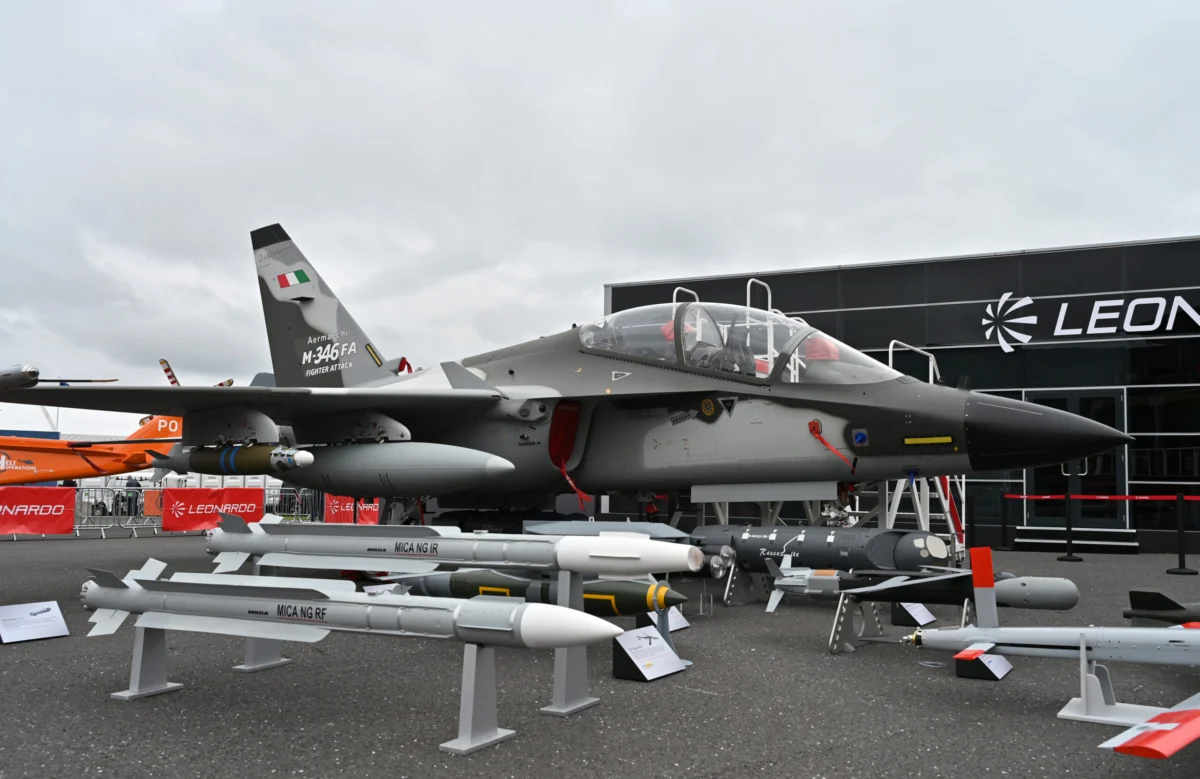
The Indonesian Ministry of Defense has formalized a significant agreement with Italian aerospace giant Leonardo for the procurement of 12 M-346F Block 20 light fighter aircraft, marking a pivotal step in the modernization of the Indonesian Air Force (Tentara Nasional Indonesia Angkatan Udara, or TNI-AU). Announced during the Farnborough International Airshow 2024, the deal underscores Jakarta’s commitment to diversifying its defense portfolio while addressing the pressing need for versatile, multirole combat platforms. This acquisition makes Indonesia the first customer in Asia to opt for the advanced Block 20 variant, a platform specifically designed to bridge the gap between advanced pilot training and high-end frontline combat operations.
Lorenzo Mariani, Leonardo’s CEO and General Manager, emphasized the strategic importance of the sale, noting that the introduction of the M-346F in Indonesia serves as clear evidence of the aircraft system’s inherent quality and the country’s growing trust in Leonardo’s multi-domain capabilities. The contract is not merely a hardware purchase; it includes a comprehensive package for the localization of support services, maintenance, repair, and overhaul (MRO) capabilities, and a robust framework for human capital development within the Indonesian defense industry.
Technical Evolution: From Trainer to Light Fighter
While the M-346 Master is globally recognized as one of the world’s premier advanced jet trainers, the M-346F (Fighter) variant represents a significant evolution into the combat space. The Block 20 standard, which Indonesia is set to receive, transforms the aircraft into a dedicated light fighter capable of performing a wide array of missions, including air-to-air engagement, air-to-ground strikes, and tactical reconnaissance.
The M-346F Block 20 is equipped with a sophisticated suite of avionics and hardware that distinguishes it from the baseline training model. Key features include:
- Active Electronically Scanned Array (AESA) Radar: The integration of the Grifo-346 AESA radar provides the aircraft with superior detection and tracking ranges, as well as the ability to engage multiple targets simultaneously in high-clutter environments.
- Link 16 Data Link: This allows for seamless integration into modern battlespaces, enabling the aircraft to share real-time data with other friendly assets, including F-16s, Rafales, and ground-based command centers.
- Weaponry and Hardpoints: The aircraft features seven external hardpoints, allowing it to carry a diverse loadout of air-to-air missiles, precision-guided munitions, rockets, and gun pods.
- Electronic Countermeasures (ECM): A comprehensive self-protection suite ensures the aircraft can operate in contested environments by detecting and jamming enemy radar and missile threats.
- Aerial Refueling: The inclusion of a refueling probe significantly extends the aircraft’s mission endurance and operational radius, a critical requirement for patrolling the vast Indonesian archipelago.
Leonardo has reported that the M-346 family has logged over 170,000 flight hours to date, demonstrating a high level of operational maturity and reliability. The first of the Indonesian M-346Fs is scheduled for delivery in 2030, reinforcing the TNI-AU’s long-term fleet transition plan.
Strategic Context: Navigating a Complex Defense Landscape
Indonesia’s decision to acquire the M-346F occurs against a backdrop of complex geopolitical shifts and a unique domestic procurement strategy. For decades, Jakarta has pursued a policy of "defense diversification," intentionally sourcing military hardware from a variety of nations to avoid over-reliance on a single supplier. This strategy is partly a legacy of the 1990s and early 2000s, when U.S.-led arms embargoes severely degraded Indonesia’s combat readiness.
Currently, the TNI-AU operates what analysts describe as a "hotchpotch" fleet. This includes American Lockheed Martin F-16 Fighting Falcons, Russian Sukhoi Su-27 and Su-30 Flankers, and South Korean KAI T-50i Golden Eagles. Furthermore, Indonesia is in the process of inducting 42 French Dassault Rafale fighters, a deal that represents one of the largest defense investments in the country’s history.
The addition of the Italian M-346F adds another layer of complexity to this ecosystem. Alban Sciascia, director of the consultancy firm PT Semar Sentinel Indonesia, noted that while diversification provides political autonomy, it creates significant hurdles for joint operations. "The Indonesian Armed Forces have been facing existing challenges related to interoperability," Sciascia observed. "It’s no secret that Indonesia has been focusing on procuring different equipment from different countries as part of its diversification strategy, but its joint operations concept is limited because of the relative inability to get all this equipment interoperating on the battlefield."
The Pivot from the KF-21 and Regional Ambitions
The M-346F deal also signals a potential shift in Indonesia’s approach to its medium-term fighter requirements. Jakarta was an early partner in the South Korean KF-21 Boramae program, intended to develop a 4.5-generation fighter. However, the partnership has been marred by payment delays and technical disputes, leading Jakarta to recently scale back its financial commitment and production plans for the KF-21.
Simultaneously, Indonesian officials have expressed interest in various other platforms, including the Turkish TAI Kaan fifth-generation fighter and even the Chinese Chengdu J-10. Defense Minister and President-elect Prabowo Subianto has been a vocal proponent of rapid modernization, aiming to achieve the "Minimum Essential Force" (MEF) goals—a strategic roadmap intended to ensure the military can effectively defend the nation’s sovereignty across its 17,000 islands.
The M-346F Block 20 serves as a pragmatic solution to fill the "middle tier" of the air force. It is more capable than the existing T-50i trainers but significantly more cost-effective to operate than heavy, twin-engine fighters like the Su-30 or the Rafale. For routine maritime patrols and internal security missions, the M-346F offers a balanced ratio of capability to operating cost.
Expanding the Partnership: Naval Aviation and Beyond
The collaboration between Jakarta and Leonardo extends beyond fixed-wing combat aircraft. Parallel to the M-346F announcement, the Indonesian Ministry of Defense and PT ESystem Solutions signed a letter of intent (LoI) with Leonardo for the prospective procurement of AW149 medium helicopters for the Indonesian Navy (TNI-AL).
The AW149 is a versatile platform capable of performing search and rescue (SAR), disaster relief, and maritime security operations. The Indonesian Navy currently relies on a fleet of eleven Airbus AS565 Panther helicopters for shipborne operations. However, given the immense size of Indonesia’s territorial waters and its Exclusive Economic Zone (EEZ), the requirement for more robust, medium-lift naval helicopters is urgent.
If the LoI transitions into a firm contract, the AW149s would likely be configured for both land-based and embarked operations, providing the Navy with a modern tool for monitoring illegal fishing, piracy, and providing rapid response during the natural disasters that frequently strike the region.
Industrial Implications and Localization
A core component of the M-346F deal is the "localization of support." This aligns with Indonesia’s Law No. 16 of 2012 on the Defense Industry, which mandates that foreign defense acquisitions must include counter-trade, local content, and technology transfer components.
By establishing maintenance and training hubs within Indonesia, Leonardo is positioning itself as a long-term partner rather than just a vendor. This move is expected to benefit state-owned enterprises like PT Dirgantara Indonesia (PTDI), which could potentially play a role in the long-term sustainment of the M-346 fleet. Human capital development, including the training of Indonesian engineers and technicians in Italy and on-site, will enhance the domestic aerospace sector’s ability to manage high-tech systems.
Analysis of Regional Impact
The acquisition of the M-346F Block 20 by Indonesia is likely to be watched closely by neighboring nations in Southeast Asia. The South China Sea remains a flashpoint of regional tension, and Indonesia’s Natuna Islands fall within the "nine-dash line" claimed by China. While Indonesia is not a formal claimant in the South China Sea disputes, it has frequently clashed with Chinese fishing vessels and coast guard ships in its EEZ.
A fleet of 12 agile, AESA-equipped light fighters provides the TNI-AU with a credible deterrent for air policing and maritime surveillance. The M-346F’s ability to operate from shorter runways and its lower logistical footprint compared to heavy fighters make it ideal for deployment to forward bases in remote regions.
In conclusion, the deal for the Leonardo M-346F Block 20 represents a calculated move by Jakarta to modernize its air power while balancing the economic and political complexities of global defense procurement. While the challenge of integrating such a diverse fleet remains, the high-tech capabilities of the Block 20 variant will undoubtedly provide the Indonesian Air Force with a modern, flexible edge as it navigates the security challenges of the 2030s and beyond. The success of this program will depend not only on the delivery of the airframes but on the successful realization of the promised technology transfers and the integration of these Italian-made jets into Indonesia’s broader multi-national defense architecture.

Related Posts
Pentagon Forges Landmark Seven-Year Agreements with Boeing and RTX to Accelerate Standard Missile-3 Production and Stabilize Defense Supply Chains
Boeing Unveils Ultra Low-Cost Seeker to Enhance Missile Inventory and Combat Cost Challenges in Modern Warfare