ICC’s Confirmation of Charges Against Khaled Mohamed Ali El Hishri Marks Historic Milestone for International Justice in Libya
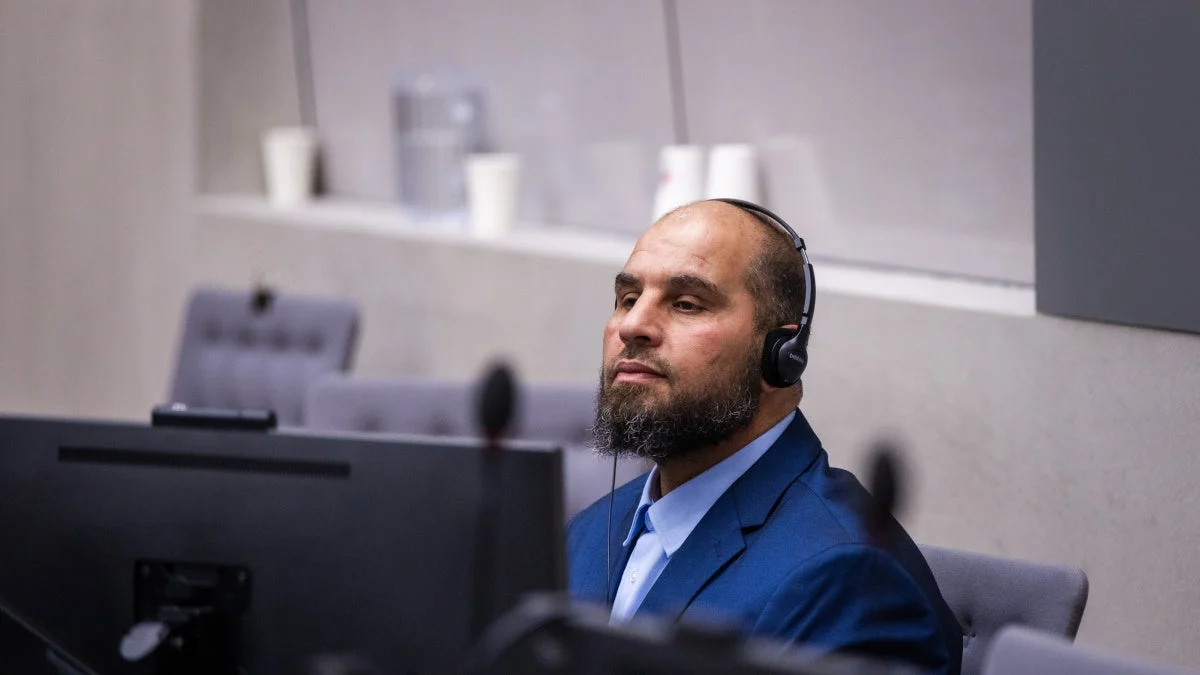
The International Criminal Court (ICC) has formally confirmed 17 counts of war crimes and crimes against humanity against Khaled Mohamed Ali El Hishri, a pivotal development that signals the first trial to emerge from the court’s 15-year investigation into the situation in Libya. In a unanimous decision delivered on July 16, 2026, a panel of three pretrial judges ruled that there are substantial grounds to believe El Hishri is responsible for a litany of atrocities committed against detainees in Tripoli’s Mitiga Prison. This landmark ruling by the Hague-based court has been hailed by human rights organizations and legal experts as a significant breakthrough in the long-standing quest to dismantle the culture of impunity that has plagued the North African nation since the 2011 uprising.
The charges against El Hishri encompass a harrowing range of abuses allegedly perpetrated since 2015, including murder, torture, rape, sexual violence, enslavement, and persecution. The pretrial chamber’s decision to send the case to trial marks the first time a suspect will face the ICC’s judiciary for crimes committed during Libya’s protracted period of civil unrest and militia rule. While the court has issued numerous warrants over the last decade and a half, the El Hishri case represents the most tangible progress toward a public accounting of the systemic violence inherent in Libya’s detention systems.
A Landmark Ruling in The Hague
The confirmation of charges follows an intensive hearing held between May 19 and 21, 2026. During these proceedings, the Office of the Prosecutor (OTP) presented a comprehensive body of evidence, much of it derived from survivor testimony and forensic documentation. The evidence links El Hishri to the direct or indirect supervision of abuses affecting more than 900 detainees at the Mitiga facility during his period of control. The judges noted that the prosecutor’s list of incidents was non-exhaustive, suggesting that the upcoming trial could expand to include further victims and specific events as more evidence is processed.
"The ICC’s decision to move its first Libya case to trial opens a long-awaited door to justice for victims of Libya’s abusive detention system," stated Alice Autin, an international justice researcher at Human Rights Watch. The organization emphasized that for the trial to be truly effective, the Libyan authorities must demonstrate a genuine commitment to the process by surrendering other suspects still at large within the country’s borders.
The Scope of Atrocities at Mitiga Prison
Mitiga Prison, located within a military airbase in Tripoli, has long been a focal point of international concern. Nominally under the control of the Ministry of Interior, the facility has effectively been managed by the Special Deterrence Forces (SDF), also known as Rada. Human rights monitors have frequently documented allegations of extrajudicial killings, prolonged arbitrary detention, and systematic torture within its walls.
The 17 counts confirmed against El Hishri provide a chilling blueprint of the alleged operations at Mitiga. According to the ICC’s findings, detainees were subjected to "pervasive and systematic" violence designed to extract confessions or punish political opposition. The inclusion of "enslavement" as a charge is particularly notable, reflecting allegations that detainees were forced into labor or treated as property by those running the facility. The court’s recognition of "persecution" as a crime against humanity further underscores the targeted nature of the violence against specific groups based on political or social affiliations.
Chronology of the Libya Investigation (2011–2026)
The path to the El Hishri trial has been fraught with legal and political hurdles. The ICC’s involvement in Libya began on February 26, 2011, when the United Nations Security Council unanimously adopted Resolution 1970, referring the situation in Libya to the ICC prosecutor. This was a rare instance of a non-member state of the Rome Statute being brought under the court’s jurisdiction via the Security Council.
- 2011: The ICC issues arrest warrants for Muammar Gaddafi, Saif al-Islam Gaddafi, and Abdullah al-Senussi. Muammar Gaddafi is killed later that year.
- 2014–2020: Libya descends into a second civil war. The ICC issues warrants for various commanders, including Al-Tuhamy Mohamed Khaled and Mahmoud al-Werfalli, many of whom are later reported killed or remain fugitives.
- January 2025: Osama Elmasry Njeem, a co-suspect of El Hishri, is arrested in Italy but released shortly after, leading to a diplomatic and legal dispute between the ICC and the Italian government.
- May 2025: In a significant legal move, the Libyan government lodges a declaration accepting the ICC’s jurisdiction for crimes committed between 2011 and 2027.
- July 2025: Khaled Mohamed Ali El Hishri is arrested by German authorities based on an ICC warrant.
- December 2025: Following domestic legal proceedings in Germany, El Hishri is surrendered to the ICC and transferred to the detention center in Scheveningen, The Hague.
- July 15, 2026: Judges reject El Hishri’s challenge to the court’s jurisdiction.
- July 16, 2026: The ICC pretrial chamber confirms 17 counts of war crimes and crimes against humanity.
Jurisdictional Challenges and the Defense Argument
Prior to the confirmation of charges, El Hishri’s defense team filed a vigorous challenge against the ICC’s authority to try him. They argued that the 2025 declaration by the Libyan government—which extended the court’s jurisdiction—was legally invalid under Libyan domestic law. Furthermore, the defense contended that the original 2011 UN Security Council referral did not cover the specific timeframe or the specific facility (Mitiga) involved in El Hishri’s case.
However, on July 15, 2026, the judges dismissed these arguments. The court ruled that the 2025 declaration was a valid exercise of state sovereignty and that the UN referral provided a broad mandate to investigate all serious international crimes in Libya. This ruling is viewed as a vital precedent, reinforcing the ICC’s ability to prosecute crimes that occur years after an initial referral if the host state consents to continued oversight.
The Controversy of Osama Elmasry Njeem and Italian Cooperation
The El Hishri case is inextricably linked to that of Osama Elmasry Njeem, another high-profile suspect wanted for crimes at Mitiga Prison. Njeem’s trajectory highlights the complexities of international cooperation. In January 2025, Njeem was apprehended in Italy, but he was released just two days later on "procedural grounds" and allowed to return to Libya.
The ICC subsequently found that Italy had breached its international obligations to the court. In January 2026, the ICC referred Italy to the Assembly of States Parties for further action. Meanwhile, a Tripoli court sentenced Njeem in June 2026 to seven years and four months in prison for torture. However, Human Rights Watch and other observers have noted that the domestic trial was severely limited in scope, covering only 10 detainees and one death, whereas the ICC warrant alleges Njeem’s involvement in the killing of at least 34 people and broader crimes against humanity. The ICC continues to demand Njeem’s surrender, arguing that the domestic proceedings do not sufficiently mirror the gravity or the scale of the international charges.
Complementarity and the Failure of Domestic Justice
The ICC operates under the principle of complementarity, meaning it acts as a "court of last resort." It only intervenes when national judicial systems are unable or unwilling to genuinely carry out investigations and prosecutions. The recent acquittal of Abdullah al-Senussi by a Tripoli appeals court in May 2026 has served as a stark reminder of the limitations of the Libyan judiciary.
Al-Senussi, the former intelligence chief under Muammar Gaddafi, was acquitted of charges related to the 2011 revolution despite overwhelming evidence of his role in the crackdown on protesters. The ICC had previously declared the case against al-Senussi inadmissible on the assumption that Libya would provide a fair and genuine trial. The subsequent acquittal, described by observers as the result of "deeply flawed proceedings," suggests that the Libyan system remains vulnerable to political pressure and lacks the robust legal framework necessary to handle complex international crimes.
Broad Implications for Libya and Global Justice
The transition of the El Hishri case to the trial phase has profound implications for the future of Libya. For over a decade, the country has been divided between rival administrations in the East and West, each backed by various armed groups. In such an environment, the ICC provides a neutral platform where evidence can be weighed without the immediate threat of militia interference.
The success of the El Hishri trial will depend heavily on the continued support of the international community and the cooperation of the Libyan General Prosecutor. Currently, eight other suspects remain fugitives, and their whereabouts range from the militia-controlled suburbs of Tripoli to the eastern regions under the control of the Libyan National Army.
The ICC’s deputy prosecutor has recently briefed the UN Security Council, noting that while there have been flashes of cooperation, the overall response from Libyan authorities remains "inadequate." The court’s ability to secure the arrest of the remaining fugitives will be the ultimate test of Libya’s stated desire to rejoin the international community as a state governed by the rule of law.
As the legal world looks toward the announcement of a trial start date, the El Hishri case stands as a beacon for victims who have spent years in the shadows of Mitiga Prison. It serves as a warning to commanders and officials that the passage of time and the complexities of civil war do not provide a permanent shield against the reach of international law. The proceedings in The Hague will likely be closely monitored not only by Libyans but by legal scholars worldwide, as they represent a critical attempt to convert the promise of the Rome Statute into a tangible verdict of justice.

Related Posts

Human Rights Watch Calls for Investigation into Death of Detainee Following Removal from Najaf Hospital by Iraqi Drug Police
Human Rights Watch Urges UN Security Council to Extend Lebanon Peacekeeping Mission Amid Escalating Conflict and Humanitarian Crisis