Hungary Establishes National Asset Recovery and Protection Office to Combat Corruption and Safeguard Public Wealth
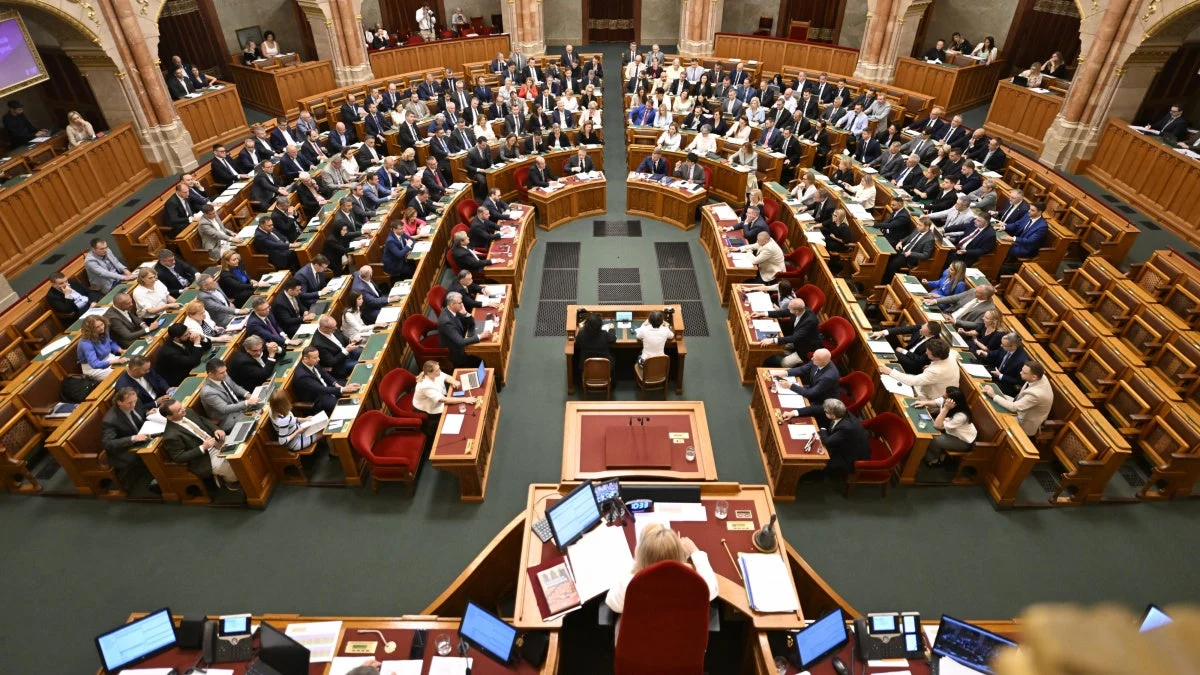
The Hungarian Parliament on July 28 formally adopted landmark legislation establishing the National Asset Recovery and Protection Office (Nemzeti Vagyonvisszaszerzési és Vagyonvédelmi Hivatal, NVVH), signaling a significant shift in the nation’s institutional framework for managing public resources. This new autonomous body is designed to serve as a central pillar in the government’s stated mission to investigate the mismanagement of public assets, recover wealth allegedly transferred through unlawful means under previous administrations, and implement preventative measures to forestall future fiscal abuses. The passage of this law follows weeks of intense domestic debate and international scrutiny, culminating in a final legislative version that incorporates several critical judicial safeguards and human rights protections that were notably absent from the initial proposals.
The establishment of the NVVH comes at a pivotal moment for Hungary, as the country continues to navigate complex negotiations with the European Commission regarding the release of frozen recovery funds. By creating a dedicated office with the specific mandate of asset recovery, the Hungarian government aims to demonstrate a commitment to transparency and the protection of the "national purse." The legislation, officially indexed as Act XXXIV of 2024, grants the NVVH expansive authority to probe suspected instances of misappropriation or the unauthorized handling of state and municipal assets. Beyond simple investigation, the office is empowered to initiate civil asset recovery proceedings in court or, in cases where criminal activity is suspected, refer findings to the appropriate law enforcement agencies for prosecution.
Historical Context and the Drive for Reform
To understand the emergence of the NVVH, one must look at the broader landscape of Hungarian politics and its relationship with European Union institutions over the past decade. Hungary has frequently been at the center of "Rule of Law" discussions within the European Council and Parliament. For years, international monitors and domestic opposition groups have raised concerns regarding the transparency of public procurement and the alleged funneling of state assets into private hands.
In 2022, the European Commission triggered the Rule of Law Conditionality Mechanism against Hungary, a move that led to the freezing of billions of euros in cohesion funds. In response, the Hungarian government proposed a series of "remedial measures" intended to strengthen the anti-corruption framework. The NVVH is viewed by many analysts as a continuation of this reform trajectory, following the earlier establishment of the Integrity Authority in late 2022. While the Integrity Authority focuses primarily on EU-funded projects, the NVVH has a broader domestic scope, focusing on the preservation and recovery of national wealth regardless of the funding source.
The Legislative Timeline and the Role of Public Consultation
The path to the NVVH’s creation was marked by a rapid but contentious legislative process. The initial draft of the bill was published for public consultation in June, sparking immediate pushback from legal experts and civil society organizations. Groups such as the Hungarian Helsinki Committee and Transparency International Hungary argued that the original text granted the executive branch nearly unfettered power to investigate individuals and private entities without sufficient check or balance.
The timeline of the office’s inception is as follows:
- Early June: The Ministry of Justice releases the first draft of the NVVH legislation for a brief public comment period.
- Late June: Civil society groups issue formal opinions warning that the draft lacks judicial oversight and could be used as a tool for political intimidation.
- July 15: The government introduces an amended version of the bill to Parliament, incorporating several recommendations regarding legal remedies.
- July 28: Parliament votes to adopt the legislation.
- August (Expected): Parliament is scheduled to elect the President and Deputy Presidents of the NVVH, who will serve multi-year terms to ensure institutional continuity.
The inclusion of public consultation, though criticized by some for being too brief, ultimately led to tangible changes in the law. This process highlighted the evolving dynamic between the Hungarian state and non-governmental monitors, illustrating that meaningful dialogue can lead to the strengthening of human rights safeguards within administrative law.
Mandate and Operational Powers of the NVVH
The NVVH is not merely an advisory body; it is equipped with a suite of investigative tools that rival those of traditional law enforcement agencies in specific administrative contexts. Under the newly passed law, the office has the authority to:
- Request and Seize Documentation: The office can demand records from state institutions, local governments, and private companies that have been involved in the management of public assets.
- Conduct On-Site Inspections: Investigators may enter premises to verify the status and handling of state-owned property.
- Initiate Civil Litigation: If the NVVH determines that an asset was transferred unlawfully—for instance, through an undervalued sale of state land or a lopsided public-private partnership—it can sue in civil court to have the contract voided and the asset returned.
- Financial Auditing: The office can trace financial flows to identify the ultimate beneficiaries of public funds.
The office’s leadership—a President and two Deputy Presidents—will be elected by a two-thirds majority in Parliament. This high threshold for election is intended to provide the leadership with a veneer of cross-party legitimacy, though critics remain wary of the governing party’s supermajority and its ability to appoint loyalists to these roles.
Addressing Rule-of-Law Concerns and Human Rights Safeguards
One of the most significant aspects of the final legislation is the introduction of judicial oversight. In the initial draft, the NVVH could have theoretically imposed restrictive measures on individuals or entities without a clear path for legal appeal. Civil society groups highlighted that such "broad investigative powers would have little or no effective remedy against measures potentially violating their rights."
Responding to these criticisms, the Hungarian government amended the bill to ensure that any measure taken by the NVVH that restricts individual rights—such as the freezing of assets or the compelled production of private data—is subject to review by a court of law. Furthermore, the law establishes an internal Human Rights Officer within the NVVH.
While the Human Rights Officer does not possess the power to veto or overturn the President’s decisions, the role is designed to act as an internal conscience for the agency. The officer is tasked with:
- Receiving and investigating complaints from individuals affected by NVVH actions.
- Reviewing the office’s internal protocols to ensure compliance with the European Convention on Human Rights.
- Issuing public findings and annual reports on the office’s human rights record.
This "ombudsman-style" addition is a unique feature in Hungarian administrative law and is intended to mitigate the risk of the office being used for arbitrary interference in private affairs.
Supporting Data: Corruption Perception and Economic Stakes
The creation of the NVVH is set against a backdrop of challenging economic indicators and corruption metrics. According to Transparency International’s 2023 Corruption Perceptions Index (CPI), Hungary ranked as the lowest-scoring country in the European Union, a position that the government has frequently disputed, citing methodological biases. However, the economic reality of the situation is undeniable: as of mid-2024, nearly €20 billion in various EU funds remained withheld from Hungary due to concerns over judicial independence and anti-corruption measures.
The potential "recovery value" of the NVVH’s work is also a point of significant interest. While the government has not provided a specific estimate of the assets it hopes to recover, previous parliamentary inquiries into "privatization abuses" of the 1990s and early 2000s suggested that billions of forints in state wealth were lost through opaque transactions. If the NVVH is successful in even a fraction of its recovery efforts, it could provide a meaningful boost to the national treasury at a time when the budget deficit remains a primary concern for the Ministry of Finance.
Stakeholder Reactions and Official Statements
The reaction to the NVVH’s establishment has been divided along predictable lines, reflecting the polarized nature of Hungarian politics.
Government Perspective: Proponents of the bill within the Fidesz-KDNP coalition have hailed the office as a "shield for national wealth." Minister of Justice Bence Tuzson has emphasized that the office is a response to long-standing public demand for accountability. "The Hungarian people deserve to know that their taxes are being used for the public good, and that any assets taken from the state through backroom deals will be returned," a spokesperson for the ministry stated following the vote.
Opposition and Civil Society: The reaction from the opposition has been one of "cautious skepticism." While few politicians are willing to vote against a body that claims to fight corruption, many have questioned whether the NVVH will investigate current government-linked entities or focus solely on the "previous governments" mentioned in the preamble of the law. The Hungarian Helsinki Committee noted that while the inclusion of judicial oversight is a "victory for the rule of law," the true test will be the office’s independence in practice. "Institutions are only as good as the people who run them and the autonomy they are permitted to exercise," the group noted in a recent briefing.
International Observation: In Brussels, the move is being watched as part of the broader "milestones" Hungary must meet. While the European Commission has not yet issued a formal statement on the NVVH specifically, it has previously indicated that any new anti-corruption body must be "functionally independent" and "adequately resourced" to be considered a valid remedial measure.
Analysis of Implications and Future Outlook
The establishment of the NVVH represents a dual-track strategy by the Hungarian government. On one hand, it serves as a domestic political tool, allowing the administration to fulfill promises of "holding the past accountable." On the other, it serves as a diplomatic signal to the European Union that Hungary is willing to build new institutional architecture to safeguard the rule of law.
However, the success of the NVVH will depend on three critical factors:
- Impartiality: If the office only pursues investigations into political rivals or defunct administrations, it will likely be dismissed by the international community as a political instrument rather than a genuine anti-corruption body.
- Transparency: The office must operate with a high degree of transparency. The public findings of the Human Rights Officer and the clarity of the office’s annual reports will be essential for building public trust.
- Judicial Deference: The effectiveness of the new judicial oversight mechanism will depend on whether the Hungarian courts feel empowered to rule against the NVVH in cases of overreach.
As Hungary prepares to elect the leadership of the NVVH in late August, the eyes of both the Hungarian public and European regulators will be on the selection process. The individuals chosen to lead this office will inherit a mandate that is as legally complex as it is politically sensitive.
In the broader European context, the NVVH could serve as a case study for how member states under "Rule of Law" pressure can adapt their domestic legislation to meet international standards while maintaining a focus on national interests. If the office operates proportionately and respects due process, it could become a model for asset recovery in the region. If it fails to do so, it may become another point of contention in the ongoing struggle between Budapest and Brussels. For now, the legislation stands as a significant, if contested, step toward a more robust framework for the protection of public assets in Hungary.

Related Posts

Human Rights Watch Calls for Investigation into Death of Detainee Following Removal from Najaf Hospital by Iraqi Drug Police

Human Rights Watch Urges UN Security Council to Extend Lebanon Peacekeeping Mission Amid Escalating Conflict and Humanitarian Crisis