Global Electrification Targets Take Center Stage at London Climate Action Week Ahead of COP31
The global climate policy landscape is undergoing a fundamental shift as electrification moves from the periphery of technical discussions to the absolute center of international diplomatic strategy. During the recent London Climate Action Week, the discourse surrounding the transition to a low-carbon economy reached a new milestone with the formal launch of the Electrify Now campaign. This initiative has provided significant momentum to a specific, ambitious target first introduced during the Bonn climate talks: a global commitment to ensure that electricity provides 35% of the world’s final energy consumption by 2035. This represents a substantial increase from the current level, which sits just above 20%.
As the international community prepares for future summits, this 35% target is being framed as one of the defining tests for COP31, set to be hosted by Türkiye. For the summit to be viewed as a success, experts argue it must move beyond the negotiation of abstract texts and provide a concrete roadmap for replacing fossil fuels in transport, domestic heating, heavy industry, and everyday infrastructure with clean, renewable electricity. For the African continent, this shift represents a dual reality: an extraordinary opportunity to bypass traditional industrial hurdles and an immense challenge regarding infrastructure and financing.
The Electrify Now Campaign and the 35% Target
The Electrify Now campaign serves as a rallying point for policymakers, NGOs, and private sector leaders who recognize that decarbonizing the power grid is only half the battle. The other half involves shifting energy demand away from the direct combustion of coal, oil, and gas toward electric-powered systems. Currently, the global energy mix is dominated by fossil fuels used directly in internal combustion engines, gas boilers for heating, and coal-fired furnaces in steel and cement production.
The proposed target—35% electrification of final energy consumption by 2035—is rooted in data provided by the International Energy Agency (IEA) and the International Renewable Energy Agency (IRENA). These organizations have long argued that electrification is the most efficient way to decarbonize. Electric motors are significantly more efficient than internal combustion engines, and heat pumps can provide several units of heat for every unit of electricity consumed, far outperforming gas furnaces.
To reach the 35% threshold, the world must accelerate the adoption of electric vehicles (EVs), scale up the installation of industrial-scale heat pumps, and modernize regional power grids to handle increased loads. The campaign emphasizes that this is not merely a technical adjustment but a wholesale reimagining of the global economy.
A Chronology of Global Climate Commitments
The journey toward the 35% target can be traced through a series of pivotal international meetings and agreements that have gradually narrowed the focus onto electrification.
- The Paris Agreement (2015): Established the framework for limiting global warming to well below 2 degrees Celsius, ideally 1.5 degrees. However, the initial focus was largely on general emissions reductions rather than specific sectoral transformations.
- COP26 in Glasgow (2021): Marked the first time a "phase-down" of coal was explicitly mentioned in a final UN climate agreement, signaling the beginning of the end for the most carbon-intensive electricity source.
- COP28 in Dubai (2023): Resulted in a historic pledge to triple global renewable energy capacity and double the rate of energy efficiency improvements by 2030. This provided the "supply-side" foundation for the electrification movement.
- Bonn Climate Change Conference (June 2024): Preliminary discussions introduced the concept of an explicit electrification target for end-use energy, moving the conversation from "how we make power" to "how we use power."
- London Climate Action Week (June 2024): The launch of Electrify Now solidified the 35% by 2035 target as a primary advocacy goal for the upcoming COP29 in Baku and the landmark COP31 in Türkiye.
The African Context: Leapfrogging Fossil Fuel Infrastructure
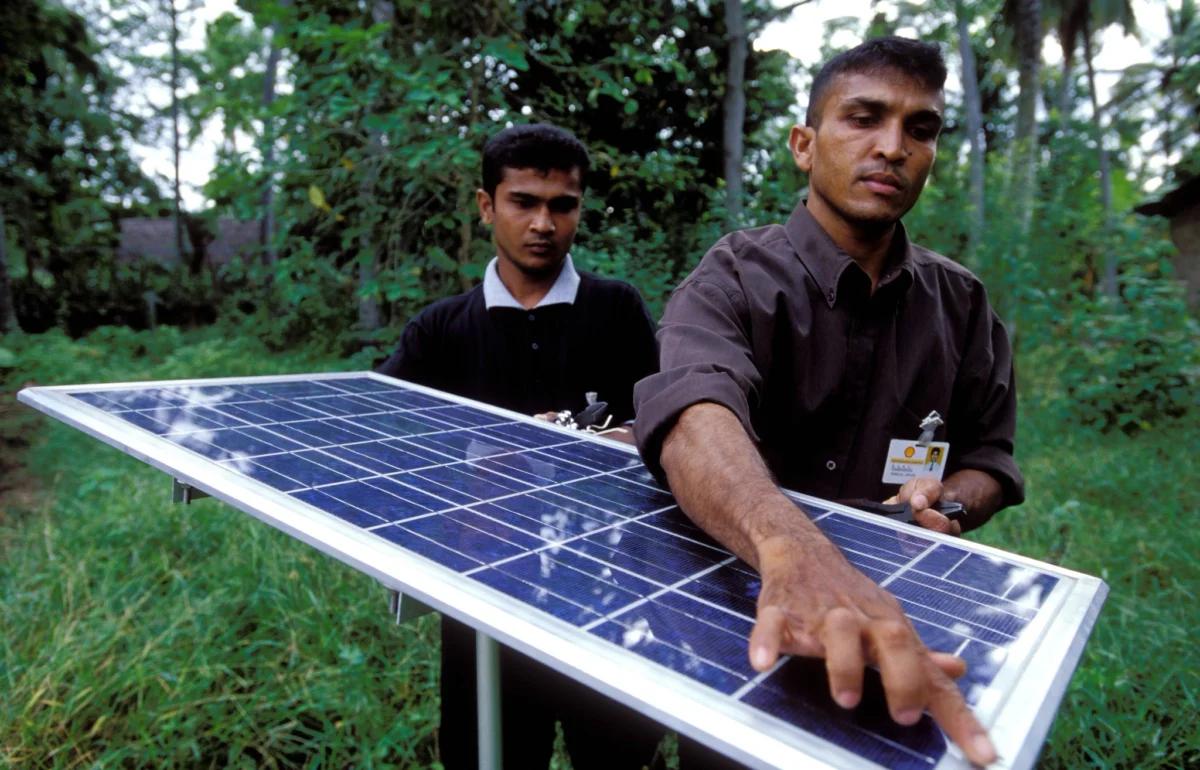
For Mohamed Adow, director of Power Shift Africa, and other continental leaders, the electrification agenda is inextricably linked to the issue of energy justice. Africa currently faces a staggering energy deficit, with more than 600 million people lacking access to reliable electricity. However, this deficit presents a unique strategic advantage: the ability to "leapfrog."
Unlike the United States, Europe, or China, many African nations are not burdened by trillions of dollars worth of "sunk costs" in aging fossil fuel infrastructure. In much the same way that many African countries skipped the landline telephone phase and went straight to mobile technology, the continent has the opportunity to skip the centralized, fossil-fuel-dependent grid phase and move directly to decentralized, renewable-based electric systems.
By building clean energy systems from the outset, African nations can avoid the eventual costs of decommissioning stranded assets—coal plants and gas pipelines that would otherwise have to be shut down before the end of their operational lives to meet climate goals. This "green-start" approach could position Africa as a global leader in the 21st-century energy economy.
Supporting Data and the Investment Gap
While the potential for electrification in Africa is vast, the financial data reveals a significant gap between ambition and reality. According to the IEA, Africa accounts for less than 3% of global energy investment, despite being home to nearly 20% of the world’s population.
- Solar Potential: Africa possesses 60% of the world’s best solar resources, yet it currently has only 1% of the world’s installed solar PV capacity.
- Investment Needs: To achieve universal energy access and meet electrification targets, annual investment in African energy systems needs to double to over $200 billion by 2030.
- Efficiency Gains: Shifting to electric transport in African cities could reduce oil import bills by billions of dollars annually, significantly improving the balance of payments for non-oil-producing nations.
The economic argument for electrification is bolstered by the falling costs of renewable technologies. Since 2010, the cost of solar energy has dropped by approximately 85%, and wind energy by nearly 50%. For many African countries, solar and wind are now the cheapest forms of new electricity generation, even without accounting for the environmental benefits.
Official Responses and Stakeholder Perspectives
The push for a 35% electrification target has drawn varied responses from global stakeholders. Mohamed Adow has been vocal in his support, stating that electrification is the "bridge" between climate mitigation and economic development. He emphasizes that for Africa, electricity is not just about lights; it is about industrialization, healthcare, and education.
In official circles, representatives from the African Union (AU) have signaled that the African Common Position on Energy Access and Just Transition will likely align with broader electrification goals, provided that developed nations fulfill their climate finance promises. At London Climate Action Week, European climate envoys expressed cautious optimism, noting that while the 35% target is technically feasible, it requires an unprecedented level of international cooperation on grid interconnections and technology transfers.
However, some industry groups in the Global North have raised concerns regarding the "critical mineral" supply chain. The transition to a highly electrified world will require massive amounts of copper, lithium, cobalt, and rare earth elements—many of which are mined in Africa. This has led to calls for a "New Deal" on minerals that ensures African nations benefit from the value-added processing of these resources, rather than just acting as raw material exporters.
Broader Implications and the Road to COP31
As the focus shifts toward Türkiye and COP31, the electrification debate will likely hinge on three critical pillars: finance, technology, and policy.
1. The Financial Architecture
The current global financial system is often cited as a barrier to African electrification. High interest rates and perceived risks mean that capital for renewable projects in Africa can be five times more expensive than in Europe or North America. Analysts suggest that COP31 must address the reform of Multilateral Development Banks (MDBs) to provide the low-cost, long-term financing necessary to build out continental grids.
2. Grid Modernization and Storage
Electrification at scale requires more than just generation; it requires "smart" grids and massive battery storage capacity to manage the variability of solar and wind power. For Africa, this means investing in regional power pools—such as the West African Power Pool (WAPP)—to allow countries with excess renewable energy to trade with their neighbors.
3. Policy and Regulation
For the 35% target to be met, national governments must implement policies that incentivize electrification. This includes phasing out fossil fuel subsidies, which currently total hundreds of billions of dollars globally, and redirecting those funds toward electric vehicle infrastructure and renewable energy rebates.
Conclusion: A Defining Moment for Global Energy
The move to place electrification at the center of the road to COP31 marks a maturation of the climate movement. It is a recognition that the transition is no longer just about "saving the planet" in an abstract sense, but about a practical, industrial, and economic overhaul of how the world functions.
For Africa, the stakes could not be higher. The successful adoption of the 35% electrification target by 2035 could provide the catalyst for a new era of sustainable industrialization, finally addressing the energy poverty that has hampered the continent’s growth for decades. As the Electrify Now campaign gains steam, the global community will be watching closely to see if the diplomatic rhetoric of London and Bonn can be translated into the wires, turbines, and batteries needed to power a cleaner future. The road to Türkiye is now clearly marked, and it is paved with high-voltage lines.

Related Posts
Constitutional Court of South Africa Bars Shell Oil Exploration in Landmark Victory for Environmental and Community Rights

The Battle for Saldanha Bay: South Africa’s Ambitious Ocean Economy Strategy Faces Legal and Environmental Reckoning