Germany Withdraws Naval Assets from Gulf of Aden Amid Growing Regional Instability and Technical Limitations
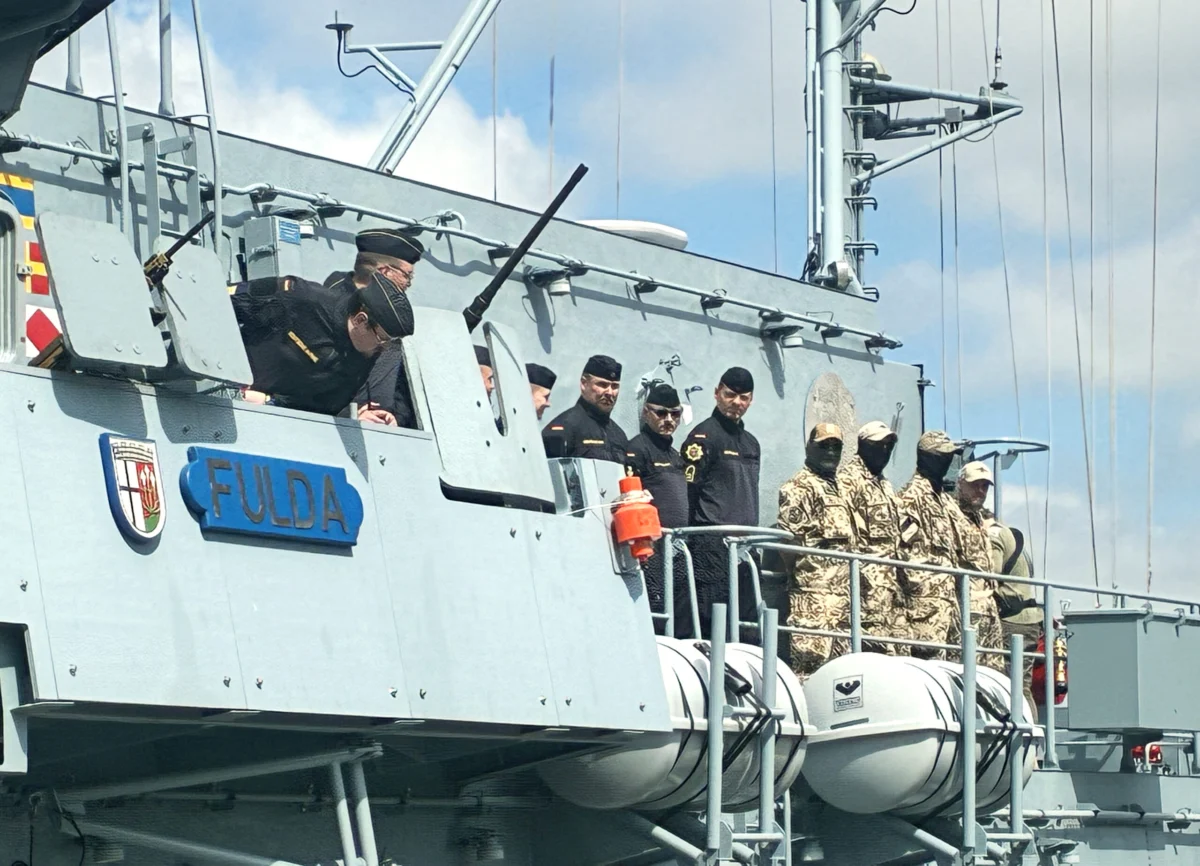
The German Federal Ministry of Defense has officially ordered the withdrawal of two naval vessels from their standby positions in the Gulf of Aden, signaling a significant shift in Berlin’s assessment of the security situation in the Middle East. The mine hunter Fulda and the support ship Mosel, which had been stationed in Djibouti for several weeks, have been instructed to redeploy to the eastern Mediterranean Sea. This move comes as German officials concede that the prospects for a multinational maritime security mission in the Strait of Hormuz have dimmed significantly following a resurgence of open hostilities between Iranian forces and the U.S.-led coalition.
The decision to relocate these assets reflects both a sober geopolitical recalculation and a candid admission of the technical limitations facing the German Navy’s aging fleet. While the vessels remain on standby, their retreat from the immediate vicinity of the Horn of Africa suggests that the "permissive environment" required by the German government for active engagement is no longer a realistic expectation in the short term.
The Geopolitical Context: A Conflict Without an End
The deployment of the Fulda and the Mosel was originally conceived as a proactive measure following the outbreak of the U.S.-Israeli conflict with Iran in late February 2026. As the war disrupted global shipping lanes, European powers felt increasing pressure to contribute to the protection of the Strait of Hormuz—a vital maritime chokepoint through which approximately 20% of the world’s petroleum liquids pass daily.
Berlin’s initial strategy was predicated on the hope that the conflict would reach a stabilization point by mid-summer, allowing for a "post-war" security mission. Such a mission was intended to be defensive and humanitarian in nature, focusing on the de-mining of sea lanes and the escorting of commercial tankers. However, the anticipated "ebb" in violence never materialized. Instead, the region has seen a volatile cycle of escalations, including renewed missile exchanges and drone strikes that have rendered the Persian Gulf and the Gulf of Oman increasingly hazardous for non-combatant vessels.
According to the Ministry of Defense, the current security climate is characterized by "unpredictable surges in kinetic activity," making it impossible to guarantee the safety of specialized units like mine hunters, which lack the robust air-defense systems necessary to survive in a high-intensity combat zone.
Chronology of the Deployment
The mission’s timeline highlights the rapid degradation of the regional security environment and the challenges of long-distance naval logistics:
- February 2026: Outbreak of hostilities between the United States, Israel, and Iran. Global oil prices spike, and insurance premiums for shipping in the Middle East skyrocket.
- May 4, 2026: The mine hunter Fulda departs its home port in Kiel. The departure is framed as a preparation for a "possible mission" to stabilize the Strait of Hormuz, contingent on a ceasefire or a significant reduction in hostilities.
- June 2026: The Fulda and the support vessel Mosel reach Djibouti, a strategic hub at the southern entrance to the Red Sea. During the transit through the high-threat Red Sea corridor, the German ships are escorted by the British Type 45 air-defense destroyer HMS Dragon, highlighting the vulnerability of the German units.
- July 2026: A brief lull in fighting sparks hope for a diplomatic resolution. However, by late July, hostilities resume with increased intensity, including attacks on maritime infrastructure.
- August 2026: The German Ministry of Defense announces the redeployment of the ships to the eastern Mediterranean, citing a lack of a "permissive environment" and technical concerns regarding the ships’ cooling systems.
Technical Limitations: Ships Out of Their Element
Beyond the high-level strategy, the redeployment has highlighted a practical issue within the German Navy: the suitability of its vessels for tropical operations. The Fulda, a Frankenthal-class mine hunter, and the Mosel, an Elbe-class replenishment ship, were designed decades ago with a primary focus on the cold waters of the North Atlantic and the Baltic Sea.
Navy officials have acknowledged that the cooling systems of these vessels, which utilize sea water to regulate the temperature of onboard machinery and electronic systems, have struggled to cope with the extreme temperatures of the Gulf of Aden and the Red Sea. In the peak of summer, sea surface temperatures in these regions can exceed 30°C (86°F), significantly reducing the efficiency of heat exchangers.
"The eastern Mediterranean offers a more suitable climate for these platforms while they remain in a holding pattern," a Ministry of Defense spokesperson stated. "Operating these specific ships in the Gulf of Aden for extended periods without an active mission objective places unnecessary strain on the crews and the hardware."
This technical hurdle underscores a broader debate within Germany regarding the modernization of its navy. Critics argue that if Germany wishes to project power or contribute to international security in "out-of-area" missions, it must invest in "tropicalized" vessels capable of sustained operations in the Global South.
International Reactions and "Symbolpolitik"
The decision to pull back has been met with a mix of understanding and criticism from the international community. Within Europe, there is a shared sense of frustration over the volatility of the conflict. Many European capitals have struggled to align their maritime strategies with the shifting proclamations of the U.S. administration, which has at times called for total military victory and at other times signaled a desire for an immediate, unconventional peace deal.
Sebastian Bruns, a prominent naval analyst and fellow at the Royal Swedish Society for Naval Sciences, characterized the original deployment as "Symbolpolitik"—symbolic politics. He argued that the German government moved the ships primarily to signal solidarity with the United States and other allies, despite the lack of a clear mandate or a safe operational environment.
"For highly specialized units like mine hunters, being kept on standby in a distant port without a clear mission feels like a waste of resources and a blow to crew morale," Bruns noted. He also predicted that the withdrawal might be framed by critics in Washington, particularly within the Trump administration, as a sign of "wavering resolve" or a "lack of staying power."
Conversely, some European partners see the move as a pragmatic preservation of assets. With the eastern Mediterranean also serving as a theater of interest due to its proximity to both the Middle East and the ongoing tensions in North Africa, the presence of the Fulda and the Mosel there provides Berlin with a more flexible—and safer—deployment option.
The Economic and Strategic Stakes of the Strait of Hormuz
The primary driver for the initial deployment remains the existential threat to global trade. The Strait of Hormuz is the world’s most important oil transit chokepoint. In 2025, data from the Energy Information Administration (EIA) indicated that nearly 21 million barrels of oil per day moved through the strait. Any prolonged closure or significant disruption would have a catastrophic impact on the German economy, which remains heavily dependent on industrial exports and stable energy prices.
By keeping the ships in the eastern Mediterranean rather than sending them back to Kiel, Germany is attempting to strike a balance. It is withdrawing from the immediate "line of fire" while remaining close enough to return if a credible international mission—likely under a United Nations or European Union (EUNAVFOR) mandate—is established.
Future Implications for the German Navy
The withdrawal of the Fulda and the Mosel raises critical questions about the future of German naval contributions to global security.
- The "Permissive Environment" Doctrine: Germany’s insistence on a low-threat environment before deploying specialized assets may limit its influence in future crises. As gray-zone warfare and asymmetric threats become the norm in maritime chokepoints, the "permissive environment" may become a relic of the past.
- Procurement and Readiness: The technical failure of the cooling systems serves as a wake-up call for the Bundeswehr. Future procurement cycles for the German Navy will likely prioritize multi-climate capabilities to ensure that "Symbolpolitik" can be backed by actual operational presence.
- Allied Coordination: The reliance on the British HMS Dragon for protection during the June transit highlights the interdependence of European navies. It also suggests that without a dedicated air-defense escort, smaller European vessels are effectively barred from high-risk zones.
Official Stance
In its concluding remarks, the Ministry of Defense emphasized that the redeployment does not constitute a permanent withdrawal from the goal of securing the Strait of Hormuz. "We remain committed to the freedom of navigation and the protection of international shipping lanes," the statement read. "The Fulda and the Mosel will continue their training and readiness cycles in the Mediterranean, prepared to move forward as soon as the conditions for a meaningful and secure international intervention are met."
For now, the crews of the Fulda and the Mosel wait in the calmer, cooler waters of the Mediterranean, serving as a floating reminder of the complexities inherent in modern naval diplomacy and the limitations of aging military hardware in an increasingly hot—both literally and figuratively—geopolitical landscape.

Related Posts
Pentagon Forges Landmark Seven-Year Agreements with Boeing and RTX to Accelerate Standard Missile-3 Production and Stabilize Defense Supply Chains
Boeing Unveils Ultra Low-Cost Seeker to Enhance Missile Inventory and Combat Cost Challenges in Modern Warfare