
Geopolitics of Energy and the Evolving Landscape of Global Climate Diplomacy in 2026
The global geopolitical landscape of 2026 has been defined by a return to resource-driven volatility, characterized by the dramatic abduction of Venezuela’s president by United States forces earlier this year and a protracted military conflict in Iran that continues to destabilize the Middle East. These events, driven by a resurgence of aggressive energy-first foreign policy under the current Trump administration, have forced a radical reassessment of how the international community approaches climate action and energy diplomacy. As disruption becomes the new normal, the intersection of fossil fuel control, trade protectionism, and superpower rivalry is fundamentally reshaping the transition to a low-carbon economy.
For decades, the climate movement operated under the assumption of a steady, if slow, progression toward multilateral cooperation. However, the events of 2025 and 2026 have shattered that paradigm. Today’s climate governance must navigate a world of escalating trade wars, regional genocides, the rise of nationalist movements, and a systemic challenge to the post-war multilateral order. The shift toward economic competitiveness and energy security as the primary drivers of policy has created a paradoxical environment where green industrialization is accelerating in some sectors while fossil fuel extraction is being pursued with renewed militaristic vigor in others.
A Chronology of Escalation: 2025–2026
The current state of global affairs is the result of a rapid series of shifts beginning in late 2024. To understand the present crisis, it is necessary to trace the timeline of events that led to the current fracturing of international relations.
- November 2024 – January 2025: Following the U.S. presidential election, the incoming administration signaled an immediate departure from international climate agreements, emphasizing "energy dominance" through the expansion of domestic oil and gas production and the deregulation of the fossil fuel sector.
- March 2025: The U.S. officially withdrew for a second time from the Paris Agreement, triggering a wave of similar exits from several fossil-fuel-dependent nations and weakening the United Nations Framework Convention on Climate Change (UNFCCC) process.
- June 2025: Tensions in the Persian Gulf escalated into open conflict. The "rumbling" Iran war, as it is now characterized, began as a series of maritime skirmishes over oil tanker routes in the Strait of Hormuz, eventually leading to sustained aerial campaigns and a disruption of roughly 20% of the world’s daily oil supply.
- October 2025: The U.S. and China entered a heightened phase of their "superpower rivalry," with both nations imposing sweeping tariffs on green technologies. The U.S. targeted Chinese-made electric vehicle batteries and solar components, while China restricted the export of critical minerals like lithium and cobalt.
- January 2026: In a move that shocked the international community, U.S. special operations forces conducted a raid in Caracas, resulting in what many world leaders have termed the "abduction" of the Venezuelan president. The administration justified the action as a "stabilization effort" to secure the world’s largest proven oil reserves amidst domestic unrest, but critics view it as a blatant grab for fossil fuel control.
The Return of Resource Realism
The primary driver behind these geopolitical maneuvers is a renewed focus on fossil fuel control. Under the Trump administration, the pursuit of oil and gas supplies has moved from the realm of commerce to the realm of high-stakes security operations. By securing Venezuelan crude and attempting to neutralize Iranian influence over Middle Eastern energy corridors, the U.S. aims to insulate itself and its closest allies from the price shocks that have plagued the global economy since the mid-2020s.
According to data from the International Energy Agency (IEA), global oil prices spiked to $135 per barrel following the January 2026 events in Venezuela, before stabilizing near $110. This volatility has incentivized a dual-track energy strategy: a desperate scramble for immediate fossil fuel security alongside a protectionist push for domestic renewable manufacturing.
However, this "resource realism" comes at a high cost to climate objectives. Andreas Sieber, head of political strategy at 350.org, and Cat Abreu, director of the International Climate Politics Hub, argue that the climate community’s traditional methods of diplomacy are no longer sufficient. The focus on voluntary emissions reductions and consensus-based treaties is being replaced by a landscape where energy policy is a weapon of economic and military statecraft.
US-China Rivalry and the Fragmentation of Trade
The US-China rivalry has become the central axis around which the global economy rotates. This competition is no longer just about ideological differences or regional influence; it is a race for dominance in the energy systems of the future. As power shifts from the West to the East and from the North to the South, the global economy is being pulled apart.
Trade data from the first half of 2026 shows a 15% decline in total goods exchanged between the U.S. and China compared to the same period in 2024. This decoupling is particularly evident in the "green industrialization" sector. While China continues to lead in the production of solar panels and wind turbines—controlling approximately 80% of the global supply chain for key components—the U.S. has pivoted toward aggressive "near-shoring" and "friend-shoring."
The Inflation Reduction Act’s successors in the U.S. have been paired with strict "Buy American" provisions that effectively bar Chinese components from the American grid. In response, China has solidified its "Belt and Road 2.0" initiative, focusing on securing energy partnerships with the Global South, offering infrastructure for minerals in an arrangement that bypasses Western financial systems.
Supporting Data: The Economic and Environmental Cost
The impact of this geopolitical volatility is measurable across several key indicators:
- Global Carbon Emissions: Despite the rhetoric of green industrialization, global CO2 emissions rose by 1.2% in 2025, largely due to the reactivation of coal plants in Europe and Asia as a response to the natural gas shortages caused by the Iran conflict.
- Energy Poverty: Spiraling inequality has seen energy costs as a percentage of household income rise by 30% in developing nations, as they are priced out of both the fossil fuel market and the high-cost, protectionist renewable market.
- Climate Finance: The promise of $100 billion in annual climate finance for developing nations has largely collapsed. In 2025, only $45 billion was recorded, as Western nations diverted funds toward military spending and domestic energy subsidies.
Official Responses and Global Reaction
The international response to the U.S. actions in Venezuela and the ongoing war in Iran has been deeply divided. The European Union, while maintaining its security alliance with the U.S., has expressed "grave concern" over the erosion of international law. In a statement released in February 2026, the European Commission noted, "The transition to a sustainable future cannot be achieved through the unilateral seizure of resources or the abandonment of multilateral frameworks."
In contrast, many nations in the Global South have reacted with a mixture of fear and pragmatism. The African Union and several Latin American blocs have called for a "new non-aligned movement" for energy, seeking to avoid being forced to choose between U.S. fossil fuel hegemony and Chinese technological dominance.
United Nations Secretary-General António Guterres, in a recent address, warned that the "superpower rivalry" is creating a "Great Fracture" that could render the 1.5°C climate goal permanently unreachable. "We are seeing the return of a world where might makes right," Guterres stated. "If we cannot cooperate on the most existential threat to our species—climate change—then we are truly lost."
Broader Impact and the Future of Climate Diplomacy
The implications of this new era are profound for the climate community. The "equitable green shift" that advocates have long called for is under threat from paradigms of economic competitiveness and national security. When energy is viewed through the lens of fascism or trade wars, the needs of the most vulnerable populations are often the first to be sacrificed.
However, some analysts see a silver lining in the shift toward green industrialization. The desire for energy independence is driving investment in renewables at a scale previously unseen, even if the motivations are nationalist rather than environmental. The challenge for climate diplomats in late 2026 is to harness this competitive drive while mitigating the harms of a fragmented global trade system.
To operate effectively in this volatile landscape, climate strategy must evolve. This involves:
- De-linking Climate from Traditional Diplomacy: Finding ways to advance decarbonization even when diplomatic relations between superpowers are frozen.
- Focusing on Supply Chain Resilience: Encouraging a diversity of manufacturing hubs to prevent any single nation from using green tech as a geopolitical lever.
- Redefining Energy Security: Shifting the definition of security from "access to foreign oil" to "resilient, localized renewable grids."
As 2026 progresses, the abduction of a president and the rumbling of distant wars serve as stark reminders that the path to a sustainable future is not a straight line. It is a battlefield where the forces of the old energy economy are fighting a desperate rearguard action, and where the new economy is being born in a crucible of competition and conflict. The task for the global community is to ensure that the transition remains "green" in more than just name, and "equitable" despite the forces pulling the world apart.

Related Posts
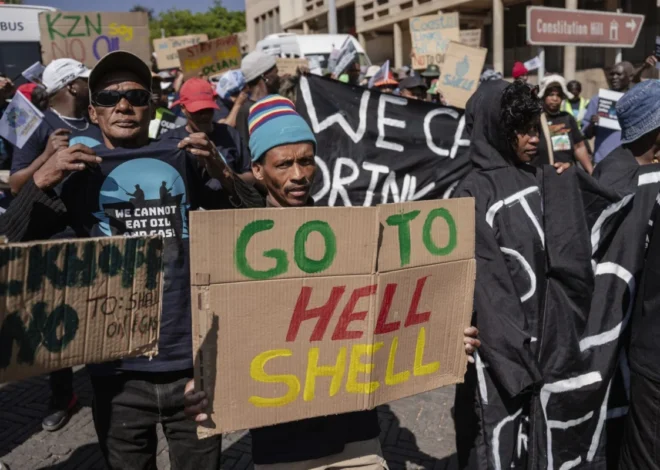
Constitutional Court of South Africa Bars Shell Oil Exploration in Landmark Victory for Environmental and Community Rights

The Battle for Saldanha Bay: South Africa’s Ambitious Ocean Economy Strategy Faces Legal and Environmental Reckoning