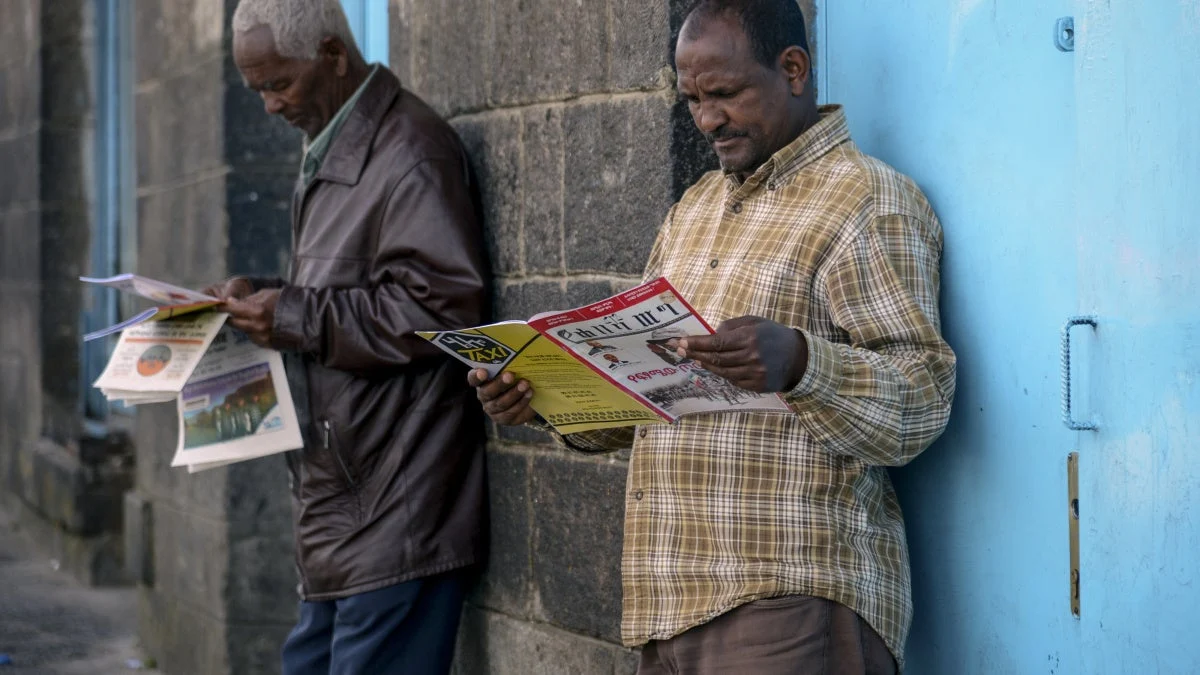
Escalating Repression of Independent Media in Ethiopia Highlights Deteriorating Press Freedom and Systematic Targeting of Journalists
The landscape for independent journalism in Ethiopia has reached a critical juncture as state authorities intensify what human rights observers describe as a systematic campaign to dismantle media freedom. On August 1, the situation escalated significantly when unidentified security personnel detained Yonas Kedir, the editor-in-chief of Addis Standard, one of the country’s most prominent independent news outlets. According to a formal statement released by the publication, Kedir was subjected to 24 hours of intensive questioning regarding the outlet’s editorial choices and reporting on sensitive national issues before being released. The pressure on the organization did not end with his release; the following day, a group of security and intelligence officials conducted a forceful raid on the Addis Standard offices, resulting in the damage and confiscation of essential broadcasting and editorial equipment.
This recent surge in hostilities is not an isolated event but rather part of a documented pattern of intimidation directed at Addis Standard and its staff. Only four months prior to the August incident, the outlet’s managing editor, Million Beyene, was seized by plainclothes agents and held incommunicado for nearly two weeks. During this period, Beyene was denied access to legal counsel and his family, a practice that international legal bodies categorize as a violation of fundamental human rights. He was eventually released without being formally charged with a crime, and the Ethiopian government has yet to provide a public justification for his detention. These actions underscore a climate where journalists are increasingly treated as security threats rather than essential components of a democratic society.
A Timeline of Regulatory and Extrajudicial Pressure
To understand the current crisis, it is necessary to examine the chronology of actions taken against independent media over the last eighteen months. The Ethiopian Media Authority (EMA), the government’s primary regulatory body, has increasingly transitioned from a facilitator of media growth to an instrument of censorship.
- February: The EMA took the unprecedented step of revoking the operating license of Addis Standard. The authority cited alleged "repeated violations" of the country’s media laws, though specific instances of these violations were not initially detailed in a transparent manner. The outlet is currently embroiled in a high-stakes legal battle, challenging the revocation in federal court.
- May: Reports emerged of multiple journalists being detained under the guise of national security, particularly those covering the ongoing conflicts in the Amhara and Oromia regions.
- June: During the national election period, the government’s rhetoric against "unauthorized" reporting intensified. Concerns raised by the Committee to Protect Journalists (CPJ) suggested that the elections served as a pretext to further tighten the noose around independent reporting.
- July 31: Just one day before the detention of Yonas Kedir, the EMA issued "final written warnings" to two other major independent broadcasters, Arts TV and Ahadu FM. The warnings alleged legal and ethical violations and carried the explicit threat of license suspension or total revocation if the outlets did not align their coverage with government standards.
- August 1-2: The detention of Yonas Kedir and the subsequent raid on Addis Standard offices occurred, marking a shift from regulatory pressure to direct physical intervention by security forces.
The Shrinking Space for Independent Voices
The harassment of Addis Standard reflects a broader, more aggressive campaign by the Ethiopian administration to silence dissent and deter reporting on issues deemed too sensitive for public consumption. Data from human rights organizations indicates that in the past year alone, Ethiopian authorities have arbitrarily arrested scores of journalists and media workers. In many cases, these individuals are held without charge for extended periods, a tactic intended to exert psychological pressure and encourage self-censorship among their peers.
The revocation of accreditation is another tool in the government’s arsenal. International news organizations have not been immune; for instance, the accreditation of a Reuters journalist was revoked following an investigative report that the government deemed unfavorable. This strategy serves two purposes: it limits the flow of objective information to the international community and signals to local journalists that even the protection of a global news agency is insufficient to shield them from state retribution.
The EMA’s use of vague legal terminology—such as "violations of national interest" or "endangering national security"—has created a legal grey area where almost any critical reporting can be characterized as a crime. By issuing final warnings to broadcasters like Arts TV and Ahadu FM, the government is effectively creating a "chilling effect," where media houses must choose between editorial integrity and their very existence.
Supporting Data and Press Freedom Rankings
The deterioration of the media environment in Ethiopia is reflected in global indices. In the 2024 World Press Freedom Index, Ethiopia’s ranking has seen a precipitous decline compared to the period immediately following Prime Minister Abiy Ahmed’s ascension to power in 2018. At that time, the release of jailed journalists and the unblocking of hundreds of websites were hailed as the beginning of a "new era" of reform. However, that progress has largely been reversed.
According to the Committee to Protect Journalists, Ethiopia has frequently appeared on the list of the top jailers of journalists in sub-Saharan Africa over the last three years. The use of emergency proclamations and anti-terrorism laws to circumvent standard legal protections for the press has become a hallmark of the current administration’s approach to media management. Furthermore, the frequent imposition of internet shutdowns in conflict-affected regions has further hampered the ability of journalists to verify facts on the ground, leaving the state’s narrative as the only accessible source of information for many citizens.
Official Responses and Justifications
The Ethiopian government maintains that its actions are necessary to preserve "national unity" and prevent the spread of misinformation that could incite violence. In statements following media crackdowns, officials often argue that some outlets have become mouthpieces for "illegal armed groups" or "foreign interests" seeking to destabilize the nation.
However, legal experts and media advocates argue that the Ethiopian Media Proclamation, while modernized on paper in 2021, is being selectively enforced. The Ethiopian Media Authority’s defense in the Addis Standard license case has been criticized by the federal court for being insufficient, leading to orders for revised submissions. This judicial friction suggests that even within the Ethiopian state structure, there is a lack of consensus on the legality of the EMA’s aggressive stance.
Despite these internal legal challenges, the executive branch and security apparatus continue to act with apparent impunity. The raid on the Addis Standard office, conducted without a clear public warrant or subsequent legal explanation, points to a shift away from the rule of law toward a more authoritarian style of information control.
Analysis of Implications for Ethiopian Democracy
The systematic targeting of the press carries profound implications for the future of democracy in Ethiopia. Independent media serves as a vital bridge between the government and the governed, providing a platform for accountability and public discourse. When this bridge is dismantled, the resulting information vacuum is often filled by state propaganda or unverified social media rumors, both of which can exacerbate social tensions and conflict.
- Erosion of Public Trust: As independent outlets are shuttered or forced into compliance, public trust in domestic institutions continues to erode. Citizens who cannot find reliable information from local sources may turn to more radicalized or less credible channels.
- Impediment to Peacebuilding: In a country currently grappling with multiple internal conflicts, the role of a free press in documenting human rights abuses and facilitating dialogue is indispensable. By silencing these voices, the government removes a critical mechanism for conflict resolution and national reconciliation.
- Economic Consequences: A restricted media environment often correlates with a lack of transparency in governance and economic management. This can deter foreign investment and complicate relations with international financial institutions that prioritize the rule of law and transparency.
The International Community’s Response
One of the most concerning aspects of the current crackdown is the relative silence of Ethiopia’s international partners. While human rights groups like Human Rights Watch and Amnesty International have been vocal in their condemnation, many Western governments and regional bodies have been hesitant to apply significant diplomatic pressure.
This silence is often attributed to Ethiopia’s role as a key security partner in the Horn of Africa. However, advocates argue that ignoring the domestic erosion of human rights for the sake of regional stability is a short-sighted strategy. They contend that a stable Ethiopia is only possible if its citizens are afforded the fundamental rights of expression and information.
There is a growing call for international donors and diplomatic missions to move beyond private "quiet diplomacy" and toward public condemnation. Pressure must be applied to ensure that the Ethiopian government respects its own constitution and international treaties, which guarantee the right to seek, receive, and impart information.
Conclusion
The recent assault on Addis Standard and the broader independent media sector marks a dark chapter in Ethiopia’s recent history. The machinery of repression, once thought to be a relic of the past, has been recalibrated and deployed against the very individuals who sought to document the country’s transition to democracy. Without a significant shift in government policy and a renewed commitment to media freedom, the space for independent thought in Ethiopia may soon disappear entirely. The international community, as well as domestic stakeholders, must recognize that the survival of independent journalism is not merely a professional concern for reporters, but a foundational requirement for the country’s long-term peace and stability.

Related Posts

Human Rights Watch Calls for Investigation into Death of Detainee Following Removal from Najaf Hospital by Iraqi Drug Police
Human Rights Watch Urges UN Security Council to Extend Lebanon Peacekeeping Mission Amid Escalating Conflict and Humanitarian Crisis