European Union Expands Sanctions Regime Targeting Russian Military-Industrial Complex Leaders Following Escalated Strikes on Ukrainian Infrastructure
The European Union has officially expanded its restrictive measures against the Russian Federation, adding five prominent individuals to its sanctions list in direct response to the Kremlin’s intensified campaign of aerial strikes targeting Ukrainian civilian population centers and critical energy infrastructure. The decision, formalized by the Council of the European Union, marks a strategic pivot toward targeting the specific human capital responsible for the manufacturing and maintenance of Russia’s most sophisticated ballistic missile systems. This move comes at a critical juncture in the ongoing conflict, as Moscow continues to leverage long-range weaponry to exert pressure on urban environments far from the immediate front lines.
The Scope of the New Sanctions
The individuals designated in this latest tranche are primarily associated with Russia’s defense-industrial base, which has been under immense pressure to sustain high-intensity operations despite international export controls. Among the most notable additions is Ramil Badgutdinov, who serves as the executive leader of a key enterprise responsible for the production of the Iskander-M short-range ballistic missile system. The Iskander-M has been a cornerstone of Russian tactical strikes throughout the war, noted for its maneuverability and ability to evade traditional air defense systems.
Furthermore, the EU has sanctioned Aleksandr Dyukarev, the director of the KrasMash plant. This facility is central to the development and production of the Sarmat (RS-28) intercontinental ballistic missile, a strategic nuclear-capable weapon system. While the Sarmat has not yet been deployed in the theater of operations in Ukraine, its integration into the Russian military apparatus remains a significant point of concern for NATO and EU defense planners. The inclusion of these figures underscores the EU’s intent to disrupt the supply chain at the executive level, signaling that those facilitating the production of offensive weaponry are no longer shielded by their administrative titles.
Chronology of Escalation: A Pattern of Targeting
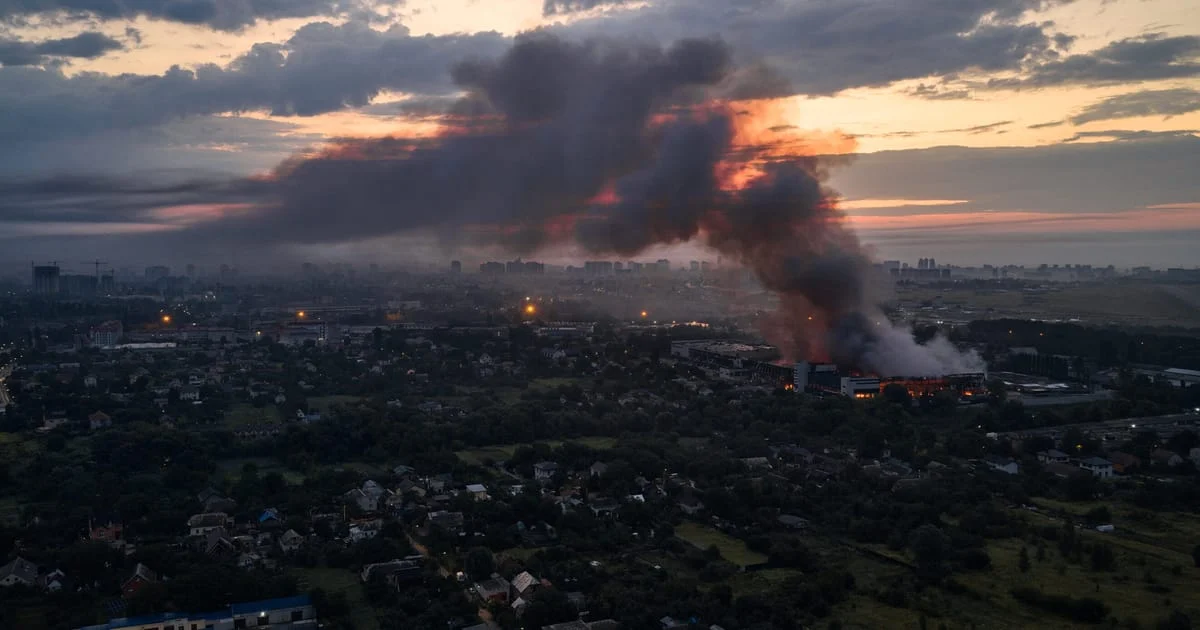
The decision to expand these sanctions follows a sustained pattern of lethal barrages against major Ukrainian cities. While the EU’s official press release remains broad in its characterization of the "intensified strikes," the timing correlates with a period of heightened volatility. Earlier this week, the Ukrainian capital of Kyiv sustained one of the most devastating missile attacks seen in recent months, resulting in at least 17 confirmed fatalities and widespread destruction of residential property.
This recent tragedy is not an isolated event but part of a broader trajectory of violence. In July, a separate, high-intensity attack on Kyiv claimed 12 lives and left dozens injured, drawing immediate condemnation from the international community. Throughout the summer months, Russian forces have adopted a strategy of persistent, high-volume strikes designed to overwhelm Ukrainian air defense capabilities. By alternating between drone swarms and ballistic missile salvos, the Russian military has sought to fatigue the defensive networks protecting major administrative and economic hubs.
Supporting Data: The Military-Industrial Complex Under Pressure
Russia’s ability to continue these strikes despite comprehensive Western sanctions remains a subject of intense analysis by military intelligence agencies. The sanctions on individuals like Badgutdinov and Dyukarev are designed to complicate the operational environment for Russia’s defense sector. Data suggests that the Russian military-industrial complex has transitioned to a wartime footing, with many factories operating on a 24-hour cycle.
However, the efficacy of these domestic production lines is increasingly reliant on the procurement of dual-use technology and components that bypass current sanctions regimes. By targeting the leadership of the KrasMash plant and other key facilities, the EU is attempting to degrade the managerial oversight and international financial mobility of the people responsible for keeping these assembly lines moving. The Sarmat program, in particular, represents a massive investment of state resources. Recent tests conducted in May 2026 confirmed that Moscow is prioritizing the maturation of this system, likely as a form of strategic posturing to deter deeper Western intervention in the conflict.
Official Responses and Diplomatic Positioning
The European Union’s move has been met with firm support from Ukrainian officials, who have long called for a tightening of the sanctions net. In a statement issued following the announcement, representatives of the Ukrainian Foreign Ministry noted that the targeting of missile manufacturers is "a necessary step toward achieving accountability for the architects of terror."
In Brussels, the consensus among member states is that existing sanctions must be continuously updated to reflect the evolving nature of Russia’s tactical deployment. Diplomats from the Baltic states and Poland have been particularly vocal in pushing for these designations, arguing that the "human element" of the Russian war machine must be fully integrated into the EU’s restrictive architecture.
Conversely, the Kremlin has predictably dismissed the new measures. Russian state media outlets have characterized the sanctions as a "futile attempt by Brussels to exert influence over Russia’s sovereign defense policy," asserting that the internal development of missile systems will continue unabated regardless of personal financial restrictions placed on factory directors. This rhetorical standoff highlights the deep entrenchment of both sides as the conflict approaches a state of long-term attrition.
Implications for Global Security
The broader implications of this sanctions expansion are significant. By specifically naming individuals involved in the production of nuclear-capable systems like the Sarmat, the EU is sending a message that the technological advancement of Russia’s strategic arsenal will trigger immediate diplomatic and economic consequences.
- Supply Chain Disruption: While sanctions on individuals may not immediately halt the production of missiles, they limit the ability of these leaders to access foreign financial markets, travel within the Schengen area, and maintain personal assets held in Western jurisdictions.
- Signal of Resolve: The move serves as a morale-building measure for Ukraine and a signal to other international actors that the EU remains committed to a long-term strategy of isolation for the Russian defense sector.
- Escalation Management: There is a latent risk that such moves could lead to retaliatory measures from Moscow, potentially involving the seizure of European business assets remaining in Russia or further escalation in cyber-warfare operations against EU member states.
Future Outlook: A Sustained Policy of Containment
As the war in Ukraine persists, the EU’s sanctions policy has moved beyond mere symbolic gestures. It has become a complex, layered mechanism of economic statecraft. The addition of five new individuals is likely just the precursor to further rounds of sanctions aimed at smaller, secondary providers of missile components.
The focus on the KrasMash plant and the Iskander-M production lines demonstrates that European intelligence agencies are closely monitoring the specific nodes of the Russian defense industry that pose the greatest threat to Ukrainian civilian life. Looking forward, the success of this strategy will depend on the EU’s ability to enforce these measures globally, particularly in preventing "sanctions evasion" through third-party nations.
Ultimately, the addition of these five individuals to the sanctions list underscores a hardening of European policy. It reflects an acknowledgment that as long as the Kremlin continues to utilize advanced weaponry to target civilian infrastructure, those who oversee the manufacturing of that weaponry will be held legally and financially accountable. The conflict has moved into a phase where the technical and managerial components of warfare are as vital as the frontline maneuvers, and the EU’s latest actions confirm that it is prepared to fight this battle on every available front. The path forward remains fraught with uncertainty, but the directive from Brussels is clear: the cost of supporting Russia’s military aggression will continue to rise for those at the helm of its industrial complex.