
Escalating Crisis in Rawalakot: Unrest, Casualties, and Humanitarian Concerns Grip Pakistan-Administered Kashmir Amidst Contentious Elections
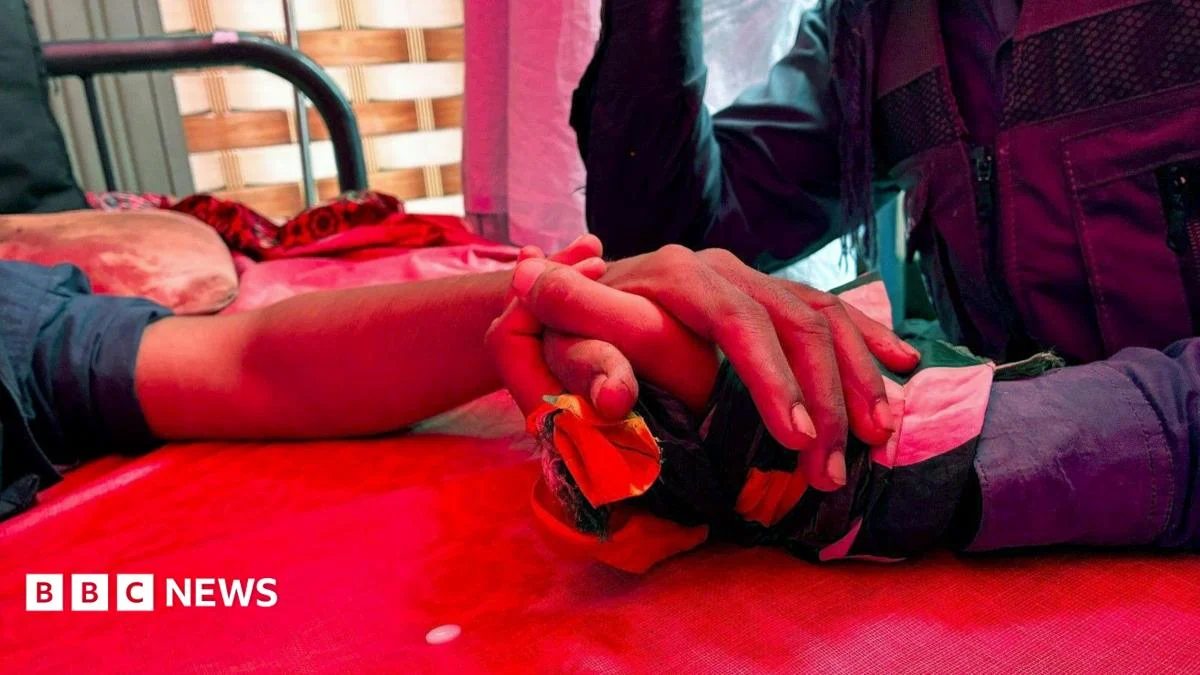
In the heart of Rawalakot, a city in Pakistan-administered Kashmir (PAK), a stark and somber reality unfolds within the confines of Dr. Anwar’s makeshift clinic. Tucked away not far from the epicentre of fervent protests, a spare bedroom serves as a critical medical supply cupboard, while outside, a simple bed under a stretched red tarpaulin bears witness to the region’s escalating human cost. It is here that Shafqat Hussain, a young man critically wounded by a chest shot, lies dying, the sheet beneath him already crimsoned with the blood of previous casualties – a grim testament to the overwhelming demand for emergency care in a city under siege.
Over the past two months, this region, home to approximately 4.5 million people, has been plunged into a deepening crisis. Dozens have reportedly been killed, and scores more injured, in violent clashes between security officials and protesters affiliated with the Joint Awami Action Committee (JAAC). These confrontations have cast a long shadow over the ongoing elections, transforming what should be a democratic exercise into a backdrop for intense civil unrest and a humanitarian emergency. The BBC, having gained rare access to Rawalakot, became the first media organisation to penetrate the information blockade and speak directly with those at the heart of the protests, offering a crucial window into a rapidly deteriorating situation.
The Epicenter of Anguish: Dr. Anwar’s Makeshift Clinic
Dr. Anwar, whose identity, like many others interviewed for this report, has been shielded for their protection, operates his improvised medical facility with limited resources but unwavering dedication. "We have enough supplies to provide first aid," he explained to the BBC team, outlining the precarious nature of their operations. "We can stop bleeding, clean and dress wounds, and remove superficial bullets. But patients with serious injuries to the chest, abdomen, head, or other vital organs need advanced hospitals." The sobering reality, he added, is that "even major hospitals would struggle if many such patients arrived at the same time," highlighting the systemic fragility in the face of widespread trauma.
Since July 27, Dr. Anwar’s clinic alone has treated an estimated 50 to 60 critically injured patients. He personally attended to 15 to 20 individuals with gunshot wounds, a chilling indicator of the severity and frequency of the violence. A pervasive fear prevents many injured protesters from seeking help at official hospitals, with reports suggesting apprehension of arrest or further harm. While authorities have vehemently denied these claims, the fear among the populace remains a tangible barrier to accessing necessary medical care, forcing many to rely on underground networks and ad-hoc clinics like Dr. Anwar’s.
A striking demographic pattern has emerged among the casualties: "Most of those who have been killed or seriously injured are young people between about 15-16 years old and 32-35 years old. I have seen very few patients over the age of 40," Dr. Anwar observed. This statistic underscores the profound impact of the conflict on the youth, who are often at the forefront of social movements and disproportionately bear the brunt of clashes.
Voices from the Frontline: The Human Cost
At Shafqat Hussain’s bedside, his friend Ali struggles to comprehend the tragedy unfolding before him. Wiping away tears with his shawl, Ali articulated the protesters’ core demands with a voice choked by grief: "We only asked for affordable flour, electricity and our basic rights. Instead, our brothers are being killed. What was our crime? Why are live bullets being fired at us?" His words encapsulate the despair and anger of a community that feels its legitimate grievances are being met with lethal force.
The Joint Awami Action Committee (JAAC) asserts that the demonstrations are fundamentally about fundamental rights, encompassing issues ranging from exorbitant electricity prices and inadequate educational facilities to substandard healthcare provisions. These demands were ostensibly addressed in an agreement signed with the Pakistan and PAK governments in October of the previous year. However, the JAAC contends that this crucial agreement has not been implemented, fueling widespread disillusionment and igniting the current wave of protests.
Conversely, the local government vehemently disputes the JAAC’s narrative, characterising the group as armed and alleging that their actions are designed to disrupt the ongoing electoral process. Authorities have maintained a firm stance against allowing protesters to march to the regional capital, Muzaffarabad, citing concerns over public order and security.
Background to the Unrest: A Region on Edge
Pakistan-administered Kashmir, often referred to as Azad Jammu and Kashmir (AJK), occupies a unique and complex geopolitical position. It is one of the two administrative units within the larger Kashmir region, the sovereignty of which remains disputed between India and Pakistan. While it enjoys a degree of self-governance, its affairs are closely intertwined with Pakistan’s federal government. This delicate balance often leads to local populations feeling marginalized or that their voices are not adequately heard in Islamabad.
The recent unrest in Rawalakot and other parts of PAK is not an isolated incident but rather the culmination of long-standing socio-economic grievances and political frustrations. For years, residents have decried what they perceive as unfair electricity tariffs, particularly given the region’s significant contribution to Pakistan’s hydropower generation. The cost of essential commodities like flour has also been a persistent concern, impacting the daily lives and livelihoods of ordinary citizens in an economically vulnerable region. The October agreement was meant to be a balm for these wounds, promising concessions on electricity prices, subsidies on flour, and improvements in education and health. Its alleged non-implementation became a flashpoint, transforming simmering discontent into widespread public outcry.
The JAAC, a coalition of various civil society groups, traders, and political activists, emerged as a prominent voice for these grievances. Formed to advocate for the rights of the people of PAK, its rise reflects a growing desire for greater autonomy and equitable distribution of resources. However, the local government in June banned the JAAC, labelling its members as "foreign-funded terrorists" – a characterization the group vehemently rejects. The JAAC asserts its peaceful nature, acknowledging funding from the PAK diaspora abroad but explicitly denying any sponsorship by India. They firmly maintain that they are the victims of state-sponsored violence rather than its instigators, alleging that Pakistan’s security forces have opened fire on peaceful demonstrators.
Conflicting Narratives and Information Blackout
The current environment in Rawalakot is marked by a severe information vacuum. Internet services have been cut, and roads leading into and out of the city are either blocked by felled trees or heavily guarded by security checkpoints. This deliberate curtailment of communication has made it exceedingly difficult to ascertain facts and disseminate information, contributing to an atmosphere of uncertainty and fear. The BBC’s access, therefore, provides a rare and critical perspective amidst the official silence and conflicting claims.
During their time in the city, the BBC team spoke to multiple families who recounted the tragic loss of loved ones, reportedly shot during the protests. Asma, a grieving mother, shared her harrowing experience of being at the protest when she heard her only son had been shot. "We were only asking for our rights. We are not terrorists," she asserted, her voice laced with pain. "No mother could ask for a better son." She remembered her son’s conviction: "He knew there were risks, but he believed standing up for justice was important. He used to say that dying for a just cause was an honour."
Salman, who lost his younger brother, echoed similar sentiments of profound loss mixed with pride. "He was the youngest in the family and was loved by everyone. It is a great loss for us," he said. "At the same time I feel proud that he gave his life while standing up for the rights of the people. He was not fighting or attacking anyone." These personal testimonies underscore the deep emotional impact of the conflict on families and the resilience of those who continue to demand justice.
Ayub, a retired soldier who also lost his son, offered a unique perspective. While refraining from blaming the Pakistan federal government or military, he directed his criticism towards the government in PAK, suggesting they were responsible for calling in paramilitary forces. "I am a retired soldier. I lived through the martial law periods of General Zia-ul-Haq and General Pervez Musharraf," he recounted, drawing parallels with past eras of authoritarian rule. "But I have never seen anything like what is happening now. In my opinion, it is extreme injustice. My son had done nothing wrong. None of the protesters had done anything wrong." His statement highlights a potential rift in public opinion and the complex interplay of blame within the administrative structure.
Official Responses and Counter-Allegations
The government of Pakistan-administered Kashmir has consistently rejected allegations that its security forces indiscriminately fired upon peaceful protesters. They maintain that law enforcement personnel acted only against individuals involved in attacks on security forces, those threatening public safety, or obstructing lawful authority. This official narrative portrays the actions of security forces as a necessary response to maintain law and order and protect state infrastructure.
Authorities have also repeatedly characterized the JAAC as a violent group, providing drone footage that purportedly shows JAAC members carrying guns on rooftops. At news conferences, police officials have displayed weapons they claim were confiscated from the group, reporting injuries and deaths among security personnel. One particularly damning claim made by officials, based on an interrogation, suggested that a man had been promised a reward of 10 million Pakistani rupees (approximately £26,700) for every paramilitary officer killed – an allegation intended to underscore the perceived extremism and mercenary nature of the protest movement.
Umar Nazir, a core committee member of the JAAC currently in Rawalakot, vehemently denied these specific allegations. While acknowledging the possibility of security personnel deaths, he refused to comment on them directly. Instead, Nazir put forth a counter-claim: "I believe that certain elements, who are under their control, were infiltrated into our ranks. Such people were certainly present among us." He further speculated, "I believe they may have carried out such actions themselves in order to justify their own narrative. I am not making a definitive claim, but there is no evidence whatsoever that any such violence came from our side." Nazir, however, provided no concrete evidence to support his claims of infiltration. The authorities, in turn, have accused the JAAC of orchestrating a disinformation campaign against them, particularly on social media platforms, further complicating the search for an objective truth.
Humanitarian Crisis and Economic Blockade
Beyond the immediate violence, Rawalakot is grappling with a severe humanitarian crisis. The BBC observed significant food shortages, with many protesters sharing their meager supplies with one another. Most shops remained shuttered, paralysing the local economy. Reports emerged of desperate efforts to smuggle in essential commodities like bags of rice on the backs of motorbikes, highlighting the severity of the blockade.
While some roads into the city have been deliberately obstructed by felled trees – which authorities attribute to the JAAC – other main entry points are now controlled by security checkpoints. The PAK government has denied claims that it is preventing food or medical supplies from entering Rawalakot, stating instead that it is actively facilitating their entry. However, the lived experience of residents and the observable shortages paint a different picture, raising serious concerns about the well-being of the civilian population caught in the crossfire.
During the JAAC protests attended by the BBC, no weaponry or active shooting was observed. However, repeated gunshots were heard overnight, leaving it unclear who was firing or at whom. This ambiguity underscores the tense and unpredictable atmosphere prevailing in Rawalakot, where the situation could escalate rapidly at any moment.
Broader Implications and The Path Forward
The escalating crisis in Rawalakot carries significant implications, not only for Pakistan-administered Kashmir but also for regional stability and Pakistan’s internal political landscape. The ongoing elections, meant to legitimise democratic governance, are instead overshadowed by violent clashes and accusations of state repression. The erosion of trust between the government and its citizens, particularly the youth, could have long-term repercussions for social cohesion and political stability.
The humanitarian situation, marked by casualties, medical supply shortages, and food insecurity, demands urgent attention. The allegations of human rights abuses, coupled with the information blackout, raise serious questions about accountability and transparency. The international community often casts a watchful eye on the Kashmir region, and prolonged unrest could draw unwanted attention and complicate diplomatic efforts.
Umar Nazir of the JAAC has expressed the group’s willingness to engage in dialogue, suggesting a potential avenue for de-escalation. However, for now, more protests are reportedly planned, indicating that the immediate future remains fraught with uncertainty. The resolution of this crisis will depend on the ability of all parties to move beyond entrenched positions, address the core grievances of the populace, and ensure that fundamental rights, including the right to peaceful protest and access to essential services, are upheld. The tragedy unfolding in Rawalakot serves as a stark reminder of the fragile balance between state authority and civil liberties, and the devastating consequences when that balance is broken.

Related Posts
Zambia on Edge: Opposition Leader Arrested Amid Allegations of Insurrection Plot and Election Tensions
Rescuers search for survivors of powerful Indonesia earthquake

