Tensions at the Spanish Border: Migration Crisis in Ceuta Ignites European Political Firestorm
The sudden, unprecedented surge of over 50,000 migrants into the Spanish autonomous city of Ceuta, a tiny European enclave on the northern coast of Africa, has sent shockwaves through the corridors of Brussels and Madrid, intensifying the long-standing and volatile debate over European Union migration policy. As thousands breached the perimeter fences separating the Spanish territory from Morocco, the incident has evolved from a local border control issue into a complex diplomatic crisis, forcing EU leadership to scramble for a unified response while placing Spanish Prime Minister Pedro Sánchez under intense political scrutiny.
The Chronology of a Border Breach
The crisis began in earnest last week when Moroccan border authorities, in an apparent loosening of security protocols, allowed an extraordinary number of people—ranging from families to unaccompanied minors—to bypass checkpoints and cross into Ceuta. The influx was rapid and overwhelming, testing the limits of Spanish emergency services and military personnel stationed in the enclave. By the middle of the week, the sheer volume of arrivals had brought the city to a virtual standstill, with local schools and administrative offices closing as resources were diverted to humanitarian relief and border security.
While the Spanish government, backed by the European Commission, swiftly moved to initiate returns, the logistical process was fraught with legal and human rights complexities. By late Friday, official records indicated that approximately 48,300 individuals had been returned to Moroccan territory. However, the rapidity of these returns prompted sharp criticism from non-governmental organizations and human rights groups, who questioned the adherence to international asylum protocols. Despite the return of the majority of those who crossed, the diplomatic fallout remains active, with the European Union scheduling an urgent meeting of interior ministers for this coming Tuesday to formalize a strategy to prevent future escalations.
Geopolitical Context and the Western Sahara Factor
To understand the scale of the crisis in Ceuta, one must look at the fragile geopolitical relationship between Madrid and Rabat. The tension is widely believed to be tied to the ongoing dispute over Western Sahara. Morocco has long sought international recognition of its sovereignty over the region, a stance that has historically been contested by the Polisario Front, an independence movement supported by neighboring Algeria.
The recent crisis was precipitated by Spain’s decision to allow Brahim Ghali, the leader of the Polisario Front, to receive medical treatment for COVID-19 in a Spanish hospital under a false identity. This move incensed Moroccan officials, who viewed it as a betrayal of the strategic partnership between the two nations. Analysts suggest the migration surge was a deliberate tactical maneuver by Rabat to exert leverage over Madrid, signaling that Morocco’s cooperation in stemming the flow of irregular migration to Europe is contingent upon Spain’s alignment with its territorial ambitions in Western Sahara.
The EU’s Institutional Response
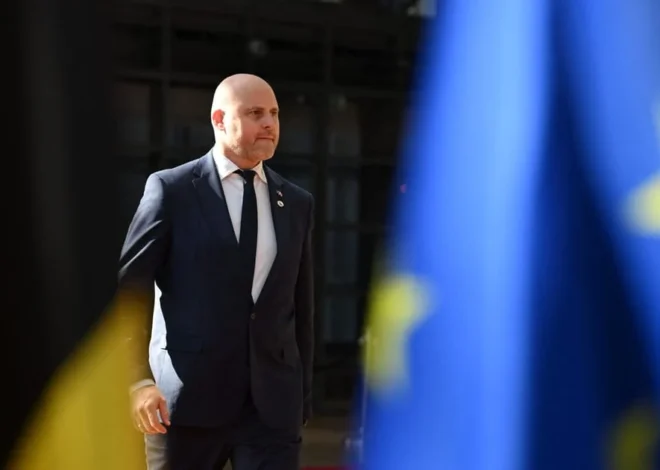
The European Union has largely rallied behind Spain, framing the incident as an attack on the integrity of the bloc’s external borders. European Commission Vice President Margaritis Schinas characterized the event as an attempt to blackmail the EU, emphasizing that the bloc would not be intimidated. However, beneath the surface of official solidarity, cracks have appeared. Several EU member states have expressed frustration with Prime Minister Sánchez, arguing that his government’s handling of the incident—and the broader diplomatic row with Morocco—has unnecessarily compromised the stability of Europe’s southern frontier.
During the upcoming emergency meeting, interior ministers are expected to deliberate on "next steps," which likely include a call for increased funding for the European Border and Coast Guard Agency (Frontex) and intensified negotiations with Morocco to restore border cooperation. The challenge for the EU is to maintain a tough stance on illegal crossings while adhering to the legal obligations set forth in the 1951 Refugee Convention and the European Convention on Human Rights.
Transparency and Institutional Accountability
Amidst the migration crisis, the European Union is facing a separate, internal challenge regarding institutional transparency. European Ombudsman Teresa Anjinho has issued a stern warning that the pressures of global crises—including the pandemic and migration surges—cannot serve as a pretext for a decline in administrative transparency. According to Anjinho’s latest report, more than one-third of the complaints filed with her office concern a lack of access to documents or the opacity of decision-making processes within EU institutions.
The Ombudsman’s findings suggest a growing disconnect between the citizens of Europe and the bureaucratic structures in Brussels. As the EU navigates high-stakes political crises, there is an increasing demand for the Commission and the Council to provide a clear accounting of their actions. Anjinho noted that while efficiency is paramount during an emergency, it must not come at the cost of democratic accountability, as the perception of secrecy only serves to fuel populism and Euroscepticism.
Diversification of Interests: Culture and Finance
In a separate development that highlights the eclectic range of issues facing the European political landscape, the administration of French President Emmanuel Macron is currently exploring unconventional avenues for economic investment. Reports indicate that the President’s team is in active discussions with Saudi Arabian investors regarding the potential funding of a large-scale manga-themed park in the vicinity of Paris.
While the project may seem incongruous with the serious nature of current diplomatic and security crises, it underscores the Macron administration’s push to attract foreign capital for ambitious cultural and infrastructure projects. The initiative has drawn mixed reactions, with proponents highlighting the potential for job creation and the promotion of "soft power" through cultural engagement, while critics raise concerns over the implications of relying on non-European sovereign wealth for public-facing cultural assets.
Broader Implications for European Policy
The events in Ceuta serve as a microcosm of the challenges facing the European Union in the coming decade. The bloc is caught in a pincer movement between the necessity of maintaining robust borders and the ethical imperative to provide humanitarian protection. The incident has laid bare the limitations of the EU’s current migration compact, suggesting that border control is inextricably linked to the broader foreign policy interests of member states.
Furthermore, the diplomatic friction with Morocco indicates that the EU’s migration policy is increasingly vulnerable to "outsourcing" risks. By relying on third-party countries in North Africa to act as buffers, the EU has inadvertently provided these nations with a powerful tool of coercion. If the EU cannot decouple its migration strategy from the volatile regional power dynamics of its neighbors, it risks being subjected to periodic crises that test the cohesion of the union.
As the interior ministers gather in Brussels, the focus will be on finding a middle ground that balances security, sovereignty, and human rights. However, the task is made increasingly difficult by the internal pressure on leaders like Sánchez to show strength, and the external pressure from partners who are increasingly willing to use migration as a strategic asset. The resolution of the Ceuta crisis will likely serve as a blueprint for how the EU manages its southern periphery in the years to come, setting a precedent that will influence everything from diplomatic relations with the Maghreb to the internal political stability of the European project itself.
In conclusion, the situation remains fluid. While the immediate crisis has subsided, the underlying issues—the geopolitical standoff, the demand for transparent governance, and the quest for economic and cultural investment—continue to shape the agenda of the European leadership. The coming weeks will be pivotal in determining whether the bloc can find a sustainable path forward that upholds its values while effectively securing its borders against the rising tide of geopolitical volatility.