
Ecuador’s Descent into Narco-Violence: A Nation Grapples with Unprecedented Drug Crime Surge and Cartel Infiltration
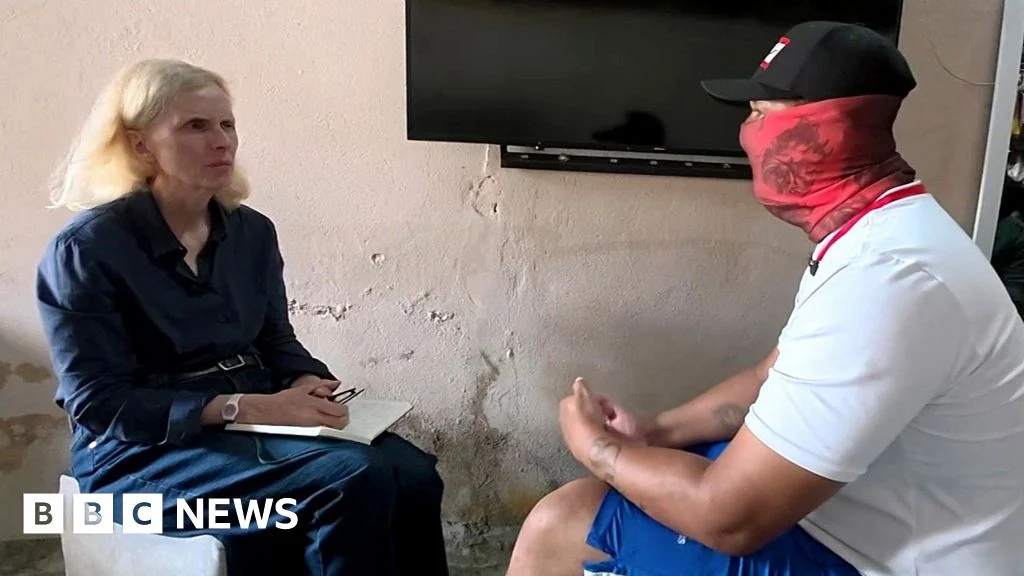
The tranquil image of Ecuador, long considered a relatively peaceful nation nestled between the world’s two largest cocaine producers, has been shattered by an unprecedented surge in drug-related crime and violence. The BBC’s Orla Guerin recently offered a stark glimpse into this escalating crisis, joining patrols with Ecuador’s overstretched police forces who are on the front lines of a brutal conflict against powerful transnational criminal organizations. This shift from a transit point to a battleground marks a grave turning point for the Andean nation, threatening its democratic institutions, social fabric, and economic stability.
The core of the crisis lies in Ecuador’s unenviable geographical position. Bordering Colombia to the north and Peru to the south, the country finds itself sandwiched between the primary sources of global cocaine production. Drugs, primarily cocaine, have been pouring into Ecuador at an alarming rate, transforming its port cities, particularly Guayaquil and Manta, into critical logistical hubs for onward smuggling. Here, powerful homegrown gangs, such as Los Choneros and Los Lobos, have forged intricate alliances with notorious international syndicates, including Mexican cartels like the Sinaloa Cartel and the Jalisco New Generation Cartel (CJNG), as well as sophisticated Albanian mafia groups. These alliances facilitate the sophisticated logistics required to move vast quantities of cocaine across the Pacific and into European markets, unleashing a wave of violence as rival factions battle for control of lucrative routes and territories.
The human cost of this escalation is staggering. Last year, Ecuador recorded one of the highest murder rates in the world, with more than 9,200 people killed, according to the country’s interior ministry. This figure represents a terrifying spike, signaling a near ten-fold increase in homicides per capita over just five years and catapulting Ecuador from a regional outlier of peace to a nation in the grip of what authorities have officially declared an "internal armed conflict."
The Strategic Shift: From Transit to Entrenchment
For decades, Ecuador largely managed to avoid the extreme levels of narco-violence that plagued its neighbors. Its role in the global drug trade was primarily as a transit country, with drug shipments passing through its territory en route to international markets. However, a confluence of factors led to a dramatic and rapid deterioration of this status quo. One critical turning point was the 2016 peace accord between the Colombian government and the Revolutionary Armed Forces of Colombia (FARC). While a landmark achievement for Colombia, the demobilization of FARC left a power vacuum in coca-growing regions along the border, allowing dissident FARC factions and other criminal groups to expand their operations. Many of these groups sought new, less scrutinized routes for their product, finding Ecuador’s porous borders, strategic Pacific coastline, and burgeoning corruption an increasingly attractive alternative.
Ecuador’s relatively dollarized economy also presented an appealing landscape for money laundering, further integrating the country into the financial architecture of transnational organized crime. The combination of a strong currency, a perceived lack of robust law enforcement capacity compared to Colombia, and critical infrastructure like the deep-water port of Guayaquil, created a perfect storm for criminal entrenchment. What began as a logistical convenience for cartels soon evolved into a deeper penetration of state institutions, local economies, and the social fabric itself.
A Chronology of Escalation: Ecuador’s Rapid Descent
The transformation of Ecuador into a narco-state in waiting did not happen overnight, but its acceleration has been breathtakingly fast:
- Pre-2018: Ecuador maintained a relatively low homicide rate, averaging around 5-7 per 100,000 inhabitants, significantly below the regional average and a stark contrast to its neighbors.
- 2018-2019: The first significant signs of escalation emerge. Homicide rates begin to creep upwards, reaching around 7.5 per 100,000. Drug seizures also see a noticeable increase, indicating growing volumes of illicit traffic. Organized crime groups start consolidating power within the country’s notoriously overcrowded and underfunded prison system.
- 2020: The COVID-19 pandemic inadvertently fuels the crisis. Lockdowns and economic hardship push more vulnerable individuals into the orbit of criminal gangs. State resources are diverted, further weakening law enforcement and judicial capacity. Prison massacres, once rare, become more frequent and brutal, signaling open warfare between rival gangs for control of internal territories and external drug routes.
- 2021: A year of unprecedented violence within prisons. Multiple massacres claim hundreds of lives, often involving beheadings and extreme brutality, highlighting the complete loss of state control over correctional facilities. The national homicide rate jumps to over 14 per 100,000, more than doubling in three years.
- 2022: The crisis spills decisively out of the prisons and onto the streets. Car bombs, targeted assassinations of judges, prosecutors, and police officers become commonplace. Extortion, known as "vacunas," terrorizes businesses and ordinary citizens. The homicide rate surges to 25.6 per 100,000 inhabitants. President Guillermo Lasso declares multiple states of emergency, deploying the military to assist police, but the measures prove largely insufficient to curb the violence.
- 2023: The peak of the violence. The murder of presidential candidate Fernando Villavicencio in August, a vocal critic of organized crime, sends shockwaves across the nation and the international community. This assassination underscores the audacity and impunity of criminal groups, even targeting the highest levels of political life. The year concludes with a staggering homicide rate exceeding 43 per 100,000, making Ecuador one of the most violent countries globally.
- Early 2024: The crisis reaches a boiling point. Gangs launch a coordinated wave of terror, including the dramatic on-air takeover of a public television station, prison breaks, kidnappings of police officers, and widespread bombings. President Daniel Noboa, who took office in November 2023, responds by declaring a 60-day state of emergency and formally designating 22 criminal groups as "terrorist organizations," initiating an "internal armed conflict" that grants the military expanded powers to combat them.
The Anatomy of the Crisis: Supporting Data and Key Players
The statistics paint a grim picture of a nation under siege:
- Homicide Rate: From 5.8 per 100,000 in 2018 to over 43 per 100,000 in 2023. This exponential growth is among the fastest recorded anywhere in the world outside of active war zones.
- Drug Seizures: Ecuadorian authorities have reported a dramatic increase in cocaine seizures. In 2021, over 210 tons of drugs were confiscated, primarily cocaine. This figure remained high in 2022 (around 180 tons) and surged again in 2023, with preliminary estimates placing seizures above 220 tons. These figures, while impressive, are believed to represent only a fraction of the total volume transiting through the country. The sheer quantity underscores Ecuador’s pivotal role in the global cocaine supply chain.
- Prison Crisis: Since 2020, over 450 inmates have been killed in a series of brutal prison massacres, often attributed to battles for control between rival gangs like Los Choneros and Los Lobos. These facilities have become training grounds and operational centers for criminal organizations, undermining the state’s authority and serving as vivid symbols of the broader breakdown of law and order.
- Key Domestic Gangs:
- Los Choneros: Historically one of the most powerful gangs, with roots in drug trafficking and extortion. Their leader, José Adolfo Macías Villamar, alias "Fito," escaped from prison in early 2024, triggering the latest wave of violence.
- Los Lobos: Emerged as a formidable rival to Los Choneros, particularly after the assassination of a Choneros leader in 2020. They are responsible for many of the prison massacres and have expanded their territorial control.
- Tiguerones, Latin Kings, Águilas: These and other smaller gangs operate throughout the country, often aligning with one of the two dominant factions, engaging in drug trafficking, extortion, kidnapping, and contract killings.
- International Links:
- Mexican Cartels: The Sinaloa Cartel and CJNG leverage their vast resources and networks to finance operations, supply weapons, and facilitate the movement of drugs through Ecuador. They often form direct partnerships with local gangs, providing them with sophisticated logistics and market access in North America.
- Albanian Mafia: Less visible but equally influential, these groups play a crucial role in managing the European distribution networks for cocaine. They often establish direct links with Ecuadorian producers and smugglers, bypassing traditional intermediaries and increasing the efficiency and profitability of the trade. Their presence highlights the truly global nature of the criminal enterprise operating within Ecuador.
Government Responses and Persistent Challenges
Ecuadorian governments have struggled to mount an effective and sustained response to the escalating crisis. The repeated declarations of states of emergency, while providing temporary legal frameworks for military deployment, have often been criticized for their short-term impact and failure to address the root causes of the violence.
- Military Deployment: The deployment of the armed forces to assist police in internal security operations has become a recurring measure. While providing a visible show of force, the military is not traditionally trained for civilian policing, raising concerns about human rights, mission creep, and the potential for increased militarization of society. President Noboa’s declaration of an "internal armed conflict" represents a significant shift, formally empowering the military to engage criminal groups as combatants, a controversial move with far-reaching legal and constitutional implications.
- Judicial System Weaknesses: The justice system remains a critical vulnerability. It is plagued by corruption, lack of resources, and intimidation. Judges, prosecutors, and even defense attorneys face threats and assassinations, leading to high rates of impunity for organized crime. Complex investigations are hampered by a lack of specialized units and forensic capabilities.
- International Cooperation: While Ecuador has sought international assistance, the scale of the problem demands more robust support. Cooperation with countries like the United States, which has provided some training and equipment, and European nations, keen to stem the flow of cocaine, is vital but often slow to materialize. Intelligence sharing, capacity building for law enforcement, and financial aid for social programs are urgently needed.
- Citizenry’s Plight: The ordinary Ecuadorian population lives in fear. Businesses are forced to pay "vacunas" (extortion money), kidnappings are on the rise, and public spaces are increasingly unsafe. This pervasive insecurity has led to a climate of distrust, psychological trauma, and an increasing desire for migration among those who can afford it. The erosion of public confidence in state institutions further complicates efforts to restore order.
Broader Impact and Regional Implications
The crisis in Ecuador carries profound implications, extending far beyond its borders:
- Regional Instability: Ecuador’s descent into narco-violence risks destabilizing the entire Andean region. Increased drug flow through Ecuador could pressure neighboring countries like Peru and Colombia, potentially reigniting violence in border areas and forcing a reallocation of resources. The established presence of transnational cartels also poses a threat to regional security architectures.
- Democratic Erosion: The infiltration of organized crime into state institutions, including the police, military, and judiciary, poses an existential threat to Ecuador’s democracy. Corruption erodes public trust, weakens governance, and can pave the way for authoritarian responses or the rise of populist leaders promising strong-arm tactics. The assassination of a presidential candidate is a direct assault on the democratic process itself.
- Economic Consequences: The pervasive insecurity deters foreign investment, harms the tourism industry, and disrupts legitimate trade. Businesses face increased costs due to extortion and security measures, stifling economic growth. The informal economy, often controlled by criminal groups, expands, while legitimate sectors contract. The cost of combating crime also drains public resources that could otherwise be allocated to social development.
- Humanitarian Crisis: The violence creates a humanitarian crisis, leading to internal displacement, psychological trauma, and a breakdown of social cohesion. Children are particularly vulnerable, either being recruited into gangs or suffering from the loss of family members and the disruption of education.
- Global Drug Trade: Ecuador’s enhanced role as a cocaine hub means an even greater volume of drugs reaching international markets, particularly in Europe. This fuels addiction, violence, and organized crime in destination countries, making the crisis a truly global concern.
The struggle to reclaim Ecuador from the grip of organized crime is one of the most urgent security challenges facing Latin America today. It demands not only a robust security response but also comprehensive long-term strategies that address social inequality, judicial reform, anti-corruption efforts, and sustained international partnership. Without a multi-faceted and determined approach, the nation risks becoming irrevocably defined by the narco-violence that now permeates every aspect of its society. The patrols of the Ecuadorian police, joined by journalists like Orla Guerin, serve as a stark reminder of the daily battle being waged for the soul of a once-peaceful nation.

Related Posts
Zambia on Edge: Opposition Leader Arrested Amid Allegations of Insurrection Plot and Election Tensions
Rescuers search for survivors of powerful Indonesia earthquake

