
Colombia’s Relentless Struggle: A Return to Coca Cultivation Amidst Failed Promises and Global Demand
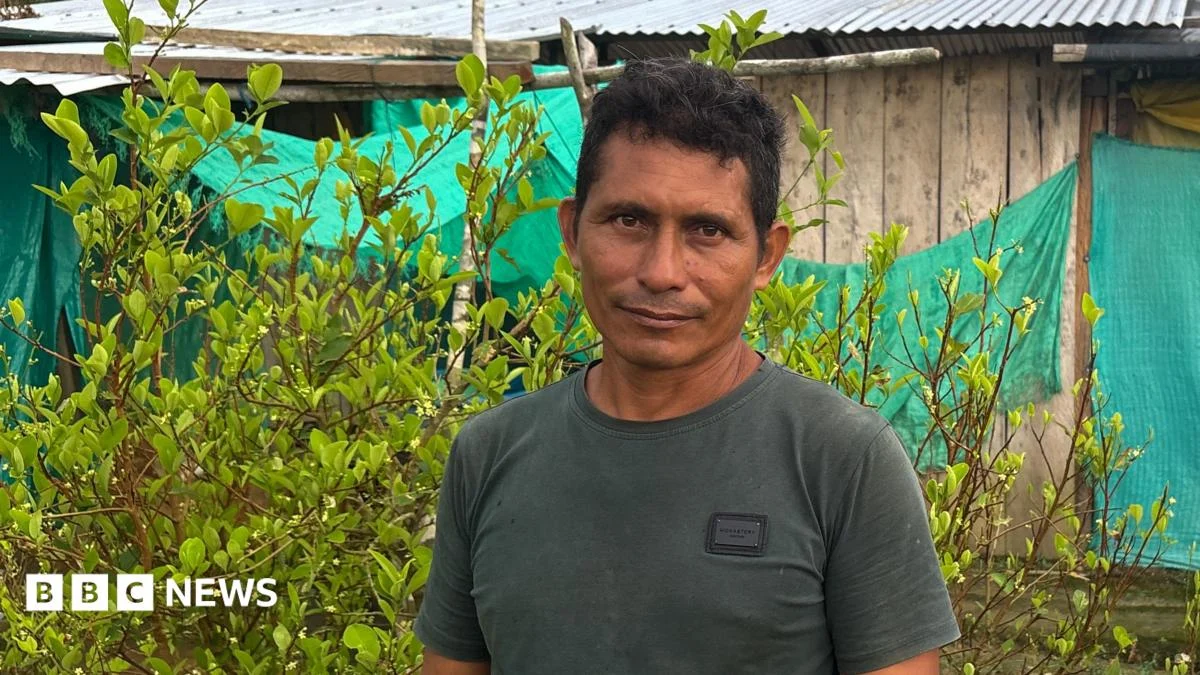
In the remote, river-accessible corners of Colombia’s Meta province, the verdant, illicit coca bushes are once again taking root, signaling a profound setback in the nation’s arduous battle against drug cultivation. Farmers like Perea, who once bravely uprooted his coca plants, replacing them with legal crops such as cassava and plantain, now find themselves tragically reverting to the very livelihood they vowed to abandon. His journey mirrors that of thousands who joined government-run crop substitution programmes, only to be let down by unfulfilled promises and insurmountable logistical hurdles. Perea’s poignant confession, "It’s a tragedy, but when you have children and no work, what choice do you have? If no help ever arrives, you go back to growing it," encapsulates the heartbreaking reality faced by countless rural families. This resurgence in 2024 is not merely a statistic; it is a testament to a complex interplay of economic desperation, fragile security, and an enduring global demand that continues to undermine Colombia’s efforts towards peace and sustainable development.
The Economic Allure of the Illicit Leaf
The coca leaf holds a dual identity in Colombia. For centuries, indigenous communities have revered it as an ancestral crop, utilizing it in traditional teas, medicines, and spiritual rituals. However, its modern significance is starkly different: it is the primary raw material for cocaine, with an estimated 70% of the global supply of the illegal drug originating from Colombia. This transformation from cultural staple to illicit commodity underpins a robust, clandestine economy that offers a perverse form of stability to impoverished farmers.
Lucas Marín Llanes, a Colombian researcher specializing in the coca economy and substitution strategies, explains the compelling advantages coca offers over legal alternatives. "Coca has some major advantages over other crops," Marín notes. "Harvests are quick – farmers can get three or four a year – it’s easier to transport, and farmers know what price they’ll get." This consistent, predictable income stream is a powerful draw in regions where legitimate markets are either non-existent or riddled with uncertainties. Unlike perishable legal crops that require extensive infrastructure for transport and face volatile market prices, coca paste, a concentrated form of the leaf, is relatively lightweight, non-perishable, and commands a reliable price, often paid in cash directly at the farm gate. Marín’s research further illuminates coca’s significant local economic impact, showing that its cultivation can boost municipal GDP by as much as 10% in some areas between 2014 and 2019, highlighting its deep integration into the economic fabric of these remote regions. For many farmers, coca is not merely a crop; it is the most reliable, and often only, currency of survival.
A Tumultuous History of Eradication and Experimentation
Colombia’s struggle with coca cultivation is deeply intertwined with its protracted internal conflict and the global war on drugs. The 1990s witnessed a significant boom in coca cultivation, drawing people like Elena Hernández to coca-growing regions such as Guaviare, lured by the promise of better pay. "There was more money back then – you could see it everywhere," she recalls, reflecting on a period where she managed to save enough to buy a small house. However, this illicit prosperity came at an immense cost. The coca industry fueled widespread violence and insecurity, as armed groups – including guerrillas, paramilitaries, and criminal organizations – fiercely vied for control over lucrative trafficking routes and production zones.
In response, successive Colombian governments, often with substantial international backing, primarily from the United States, pursued aggressive eradication strategies. These included manual eradication, where coca plants were physically removed by hand, and aerial fumigation, which involved spraying herbicides like glyphosate over coca fields from planes. While these efforts aimed to curb production, they often had devastating consequences for rural communities. They cut off families’ primary sources of income, pushing them deeper into poverty, and frequently failed to stem cultivation, as farmers would simply replant in new areas or use more resilient strains of coca. The cycle of eradication and replanting became a costly and often futile exercise, alienating local populations and failing to address the root causes of cultivation.
The Promise of Peace: PNIS and its Shortcomings
A pivotal shift in strategy emerged from the historic 2016 peace deal between the Colombian government and the Revolutionary Armed Forces of Colombia (FARC), the country’s largest guerrilla group. Recognizing that militarized approaches alone were insufficient, the peace accord prioritized a comprehensive rural development agenda, including ambitious crop substitution programmes. In 2017, the government launched the National Comprehensive Programme for the Substitution of Illicit Crops (PNIS), an unprecedented initiative designed to offer a viable alternative to coca cultivation.
PNIS represented the most ambitious attempt to date to help Colombian coca farmers transition to legal livelihoods. Elena Hernández was among the roughly 100,000 families who eagerly signed up, drawn by the promise of substantial financial support and technical assistance. Each participating household was slated to receive 36 million Colombian pesos (approximately $11,000 USD or £8,000 GBP at the time), disbursed over a two-year period. Beyond monetary aid, the programme pledged crucial technical support, including guidance from agronomists on sustainable farming practices, soil management, and access to new markets for legal crops. "The way it was presented to us, it seemed very promising for the development of our territory," Hernández remembers, echoing the widespread hope that PNIS would usher in an era of peace and prosperity.
Initially, PNIS showed signs of success. In parts of southern Meta and Guaviare, areas historically plagued by coca, fields of illicit bushes were visibly replaced by promising lemon trees, banana crops, and small livestock farms. Many farmers, including Hernández, genuinely committed to staying away from coca, demonstrating the communities’ willingness to embrace legality when presented with genuine alternatives.
However, the momentum behind PNIS proved difficult to sustain. Despite its initial promise, the programme was plagued by systemic failures and shifting political priorities. Hernández, despite her efforts, found herself disillusioned, stating, "The government wasn’t very committed to us farmers. We were treated badly." Payments, crucial for families transitioning away from coca, were often delayed or never fully materialized. Technical support, vital for successful agricultural diversification, frequently failed to reach remote communities. Weak state presence in these often-neglected rural areas, coupled with poor coordination between various government agencies, meant that the promised assistance remained an elusive dream for many.
The political landscape further complicated PNIS’s trajectory. When Iván Duque assumed the presidency in 2018, his administration refocused the government’s approach heavily on eradication and security strategies, effectively sidelining the comprehensive substitution efforts initiated under his predecessor. By the time current President Gustavo Petro took office in 2022, PNIS was significantly behind schedule, underfunded, and struggling to maintain relevance or reach the communities it was designed to serve.
Glimmers of Hope Amidst Persistent Challenges
Despite the overarching narrative of disillusionment, there were instances where PNIS, even belatedly, delivered positive outcomes. Doralba Bejarano, from Puerto Rico in southern Meta, experienced a tangible improvement in her situation once stalled government support finally began to arrive. Her testimony highlights the transformative power of effective state presence and consistent aid. "Before the programme we were terrified," she recounts. "We had to hide the coca paste because the police, the military, would put us in jail." The ability to sell coca paste, a more concentrated form of the leaf, allowed growers to earn more than selling raw leaves, but also exposed them to greater risks of legal repercussions. Now, Bejarano expresses a newfound peace of mind: "I go wherever I want. I have no reason to hide." She reports that many in her community are now receiving government support to promote and sell their non-coca crops and other foodstuffs, demonstrating that when the state’s commitment is sustained, communities can indeed transition successfully.
Yet, such successes remain isolated against a backdrop of escalating coca cultivation. Official data shows that the planting of coca is at record levels, exceeding 250,000 hectares, a stark indicator that the challenges facing substitution programmes extend far beyond administrative inefficiencies.
Broader Forces: Global Demand and a Fragile Security Landscape
The trajectory of coca cultivation in Colombia is not solely determined by domestic policies; it is profoundly shaped by powerful external and internal forces. Michael Weintraub, co-director of the Centre for the Study of Security and Drugs at the University of the Andes in Bogota, points to the insatiable international appetite for cocaine as a primary driver. "Right now there is expanding demand, and so there will be supply to meet that," he states, emphasizing that as long as consumption in the US, Europe, and increasingly, newer markets elsewhere, continues unabated, Colombia will remain a primary source. This global demand creates an irresistible economic incentive for farmers in remote, impoverished regions, effectively outcompeting any legal alternative that lacks robust market access and infrastructure.
Compounding this external pressure is Colombia’s "fragile" security context, as described by Weintraub. While the 2016 peace deal led to the demobilization of large parts of FARC, it inadvertently created a power vacuum in many rural areas. This void has been swiftly filled by an array of new armed groups, including dissident FARC factions, the National Liberation Army (ELN), and burgeoning criminal gangs. These groups often assert control over trafficking routes, dictate local economies, and exploit the very desperation that drives farmers to coca. Their presence makes it exceedingly difficult for government substitution programmes to operate effectively, as aid workers and technical advisors face threats and communities are often coerced into continued cultivation.
President Gustavo Petro’s administration has sought to address this complex security landscape through its ambitious "Total Peace" policy, which aims to negotiate peace deals with all armed and criminal gangs. However, analysts acknowledge that progress has been limited, and the fragmentation of these groups makes comprehensive agreements challenging to achieve. Until a more stable security environment can be established in these territories, the efforts of crop substitution programmes will continue to be undermined by the coercive power of illicit armed actors.
RenHacemos: A New Hope or a Repeating Cycle?
Acknowledging the shortcomings of PNIS and the evolving nature of the problem, the current government began rolling out RenHacemos, a new substitution programme, in pilot areas last year. RenHacemos is designed to build upon the lessons learned from PNIS, aiming for a more holistic and sustainable approach. While financial support for farmers remains a core component, the programme’s vision extends far beyond mere crop replacement. It focuses on diversifying entire local economies, integrating wider assistance that includes crucial infrastructure improvements like roads, expanded access to university education, digital connectivity, and better housing.
Gloria Miranda, director of the government agency in charge of illicit crop substitution in Colombia, articulates this comprehensive philosophy: "Coca is a business. It’s a criminal enterprise, but it functions like any other business. RenHacemos aims to replace not only the coca plant, but the entire economy surrounding it – from processing and agro-industry to transport and logistics." This recognition that coca cultivation is part of a sophisticated, albeit illicit, economic ecosystem is a critical step towards developing more effective interventions. By addressing the entire value chain and providing genuine opportunities for legal economic development, RenHacemos seeks to create resilient communities less susceptible to the allure of coca.
However, for many analysts, questions remain over whether such ambitious approaches can deliver lasting change. Lucas Marín Llanes, reflecting on the persistent growth of coca cultivation, observes that "repeated interventions haven’t worked," highlighting a pervasive skepticism rooted in decades of unfulfilled promises. For farmers like Perea, standing amidst the newly replanted coca plants surrounding his weathered wooden shack, the prospect of government support arriving anytime soon feels distant and uncertain. "The state has completely abandoned us," he laments, painting a bleak picture of daily life, sometimes even "running out of food."
For now, Perea sees no other choice but to continue growing coca. His situation underscores a crucial distinction: "We are not the drug traffickers – if I was, I wouldn’t be living like I do." He and thousands of others are not motivated by criminal enterprise but by the fundamental human need for survival. Their plight serves as a stark reminder that the battle against illicit crops in Colombia is ultimately a battle against poverty, inequality, and the absence of viable alternatives. Until these root causes are comprehensively and consistently addressed, and the overwhelming global demand for cocaine is curtailed, the cycle of cultivation, promised aid, and eventual disillusionment is likely to continue, perpetuating a tragedy for both the farmers and the nation as a whole.

Related Posts
Zambia on Edge: Opposition Leader Arrested Amid Allegations of Insurrection Plot and Election Tensions
Rescuers search for survivors of powerful Indonesia earthquake

