China Coal Power Expansion Surges in 2026 Amid Record Renewables Curtailment and Energy Security Priorities
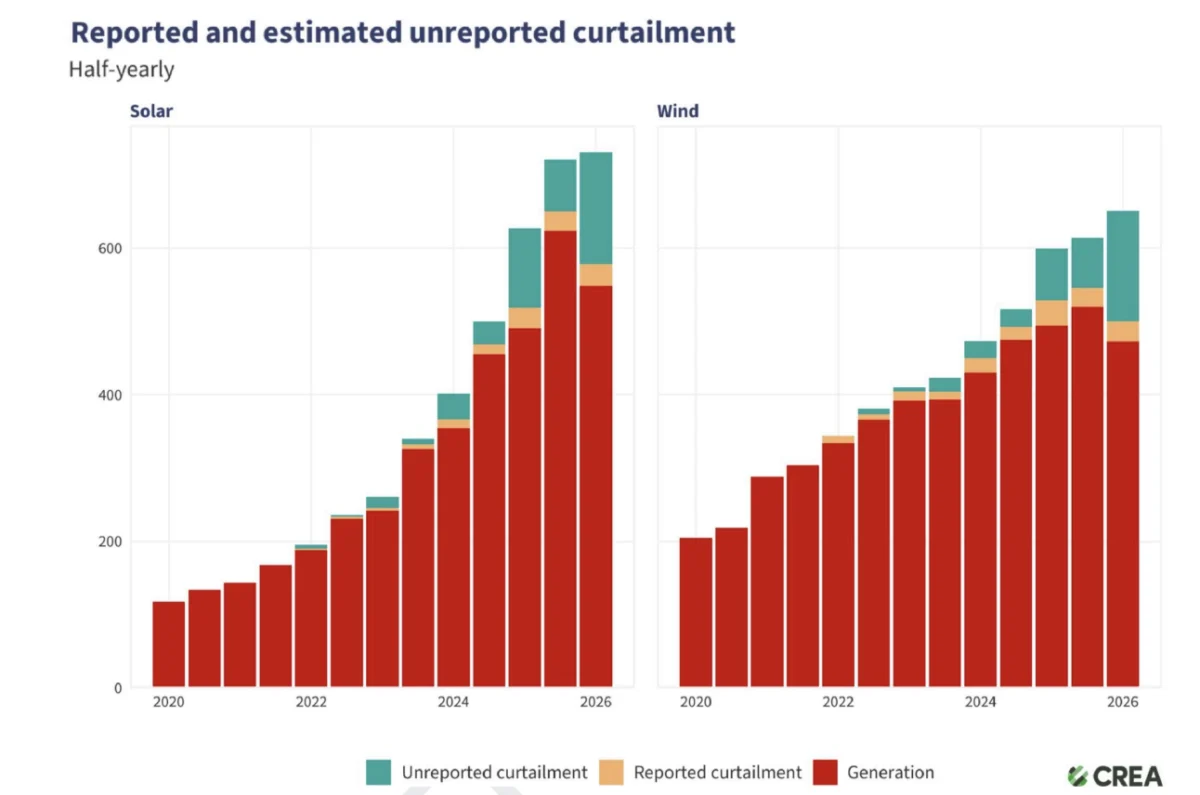
China’s reliance on coal-fired electricity witnessed a significant resurgence during the first half of 2026, marking a complex and challenging period for the nation’s energy transition. According to a joint report released by the Centre for Research on Energy and Clean Air (CREA) and Global Energy Monitor (GEM), the world’s largest greenhouse gas emitter commissioned 30 gigawatts (GW) of new coal power capacity between January and June. This expansion occurred even as the country grappled with record levels of "curtailment"—a phenomenon where wind and solar energy are intentionally wasted because the electrical grid cannot absorb the surplus.
The report highlights a stark contrast in China’s energy landscape: while the nation continues to lead the world in renewable energy installations, its traditional power sector is growing at a pace that threatens to undermine global climate objectives. Coal-fired generation rose by 3% in the first half of the year, a reversal of the slight decline observed in 2025. Meanwhile, the retirement of aging, inefficient coal plants has slowed to a crawl, with only 2.7 GW of capacity taken offline during the same period.
The Roots of the Coal Resurgence: A Chronology of Energy Insecurity
The current surge in coal power is not an overnight phenomenon but the culmination of a multi-year policy shift driven by fears of energy instability. To understand the 2026 expansion, one must look back to the pivotal events of late 2021.
In the autumn of 2021, China faced its most severe power crisis in a decade. A combination of skyrocketing global coal prices and rigid domestic electricity pricing led to a massive supply-demand imbalance. Power plants, facing losses for every kilowatt-hour generated, reduced output, resulting in widespread blackouts and forced factory shutdowns across more than 20 provinces. The economic shockwaves were felt globally, disrupting supply chains and prompting a fundamental reassessment of energy security in Beijing.
By early 2022, the central government’s rhetoric shifted. While the long-term "Dual Carbon" goals—peaking emissions by 2030 and achieving carbon neutrality by 2060—remained official policy, the immediate priority became "energy sovereignty." Local governments were granted greater autonomy to approve new coal projects, leading to a permitting "gold rush."
Throughout 2023 and 2024, the volume of approved coal projects reached heights not seen since the mid-2010s. These projects, many of which broke ground in 2024, have now reached operational status in the first half of 2026. The 30 GW commissioned this year represents the physical manifestation of those post-crisis policy decisions.
Analyzing the Data: The 274 GW Pipeline and the "Lock-in" Effect
The CREA and GEM report provides a sobering look at the scale of China’s ongoing commitment to fossil fuels. Beyond the 30 GW already brought online this year, a staggering 274 GW of coal capacity is currently in the pipeline—either already under construction or having secured the necessary permits to begin. To put this in perspective, this pipeline is equivalent to roughly one-fifth of China’s existing coal fleet, which is already the largest in the world.
The persistence of this pipeline suggests that the expansion of the coal sector is effectively "locked in" for the remainder of the decade. This creates a significant structural challenge for the transition to clean energy. As Qi Qin, the lead author of the report, noted, once these massive capital investments are made, the plants must operate to generate revenue and service debt.
"After coal power plants are built, they will seek revenue and operating hours for decades," Qin explained. "That can crowd out clean power and slow the retirement of the older, less efficient coal power units. It creates a perverse incentive to keep burning coal even when cheaper, cleaner alternatives are available."
The data also reveals a troubling trend in generation patterns. Despite the massive influx of wind and solar capacity into the national grid, coal’s 3% growth in generation indicates that it is still being used as the primary "baseload" source rather than a flexible backup. This is particularly problematic given that the first half of 2026 saw record-breaking temperatures, driving up demand for air conditioning and further straining the grid.
The Curtailment Crisis: Wasted Green Energy
One of the most alarming findings in the new research is the record level of renewable energy curtailment. Curtailment occurs when wind turbines are locked or solar panels are disconnected because the grid is either physically unable to transport the electricity from remote areas to urban centers or because the grid operators prioritize coal-fired power for stability.
In the first half of 2026, the amount of wind and solar power wasted reached an all-time high. This inefficiency highlights a critical mismatch between China’s world-class renewable manufacturing and its aging grid infrastructure. Most of China’s massive "energy bases"—vast clusters of wind and solar farms—are located in the sparsely populated western and northern regions, such as Inner Mongolia and Xinjiang. However, the bulk of the country’s electricity demand is concentrated in the industrialized eastern provinces.
The infrastructure required to bridge this gap, specifically Ultra-High Voltage (UHV) transmission lines, has not kept pace with the speed of renewable deployment. Furthermore, the Chinese grid remains "inflexible." Unlike modern grids in Europe or parts of North America that can rapidly ramp up or down based on weather conditions, the Chinese system is still largely designed around the steady, unchanging output of coal.
Industry analysts point out that as more coal plants come online, the pressure to use them increases, often at the direct expense of renewables. When the grid reaches capacity, it is the intermittent wind and solar power that is typically cut first, while the coal plants—many of which are state-owned and provide local tax revenue—continue to churn.
Official Responses and Provincial Motivations
While the central government in Beijing continues to champion its climate credentials on the international stage, the reality on the ground is often dictated by provincial interests. For local governors, a new coal plant represents more than just electricity; it is a massive infrastructure project that boosts local GDP, creates construction jobs, and ensures that the lights stay on during peak summer and winter months, thus avoiding the political embarrassment of blackouts.
In response to the CREA/GEM report, officials from the National Energy Administration (NEA) have traditionally defended the expansion as a necessary measure for "system flexibility." The official line suggests that these new, "ultra-supercritical" coal plants are more efficient than older models and are intended to act as a "supporting" force for the growing renewable sector.
However, environmental advocates and international observers remain skeptical. "The argument that you need to build hundreds of gigawatts of new coal to support renewables is increasingly difficult to justify," said a senior energy analyst at an international NGO. "The focus should be on battery storage, demand-side management, and grid reform, not on doubling down on 19th-century technology."
Within the domestic industry, there are also concerns about the economic viability of these new assets. Some state-owned enterprise (SOE) executives have privately expressed worries that these plants will eventually become "stranded assets"—facilities that are no longer profitable but must be maintained at a loss, or retired early, as carbon prices rise and renewable costs continue to plummet.
Broader Implications: A Global Climate Concern
The trajectory of China’s coal sector has profound implications for the global effort to limit warming to 1.5 degrees Celsius. As the source of nearly 30% of global CO2 emissions, China’s internal energy choices dictate the success or failure of the Paris Agreement.
The resurgence of coal in 2026 suggests that China’s emissions may not peak as early as some optimistic forecasts had predicted. If the 274 GW pipeline is fully realized, it could add hundreds of millions of tons of CO2 to the atmosphere annually for decades to come. This creates a "carbon overhang" that makes the subsequent task of reaching neutrality by 2060 significantly more difficult and expensive.
Furthermore, China’s actions influence the global energy market. Its massive demand for coal helps sustain global prices and provides a justification for other developing nations to continue investing in fossil fuel infrastructure. If the world’s leading renewable energy powerhouse is still building coal plants at this scale, it sends a mixed message to the Global South about the feasibility of a coal-free development path.
The Path Forward: Reform and Integration
The report concludes that for China to align its energy reality with its climate rhetoric, a fundamental shift in grid management is required. Building more coal plants to solve energy security is described as a "short-term fix with long-term consequences."
Experts suggest several key areas for reform:
- Market Liberalization: Moving away from a system where coal plants are guaranteed a set number of operating hours and toward a market-based system where the cheapest energy (renewables) is prioritized.
- Grid Modernization: Accelerating the construction of UHV lines and, more importantly, "smart grids" that can manage the variability of wind and solar.
- Storage Revolution: Massively scaling up battery storage and pumped-hydro projects to store excess renewable energy, reducing the need for coal as a backup.
- Incentive Realignment: Changing how local government officials are evaluated, moving from GDP-centric metrics to those that prioritize carbon reduction and energy efficiency.
As 2026 progresses, the world will be watching to see if China can resolve the paradox of its energy policy. The record amount of wasted green energy and the steady hum of new coal turbines serve as a reminder that the transition to a clean energy future is not just about building panels and turbines, but about dismantling the institutional and infrastructural legacy of the fossil fuel era. Without a decisive turn away from coal permitting, the "climate concern" raised by researchers may soon become a permanent climate reality.

Related Posts

Constitutional Court of South Africa Bars Shell Oil Exploration in Landmark Victory for Environmental and Community Rights

The Battle for Saldanha Bay: South Africa’s Ambitious Ocean Economy Strategy Faces Legal and Environmental Reckoning