Accountability and the State Defining the Legal Consequences of Decades of Government Knowledge on Climate Change
The landscape of climate litigation is undergoing a fundamental shift as the focus of legal inquiry expands from the deceptive practices of private fossil fuel corporations to the historical and contemporary responsibilities of sovereign states. For decades, the public discourse surrounding climate change culpability has largely centered on "what Exxon knew," highlighting the gap between internal scientific certainty and external public relations campaigns. However, a growing body of legal scholarship and recent international judicial opinions suggest that the more pertinent question for the future of global climate justice is what governments knew, when they knew it, and why they failed to act. This evolution in legal strategy posits that states are not merely passive observers of environmental degradation but are active participants whose failure to regulate known risks constitutes a breach of international law.
A landmark advisory opinion issued by the world’s highest judicial bodies has recently affirmed that countries have been under a binding obligation to curb climate change since the moment the foreseeable risks of greenhouse gas emissions became clear. This ruling establishes a standard of "due diligence" that requires states to take all necessary measures to prevent transboundary harm. By linking state responsibility to the timeline of scientific awareness, the court has opened a pathway for legal accountability that transcends voluntary political commitments, such as those found in the Paris Agreement, and enters the realm of mandatory legal liability and potential reparations.
The Evolution of State Knowledge and the Duty to Act
The legal concept of state responsibility hinges on the principle of foreseeability. In international law, once a state is aware that activities within its jurisdiction—such as the massive extraction and combustion of fossil fuels—pose a significant risk of harm to other states or the global commons, it has a duty to mitigate those risks. Lindsay Fenlock, a senior researcher at the Center for International Environmental Law (CIEL), and Nikki Reisch, a human rights lawyer leading CIEL’s Climate and Energy Program, have emphasized that the historical record of government knowledge is not merely a subject for academic study but a foundational element of legal liability.
While the specific timing of when these duties were first breached remains a subject of intense litigation, the scientific consensus provided to governments has been robust for over half a century. The transition from scientific curiosity to actionable government intelligence occurred in several distinct phases, each narrowing the window of "excusable ignorance" for state actors.
A Chronology of Government Awareness
The timeline of government knowledge regarding climate change reveals that major industrial powers were briefed on the risks of carbon dioxide accumulation long before the issue became a mainstay of public concern.
In 1957, scientists Roger Revelle and Hans Suess published a seminal paper noting that human beings were conducting a "great geophysical experiment" by returning to the atmosphere the organic carbon stored in sedimentary rocks over hundreds of millions of years. This research was not confined to the laboratory; it was communicated to government agencies and influenced early environmental policy discussions in the United States and Europe.
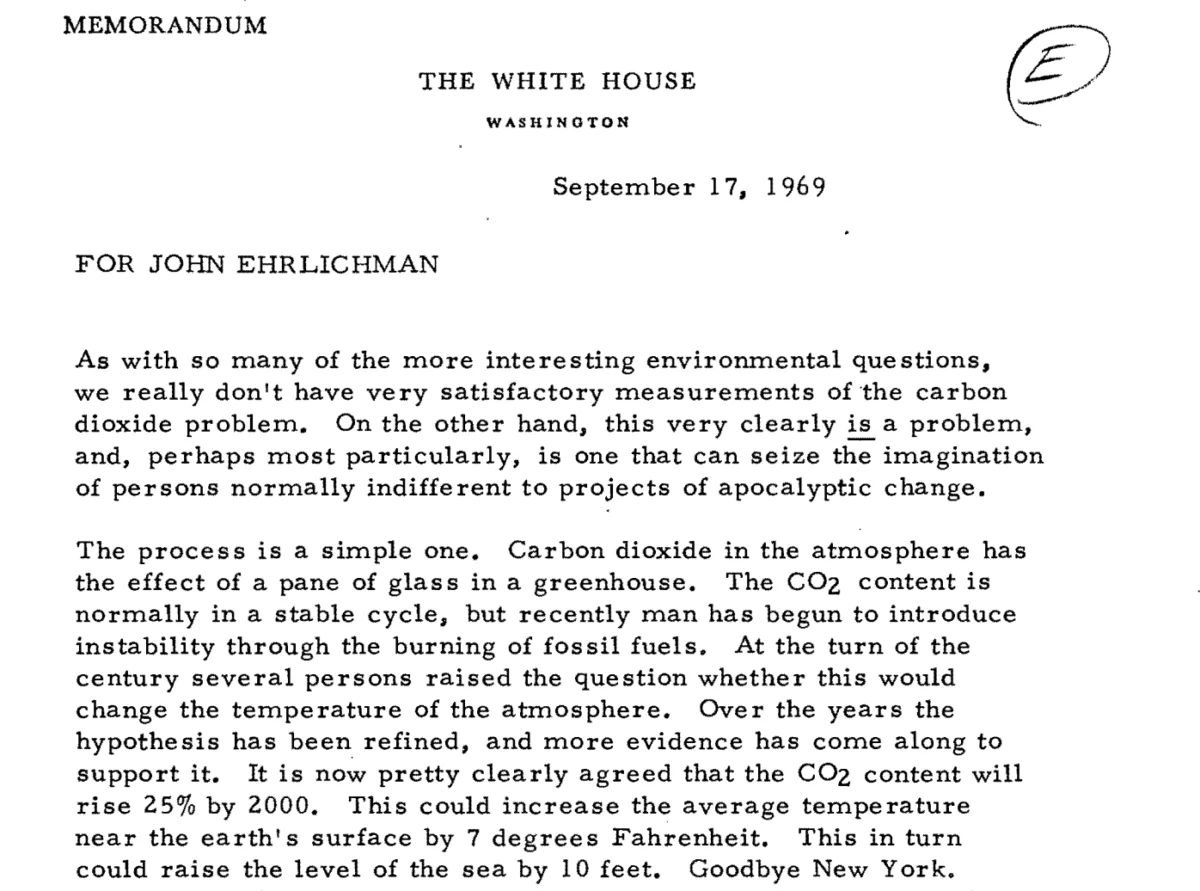
By 1965, the risks of climate change reached the highest levels of the U.S. government. The Environmental Pollution Panel of President Lyndon B. Johnson’s Science Advisory Committee issued a report titled "Restoring the Quality of Our Environment." The report explicitly warned that the burning of fossil fuels was increasing atmospheric carbon dioxide levels, which could lead to "marked changes in climate" that would be "deleterious from the point of view of human beings." This 1965 report serves as a critical marker in the timeline of state knowledge, proving that the executive branch of the world’s largest economy was formally notified of the climate threat sixty years ago.
The 1970s and 1980s saw a consolidation of this knowledge on an international scale. In 1979, the First World Climate Conference issued a declaration calling on nations to "foresee and prevent potential man-made changes in climate." That same year, the "Charney Report" from the U.S. National Academy of Sciences concluded that a "wait-and-see" policy would likely be disastrous, as the lag in the climate system meant that by the time warming was clearly observable, significant further warming would be inevitable.
The establishment of the Intergovernmental Panel on Climate Change (IPCC) in 1988 by the United Nations Environment Programme and the World Meteorological Organization marked the definitive end of any plausible claim of ignorance by any sovereign state. The IPCC’s First Assessment Report in 1990 provided the scientific basis for the 1992 United Nations Framework Convention on Climate Change (UNFCCC), which was signed and ratified by nearly every country in the world. By 1992, every signatory state had formally acknowledged that "human activities have been substantially increasing the atmospheric concentrations of greenhouse gases" and that this would result in "an additional warming of the Earth’s surface and atmosphere."
Supporting Data on State Inaction and Fossil Fuel Proliferation
Despite this deep reservoir of knowledge, the data regarding state behavior over the last three decades reveals a stark contradiction between scientific awareness and policy implementation. Rather than curtailing fossil fuel production, many states have actively incentivized it through subsidies, infrastructure permitting, and diplomatic support.
According to data from the International Monetary Fund (IMF), global fossil fuel subsidies rose to a record $7 trillion in 2022, representing roughly 7.1% of global GDP. These subsidies, which include both explicit underpricing of supply costs and implicit subsidies through the failure to charge for environmental costs, represent a direct state-led perpetuation of the climate crisis. For legal experts, these figures serve as evidence that states did not merely "fail to act," but took affirmative steps to exacerbate the problem despite knowing the consequences.
Furthermore, the "Production Gap" reports published by the UN Environment Programme highlight that governments still plan to produce more than double the amount of fossil fuels in 2030 than would be consistent with limiting warming to 1.5°C. This persistent gap between scientific necessity and state-sanctioned production plans forms the core of the argument for "breach of duty."
Since the signing of the UNFCCC in 1992, more carbon dioxide has been emitted into the atmosphere than in all of human history prior to that date. This "post-knowledge" emission surge is a critical factor in current litigation, as it demonstrates that the majority of climate damage occurred after states had already committed to preventing "dangerous anthropogenic interference with the climate system."
The Legal Implications of the Foreseeability Standard
The recent advisory opinions from international tribunals have clarified that the content of international law includes a "no-harm" rule. This rule dictates that states must ensure that activities within their jurisdiction do not cause significant damage to the environment of other states or to areas beyond national jurisdiction.
When applied to climate change, the no-harm rule suggests that once a state knew that fossil fuel consumption caused global warming, it had a legal obligation to regulate that consumption. The failure to do so, combined with the continued promotion of fossil fuel industries, creates a basis for liability.
Analysis of these implications suggests three primary areas of legal vulnerability for states:
- Failure to Regulate: States may be held liable for failing to implement domestic laws that align with the scientific reality they acknowledged decades ago.
- Transboundary Harm: Vulnerable nations, particularly Small Island Developing States (SIDS), are seeking to establish that the emissions of major industrial powers have caused direct physical and economic damage to their territories, necessitating compensation.
- Human Rights Violations: International human rights bodies are increasingly viewing climate inaction as a violation of the right to life, health, and a clean environment. Because states are the primary duty-bearers for human rights, they are the primary targets for litigation when those rights are compromised by environmental disasters.
Global Reactions and the Path to Accountability
The shift toward state accountability has met with varied reactions across the geopolitical spectrum. Small island nations, led by Vanuatu and the Commission of Small Island States on Climate Change and International Law (COSIS), have been the primary drivers of the movement to seek advisory opinions from the International Court of Justice (ICJ) and the International Tribunal for the Law of the Sea (ITLOS). For these nations, the legal process is a matter of survival, providing a mechanism to seek "loss and damage" funding that goes beyond the voluntary pledges of developed nations.
In contrast, many industrialized nations and major emitters have expressed concerns about the "judicialization" of climate policy. During oral arguments in recent international proceedings, some representatives argued that climate change is a complex political and economic issue that should be resolved through multilateral negotiations like the COP summits, rather than through court rulings. They contend that imposing retroactive liability based on historical knowledge would be legally unprecedented and economically destabilizing.
However, legal advocates like Reisch and Fenlock argue that the "political process" has failed precisely because it has ignored the legal obligations of states. They posit that until the threat of legal liability is real, states will continue to prioritize short-term economic interests over long-term climate stability.
Conclusion: From Historical Record to Judicial Remedy
The transition of climate change from a scientific forecast to a legal crisis for states marks a new chapter in the fight for environmental justice. The historical record is clear: governments were warned of the catastrophic potential of fossil fuel dependence as early as the 1960s and reached a global consensus on the need for action by 1992.
The mounting evidence of state foreknowledge, contrasted with the continued expansion of fossil fuel infrastructure, provides a compelling narrative for domestic and international courts. As the world’s highest courts continue to define the parameters of state responsibility, the "duty to prevent" is likely to become the most potent tool in the climate litigation arsenal. The focus is no longer just on what the companies knew, but on why the guardians of the public interest—the states—failed to protect the planet when they had the knowledge, the power, and the legal obligation to do so.

Related Posts
Constitutional Court of South Africa Bars Shell Oil Exploration in Landmark Victory for Environmental and Community Rights

The Battle for Saldanha Bay: South Africa’s Ambitious Ocean Economy Strategy Faces Legal and Environmental Reckoning