Youth Membership in Hong Kong’s Uniformed Groups Declines Amidst Shifting Extracurricular Landscape and Funding Debates
A significant and persistent decline in youth membership across Hong Kong’s uniformed groups has been observed over the past five years, a trend that has prompted discussions about the efficacy of public funding and the future of these organizations. Despite a steady allocation of government subsidies, the number of young people participating in these traditionally valued institutions has fallen by 8 percent in the last five years, and nearly 18 percent over the past decade. This downturn is largely attributed to Hong Kong’s persistently low birth rates, a demographic reality impacting participation across various youth-oriented sectors, and a burgeoning landscape of diverse extracurricular activities vying for students’ attention and time. The South China Morning Post’s investigation into the matter reveals a complex interplay of demographic shifts, evolving youth interests, and policy considerations surrounding the substantial public funds directed towards these groups.
Declining Numbers and Shifting Participation
The most recent figures from the Home and Youth Affairs Bureau highlight a stark reality: the total youth membership across the 11 government-subsidized uniformed youth groups has decreased from 117,671 in the 2020-21 academic year to 108,551 in the 2024-25 academic year. This represents a significant drop of 9,120 participants. Looking further back, the decline is even more pronounced. Over the last decade, from the 2013-14 academic year to the present, membership has plummeted by almost 18 percent, a loss of approximately 23,319 young individuals from these organizations.
The reasons cited for this protracted decline are multifaceted. Foremost among them is Hong Kong’s notoriously low fertility rate, which has been a subject of national and international concern for years. A smaller pool of young people naturally translates to fewer potential recruits for any youth-focused program. This demographic challenge is compounded by the increasing variety and appeal of alternative extracurricular pursuits available to Hong Kong’s students. In an era of heightened academic pressure and a globalized world, young people are presented with a wider array of options, from advanced STEM workshops and competitive sports leagues to specialized arts programs and international exchange opportunities, all of which compete for their limited free time and parental approval.
Notable Declines and Areas of Growth
Among the organizations experiencing significant membership contractions, the Hong Kong Adventure Corps (HKAC) stands out. Formerly known as the Junior Leaders Corps during the British colonial era and retaining an army-oriented ethos, the HKAC has seen its membership plummet by 30 percent. This translates to a reduction from 4,882 participants in 2020-21 to 3,403 in 2024-25, marking the most substantial percentage drop among all the groups surveyed. This decline suggests that the traditional military-style training and discipline, once a significant draw, may no longer resonate as strongly with contemporary youth.
Following closely behind the HKAC is the Hong Kong Road Safety Patrol, which experienced a decline of more than 22 percent in its membership over the same five-year period. This group, focused on promoting safe road practices among the young, also appears to be struggling to maintain its appeal.
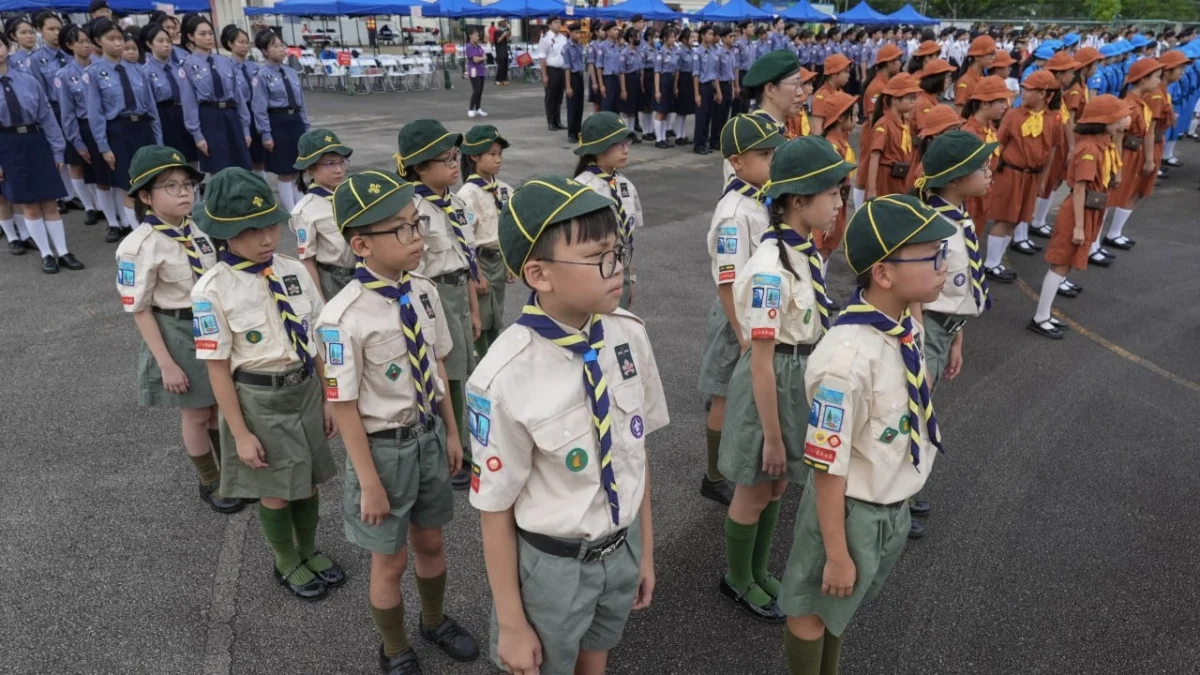
Several other well-established uniformed groups have also reported falling numbers. The Scout Association of Hong Kong, historically the largest uniformed group in the city, has not been immune to this trend, indicating a broader societal shift rather than isolated organizational issues. Similarly, the Guides Association and the Boys’ Brigade have also witnessed a decrease in their youth participation rates. These organizations, often seen as pillars of character development and community engagement, are now grappling with the challenge of adapting to changing generational preferences.
However, the picture is not entirely bleak. Six uniformed groups have managed to buck the trend, reporting membership growth during the same five-year period. Notably, the Association of Hong Kong Flag-guards and the Hong Kong Red Cross Youth have seen their numbers increase. This suggests that certain organizational approaches, program offerings, or perhaps a stronger alignment with contemporary social values might be contributing to their success in attracting and retaining young members. The Hong Kong Red Cross Youth, with its emphasis on humanitarian aid, community service, and global citizenship, may resonate more deeply with a generation increasingly concerned with social impact and global issues. Similarly, the Association of Hong Kong Flag-guards might be tapping into a demand for disciplined, ceremonial activities that also foster a sense of national pride.
Government Funding and Policy Debates
The Home and Youth Affairs Bureau plays a crucial role in supporting these uniformed youth organizations. The bureau provides recurrent subsidies to 11 such groups, with the stated objectives of fostering positive values, promoting all-round development, and instilling a sense of national and ethnic identity among young people. For the 2024-25 academic year alone, these organizations collectively received HK$86 million (approximately US$11 million) in subsidies. This substantial financial commitment underscores the government’s continued belief in the importance of these groups for youth development.
However, the declining membership figures, juxtaposed with steady government funding, have sparked debate among lawmakers. Several legislators have voiced concerns about the prudent use of public funds and have called for the introduction of Key Performance Indicators (KPIs) for uniformed groups. The rationale behind this proposal is to ensure that taxpayer money is being used effectively and that the organizations are demonstrating tangible results in terms of youth engagement and development. The introduction of KPIs could potentially link funding allocations to measurable outcomes, such as membership retention rates, program participation levels, and the achievement of specific developmental milestones for young members.
Organizational Concerns and Future Development
While the call for accountability and performance measurement is understandable from a public finance perspective, some uniformed organizations have expressed apprehension. They argue that rigidly linking funding to membership numbers could inadvertently hinder their long-term development and operational flexibility. Such a model might incentivize organizations to prioritize sheer numbers over the quality of their programs or their ability to innovate and adapt to evolving youth needs. For instance, a focus on increasing membership could lead to a dilution of program standards or a shift away from specialized, impactful activities in favor of more broadly appealing, but potentially less substantive, offerings.
Furthermore, these organizations often engage in activities that are difficult to quantify in simple numerical terms. The development of character, leadership skills, resilience, and a sense of civic responsibility are often gradual processes that do not lend themselves easily to strict KPI measurement. Critics of a KPI-driven approach suggest that it could lead to a narrow focus on easily measurable metrics, potentially at the expense of the holistic development that these groups aim to provide. They might argue that the value of these organizations lies not just in the number of young people they engage, but in the depth and quality of their impact on those who participate.
Historical Context and Evolving Roles
The uniformed youth groups in Hong Kong have a long and varied history, with many tracing their origins back to the mid-20th century. Organizations like the Scout Association and the Boys’ Brigade were established with the aim of providing structured outdoor activities, discipline, and moral guidance, often as an alternative to less structured or potentially negative influences. The HKAC, with its military roots, was designed to instill discipline, teamwork, and a sense of duty, drawing inspiration from cadet corps models in other Commonwealth countries.
Over the decades, these groups have adapted to societal changes, but their core mission has largely remained the same: to nurture responsible and well-rounded citizens. However, the social and educational landscape of Hong Kong has transformed dramatically. The rise of the internet, social media, and a highly competitive academic environment have reshaped how young people spend their time and what they value in their extracurricular pursuits. The perceived relevance and appeal of traditional uniformed structures and activities may be waning in this new context.
The government’s continued financial support, amounting to HK$86 million annually, reflects a sustained belief in the enduring value of these organizations. This funding is intended to help them maintain their operations, develop new programs, and adapt to contemporary challenges. The debate over KPIs, therefore, represents a critical juncture for these groups, pushing them to demonstrate their continued relevance and effectiveness in a changing world, while also ensuring they have the flexibility to evolve and thrive.
Broader Implications and Future Outlook
The declining membership in Hong Kong’s uniformed youth groups is more than just a statistical trend; it reflects broader societal shifts and raises important questions about youth engagement and civic development. The persistent low birth rate is a demographic challenge that will continue to affect participation across many sectors. However, the competition from a wider array of extracurricular activities suggests that uniformed groups must actively re-evaluate their offerings and marketing strategies to remain attractive to today’s youth.
The debate surrounding KPIs highlights the tension between accountability and the nuanced nature of youth development. While ensuring public funds are used wisely is paramount, an overly rigid approach could stifle the very innovation and adaptability needed for these organizations to survive and flourish. The success of groups like the Association of Hong Kong Flag-guards and the Hong Kong Red Cross Youth suggests that focusing on contemporary themes, community impact, and unique skill development can indeed lead to growth.
Looking ahead, the uniformed youth sector in Hong Kong faces a critical period of adaptation. Organizations will need to find ways to balance tradition with innovation, to demonstrate their value beyond mere membership numbers, and to connect with a generation whose interests and priorities may differ significantly from those of their predecessors. The continued support from the government, coupled with a willingness from the organizations to evolve, will be crucial in navigating these challenges and ensuring that these institutions can continue to play a meaningful role in shaping the future of Hong Kong’s youth. The conversation about performance metrics and funding models will undoubtedly continue, shaping the future direction and sustainability of these foundational youth development programs.