Azerbaijani Authorities Escalate Abuse of Detained Opposition Leader
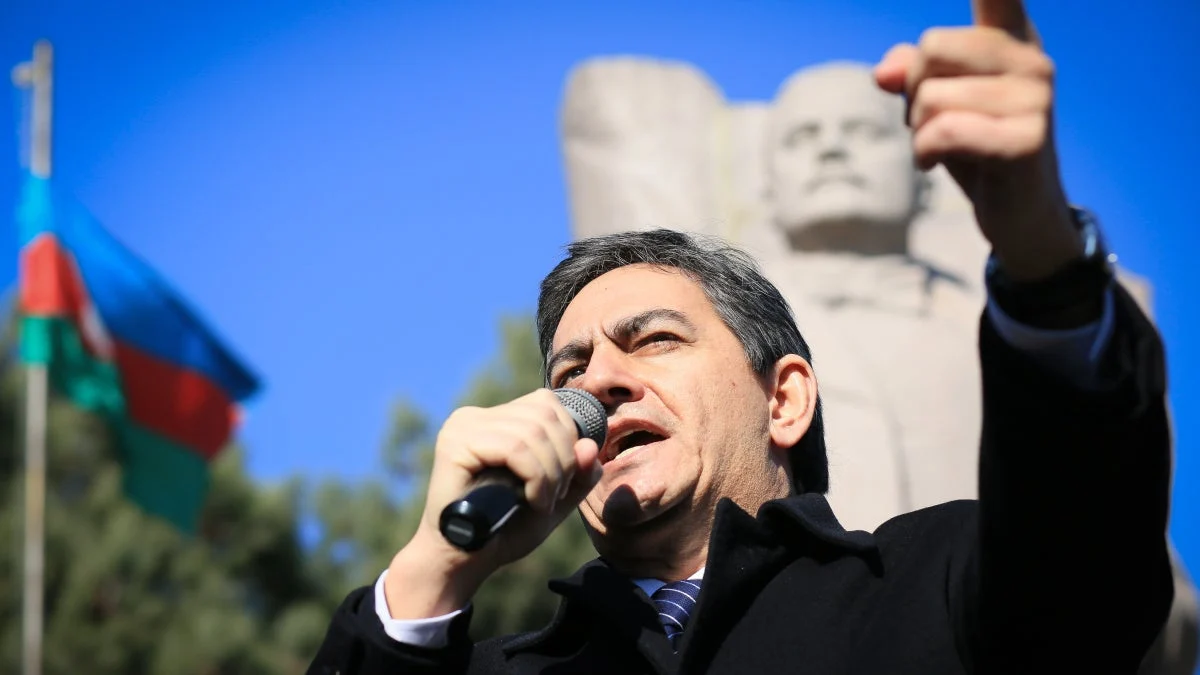
The detention conditions of Ali Karimli, the 61-year-old chairman of the Azerbaijan Popular Front Party (APFP), have reportedly shifted from standard pretrial incarceration to what legal experts and human rights defenders characterize as a systematic campaign of psychological and physical attrition. Since his arrest on November 29, 2025, Karimli has been held in the detention facility of the State Security Service (DTX), facing charges that could result in life imprisonment. As the judicial process stretches into 2026, the nature of his confinement has drawn sharp criticism from international observers who allege that the Azerbaijani state is employing punitive measures to silence its most prominent domestic critic.
Karimli’s legal team and family have documented a series of escalating restrictions that coincide with his continued refusal to retract criticisms of the administration led by President Ilham Aliyev. The charges leveled against him—specifically Article 278.1 of the Criminal Code, which pertains to "actions aimed at the violent seizure of power and forcible change of the constitutional order"—are viewed by the APFP and various international NGOs as politically motivated fabrications designed to decapitate the country’s organized political opposition.
A Chronology of Detention and Judicial Extensions
The legal trajectory of Ali Karimli’s case highlights a pattern of prolonged pretrial detention often seen in high-profile political cases in Baku. Following his initial arrest in late 2025, the courts have consistently sided with the prosecution to keep the opposition leader behind bars while investigations continue.
On June 10, 2026, a Baku court granted a prosecution request to extend Karimli’s pretrial detention by an additional five months. This ruling ensures that Karimli will remain in custody until at least November 2026, marking a full year of detention without a trial verdict. Legal analysts note that such extensions are frequently used in Azerbaijan to exhaust the resources and morale of political defendants.
Prior to his 2025 arrest, Karimli had already lived under significant state-imposed limitations for nearly two decades. The Azerbaijani authorities had consistently refused to issue him a passport, a move that effectively placed him under a de facto travel ban and prevented him from engaging with international democratic forums or seeking medical treatment abroad. This long-standing restriction set the stage for his eventual total isolation within the State Security Service facility.
Escalation Following International Media Engagement
The conditions of Karimli’s detention reportedly took a sharp turn for the worse in June 2026. The catalyst for this deterioration appears to have been an interview Karimli managed to provide to the French news outlet France 24. In the interview, Karimli maintained a defiant stance, labeling himself a "prisoner of conscience" and lambasting European governments for what he described as a "gas-for-silence" policy. He argued that the European Union’s reliance on Azerbaijani energy exports has led Western leaders to overlook systemic human rights abuses in the Caspian nation.
Immediately following the publication of the interview, the detention facility authorities implemented a series of restrictive measures. His allotted 15-minute weekly telephone calls were abruptly truncated to just four minutes, severely limiting his ability to communicate with his family. Furthermore, his legal team reported that courts have refused to even register applications aimed at restoring these basic communication rights, suggesting a coordination between the executive and judicial branches to maintain his isolation.
Psychological Attrition and "Cellmate Tactics"
One of the most concerning developments reported by Karimli’s defense team involves the introduction of a new cellmate into his quarters shortly after the France 24 interview. According to his lawyers, this individual engages in loud religious recitations and vocalizations throughout the night, making it impossible for Karimli to achieve normal sleep cycles.
The use of "difficult" cellmates is a documented tactic in various penal systems intended to exert psychological pressure on high-profile detainees without leaving physical marks. Karimli’s lawyers have formally requested a cell transfer, citing the significant psychological strain and the impact of prolonged sleep deprivation on the 61-year-old’s health. However, these requests have been summarily rejected by the facility’s administration.
By July 2026, the restrictions expanded to include the total prohibition of food parcels from his family, the removal of the television from his cell, and the confiscation of all newspapers. Most critically, authorities have barred his legal counsel from providing him with written materials, a move that severely hampers his ability to participate in his own defense and stay informed about the legal proceedings against him.
Allegations of Violating the European Convention on Human Rights
On July 13, 2026, Karimli’s defense team issued a formal statement asserting that the current conditions of his detention constitute a violation of Article 3 of the European Convention on Human Rights (ECHR). Article 3 strictly prohibits "torture or inhuman or degrading treatment or punishment."
The legal team argues that the combination of sleep deprivation, isolation from family, denial of information, and the restriction of nutritional supplements from home constitutes a cumulative form of degrading treatment intended to break the prisoner’s will. As a member of the Council of Europe, Azerbaijan is legally bound by the ECHR, and Karimli’s case is expected to eventually reach the European Court of Human Rights (ECtHR) in Strasbourg, which has ruled against Azerbaijan in numerous similar cases in the past.
The Broader Crackdown on the Azerbaijan Popular Front Party
The targeting of Ali Karimli does not occur in a vacuum; it is the centerpiece of a wider offensive against the APFP. Since the wave of arrests began in November 2025, more than 20 high-ranking members and activists of the party have been detained. These individuals face a variety of charges, ranging from drug possession (a common charge used against activists in the region) to more serious state-level offenses.
Furthermore, the Azerbaijani government has intensified its efforts to prevent the APFP from engaging in public assembly. Multiple applications by the party to hold peaceful rallies in central Baku have been denied on various administrative grounds, effectively stripping the opposition of its ability to communicate with the public and organize on the ground. This systemic narrowing of the political space suggests an effort to ensure that no organized opposition exists to challenge the ruling party’s narrative or authority.
Geopolitical Implications and the Role of International Partners
The timing of the crackdown on Karimli and the APFP is particularly significant given Azerbaijan’s growing importance as an energy supplier to Europe. In the wake of the geopolitical shifts in Eastern Europe, Baku has positioned itself as a critical alternative to Russian gas. This has led to a series of high-level energy agreements with the European Commission.
Human rights organizations, such as Human Rights Watch and Amnesty International, have warned that this energy dependency must not come at the cost of democratic values. The "brief fact-based analysis" of the situation suggests that the Azerbaijani authorities may feel emboldened to suppress domestic dissent, calculating that the West’s need for energy security will outweigh its commitment to advocating for political prisoners.
However, the international community has not remained entirely silent. Members of the European Parliament and various U.S. State Department officials have previously called for the release of political prisoners in Azerbaijan. The case of Ali Karimli is increasingly seen as a litmus test for the resilience of international human rights standards in the face of strategic energy interests.
Conclusion and Outlook
As of mid-2026, Ali Karimli remains in a high-security environment, facing the prospect of a trial that many observers believe has a predetermined outcome. The transition from legal detention to what is described as punitive and degrading treatment marks a significant escalation in the state’s approach to the opposition.
The demands from the international community and domestic human rights defenders are clear:
- The immediate cessation of punitive restrictions within the DTX detention facility.
- The restoration of Karimli’s right to communicate with his family and legal counsel without hindrance.
- The release of Karimli from pretrial detention pending a fair and transparent trial.
- An independent investigation into the allegations of inhuman treatment.
The resolution of Karimli’s case will likely have profound implications for the future of political pluralism in Azerbaijan. If the chairman of the country’s oldest opposition party can be subjected to such conditions with impunity, the prospects for other activists and the broader civil society remain bleak. For Azerbaijan’s international partners, the challenge remains to balance strategic energy needs with the foundational principles of human rights and the rule of law.

Related Posts
Human Rights Watch Calls for Investigation into Death of Detainee Following Removal from Najaf Hospital by Iraqi Drug Police
Human Rights Watch Urges UN Security Council to Extend Lebanon Peacekeeping Mission Amid Escalating Conflict and Humanitarian Crisis