Ukraine Collaborates with European Defense Giants to Develop Freyja Ballistic Missile Interceptor as Indigenous Production Scales
In a significant move toward strategic autonomy and the modernization of its air defense capabilities, the Ukrainian drone and missile manufacturer Fire Point has formalized agreements with more than a dozen European defense firms to develop the Freyja missile defense system. The project, which represents one of the most ambitious cross-border military-industrial collaborations in recent history, aims to provide Ukraine with a cost-effective, indigenous solution to the persistent threat of Russian ballistic missiles. Fire Point CEO Iryna Terekh confirmed that the integration of various subsystems—including advanced radar, guidance seekers, and command centers—is currently underway, marking a critical transition from the conceptual phase to active assembly.
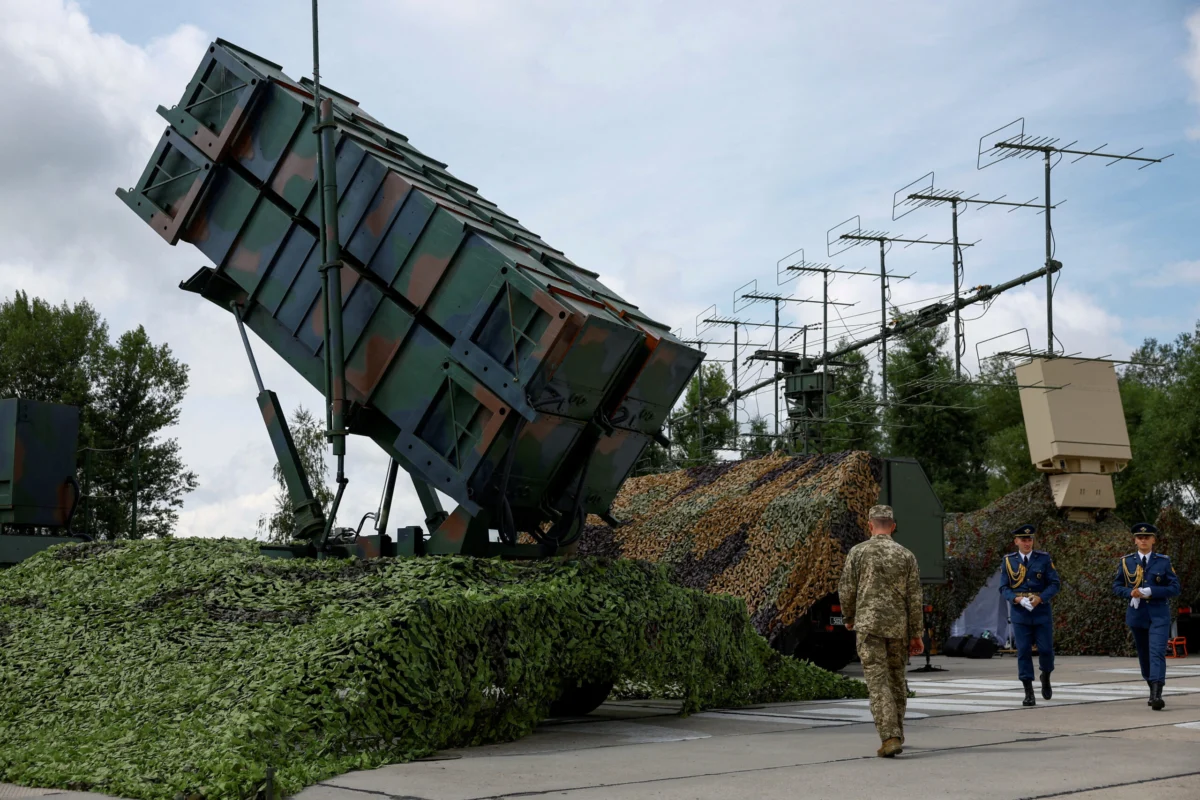
The Freyja project was officially inaugurated last month in Paris, supported by a coalition of ten governments and twelve primary defense contractors. The industrial roster includes some of the continent’s most prominent names, such as Eurosam, Leonardo, Thales, and SAAB. This pan-European initiative arrives at a time of acute necessity for Kyiv, which has struggled to maintain sufficient stockpiles of interceptors for the U.S.-made Patriot system. While the Patriot remains a gold standard for intercepting hypersonic and ballistic threats, global shortages—compounded by escalating tensions and conflict in Iran—have left the Ukrainian airspace vulnerable.
The Strategic Necessity of the Freyja Initiative
The reliance on Western-supplied systems has highlighted a critical bottleneck in Ukraine’s defense strategy: the high cost and low availability of interceptor missiles. Each Patriot interceptor can cost between $4 million and $6 million, a price point that is difficult to sustain during a prolonged war of attrition. Fire Point aims to disrupt this economic reality by producing the Freyja interceptor for less than €1 million ($1.2 million) per unit. If successful, this would provide a defense solution at roughly one-sixth the cost of current American systems.
"Pretty much everything is agreed," Terekh told reporters, noting that 13 industrial partners have already integrated their workflows into the project. The primary objective is to achieve a "Minimum Viable Product" (MVP)—defined as the successful interception of a ballistic missile—by mid-2027. To meet this aggressive timeline, Fire Point is attempting to compress a development cycle that typically spans two to three decades into a window of just a few years.
Technical Architecture and System Integration
The backbone of the Freyja system is the FP7.X, a high-velocity interceptor derived from Fire Point’s existing FP7 ballistic missile. The integration process is currently focused on marrying the FP7.X airframe with sophisticated guidance systems, known as seekers, and multi-layered radar arrays.
According to technical briefings, the Freyja system utilizes an "open-source architecture." This modular approach allows the system to remain flexible and vendor-neutral, enabling the substitution of components based on availability or specific mission requirements. For instance, the system is designed to seamlessly swap between a Danish Weibel radar and a Swedish Saab radar.
Norway’s Kongsberg is reportedly spearheading the development of the command center, the digital "brain" that integrates surveillance data and tracking radars to coordinate the launch. Meanwhile, Germany’s Diehl Defence, the manufacturer of the IRIS-T air defense system, is in advanced discussions to provide the seeker technology. While Diehl spokespeople have remained tight-lipped regarding the specifics of the negotiations, the partnership underscores the high level of European confidence in the project’s viability.
Chronology of Development and Testing
The path toward the Freyja system has been marked by rapid iterative testing and a shift from Soviet-era foundations to modern Western standards. The following timeline outlines the development of the Fire Point missile family:
- Initial Research Phase (2024-2025): Fire Point engineers utilized legacy Soviet designs for S-300 and S-400 interceptors as a baseline. However, through continuous redesign, the current FP7.X shares only 20% of its DNA with the original Soviet plans.
- July 2026: Official launch of the Freyja project in Paris, establishing the multi-national industrial consortium.
- August 2026: Confirmation of 13 industrial partners and the commencement of the integration phase for radars and seekers.
- Autumn 2026 (Projected): The attack variant of the FP7 missile is expected to see its first combat deployment following certification by the Ukrainian Ministry of Defense.
- Late Autumn 2026 (Projected): Scheduled debut of the FP9 ballistic missile, a long-range weapon designed to reach deep into Russian territory, including Moscow.
- Mid-2027 (Target): Expected first successful ballistic interception by the Freyja system.
Mathematical Feasibility and Combat Standards
The success of the Freyja project hinges not only on industrial cooperation but also on meeting stringent military performance standards. Missile defense is a game of probabilities. Industry experts, including Fabian Hoffmann of the Norwegian Institute for Defence Studies, point out that a launcher typically carries four to six missiles to ensure a high probability of kill (Pk).
For a launcher with six interceptors to maintain a failure rate of less than 5% (the industry standard), each individual interceptor must have a single-shot hit probability of approximately 40%. "If it could really be done for €1 million, it would be pretty impressive and very cheap," Hoffmann noted. The economic efficiency of the FP7.X would allow Ukraine to "salvo" interceptors—firing multiple rounds at a single incoming target—without depleting its national treasury at the same rate as the Patriot system.
Offensive Capabilities: The FP9 and the Flamingo
While the Freyja project focuses on defense, Fire Point is simultaneously scaling its offensive portfolio. The FP7 attack variant has already undergone 15 test launches and is currently in the final stages of certification. Perhaps more significant is the FP9, a larger ballistic missile that represents a major escalation in Ukraine’s long-range strike capability. By targeting Moscow, the FP9 aims to create a strategic deterrent that has previously been absent from Kyiv’s arsenal.
Furthermore, Fire Point is transitioning its cruise missile program, the FP5 "Flamingo," away from improvised components. Previously, the Flamingo relied on refurbished, second-hand jet engines sourced from what Terekh described as an "engine cemetery." As these supplies dwindle, Fire Point has begun assembling its own indigenous prototype engines. The first batch of 10 units is currently undergoing testing. Once finalized, production of the Flamingo—which has already successfully struck high-value Russian military targets this year—is expected to increase exponentially.
Political Context and Transparency Efforts
The development of Fire Point’s technology has not been without controversy. Co-founder Denys Shtilierman recently revealed that the original Soviet blueprints used for the S-300/S-400 baseline were obtained through Timur Mindich, a former associate of President Volodymyr Zelenskiy. Mindich is currently a fugitive in Israel, facing corruption charges.
In an effort to maintain institutional integrity and secure the trust of its European partners, Fire Point has publicly distanced itself from Mindich. The company confirmed it declined an offer from Mindich to purchase a stake in the firm, emphasizing that its current research and development are funded by the participating industrial partners until the MVP stage is reached. This commitment to transparency is viewed as essential for the continued participation of major EU defense firms like Thales and Leonardo.
Implications for European Defense and Regional Stability
The Freyja project signifies a paradigm shift in European defense dynamics. For decades, European nations have relied heavily on American technology for high-end air defense. By partnering with a combat-tested Ukrainian firm, European companies are gaining real-world data and a platform to test their newest sensors and command-and-control software in a high-intensity conflict environment.
For Ukraine, the project offers a path to military sustainability. The ability to manufacture its own ballistic interceptors and long-range strike missiles reduces its dependence on the shifting political winds of Washington D.C. and Brussels. If Fire Point achieves its 2027 goals, the Freyja system could become a cornerstone of a new, integrated European air defense shield, potentially being exported to other NATO members looking for a cost-effective alternative to the Patriot.
As the integration of the FP7.X continues, the eyes of the global defense community remain on Kyiv. The success of Freyja would not only provide a shield for Ukrainian cities but also prove that rapid, multi-national innovation can overcome the logistical and economic hurdles of modern missile warfare. The next few months of testing and combat certification will be the ultimate litmus test for this ambitious pan-European endeavor.

Related Posts
Pentagon Forges Landmark Seven-Year Agreements with Boeing and RTX to Accelerate Standard Missile-3 Production and Stabilize Defense Supply Chains
Boeing Unveils Ultra Low-Cost Seeker to Enhance Missile Inventory and Combat Cost Challenges in Modern Warfare