
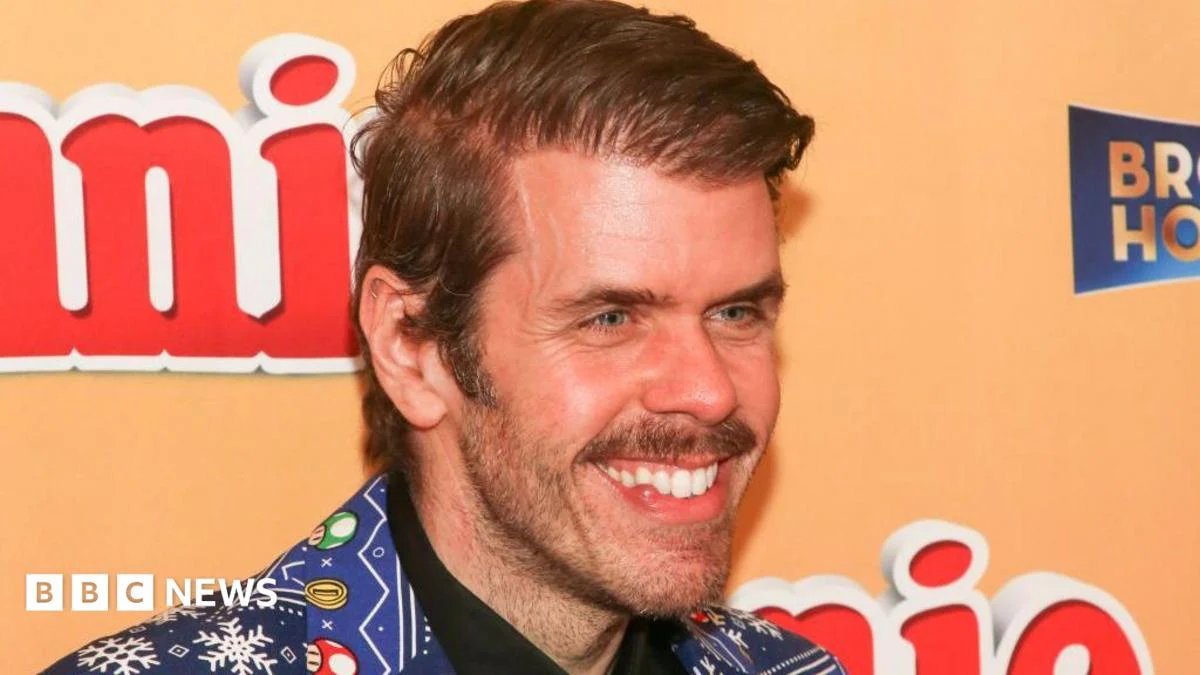
Celebrity Blogger Perez Hilton Hospitalized in Serious but Stable Condition Following Livestreamed Self-Harm Incident
Miami, Florida – Renowned American celebrity blogger Perez Hilton, whose real name is Mario Lavandeira, has been admitted to hospital in a "serious but stable" condition following an incident involving a livestreamed act of self-harm. The event, which unfolded on Tuesday, prompted immediate concern from members of the public viewing a TikTok broadcast, leading to emergency services being dispatched to his Miami residence. His family confirmed his condition and the difficult road to recovery in a statement released on his official website.
Chronology of Events and Official Confirmations
The incident began on Tuesday when emergency services received multiple reports from concerned individuals observing a TikTok livestream. Viewers, alarmed by the content, contacted authorities, highlighting the potential danger to the individual involved. This swift public response underscores the growing role of online communities and vigilant citizens in monitoring digital platforms for distress signals.
The Miami sheriff’s office confirmed their intervention, stating that officers responded to a scene involving a man "livestreaming acts of self-harm" on Tuesday. While the sheriff’s office refrained from explicitly naming Lavandeira in their initial confirmation, the details provided aligned with the unfolding situation. They further noted that the individual was alone in the house at the time of their arrival, emphasizing the isolation often associated with such crises.
Following the intervention, a statement was issued on the 48-year-old’s official website, perezhilton.com, providing an update on his condition and requesting privacy for his family. The statement detailed that Lavandeira "experienced significant blood loss" and cautioned that his "treatment and recovery would be a long process." This frank disclosure offered a glimpse into the severity of the situation and the immediate medical challenges he faces. The statement also confirmed that Hilton was being held in hospital under Florida’s Baker Act, a critical piece of legislation designed to provide involuntary examination and services for individuals experiencing a mental health crisis. It is anticipated that the father-of-three will require surgery in the coming days as part of his ongoing medical care.
The Baker Act: A Legal Framework for Mental Health Intervention
Florida’s Baker Act, formally known as the Florida Mental Health Act of 1971 (Chapter 394, Part I, Florida Statutes), is a legal provision that allows for involuntary examination and temporary detention of individuals who meet specific criteria related to mental illness. It is not a punitive measure but rather a protective one, designed to safeguard individuals who may be a danger to themselves or others, or who are severely neglected due to mental illness and cannot make rational decisions regarding their care.
For an individual to be held under the Baker Act, they must meet one of three criteria:
- There is reason to believe the person is mentally ill.
- Because of the mental illness, the person has refused voluntary examination or is unable to determine for himself or herself whether examination is necessary.
- Without care or treatment, the person is likely to suffer from neglect or refuse to care for himself or herself; or there is a substantial likelihood that without care or treatment the person will cause serious bodily harm to himself or herself or others in the near future, as evidenced by recent behavior.
In Lavandeira’s case, the livestreamed acts of self-harm clearly triggered the third criterion, necessitating immediate intervention to ensure his safety and facilitate professional mental health assessment and treatment. An initial Baker Act hold typically allows for up to 72 hours of involuntary examination in a designated mental health facility, during which a thorough evaluation is conducted to determine the individual’s mental state, the need for further treatment, and whether they can safely be released. This legal mechanism underscores the state’s commitment to addressing mental health crises with prompt, albeit involuntary, care when an individual’s capacity for self-preservation is compromised.
Social Media Platforms and the Challenge of Content Moderation
The incident also brought into sharp focus the ongoing challenges faced by social media platforms, particularly TikTok, in moderating harmful content, especially concerning self-harm. TikTok, a rapidly growing short-form video platform, has amassed over a billion users worldwide, presenting an immense scale of content that requires constant vigilance.
A TikTok spokesman released a statement addressing the incident, acknowledging the platform’s response. According to TikTok, their automated moderation systems were able to flag the livestream within minutes of its commencement. This initial detection then prompted a review by the company’s dedicated US moderation team. However, the spokesman admitted that a "moderator error caused a delay in the removal" of the distressing content. Despite this initial delay, the company asserted that it subsequently alerted law enforcement to the situation, demonstrating a critical step in inter-platform cooperation and real-world intervention. Furthermore, TikTok stated that it moved to close several subsequent streams related to the incident within 90 seconds and ultimately banned the account involved.
This sequence of events highlights the intricate dance between automated detection, human review, and rapid response required to manage potentially life-threatening content online. While AI-powered systems can flag suspicious activity quickly, the final decision-making and nuanced interpretation often fall to human moderators. The "moderator error" points to the inherent difficulties and pressures placed on these individuals, who must make split-second judgments on highly sensitive and distressing material. The company’s subsequent actions – alerting law enforcement, swift removal of related content, and account banning – are standard protocols for platforms dealing with severe violations of their community guidelines, particularly those related to self-harm and suicide. These incidents serve as stark reminders of the ethical responsibilities platforms bear in protecting their users and the broader public.
Perez Hilton: A Trajectory from Gossip King to Media Personality
Mario Lavandeira, known by his provocative pseudonym Perez Hilton, rose to prominence in the early 2000s, carving out a unique and often controversial niche in the nascent world of online celebrity gossip. The moniker "Perez Hilton" itself was a deliberate and cheeky reference to Paris Hilton, who was at the apex of her reality television and socialite fame when Lavandeira launched his blog in 2005. The strategic choice of a name that played on a prominent celebrity instantly granted him a degree of recognition and notoriety.
At a time when the internet was still in its relative infancy, and celebrity news was predominantly controlled by traditional print magazines and television shows, Perez Hilton’s blog offered an unfiltered, often snarky, and highly opinionated perspective. The website quickly became a sensation, attracting an astonishing 8 million hits a day during its peak. His brand of gossip journalism was characterized by paparazzi photos defaced with hand-drawn scribbles, bold and often biting commentary, and a no-holds-barred approach to reporting on the private lives of Hollywood’s elite.
While undeniably popular, Hilton’s methods were frequently criticized for their perceived viciousness and cruelty. High-profile celebrities, including Miley Cyrus and Lady Gaga, were among those who found themselves on the receiving end of his sharp-tongued critiques and often personal attacks. The blog was a pioneer in the era of "mean celebrity gossip," setting a precedent for how much personal intrusion and critical commentary the public would tolerate, and even crave, regarding their favorite stars.
However, as the digital landscape evolved and public sensibilities shifted, so too did Perez Hilton’s approach. In later years, Lavandeira publicly expressed regrets about his past conduct, admitting to having been "mean or cruel" in his commentary. This acknowledgment marked a significant turning point, reflecting a broader cultural shift towards greater empathy and a reevaluation of the ethics of celebrity journalism. His evolution from a provocateur to a more reflective media personality saw him pivot to other ventures, including appearances on reality television shows such as "Celebrity Rap Superstar" and "Celebrity Big Brother," further diversifying his public persona beyond the confines of his controversial blog. This personal and professional transformation, while public, also hinted at the internal complexities and pressures inherent in maintaining a high-profile public image.
Broader Implications: Mental Health, Digital Responsibility, and Public Figures
The incident involving Perez Hilton carries significant broader implications across several domains, including mental health awareness, the responsibility of digital platforms, and the unique vulnerabilities of public figures.
Firstly, it starkly underscores the pervasive nature of mental health crises, affecting individuals from all walks of life, including those in the public eye. Despite outward appearances of success or public engagement, individuals can struggle profoundly with their mental well-being. The public nature of Lavandeira’s distress serves as a poignant reminder that mental health issues do not discriminate and that accessible, non-judgmental support systems are crucial. It may help to reduce the stigma associated with mental health struggles, encouraging more open conversations and a greater willingness among those suffering to seek help. Mental health organizations and advocates consistently emphasize the importance of early intervention and the availability of resources for individuals contemplating self-harm.
Secondly, the event highlights the ongoing ethical and technical challenges for social media companies. While platforms like TikTok have invested heavily in content moderation, this incident demonstrates that no system is infallible. The "moderator error" serves as a critical learning point, prompting further scrutiny of training protocols, support systems for human moderators, and the continuous refinement of AI detection algorithms. The incident will likely intensify calls for greater transparency from platforms regarding their content moderation policies and enforcement, especially concerning highly sensitive material like self-harm. It also reinforces the notion that social media companies are not just technology providers but also critical gatekeepers of public safety and well-being.
Finally, the incident sheds light on the unique pressures faced by public figures. While celebrity status often comes with privileges, it also entails an unprecedented lack of privacy and intense public scrutiny. The constant demand for engagement, the prevalence of online criticism, and the blurring lines between public and private life can create an immense burden on mental health. When a public figure experiences a crisis so openly, it exposes the profound vulnerability that can lie beneath a carefully constructed public persona. This event serves as a powerful reminder for both the public and media outlets to approach reporting on such sensitive issues with empathy and a focus on promoting understanding and support rather than sensationalism.
The recovery process for Mario Lavandeira, both physical and psychological, is expected to be extensive. As he undergoes treatment and rehabilitation, the incident will undoubtedly continue to spark important discussions about the intersection of mental health, digital platforms, and the often-unseen struggles of those living in the public eye. The collective response, from concerned citizens to law enforcement and social media platforms, demonstrates a growing societal awareness of the need for intervention and support in moments of crisis, particularly in the ever-evolving digital landscape.

Related Posts
Zambia on Edge: Opposition Leader Arrested Amid Allegations of Insurrection Plot and Election Tensions
Rescuers search for survivors of powerful Indonesia earthquake

