Escalating Peril for Media Workers in Yemen as Targeted Assassinations and Arbitrary Detentions Undermine Press Freedom
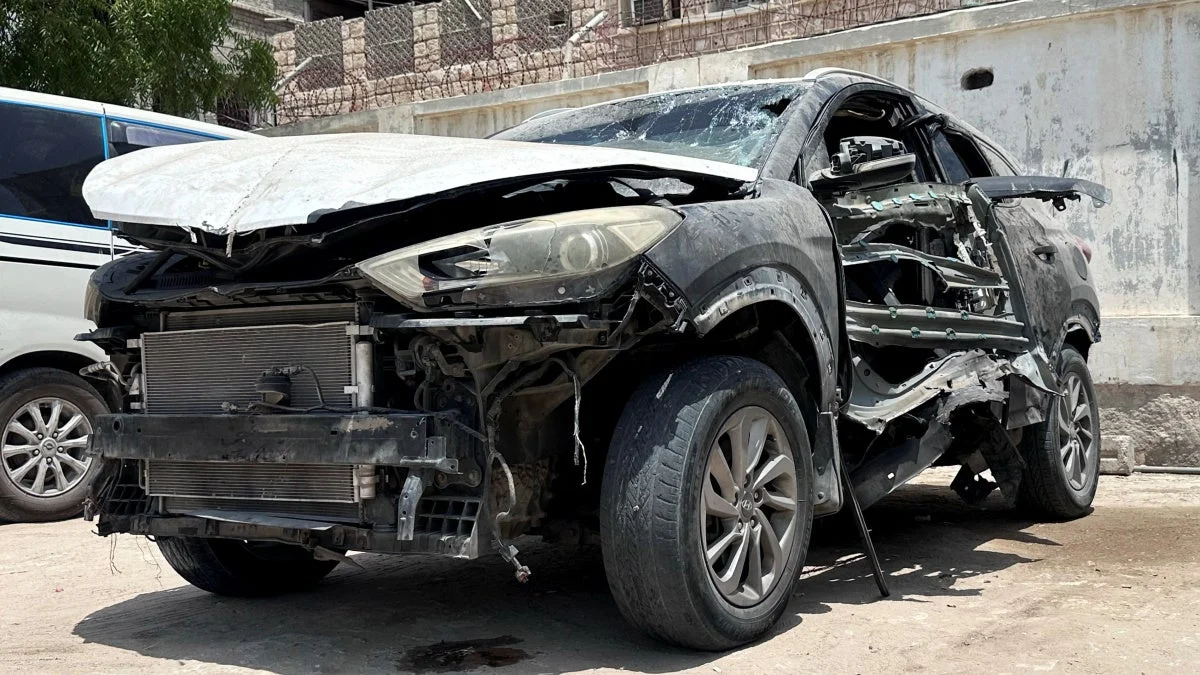
The assassination of journalist Mohammed Aydah in the eastern port city of Mukalla on June 24, 2024, marks a grim escalation in the systematic campaign of violence and intimidation directed against media professionals in Yemen. Aydah, a veteran reporter who had provided critical field coverage for the Saudi-owned Al Arabiya and Al Hadath news channels since 2019, was killed when an improvised explosive device (IED) planted in his vehicle detonated. The targeted nature of the attack, occurring in a region theoretically under the control of the internationally recognized government and its allies, underscores the pervasive insecurity and the lethal risks faced by those attempting to document the complexities of the Yemeni conflict.
This tragedy was followed just days later by another incident of state-sponsored intimidation in the city of Marib. On June 27, security forces loyal to the Yemeni government detained journalist Hamoud Haza while he was performing his professional duties at a public event. Haza’s subsequent account of his detention provided a rare and chilling glimpse into the mechanisms of censorship currently employed by warring factions. Held incommunicado for two days, Haza was only granted his freedom after being coerced into signing a written pledge. This document reportedly compelled him to refrain from any future criticism of the internationally recognized government or its Minister of Information, a clear violation of constitutional protections for free speech and international human rights standards.
A Chronology of Violence and Suppression
The timeline of abuses against Yemeni journalists in the first half of 2024 reflects a broader, multi-actor strategy to silence dissent and control the narrative of a war that has ravaged the nation since late 2014. The pattern of these violations suggests that no region of the country—regardless of which faction holds territorial control—is safe for independent reporting.
In March 2024, the Houthi movement, which maintains control over the capital, Sanaa, and much of the northern highlands, allegedly abducted journalist Salah al-Deen al-Rawhani. According to reports from the International Federation of Journalists (IFJ), al-Rawhani was taken from his home by armed forces and has since been subjected to enforced disappearance. His current whereabouts and the state of his health remain unknown, a tactic frequently used by the Houthi authorities to instill fear among the remaining press corps in the capital.
The killing of Mohammed Aydah in June is not an isolated incident but rather the latest in a series of targeted assassinations using vehicle-borne explosives. The Yemeni Journalists Syndicate, in its official condemnation of the Aydah killing, drew direct parallels to the 2022 assassinations of Rasha al-Harazi and Saber al-Haidari in Aden. Al-Harazi, who was pregnant at the time of her death, and al-Haidari were both killed in similar car bombings, yet despite international outcry, no perpetrators have been brought to justice.
The Human Toll: Data and Statistical Overview
The National Organization of Yemeni Reporters (SADA) has released data indicating that the cost of truth in Yemen is staggeringly high. Since the full-scale escalation of the conflict in 2015, more than 90 journalists and media workers have been killed. This figure includes those caught in the crossfire of active combat, those targeted by snipers, and victims of calculated assassinations like Aydah.
Beyond the fatalities, the scale of non-lethal violations is equally concerning. Human Rights Watch (HRW) documented in a comprehensive September 2025 report—which synthesized years of field research—that all major parties to the conflict are complicit in systematic abuses. The report highlighted:
- Enforced Disappearances: At least dozens of journalists have been held without charge or access to legal counsel, often for years.
- Torture and Ill-treatment: Detained media workers have provided testimonies of physical and psychological abuse intended to extract confessions or discourage further reporting.
- Arbitrary Detention: The use of "pledges" and administrative detentions to bypass judicial oversight has become a standard operating procedure for both government forces and non-state actors.
The "bloody toll" cited by SADA reflects what many analysts describe as a deliberate policy of "media blackout." By eliminating high-profile reporters and intimidating those who remain, the warring parties seek to entrench a culture of impunity where war crimes and corruption can flourish without the scrutiny of the fourth estate.
Official Responses and the Crisis of Impunity
The reaction to Mohammed Aydah’s death has been one of universal condemnation from professional bodies, though the response from government authorities has been criticized as performative. The Yemeni Journalists Syndicate issued a scathing statement, asserting that the attack was a continuation of a "series of crimes and violations" that the state has failed to prevent or prosecute.
The International Federation of Journalists (IFJ) and various regional media watchdogs have called for an immediate, independent investigation. However, the track record for such investigations in Yemen is poor. In territories controlled by the internationally recognized government, investigations often stall due to a lack of forensic resources or political interference. In Houthi-controlled areas, the judicial system is frequently used as a tool of the executive, leading to "show trials" where journalists are accused of espionage or "spreading false news" to aid the enemy.
The National Organization of Yemeni Reporters emphasized that the persistence of these attacks is directly linked to the lack of accountability. When the killers of Rasha al-Harazi and Saber al-Haidari remain free, it signals to other actors that journalists can be targeted with zero legal consequences.
The Legal Framework: International Obligations
Under International Humanitarian Law (IHL), specifically the Geneva Conventions and their Additional Protocols, journalists are classified as civilians. As long as they do not take a direct part in hostilities, they are entitled to all protections afforded to the civilian population. Targeting a journalist is considered a war crime.
Furthermore, International Human Rights Law (IHRL), which remains applicable even during armed conflict, protects the rights to liberty, security of person, and freedom of expression. The practice of enforced disappearance—as seen in the case of Salah al-Deen al-Rawhani—is a grave violation of these rights. It places the individual outside the protection of the law and inflicts extreme suffering on their families, who are left in a state of perpetual uncertainty.
The detention of Hamoud Haza in Marib and the forced signing of a non-criticism pledge also violate the International Covenant on Civil and Political Rights (ICCPR), to which Yemen is a signatory. Such actions undermine the legitimacy of the government’s claim to represent a democratic alternative to militia rule.
Broader Impact and the Strategy of Silence
The implications of this ongoing crackdown extend far beyond the individual victims. The systematic targeting of the press has created a "chilling effect" that has hollowed out the Yemeni media landscape. Many journalists have been forced into exile, while those remaining in the country often resort to self-censorship to survive.
This vacuum of reliable information has significant humanitarian consequences. In a country facing one of the world’s worst humanitarian crises, journalists play a vital role in documenting the distribution of aid, the spread of disease, and the impact of economic collapse. When reporters are silenced, the international community loses its eyes and ears on the ground, making it harder to coordinate relief efforts or advocate for peace.
The strategy of the warring parties is clear: by controlling the flow of information, they can manipulate public opinion and hide the true cost of the war from both the domestic population and the global stage. The use of IEDs in the south and abductions in the north represent two sides of the same coin—a total intolerance for any narrative that challenges the authority of those with the guns.
Conclusion and the Path Forward
The killing of Mohammed Aydah and the abduction of Salah al-Deen al-Rawhani are stark reminders that the war in Yemen is being fought not just on front lines with tanks and drones, but also in the realm of information and truth.
To break the cycle of violence, the Yemeni government must move beyond rhetoric and conduct a prompt, impartial, and transparent investigation into the killing of Aydah and his predecessors. Accountability must be the priority, and the findings of such investigations must be made public to restore confidence in the rule of law.
Simultaneously, the Houthi authorities must be held to account by the international community for the practice of enforced disappearances. The immediate and unconditional release of Salah al-Deen al-Rawhani and all other arbitrarily detained media workers is a prerequisite for any meaningful political dialogue.
As Yemen continues to navigate a fragile and fragmented political landscape, the protection of journalists is not merely a matter of human rights; it is a fundamental requirement for the country’s eventual recovery. Without a free and secure press, the path to a sustainable peace and a functional state will remain obscured by the shadows of impunity and the silence of the suppressed.

Related Posts
Human Rights Watch Calls for Investigation into Death of Detainee Following Removal from Najaf Hospital by Iraqi Drug Police
Human Rights Watch Urges UN Security Council to Extend Lebanon Peacekeeping Mission Amid Escalating Conflict and Humanitarian Crisis