Pentagon Formally Launches Comprehensive Europe Force Posture Review to Realign Transatlantic Defense Responsibilities
The United States Department of Defense has officially initiated a high-level, comprehensive review of its military footprint across the European continent, marking a significant step in the administration’s efforts to recalibrate the transatlantic security architecture. Announced on July 28, 2026, by Under Secretary of Defense for Policy Elbridge Colby, the Europe force posture review follows a directive from Secretary of Defense Pete Hegseth. The initiative is designed to evaluate every facet of the American military presence in the region, including troop levels, basing agreements, and the strategic distribution of hardware, with the ultimate goal of shifting primary conventional defense responsibilities to European allies.
Under Secretary Colby confirmed the commencement of the review via a formal statement, noting that the Pentagon has "kicked off" the process first unveiled by Secretary Hegseth during the NATO defense ministerial in Brussels on June 18, 2026. This review is not merely a routine administrative audit but is described by senior officials as a "real review" aimed at ensuring that U.S. global deployments are sustainable and aligned with the shifting geopolitical realities of the late 2020s. While the announcement did not immediately order troop withdrawals or base closures, it sets the stage for what could be the most significant reorganization of U.S. forces in Europe since the end of the Cold War.
A Strategic Shift Toward Burden-Sharing
The launch of the review follows years of escalating rhetoric from Washington regarding the necessity of "burden-sharing" within the NATO alliance. The current administration has consistently argued that the United States can no longer serve as the primary guarantor of conventional security in Europe while simultaneously addressing rising challenges in the Indo-Pacific theater. The 2025 National Security Strategy and the 2026 National Defense Strategy both emphasize a "prioritization" model, where the U.S. provides the nuclear umbrella and high-end niche capabilities—such as advanced intelligence, surveillance, and reconnaissance (ISR)—while European nations provide the bulk of the "boots on the ground" and conventional armor.
Under Secretary Colby’s remarks underscored this intent, stating that the review is intended to move the alliance "fast and irreversibly" toward a future where Europe takes the lead on its own defense. Proponents of this shift argue that the current model, which saw U.S. troop levels in Europe surge to over 100,000 following the 2022 invasion of Ukraine, is an unsustainable "emergency" posture that has become an unintended permanent fixture. The review aims to transform NATO into what Colby described as a "stronger, more equitable, and sustainable alliance" by ending European over-reliance on American conventional forces.
Chronology of the 2026 Force Posture Review
The path to this review began in early 2026, as the Pentagon began drafting the new National Defense Strategy. The following timeline outlines the critical milestones leading to the current launch:
- January 2026: The White House releases the 2025 National Security Strategy, highlighting the need for "strategic focus" and a "division of labor" among global allies.
- March 2026: The Department of Defense publishes the 2026 National Defense Strategy, which identifies the Indo-Pacific as the primary theater of concern and calls for a "rationalization" of forces in secondary theaters.
- June 18, 2026: Secretary of Defense Pete Hegseth attends the NATO defense ministerial in Brussels. He formally announces the intent to conduct a Europe-wide force posture review, citing the need for "strategic rigor" in how U.S. taxpayers’ resources are deployed.
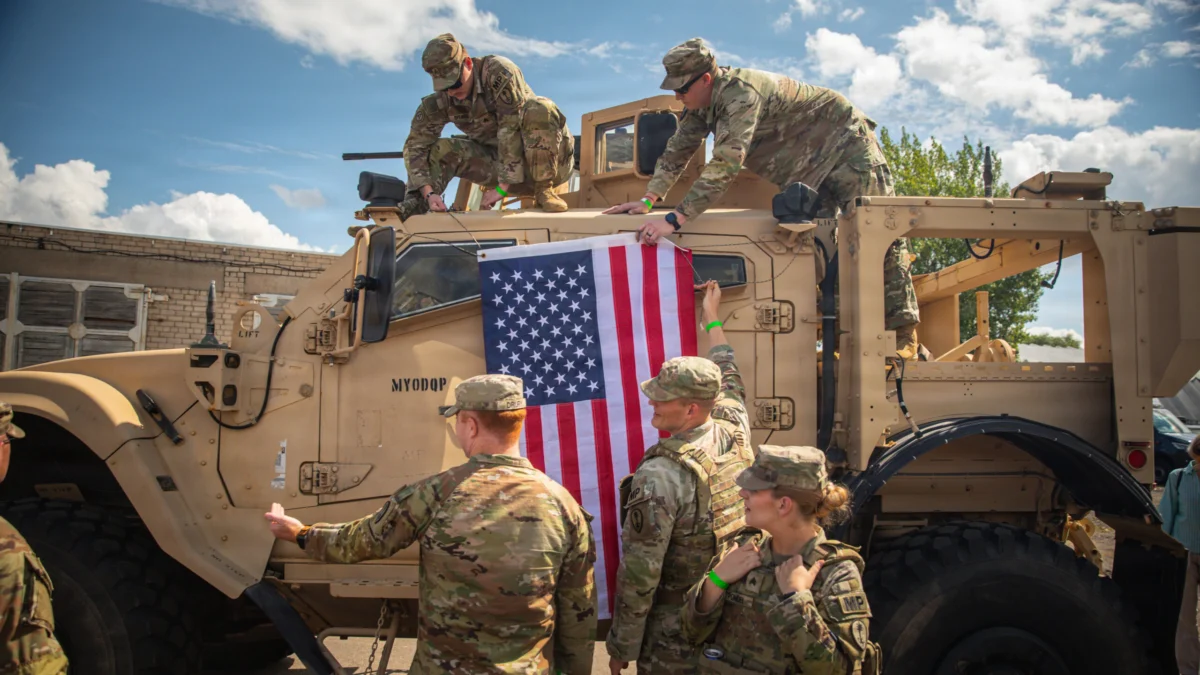
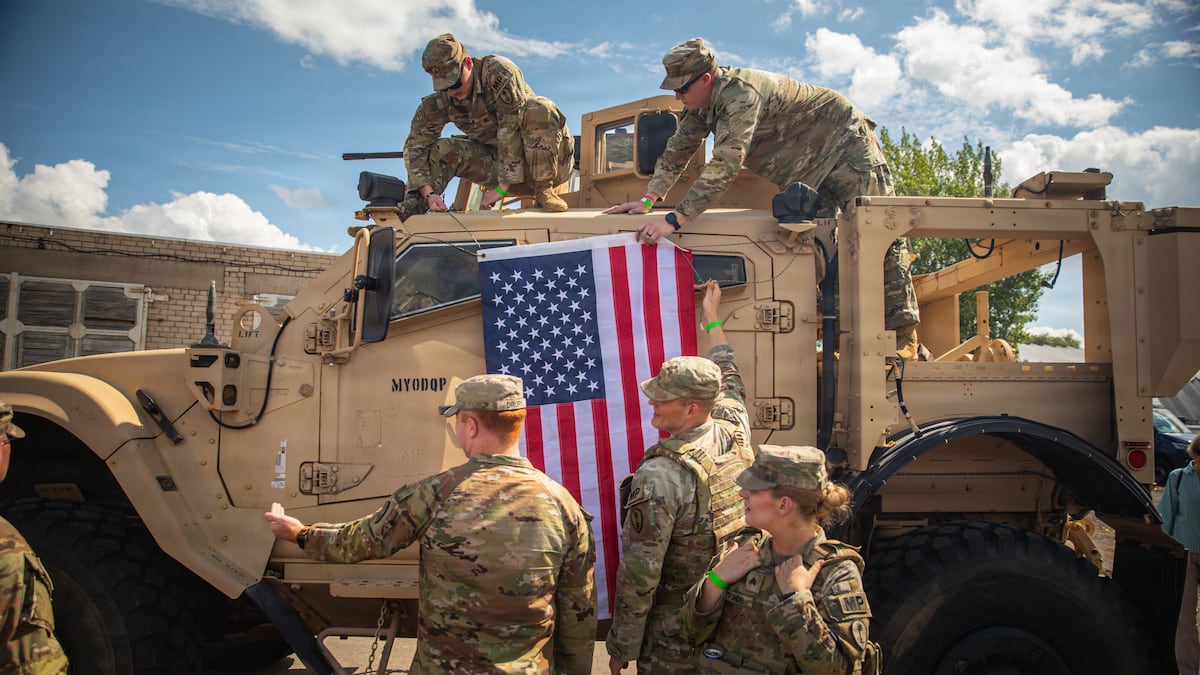
- July 25, 2026: At the Kaunas Air Show in Lithuania, U.S. soldiers from the 196th Mobile Public Affairs Detachment and other units display Mine-Resistant Ambush-Protected (MRAP) vehicles, highlighting the ongoing but potentially shifting nature of U.S. presence on the Eastern Flank.
- July 28, 2026: Under Secretary Elbridge Colby formally announces the start of the review process, establishing a six-month window for completion.
Current U.S. Posture: Data and Statistics
To understand the scope of the review, it is necessary to examine the current U.S. military footprint in Europe. As of mid-2026, the United States maintains a significant presence across several key hubs:
- Troop Levels: Approximately 95,000 to 102,000 U.S. personnel are currently stationed in Europe. This includes permanent garrisons in Germany, Italy, and the United Kingdom, as well as rotational forces in Poland, Romania, and the Baltic States.
- Major Installations: The U.S. operates several massive logistics and operational hubs, including Ramstein Air Base (Germany), Aviano Air Base (Italy), and Naval Support Activity Naples.
- The Eastern Flank: Since 2022, the U.S. has maintained a "persistent" rotational presence in Poland, headquartered at Camp Kościuszko in Poznań. This includes an armored brigade combat team and various aviation elements.
- Economic Context: The U.S. defense budget for European operations (formerly the European Deterrence Initiative) has remained high, even as European allies have increased their own spending. By mid-2026, 23 out of 32 NATO members have reached the 2% GDP spending target, a factor the Pentagon cites as evidence that Europe is now capable of assuming more responsibility.
The review will examine whether these deployments—many of which were established during the Cold War or as rapid responses to the 2022 crisis—still serve the primary national interest of the United States in 2026 and beyond.
Methodology and Consultation Process
The Pentagon has emphasized that this review will not be conducted in a vacuum. Secretary Hegseth and Under Secretary Colby have outlined a collaborative approach involving multiple stakeholders:
- U.S. European Command (EUCOM): General Alexus Grynkewich, the Supreme Allied Commander Europe (SACEUR), will play a pivotal role in providing the empirical baseline for the review. EUCOM’s operational requirements will be weighed against the broader strategic mandates of the Pentagon.
- Congressional Oversight: The Defense Department has committed to "extensive consultations" with the House and Senate Armed Services Committees. This is particularly relevant as some members of Congress have expressed concern over the potential for a "security vacuum" if U.S. withdrawals are too hasty.
- Allied Engagement: While the review is a U.S. sovereign decision, the Pentagon plans to coordinate with NATO headquarters and individual European capitals. The goal is to ensure that as the U.S. scales back certain conventional capabilities, European allies are prepared to fill those gaps.
Colby noted that the department will develop a range of options based on "strategic rigor, a strong empirical baseline, and a clear sense of the geopolitical and military realities." The review is expected to take between four to six months, with a final report likely reaching the Secretary of Defense by early 2027.
Implications for the European Defense Landscape
The launch of this review has sent ripples through European capitals. While some allies, such as Poland and the Baltic states, have expressed anxiety over potential reductions in U.S. "boots on the ground," others see it as a necessary catalyst for "European Strategic Autonomy."
The Eastern Flank: For nations like Lithuania, Latvia, and Estonia, the presence of U.S. forces is seen as the ultimate deterrent against regional aggression. Any recommendation to move from "persistent rotation" to "periodic exercises" could be met with diplomatic resistance. However, the Pentagon’s focus appears to be on shifting the type of support—moving away from providing basic infantry and armor toward providing high-tech enablers that Europe still lacks.
Western Europe: Major powers like Germany and France are likely to face increased pressure to modernize their own forces. The review may suggest that the U.S. reduce its permanent garrison in Germany, which has historically been the centerpiece of American presence in Europe, in favor of a more flexible, "light-footprint" model.
The Pacific Pivot: The most significant implication is what this means for the Indo-Pacific. By "right-sizing" the European posture, the Pentagon hopes to free up naval assets, long-range fires, and logistical support for the Pacific theater. This realignment is the cornerstone of the Colby-led policy doctrine, which posits that the U.S. cannot be "everywhere at once" and must prioritize the theater with the greatest challenge to its long-term interests.
Conclusion: Toward a New Era of NATO
The Europe force posture review represents a pivotal moment in the history of the North Atlantic Treaty Organization. For decades, the alliance has operated under a model where the United States provided the lion’s share of conventional defense. The 2026 review signals the formal end of that era.
By the time the recommendations are released in early 2027, the map of U.S. military presence in Europe may look significantly different. The focus will likely shift from large, permanent bases to smaller, more agile "lily pad" facilities and a greater reliance on pre-positioned equipment that European troops can utilize.
As Under Secretary Colby stated, the goal is "irreversible" change. The Pentagon is betting that by forcing a transition now, the alliance will become more resilient in the long run, allowing the United States to balance its global commitments while ensuring that Europe remains secure under its own increasingly capable guardianship. The next six months will determine the specifics of this new blueprint, but the direction is clear: the American role in Europe is being redefined for a new century of competition.

Related Posts
Pentagon Forges Landmark Seven-Year Agreements with Boeing and RTX to Accelerate Standard Missile-3 Production and Stabilize Defense Supply Chains
Boeing Unveils Ultra Low-Cost Seeker to Enhance Missile Inventory and Combat Cost Challenges in Modern Warfare