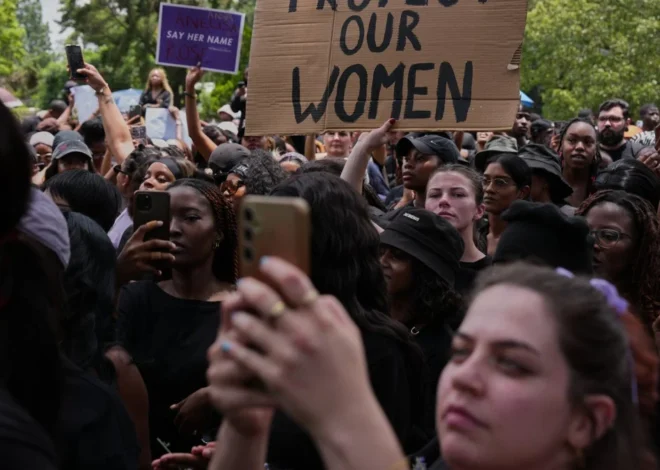
Vietnam Sentences Prominent Social Media Critic Hoang Thi Hong Thai to Six Years as Authorities Escalate Crackdown on Peaceful Dissent
The People’s Court of Hanoi has sentenced prominent social media commentator Hoang Thi Hong Thai to six years in prison, marking a significant escalation in the Vietnamese government’s long-running campaign to silence domestic critics. The conviction, handed down on July 29, 2026, follows charges of conducting "anti-state propaganda" under the country’s controversial Penal Code. Human Rights Watch and various international observers have immediately condemned the verdict, calling for the unconditional release of Hoang and a total cessation of prosecutions targeting peaceful expression.
Hoang Thi Hong Thai, 45, was arrested on January 7, 2026, after months of surveillance and intimidation by the Hanoi police. Her legal troubles stem from her extensive activity on Meta (formerly Facebook), where she commanded an audience of over 118,000 followers. Her posts frequently addressed sensitive socio-political issues, ranging from land rights disputes to government corruption, and often expressed solidarity with other activists facing state repression. The court’s decision underscores the shrinking space for civil society in Vietnam as the ruling Communist Party prepares for its upcoming Party Congress, a period historically associated with increased security measures and the silencing of dissent.
The Case of Hoang Thi Hong Thai: A Chronology of Intimidation
The legal proceedings against Hoang Thi Hong Thai were the culmination of a year-long effort by authorities to curb her influence. In April 2025, Hoang was summoned for a series of intense interrogations. During these sessions, police reportedly presented her with a harrowing ultimatum: cease her online activism or face imprisonment, which would leave her unable to care for her autistic child.
In a poignant social media post following these interrogations, Hoang informed her followers that she was being forced to choose between her role as a mother and her commitment to social justice. "Be a mother or go to prison," she wrote, initially signaling a withdrawal from public discourse. However, the hiatus was short-lived. Driven by what she described as a moral obligation to highlight systemic injustices, she resumed her writing within days, continuing to critique the legal frameworks used to suppress the Vietnamese populace.
By June 2025, Hoang’s rhetoric shifted toward a direct critique of the Vietnamese legal system. She published a detailed analysis of Articles 117 and 331 of the Penal Code, arguing that these provisions were unconstitutional and directly contradicted the right to freedom of speech enshrined in Vietnam’s own founding documents. She went as far as to urge the National Assembly to amend or abolish these laws to bring Vietnam into alignment with international human rights standards. This direct challenge to the legislative status quo likely accelerated the state’s decision to move toward a formal arrest.
The Legal Architecture of Repression: Articles 117 and 331
The conviction of Hoang Thi Hong Thai rests on Article 117 of the 2015 Penal Code, a provision frequently criticized by the United Nations and international legal experts for its "vague and overbroad" language. Article 117 prohibits the "making, storing, disseminating or propagandizing information, materials and products that aim to oppose the State of the Socialist Republic of Vietnam."
The flexibility of this definition allows the state to categorize almost any form of criticism—whether it concerns environmental policy, economic mismanagement, or human rights—as a threat to national security. Convictions under Article 117 carry heavy penalties, ranging from five to twenty years in prison. In Hoang’s case, the six-year sentence reflects the court’s determination that her influence as a "high-follower" account constituted a significant threat to social stability.
In addition to Article 117, authorities frequently utilize Article 331, which criminalizes "abusing democratic freedoms to infringe upon the interests of the State." Together, these two articles form the backbone of the government’s legal strategy to monitor and punish digital dissent. According to Human Rights Watch, the Vietnamese authorities have intensified the use of these laws over the past 24 months, creating a climate of fear that has led many journalists and bloggers to self-censor or flee the country.
A Broader Pattern of Escalation
The sentencing of Hoang Thi Hong Thai is not an isolated incident but rather part of a documented surge in political trials across Vietnam. Data collected by human rights monitors indicates that in the past year alone, at least 14 individuals have been convicted and sentenced to prison for peaceful expression, while another 12 await trial under Article 117.
In March 2026, a court in Dak Lak province sentenced Huynh Ngoc Tuan, a former political prisoner, to eight and a half years in prison. Tuan, who had previously served a decade in prison for writing fiction deemed subversive by the state, was rearrested for posting his political opinions on social media. His case illustrates the "revolving door" of the Vietnamese prison system, where activists are repeatedly targeted even after completing lengthy sentences.
Furthermore, the crackdown has extended to those examining the history of the Communist Party itself. In mid-2026, five individuals were arrested for their involvement in publishing and distributing a controversial biography of Ho Chi Minh, the founder of modern Vietnam. The arrests signal that even historical inquiry is subject to strict ideological control.
Targeting Organized Dissent and the Diaspora
The Vietnamese government has also turned its attention toward organized groups, specifically those advocating for multi-party democracy. Between 2025 and 2026, six individuals alleged to be affiliated with the Collective for Democracy and Pluralism (CDP) were charged with anti-state propaganda. The CDP, founded in France in 1982, has long been a thorn in the side of the Hanoi government for its advocacy of civil and political rights.
The individuals charged—Quach Gia Khang (29), Chu Tuan Anh (28), Nguyen Thanh Tien (37), Tran Van Khanh (41), Dinh Thanh Tung (37), and Nguyen Huu Binh (31)—represent a younger generation of activists who have utilized digital platforms to connect with the Vietnamese diaspora. These arrests follow the earlier convictions of Tran Khac Duc and Nguyen Duy Niem, who received seven and five years respectively for their association with the group.
The reach of the Vietnamese judiciary has also extended beyond its borders. On August 3, 2026, the People’s Court of Hanoi is scheduled to try freelance journalist Doan Bao Chau in absentia. Doan, who went into hiding in 2025 after a wanted notice was issued for him, is accused of producing anti-state propaganda for his participation in discussions on BBC Vietnamese. Similarly, in December 2025, the courts sentenced Berlin-based journalist Le Trung Khoa and former political prisoner Nguyen Van Dai to 17 years each in absentia. These long-distance sentences are viewed by analysts as a tactic to intimidate the diaspora and discourage international media outlets from hosting Vietnamese dissidents.
International Reactions and Human Rights Obligations
The conviction of Hoang Thi Hong Thai has drawn sharp criticism from Patricia Gossman, senior associate Asia director at Human Rights Watch. Gossman noted that the Vietnamese government’s claims of upholding human rights at international forums are fundamentally "contradicted daily by the persecution of citizens who criticize the Communist Party."
Vietnam currently holds a seat on the United Nations Human Rights Council, a position that requires the state to uphold the "highest standards" of human rights. However, international observers argue that the ongoing crackdown on bloggers and activists constitutes a flagrant violation of the International Covenant on Civil and Political Rights (ICCPR), to which Vietnam is a signatory.
Foreign governments, particularly those with significant trade ties to Vietnam, are facing increasing pressure to address these violations. The European Union, which has a Free Trade Agreement (EVFTA) with Vietnam that includes human rights clauses, has been urged by advocacy groups to trigger the agreement’s monitoring mechanisms. Similarly, the United States, which has sought to strengthen strategic ties with Hanoi to counter regional influence, is being called upon to prioritize human rights in its bilateral dialogues.
Implications for the Future of Civic Space
The sentencing of Hoang Thi Hong Thai serves as a stark reminder of the risks faced by those who attempt to navigate the digital landscape in Vietnam. As the government continues to refine its "bamboo firewall" and increase its surveillance capabilities, the cost of dissent has become prohibitively high for many.
The use of psychological pressure—such as the "mother or prison" dilemma—indicates a shift in state tactics toward more personal forms of coercion. By targeting the family lives and livelihoods of activists, the authorities aim not only to silence the individuals themselves but to send a deterrent message to their followers.
As Vietnam moves toward its next political transition in 2026, the international community remains watchful. The fate of Hoang Thi Hong Thai and dozens of other political prisoners will likely remain a central point of contention in Vietnam’s relations with the West. For now, the six-year sentence handed to a mother for her Facebook posts stands as a definitive marker of the current state of freedom of expression in the Socialist Republic of Vietnam. Without significant international pressure or internal policy shifts, the cycle of arrests and convictions under Articles 117 and 331 is expected to continue, further isolating Vietnam’s vibrant but besieged community of independent thinkers.

Related Posts
Human Rights Watch Calls for Investigation into Death of Detainee Following Removal from Najaf Hospital by Iraqi Drug Police
Human Rights Watch Urges UN Security Council to Extend Lebanon Peacekeeping Mission Amid Escalating Conflict and Humanitarian Crisis