South Sudan Forces and Allied Militias Accused of War Crimes and Systematic Abuses Against Civilians in Nagero County
Human Rights Watch issued a comprehensive report today detailing a harrowing campaign of violence in Nagero County, Western Equatoria, where South Sudan’s national army, opposition forces, and allied militias are accused of committing war crimes against civilian populations throughout 2025. The documented abuses include summary executions, gang rape, systematic torture, and the deliberate destruction of civilian property, which have forced tens of thousands of residents to flee their homes. According to the international rights monitor, the South Sudan People’s Defence Forces (SSPDF) and the Sudan People’s Liberation Army-in-Opposition (SPLA/IO) have both failed to protect non-combatants, instead subjecting them to targeted attacks based on perceived political loyalties and ethnic backgrounds.
The conflict in Western Equatoria is not a new phenomenon but represents a violent escalation of tensions that have simmered since 2018. The region has become a flashpoint for clashes between government-aligned forces and the SPLA/IO, with the civilian population caught in a cycle of retaliatory violence. The 2025 surge in hostilities has been particularly devastating, characterized by a complete disregard for international humanitarian law. Between January and November 2025, Nagero County witnessed two distinct waves of heavy fighting that resulted in the displacement of over 21,000 people and the near-total destruction of local infrastructure, including schools and medical facilities.
Historical Context and Political Triggers
The violence in Nagero County is deeply rooted in the complex political and ethnic landscape of South Sudan. Western Equatoria has long been a stronghold for the SPLA/IO, but the government in Juba has consistently sought to assert control over the region’s strategic corridors. Tensions are further exacerbated by ethnic divisions between the Balanda and Azande communities. The Balanda are widely perceived as supporters of the opposition, while the Azande are often linked to government-aligned factions.
A significant turning point occurred when President Salva Kiir dismissed Western Equatoria Governor Alfred Futuyo Karaba, an ethnic Balanda and SPLM/IO nominee, replacing him with a candidate aligned with the central government. This political reshuffling, combined with the defection of commanders like James Nando—an Azande leader who left the SPLA/IO to join government-aligned forces—created a volatile environment. Nando, who was sanctioned by the U.S. Treasury in 2023 for conflict-related sexual violence, has been a central figure in the recent operations in Nagero, leading specialized units such as the "Mobile II" forces.
Chronology of the 2025 Violence
The first major escalation of 2025 began in January when the SSPDF seized a strategic checkpoint at Kubri-Bo, a bridge linking Nagero and Tambura to northern routes toward Wau. This maneuver triggered immediate clashes with SPLA/IO forces. As government troops moved through Nagero town in early February, they engaged in what witnesses described as a "cleansing" operation. On February 7 and 8, soldiers reportedly executed civilians at random, including a man with a mental health condition and two secondary school students, Jackson Erneo Kumbo and Stephen Natale Diko. The students were detained, beaten with machetes, and shot; their bodies were later found 40 kilometers away, partially burned.
A second, more intense wave of violence erupted on September 28, 2025, when SPLA/IO forces launched an attack on the Nagero town army barracks. The government responded with a massive counter-offensive, deploying reinforcements from Division Six. In the weeks that followed, the SSPDF and allied militias carried out systematic raids on civilian settlements. By early October, the United Nations reported that at least 21,000 people had fled into the bush or toward neighboring towns like Bazia and Wau.
Systematic Executions and Sexual Violence
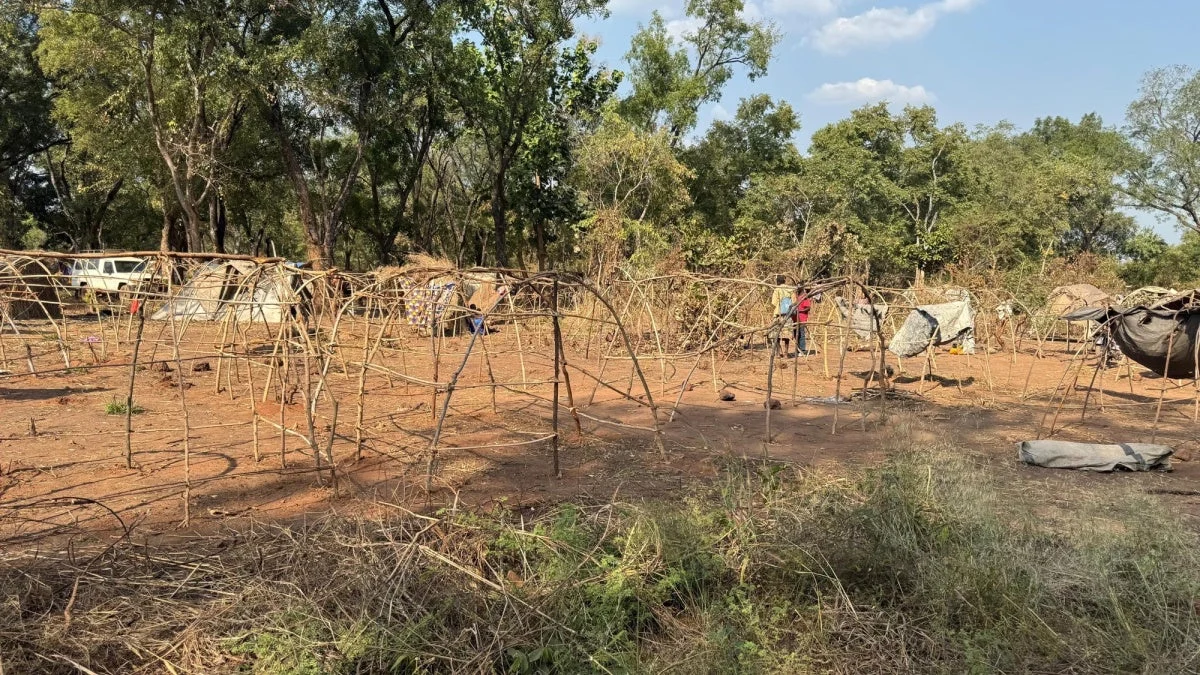
The most egregious incident documented by Human Rights Watch occurred on October 6, 2025. Approximately 30 heavily armed government soldiers descended upon a makeshift camp where displaced families had sought refuge. Witnesses reported that the soldiers rounded up men and boys, accusing them of being rebel collaborators. Six civilians, including three young boys, were taken into the forest and summarily executed. One survivor described being tied to a child named Saviour; the boy was shot first, and the survivor only escaped by falling into the brush as machine-gun fire shredded the leaves around him.
The use of sexual violence as a tool of intimidation was also widespread. Human Rights Watch interviewed multiple survivors who described being gang-raped by soldiers while attempting to forage for food or return to their homes. In one instance on November 12, a 27-year-old woman and her companion were intercepted by five soldiers near the Nagero barracks. After being threatened with death, they were raped sequentially by three soldiers. Despite reporting the incident to local chiefs and military commanders, no investigative action was taken.
Destruction of Infrastructure and Looting
The economic heart of Nagero County has been decimated by the scorched-earth tactics employed by the warring parties. Satellite imagery analyzed by Human Rights Watch confirmed active fires and burn marks across several villages in January and February 2025. Soldiers reportedly targeted food stores, looting groundnuts, cassava flour, and livestock before setting homes on fire.
Public services have also been intentionally targeted. On September 28, soldiers raided a local health facility, beating patients and staff before looting essential medical equipment, including solar panels and batteries. This has left the county with a crippled healthcare system. Similarly, Nagero Primary School was ransacked on October 7, with soldiers using iron bars to break into offices and classrooms to steal supplies. As of mid-2026, only half of the schools in the area are functional, as teachers remain too terrified to return and families lack the resources to buy basic school supplies.
Humanitarian Impact and Displacement
The humanitarian consequences of the fighting have been catastrophic. The journey for those fleeing Nagero was often lethal; older people and those with disabilities frequently died of exhaustion or illness during the four-to-seven-day trek to Bazia. In one tragic report, a blind man in his 70s died alone in the bush after his family was forced to leave him behind during a rapid military advance.
The Integrated Food Security Phase Classification (IPC) warned in April 2026 that Nagero County remains in a state of "critical" food insecurity. Ongoing instability prevents farmers from planting or harvesting crops, and the government continues to restrict humanitarian access to the region. Many returnees find their homes reduced to ashes and their lands occupied or littered with unexploded ordnance, leaving them entirely dependent on dwindling aid.
Responses and Lack of Accountability
The South Sudanese government has largely remained silent or dismissive regarding these allegations. In response to media inquiries, military spokespeople denied the killing of civilians, claiming that those executed were "fighters in civilian clothes." Human Rights Watch sent a formal inquiry to the army’s Chief of General Staff in July 2026, but the letter, which was forwarded to the Minister of Defence, received no official response.
This lack of accountability is a recurring theme in South Sudan’s decade-long struggle with internal conflict. While the 2018 peace agreement stipulated the creation of a Hybrid Court for South Sudan to investigate war crimes, the institution has yet to be established. Consequently, commanders with well-documented histories of abuse, such as James Nando, continue to hold positions of power and lead operations that result in further civilian casualties.
Broader Implications and Analysis
The situation in Nagero County serves as a grim reminder of the fragility of South Sudan’s transition toward peace. The integration of former rebel commanders into the national army without vetting for human rights abuses has created a culture of impunity. When commanders like Nando defect and are immediately given leadership roles in government operations, it signals to the rank-and-file that violations of international law will not be punished.
Furthermore, the targeting of the Balanda community suggests that ethnic profiling remains a primary driver of military strategy in Western Equatoria. This deepens communal divisions and makes long-term reconciliation nearly impossible. If the government continues to block humanitarian aid and shield abusive commanders from justice, the cycle of displacement and violence is likely to repeat, further destabilizing the border regions with the Central African Republic and the Democratic Republic of Congo.
Human Rights Watch has called on the African Union and the United Nations to increase pressure on Juba. The organization insists that the government must immediately suspend commanders implicated in these abuses and allow for independent investigations. Without a functional justice mechanism and a genuine commitment to civilian protection, the "nothing to return to" reality for the people of Nagero will become a permanent fixture of the South Sudanese landscape. For the survivors of the 2025 massacres, the rain continues to fall on the unmarked, dirt graves of their children, a silent testament to a peace process that has yet to reach the most vulnerable.

Related Posts
Human Rights Watch Calls for Investigation into Death of Detainee Following Removal from Najaf Hospital by Iraqi Drug Police
Human Rights Watch Urges UN Security Council to Extend Lebanon Peacekeeping Mission Amid Escalating Conflict and Humanitarian Crisis