US Central Command and United Arab Emirates Establish Task Force Talon Synapse to Advance Military Artificial Intelligence Integration
In a move that signals a profound shift toward data-centric warfare in the Middle East, U.S. Central Command (CENTCOM) and the United Arab Emirates (UAE) have announced the formation of Task Force Talon Synapse. This initiative represents the first bilateral task force dedicated specifically to the development, testing, and scaling of military artificial intelligence (AI) applications. The partnership marks a significant milestone in the long-standing security relationship between Washington and Abu Dhabi, reflecting a shared recognition that the future of regional stability will be defined by technological superiority and rapid algorithmic decision-making.
The task force is scheduled to become operational in the coming weeks, according to official statements released by CENTCOM. Headquartered in Abu Dhabi, the unit will serve as a collaborative laboratory where American and Emirati experts will work side-by-side to integrate AI into the core of military operations. The mission of Task Force Talon Synapse is broad yet focused on three critical pillars: enhancing intelligence support, safeguarding critical national infrastructure, and monitoring the increasingly complex regional security environment.
Operational Framework and Personnel
Task Force Talon Synapse will initially be comprised of approximately 20 personnel, split between U.S. and Emirati ranks. This elite cadre will include data scientists, cybersecurity analysts, software engineers, and military intelligence officers. By placing these specialists in a unified command structure, the task force aims to bypass traditional bureaucratic hurdles that often slow the adoption of emerging technologies.
Admiral Brad Cooper, the Deputy Commander of CENTCOM, emphasized the strategic importance of the unit during the announcement. He noted that the partnership leverages the UAE’s position as a global leader in AI investment and CENTCOM’s operational experience in one of the world’s most volatile regions. The goal is to provide "innovation at speed and scale," ensuring that warfighters have access to predictive analytics and automated systems that can process information faster than any human adversary.
The task force will focus on "edge processing"—the ability to analyze data directly on sensors or platforms rather than sending it back to a centralized cloud. This is particularly vital in the Middle East, where electronic warfare and signal interference can disrupt communications. By utilizing AI at the tactical edge, Task Force Talon Synapse hopes to provide real-time insights to commanders on the ground, whether they are monitoring maritime traffic in the Strait of Hormuz or protecting energy facilities from drone incursions.
A Chronology of Technological Cooperation
The establishment of Task Force Talon Synapse is not an isolated event but the culmination of years of intensifying cooperation between the U.S. and the UAE. This trajectory has been defined by a mutual desire to move beyond traditional arms sales toward a partnership rooted in high-tech research and development.
- October 2017: The UAE becomes the first nation in the world to appoint a Minister of State for Artificial Intelligence, signaling its intent to become a global hub for the technology by 2031.
- September 2021: The UAE and the United Kingdom sign a "Partnership for the Future," which includes significant provisions for defense research and AI collaboration. This served as a blueprint for similar arrangements with the United States.
- 2022-2023: CENTCOM begins a series of digital transformations under the leadership of General Michael "Erik" Kurilla, establishing Task Force 59 (maritime unmanned systems) and Task Force 99 (aerial unmanned systems). The UAE emerges as a primary partner in these exercises.
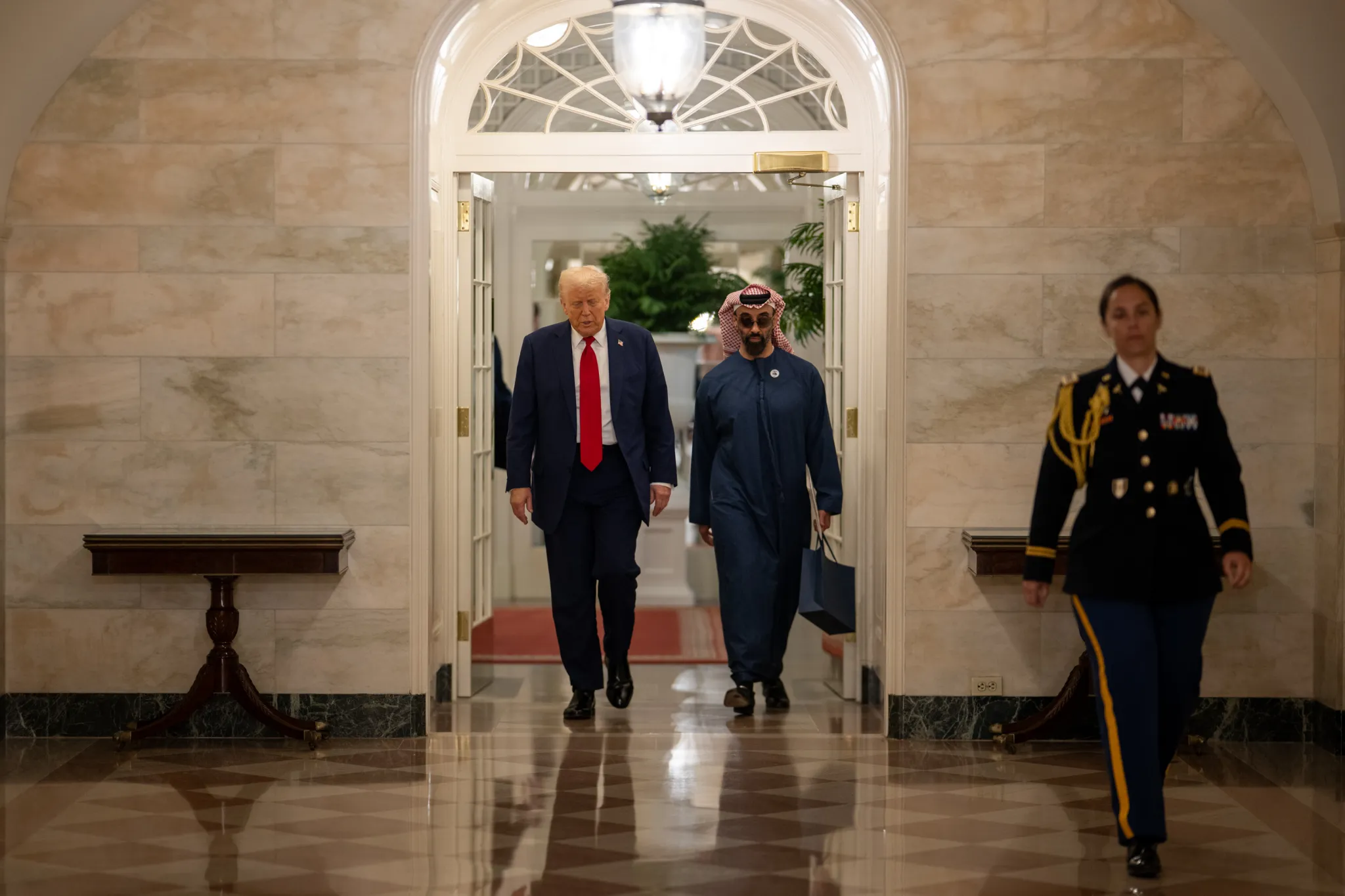
- Late 2023: Admiral Brad Cooper and UAE National Security Advisor Sheikh Tahnoun bin Zayed al-Nahyan hold preliminary discussions regarding a dedicated bilateral AI cell.
- November 2024: The UAE-based defense conglomerate EDGE Group and U.S.-based Anduril Industries announce a partnership to co-produce the "Transformer" drone, an autonomous loitering munition capable of transitioning between hovering and high-speed flight.
- March 2025: Sheikh Tahnoun bin Zayed al-Nahyan visits the White House for high-level talks with President Donald Trump and senior national security officials. The visit centers on the "national responsibility" of adopting AI and solidifies the plans for Task Force Talon Synapse.
- April 2025: Official launch of Task Force Talon Synapse is announced by CENTCOM.
Strategic Context: Why the UAE?
The selection of the UAE as the first bilateral partner for an AI task force is a testament to the country’s unique position in the global technology landscape. Unlike many other regional powers, the UAE has invested tens of billions of dollars into its domestic AI ecosystem. This includes the establishment of the Mohamed bin Zayed University of Artificial Intelligence (MBZUAI) and the growth of G42, an Abu Dhabi-based AI and cloud computing company.
The UAE’s strategic value to the U.S. has also evolved. In late 2024, the U.S. formally designated the UAE as a "Major Defense Partner," a status previously held only by India. This designation facilitates deeper cooperation on sensitive technologies and streamlines the process for joint research initiatives.
From a geopolitical perspective, Task Force Talon Synapse serves as a hedge against the influence of rival powers. As China seeks to export its own AI-driven surveillance and military hardware to the Gulf, the U.S. is moving to ensure that its closest partners remain integrated within a Western-led technological framework. By embedding U.S. personnel within an Emirati AI task force, the Pentagon ensures interoperability and maintains a foothold in the region’s most advanced tech sectors.
AI Applications in Regional Security
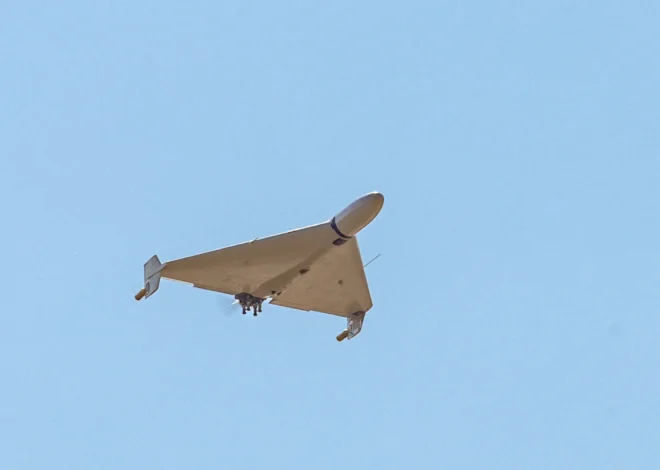
The practical applications of Task Force Talon Synapse are expected to address the specific threats prevalent in the CENTCOM area of responsibility. One of the primary areas of focus is the protection of critical infrastructure. The UAE is home to some of the world’s most vital desalination plants, oil refineries, and shipping ports. These facilities are increasingly targeted by "asymmetric" threats, such as low-cost kamikaze drones and cyber-attacks.
AI-driven defense systems can monitor thousands of sensor feeds simultaneously, identifying anomalies that might escape a human operator. For instance, computer vision algorithms can distinguish between a commercial bird and a small surveillance drone, triggering automated countermeasures in milliseconds.
Furthermore, the task force will look at "Information Operations" and "Intelligence Support." In a region where disinformation can spark civil unrest or military escalation, AI tools can be used to track the spread of narratives across social media and encrypted messaging apps. This allows for a more proactive approach to regional stability, where commanders can anticipate crises before they manifest physically.
Official Responses and Industry Impact
The announcement has been met with positive reactions from both military leadership and industry analysts. Defense experts suggest that Task Force Talon Synapse could serve as a model for future bilateral units with other technologically advanced allies, such as Israel, Japan, or Singapore.
"This is about more than just software; it’s about a culture of innovation," said a senior defense analyst based in Washington. "The UAE provides a unique ‘living laboratory’ where environmental conditions—such as extreme heat and dust—test the limits of AI hardware. What the U.S. learns in Abu Dhabi will eventually benefit the entire Department of Defense."
Within the UAE, the task force is viewed as a critical component of the nation’s "Vision 2031." Emirati officials have frequently stated that they view AI not just as an economic driver, but as a pillar of national sovereignty. By collaborating with CENTCOM, the UAE gains access to American military doctrine and high-end data sets that are essential for training robust machine learning models.
Industry giants are also paying close attention. The collaboration between EDGE Group and Anduril is likely just the beginning of a wave of joint ventures. Major U.S. firms like Microsoft, which recently invested $1.5 billion in the UAE’s G42, are expected to play an indirect role by providing the cloud infrastructure and foundational models upon which military applications will be built.
Broader Implications and Future Outlook
The launch of Task Force Talon Synapse marks a definitive end to the era of "hardware-only" defense partnerships in the Middle East. For decades, the measure of a relationship was the number of fighter jets or tanks sold. Today, the measure is the depth of data integration and the sophistication of shared algorithms.
However, the path forward is not without challenges. Integrating AI into military operations raises complex questions regarding the "human-in-the-loop" principle and the ethics of autonomous systems. Both the U.S. and the UAE will need to navigate these issues as the task force moves from the laboratory to the field. There is also the persistent challenge of cybersecurity; a task force dedicated to AI is a high-value target for state-sponsored hackers looking to steal proprietary code or inject malicious data into training sets.
Despite these hurdles, the trajectory is clear. Task Force Talon Synapse represents the vanguard of a new security architecture in the Middle East. As the unit begins its work in Abu Dhabi, it will not only be monitoring the security environment of today but actively coding the defense strategies of tomorrow. The "coming weeks" will mark the beginning of an experiment that could redefine how the United States and its partners maintain the balance of power in an increasingly digitized world.

Related Posts
Pentagon Forges Landmark Seven-Year Agreements with Boeing and RTX to Accelerate Standard Missile-3 Production and Stabilize Defense Supply Chains
Boeing Unveils Ultra Low-Cost Seeker to Enhance Missile Inventory and Combat Cost Challenges in Modern Warfare