Escalation of Hostilities in Yemen: Saudi-Led Coalition Airstrikes on Sanaa Airport and Houthi Retaliation Signal Potential End to Two-Year Truce
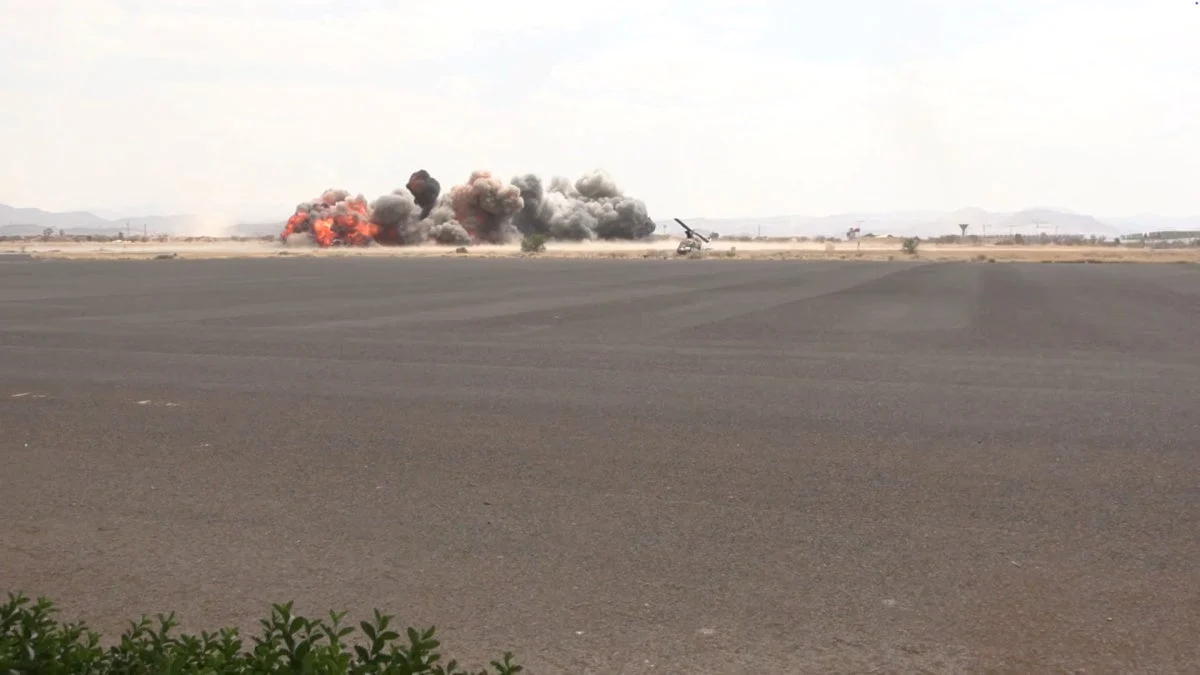
The fragile peace that has largely held in Yemen since 2022 faced its most significant challenge on July 13, as Yemeni government forces, operating in a long-standing coalition with Saudi Arabia, launched a series of targeted airstrikes against Sanaa International Airport. According to an extensive analysis of satellite imagery conducted by Human Rights Watch (HRW), the coalition forces conducted at least five distinct airstrikes on the facility. Of these, three specifically targeted the airport’s primary runway, rendering it largely inoperable for heavy aircraft. The Yemeni government defended the military action, stating that the strikes were a preemptive measure intended to prevent a flight operated by Mahan Air from landing. Mahan Air is a privately owned Iranian carrier that has frequently been accused by Western and coalition intelligence agencies of transporting military hardware and personnel to Houthi-controlled regions.
The response from the Houthi movement, which maintains control over the capital and much of northern Yemen, was swift and substantial. Only hours after the smoke cleared at Sanaa International, Houthi forces launched a large-scale retaliatory offensive against Abha International Airport, located in the Asir province of southwestern Saudi Arabia. This counter-attack involved dozens of ballistic missiles and loitering munitions, more commonly known as suicide drones. Yahya Saree, the official spokesperson for the Houthi military forces, issued a statement confirming the operation, characterizing it as a direct and "proportionate response to the Saudi-led aggression against Sanaa airport." The exchange marks a dangerous departure from the relative calm that has defined the region for over two years, sparking fears of a return to full-scale kinetic warfare.
Strategic Significance of Sanaa International Airport
Sanaa International Airport is far more than a mere military target; it is a vital lifeline for the millions of civilians living under Houthi administration. As the only functional international airport in the northern highlands—where the vast majority of the Yemeni population resides—it serves as the primary gateway for humanitarian aid, medical supplies, and the movement of international aid workers. Since the coalition-imposed blockade began earlier in the conflict, the airport’s operations have been severely restricted, yet it remains the central hub for the United Nations’ "humanitarian air bridge."
The damage to the runway poses an immediate threat to the delivery of life-saving supplies. Humanitarian organizations have warned that any disruption to the airport’s functionality exacerbates an already dire situation. Yemen is currently grappling with what the UN has frequently termed the "world’s worst humanitarian crisis," with millions on the brink of famine. The destruction of civilian infrastructure like runways not only complicates the logistics of aid delivery but also isolates the civilian population from the rest of the world, preventing those with chronic illnesses from seeking specialized medical treatment abroad.
Chronology of the Conflict and the Breakdown of the Truce
To understand the gravity of the July 13 strikes, one must look at the broader timeline of the Yemeni Civil War, which began in late 2014 when Houthi rebels seized the capital.
- September 2014: Houthi forces take control of Sanaa, forcing the internationally recognized government into exile.
- March 2015: A Saudi-led coalition intervenes at the request of the Yemeni government, launching "Operation Decisive Storm."
- 2016–2021: A period of intense conflict characterized by coalition airstrikes and Houthi cross-border missile and drone attacks. Both sides face accusations of war crimes.
- April 2022: A United Nations-brokered truce is established. This agreement led to a significant reduction in violence, the reopening of Sanaa airport for limited commercial flights to Amman and Cairo, and the entry of fuel ships into the port of Hudaydah.
- October 2022 – June 2024: While the formal truce expired in October 2022, the parties largely adhered to its terms in a "de facto" truce period, with major hostilities remaining dormant as back-channel negotiations continued.
- July 13, 2024: The coalition airstrikes on Sanaa airport represent the first major violation of this extended period of relative peace, effectively ending the two-year pause in direct aerial bombardment of the capital’s infrastructure.
This latest escalation mirrors the patterns of violence seen prior to 2022. Between 2014 and the start of the truce, Human Rights Watch documented numerous Houthi attacks on Saudi airports, including Jizan, Najran, and Abha. These attacks often utilized unguided or semi-guided projectiles that HRW classified as "likely war crimes" due to their indiscriminate nature and the targeting of civilian hubs. Conversely, the Saudi-led coalition has been criticized for its "double-tap" strikes and the targeting of economic infrastructure, which have contributed to the collapse of the Yemeni state.
Humanitarian Data and the Human Cost
The statistics surrounding the Yemeni conflict are staggering, illustrating a decade of systemic suffering. According to the United Nations Office for the Coordination of Humanitarian Affairs (OCHA), more than 24 million people—approximately 80% of the population—require some form of humanitarian assistance or protection.
Supporting data highlights the following:
- Displacement: Over 4.5 million Yemenis have been internally displaced since the conflict began. Many have been displaced multiple times as frontlines shifted.
- Food Insecurity: Approximately 17 million people are considered food insecure, with 2.2 million children suffering from acute malnutrition.
- Casualties: While exact figures are difficult to verify due to the collapse of the health system, conservative estimates suggest that over 377,000 people have died as a result of the war, with a significant percentage resulting from indirect causes such as hunger and preventable diseases like cholera.
- Economic Impact: The Yemeni Rial has lost over 500% of its value since 2014, making basic commodities unaffordable for the average citizen.
The July 13 strikes further threaten these precarious numbers. When critical infrastructure like an airport is targeted, the "cascading effects" often lead to more deaths than the initial explosion. The inability to fly in vaccines, specialized medicines, and technical experts can lead to localized outbreaks of disease and the failure of essential services.
Official Responses and International Reactions
The Yemeni government, currently based in Aden, issued a formal statement justifying the strikes as a "national security necessity." They alleged that the Houthi movement has increasingly used Sanaa International Airport for military purposes, including the storage of drone components and the reception of foreign military advisors. The government emphasized that the decision to target the runway was a "calibrated move" to stop the landing of an unauthorized Iranian flight, which they claimed violated the terms of the regional air traffic agreements.
In contrast, the Houthi leadership in Sanaa condemned the strikes as a "cowardly act of aggression" that targeted a civilian facility protected under international law. Houthi officials argued that the coalition’s claims regarding Mahan Air were a pretext for tightening the "suffocating siege" on northern Yemen. Following their retaliatory strike on Abha, Houthi representatives warned that any further strikes on Sanaa would result in "even more painful" consequences for Saudi Arabia’s economic and transport sectors.
International human rights organizations have been quick to criticize both parties. Human Rights Watch reiterated that deliberate attacks on objects indispensable to the survival of the civilian population—including airports used for aid—are strictly prohibited under the laws of armed conflict. "The cycle of impunity must end," a spokesperson for HRW stated. "Both the coalition and the Houthi forces have demonstrated a reckless disregard for civilian life for over a decade. These latest strikes prove that without international accountability, the parties will continue to use civilian infrastructure as a chessboard for their military ambitions."
Broader Geopolitical Implications and Future Outlook
The resumption of airstrikes suggests a significant shift in the regional geopolitical landscape. For the past two years, Saudi Arabia has been engaged in direct talks with the Houthis, mediated by Oman, in an attempt to find a permanent exit strategy from the conflict. This recent escalation may indicate a breakdown in these negotiations or a "pressure tactic" by the coalition to force concessions regarding Houthi military activities.
Furthermore, the involvement of Mahan Air highlights the persistent regional tension between Saudi Arabia and Iran. Despite the China-brokered rapprochement between Riyadh and Tehran in early 2023, the situation in Yemen remains a primary friction point. The coalition’s willingness to strike Sanaa to block an Iranian flight suggests that the underlying security concerns regarding Iranian influence in the Arabian Peninsula remain unresolved.
The implications for the United Nations’ peace process are grim. UN Special Envoy Hans Grundberg has consistently called for a transition from a truce to a comprehensive political settlement. However, the return to "tit-for-tat" attacks on civilian airports undermines the trust required for such a transition. If the strikes continue, the progress made in opening Sanaa airport for commercial travel—one of the few tangible benefits for civilians during the truce—could be permanently erased.
As the conflict enters this volatile new chapter, the international community faces the challenge of re-engaging the warring parties before the violence returns to the levels seen in 2018. The protection of civilian airports and the maintenance of humanitarian corridors are essential if Yemen is to avoid another humanitarian catastrophe. Without a concerted effort to hold violators accountable for war crimes and violations of international humanitarian law, the cycle of harm will likely persist, leaving the Yemeni people to pay the ultimate price for a war that shows no sign of a definitive conclusion.

Related Posts

Human Rights Watch Calls for Investigation into Death of Detainee Following Removal from Najaf Hospital by Iraqi Drug Police
Human Rights Watch Urges UN Security Council to Extend Lebanon Peacekeeping Mission Amid Escalating Conflict and Humanitarian Crisis