The Strategic Necessity of Weather Readiness How the 2026 El Niño Threatens US Military Operations and Infrastructure
In the annals of military history, weather has frequently proven to be as decisive a factor as firepower or tactical genius. General Dwight D. Eisenhower famously attributed the success of the Allied invasion of Normandy in June 1944 to the expertise of his meteorologists, who identified a brief window of manageable conditions amidst a week of North Atlantic storms. This historical precedent underscores a fundamental axiom of military planning: the mission does not dictate the weather; rather, the mission must accommodate it. As the Department of Defense (DOD) looks toward the latter half of 2026, a significant meteorological warning has been issued that demands the same level of strategic attention as a conventional security threat.
The National Oceanic and Atmospheric Administration (NOAA) officially declared the formation of a new El Niño event on June 12, 2026. According to current modeling and atmospheric data, this event is projected to intensify significantly by the fall and winter, potentially becoming one of the strongest El Niño cycles in the modern recorded era. For the Pentagon, this is not merely a scientific observation but a critical intelligence report. With months of lead time, military commanders and installation leaders are being presented with a rare opportunity to prepare for a predictable cycle of disruption before it arrives.
The Mechanics of El Niño and the 2026 Forecast
El Niño, the warm phase of the El Niño-Southern Oscillation (ENSO), is characterized by the unusual warming of surface waters in the central and eastern Pacific Ocean. This shift in ocean temperatures disrupts global atmospheric circulation, altering the position of the jet stream and, consequently, weather patterns across the globe. While El Niño does not dictate the exact timing of individual storms, it serves as a powerful "threat indicator," shifting the statistical probability of extreme weather events in specific regions.
The 2026 forecast presents a complex dichotomy for U.S. military interests. On one hand, NOAA predicts a below-normal Atlantic hurricane season, as El Niño typically increases vertical wind shear over the Atlantic, which inhibits the formation and intensification of tropical cyclones. On the other hand, the phenomenon significantly increases activity in the Pacific. For the Department of Defense, which has spent the last decade pivoting its strategic focus toward the Indo-Pacific, this shift represents a direct challenge to the "Second Island Chain" and critical logistics hubs.
The Pacific Theater: A Hub Under Pressure
The strategic importance of Guam and the Commonwealth of the Northern Mariana Islands (CNMI) cannot be overstated. As the westernmost territories of the United States, these islands host Andersen Air Force Base and Naval Base Guam, serving as the primary staging grounds for power projection in the Pacific. However, El Niño conditions tend to shift typhoon activity eastward, placing these installations directly in the path of more frequent and more intense storms.
The 2026 season has already provided a grim preview of this vulnerability. In April, Typhoon Sinlaku struck Guam and the Northern Marianas, causing widespread power outages, severe flooding, and significant damage to civilian and military infrastructure. This was followed in July by Super Typhoon Bavi, whose eye passed directly over the island of Rota. Bavi left a trail of destruction across Guam and Saipan, where thousands of residents and personnel were still in the process of recovering from Sinlaku.
The El Niño outlook suggests that the frequency of such events will likely increase through the end of the year. For the U.S. Indo-Pacific Command (INDOPACOM), this translates to potential interruptions in maritime patrols, delayed supply chains, and the redirection of combat-ready forces toward humanitarian assistance and disaster relief (HADR) missions.
Continental U.S. Operations: Flooding and Training Interruptions
While the Pacific faces the threat of typhoons, the continental United States (CONUS) faces a different set of challenges driven by a strengthened southern storm track. Historically, strong El Niño events correlate with wetter-than-average conditions across the southern tier of the country, from California through the Gulf Coast and into the Southeast.
For the military, this geographic belt is home to some of the nation’s most vital training and industrial bases. Installations such as Fort Cavazos in Texas, Camp Pendleton in California, and Eglin Air Force Base in Florida are at increased risk of:
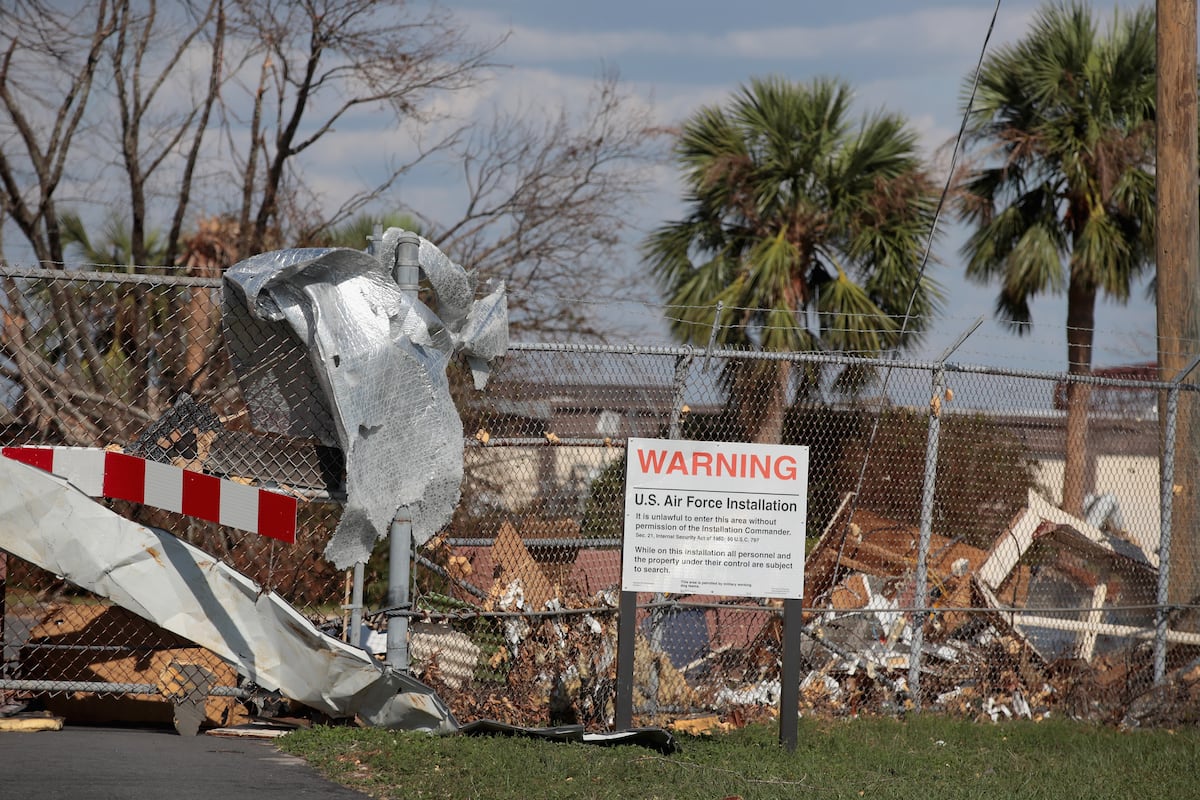
- Infrastructure Damage: Excessive rainfall can overwhelm aging drainage systems, lead to soil erosion under runways, and cause flash flooding that renders access roads impassable.
- Training Stoppages: Heavy rain and flooding frequently force the cancellation of outdoor maneuvers, live-fire exercises, and aviation training, creating a "readiness debt" that can take months to repay.
- Maintenance Delays: Open-air maintenance and construction projects, essential for keeping aging fleets operational, are often halted during periods of prolonged inclement weather.
Simultaneously, the northern tier of the U.S. is expected to experience a warmer-than-average winter. While this might reduce snow-removal costs, it can lead to erratic freeze-thaw cycles that damage pavement and infrastructure, and it does little to offset the risks posed to the southern installations.
The Human Factor: Heat Stress and Readiness
The 2026 El Niño arrives on top of a baseline of rising global temperatures, exacerbating the risks of heat stress for service members. Training bases in the South and Southwest are already seeing an increase in "Black Flag" days—periods when the Wet Bulb Globe Temperature (WBGT) exceeds 90 degrees Fahrenheit, necessitating the suspension of strenuous physical activity.
Medical data from the Defense Health Agency indicates that heat-related illnesses, including heat exhaustion and heatstroke, remain a persistent threat to force readiness. As El Niño contributes to a punishing summer and potentially erratic autumn temperatures, commanders must balance the need for rigorous training with the biological limits of their personnel. The economic cost of lost training days and medical treatments for heat-related injuries adds a significant, though often overlooked, burden to the defense budget.
Lessons from Tyndall: The Cost of Unpreparedness
The potential for catastrophe is not hypothetical. In October 2018, Hurricane Michael—a Category 5 storm—essentially leveled Tyndall Air Force Base in Florida. The damage was so extensive that it required a $5 billion, multi-year reconstruction effort to transform Tyndall into a "base of the future."
In the aftermath, former base commanders noted that while they could not have stopped the wind, a longer warning period would have fundamentally changed their operational preparation. With six months of notice, a commander cannot rebuild a hangar, but they can refine evacuation protocols, harden temporary structures, double-check backup power systems, and ensure that every service member and their family has a clear, practiced plan for continuity of operations.
The 2026 El Niño forecast provides exactly this kind of six-month window. It is a strategic "early warning" that allows the DOD to move from a reactive posture to a proactive one.
A Framework for Operational Resilience
To mitigate the risks posed by the upcoming El Niño, military leaders are being encouraged to focus on operational resilience rather than long-term infrastructure overhauls, which are impossible to complete in the given timeframe. Key areas of focus include:
- Continuity of Mission-Essential Functions (MEF): Installations must identify the functions that must remain operational at all costs—such as communications, command and control, and emergency medical services—and ensure they have redundant power, water, and fuel supplies.
- Infrastructure Audits: Before the winter rains arrive in the South and West, installations must clear drainage systems, inspect roofing on critical buildings, and reinforce areas prone to erosion.
- Training Calendar Adjustments: Commanders may need to front-load or delay specific outdoor training modules to coincide with predicted windows of favorable weather, rather than adhering to a rigid, pre-set schedule.
- Supply Chain Buffering: In the Pacific, increasing on-island stocks of fuel, food, and medical supplies can mitigate the impact of typhoon-related shipping delays.
The Shifting Baseline: Weather as a Permanent Threat
The 2026 El Niño will eventually subside, but the broader challenge it represents will not. Defense analysts point out that each major weather event now occurs against a "shifting baseline." Warmer oceans and a more energetic atmosphere mean that the same seasonal patterns experienced thirty years ago now produce more extreme results.
For the Department of Defense, this reality necessitates a cultural shift. Weather and climate patterns must be treated as "intelligence inputs" rather than "acts of God." Just as the military monitors the movement of adversary forces or the proliferation of new technologies, it must monitor the movement of atmospheric currents and the warming of the seas.
The Pentagon’s ability to operate in an increasingly volatile environment depends on its capacity to use the data provided by agencies like NOAA. The 2026 El Niño is a test of this capacity. It is a known threat with a known timeline and known consequences. By treating this forecast as a tactical warning, the military can ensure that when the storms arrive, the mission—much like Eisenhower’s at Normandy—remains on track despite the weather.

Related Posts
Pentagon Forges Landmark Seven-Year Agreements with Boeing and RTX to Accelerate Standard Missile-3 Production and Stabilize Defense Supply Chains
Boeing Unveils Ultra Low-Cost Seeker to Enhance Missile Inventory and Combat Cost Challenges in Modern Warfare