Beijing’s Point Man Urges Hong Kong Lawmakers to Bolster Governance, Development, and Citizen Well-being
Xia Baolong, the top mainland Chinese official overseeing Hong Kong and Macau affairs, has issued a pointed directive to the city’s legislators, calling for enhanced support for the Chief Executive, a significant uplift in governance efficacy, a revitalization of local economic development, and a more responsive approach to the pressing needs of Hong Kong residents. The remarks were delivered during a pivotal seminar in Beijing, attended by 88 members of the Legislative Council (Legco) as part of an unprecedented week-long national affairs study tour aimed at deepening their understanding of mainland China’s policies and governance structures.
Context of the Beijing Summit
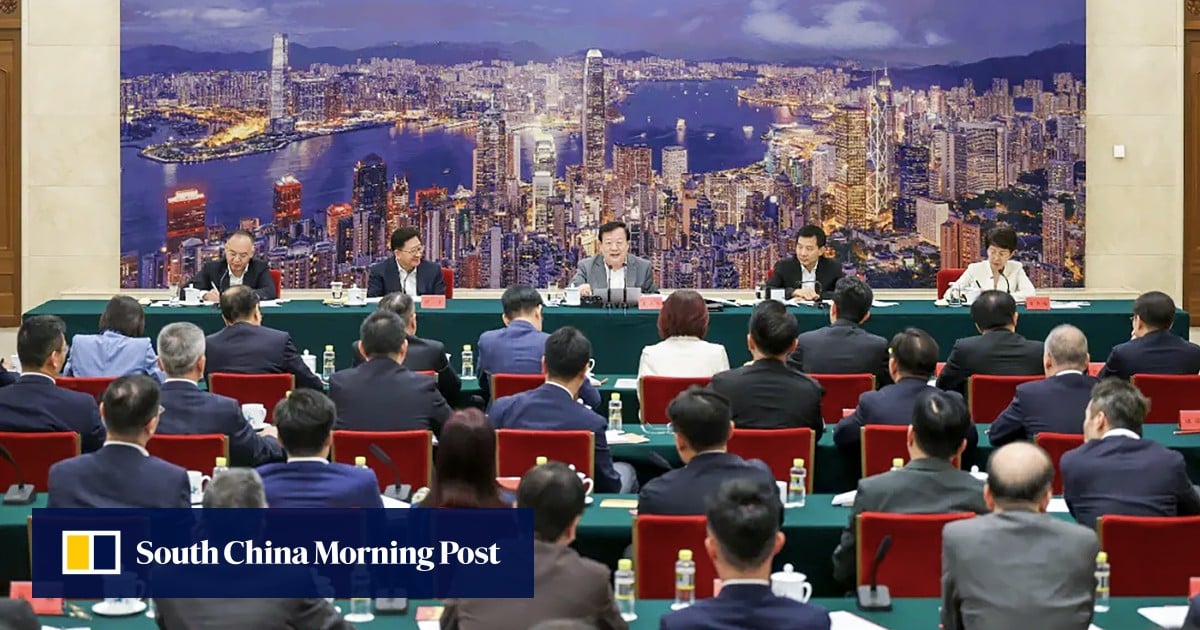
The meeting, held on Friday in the opulent Hong Kong Room of the Great Hall of the People, marks a significant moment in the evolving relationship between Hong Kong’s legislature and the central government. This study tour, spanning an entire week, is the first of its kind for Legco members, underscoring Beijing’s increasing emphasis on aligning the city’s political and administrative trajectory with the national agenda. The initiative appears designed to foster greater unity, shared purpose, and a more profound understanding of national development strategies among Hong Kong’s lawmakers.
Xia Baolong, in his capacity as Director of the Hong Kong and Macau Affairs Office, utilized the platform to not only acknowledge the work of the Legislative Council but also to articulate clear expectations for its future contributions. According to a Legco press statement, Xia encouraged members to "step up their learning, strengthen unity and keep fulfilling their duties with diligence." This call for diligence and unity suggests a desire from Beijing for a more cohesive and effective legislative body that is fully aligned with the central government’s objectives for Hong Kong.
Key Directives for Legislative Action
The core of Xia Baolong’s address revolved around several critical areas for improvement and focus. He specifically urged Legco to "assume a greater role in supporting the chief executive and the [government] in administering Hong Kong in accordance with the law." This statement carries significant weight, implying that Beijing views the legislature as a crucial pillar in ensuring the effective and lawful governance of the Special Administrative Region. The emphasis on "administering Hong Kong in accordance with the law" also serves as a reminder of the legal framework within which the city operates, particularly in the post-national security law era.
Furthermore, Xia articulated the need to "enhance governance efficacy of [the city]." This suggests a perceived need for greater efficiency, responsiveness, and effectiveness in how Hong Kong is governed. The directive implies that current governance structures and processes may require optimization to meet the evolving challenges and expectations.
Injecting "new impetus into the city’s growth" was another prominent theme. This points to a focus on economic development and innovation, signaling Beijing’s desire for Hong Kong to regain its dynamism and contribute more robustly to both its own prosperity and the broader national economic landscape. The specific nature of this "new impetus" remains to be fully detailed, but it likely encompasses areas such as technological advancement, integration with the Greater Bay Area, and attracting new investment.
Finally, Xia emphasized the imperative to "tackle the most pressing concerns of the people." This directive directly addresses the socio-economic challenges faced by Hong Kong residents, including issues such as housing affordability, livelihood improvement, and social welfare. It suggests that Beijing expects the Legislative Council to play a more active role in identifying and resolving these deep-seated issues, thereby enhancing public satisfaction and stability.
The Role of Deputies and the Liaison Office
The seminar was further bolstered by the presence of Xia Baolong’s deputies: Xu Qifang, Zhou Ji, and Zhang Dongmei, alongside Nong Rong. Notably, Zhou Ji also serves as the director of the central government’s liaison office in Hong Kong. The participation of these key figures underscores the unified front and coordinated approach Beijing is adopting towards Hong Kong affairs. The liaison office, in particular, plays a critical role in facilitating communication and implementation of central government policies within the city. Their presence signifies a direct channel of influence and oversight.
Broader Implications and Analysis
Xia Baolong’s pronouncements offer a glimpse into Beijing’s strategic priorities for Hong Kong. The emphasis on supporting the Chief Executive and enhancing governance efficacy suggests a desire for a more streamlined and directive approach to policymaking and implementation. The call for increased legislative support indicates that Beijing expects the Legco to act as a loyal and effective partner in executing its agenda, rather than as an independent check on executive power.
The focus on economic revitalization is particularly pertinent given Hong Kong’s recent economic performance, which has been impacted by global uncertainties and internal challenges. Beijing’s push for "new impetus" could translate into policy initiatives aimed at fostering innovation, attracting talent, and deepening economic integration with the mainland, particularly within the Greater Bay Area framework. This aligns with China’s broader strategy of leveraging Hong Kong as a gateway for international trade and finance, while also ensuring its economic development complements national goals.
The directive to address the "most pressing concerns of the people" is a recognition of the social issues that have historically fueled discontent in Hong Kong. By explicitly calling on the legislature to tackle these concerns, Beijing is likely aiming to build greater public trust and demonstrate its commitment to improving the quality of life for Hong Kong residents. This could lead to a renewed focus on social welfare programs, housing solutions, and employment opportunities.
The unprecedented nature of the Legco study tour itself is a significant indicator of Beijing’s intent. By bringing lawmakers to the capital for an immersive experience, Beijing aims to instill a deeper understanding of national policies, foster ideological alignment, and solidify loyalty to the central government. This approach reflects a broader trend in China’s governance, where direct engagement and education are used to ensure policy coherence and compliance across different regions and institutions.
Historical Context and Evolution of Legco’s Role
The role of the Legislative Council in Hong Kong has undergone significant transformation, particularly since the handover in 1997 and more recently following the implementation of the National Security Law in 2020. Historically, Legco often played a more oppositional role, with a significant number of members advocating for democratic reforms and acting as a check on government power. However, changes to the electoral system and the political climate have resulted in a legislature that is largely composed of members perceived to be loyal to Beijing.
Xia’s remarks can be seen as an attempt to codify and solidify this new dynamic. The expectation for Legco to "support the chief executive and the government" rather than to challenge them marks a departure from the more adversarial political landscape of the past. The emphasis on "unity" further reinforces the notion of a cohesive political bloc working towards common objectives.
The "national affairs study tour" itself is a tool for political education and ideological reinforcement. By exposing lawmakers to China’s economic achievements, technological advancements, and governance models, Beijing aims to cultivate a shared vision and a sense of national belonging. This can include visits to economic zones, technology hubs, and government ministries, providing firsthand exposure to the mainland’s development trajectory. The mention of briefings on work in historical and cultural districts, as seen in the accompanying image, suggests a broader scope of the tour, encompassing not just economic and political matters but also cultural and historical narratives that reinforce national identity.
Potential Impact on Policy and Governance
The directives from Xia Baolong are likely to translate into tangible policy shifts and a recalibrated approach to governance within Hong Kong. Lawmakers will be under pressure to demonstrate their commitment to the outlined objectives. This could mean prioritizing legislation that supports economic diversification, strengthens the city’s integration with the Greater Bay Area, and addresses social welfare issues.
The enhanced role of the Legislative Council in supporting the executive branch could lead to a more efficient legislative process, with fewer roadblocks and greater consensus on key government proposals. However, it also raises questions about the extent to which dissenting voices or alternative perspectives will be accommodated within the legislative agenda.
The focus on "governance efficacy" might spur reforms aimed at improving public service delivery, streamlining bureaucratic processes, and enhancing the responsiveness of government departments. This could involve adopting best practices from the mainland or implementing new technological solutions to improve efficiency.
Conclusion
Xia Baolong’s address to Hong Kong lawmakers serves as a clear articulation of Beijing’s expectations for the city’s legislative body. The directives for enhanced support of the Chief Executive, improved governance, revitalized development, and a focus on citizen needs signal a new phase in Hong Kong’s governance, characterized by closer alignment with mainland China’s national agenda. The unprecedented study tour underscores Beijing’s commitment to shaping a legislative landscape that is both effective and ideologically unified, aiming to ensure Hong Kong’s continued prosperity and stability within the broader framework of national development. The coming months and years will likely see the implementation of policies and initiatives designed to meet these articulated goals, with the Legislative Council playing a pivotal role in their execution.