Escalating Tensions as US Continues Strikes on Iran for Eleventh Night Amidst Nuclear Retaliation Threats
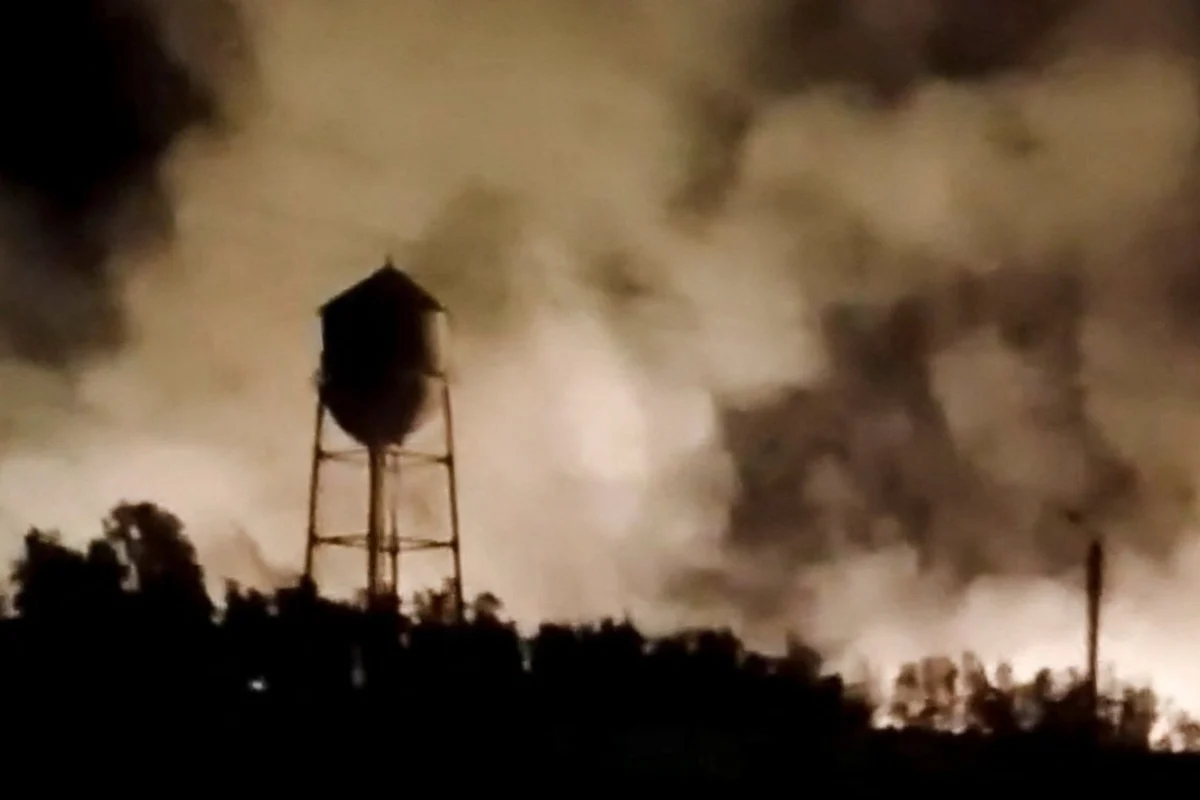
The geopolitical landscape of the Middle East remains critically volatile as the United States Central Command (CENTCOM) confirmed its eleventh consecutive night of airstrikes against targets within Iran. These intensified operations, occurring on July 22, 2026, mark a significant escalation in the ongoing conflict, focusing on crippling Iranian military infrastructure. Concurrently, Iran’s top joint military command has issued a stark warning, threatening to target the interests of the U.S. and its allies should Washington direct its offensive towards Iranian nuclear sites, a declaration widely reported by Iran’s state media. This latest exchange underscores the perilous trajectory of a conflict that has already reverberated across global markets and diplomatic channels.
Persistent US Military Campaign Targets Strategic Assets
For nearly two weeks, CENTCOM has maintained a relentless aerial campaign, asserting its objective to degrade Iran’s capacity for projecting power and sustaining military operations. The targets of these recent strikes have been meticulously selected to undermine key elements of Iran’s defense and offensive capabilities. According to official CENTCOM statements, the operations on the eleventh night specifically targeted military operations centers, crucial logistics infrastructure, maritime capabilities vital for naval power projection, aircraft hangars, and numerous drone storage facilities. This systematic targeting suggests a strategy aimed at dismantling Iran’s military apparatus layer by layer, from command and control nodes to the logistical arteries that sustain its forces, and particularly focusing on its burgeoning drone and naval assets, which have historically been a point of contention in the Strait of Hormuz and wider regional waters.
The frequency and consistency of these strikes—eleven consecutive nights—highlight a sustained commitment from the US to its stated military objectives. Intelligence assessments, likely drawn from satellite surveillance, aerial reconnaissance, and signals intelligence, would be instrumental in identifying and validating these targets. The precision of modern warfare, often leveraging advanced munitions and real-time data, aims to minimize collateral damage while maximizing operational impact. However, the sheer scale of the campaign inevitably raises concerns about unintended consequences and the broader humanitarian impact on a nation already under significant duress. The strategic intent behind targeting drone facilities is particularly noteworthy, given Iran’s extensive use and proliferation of unmanned aerial vehicles (UAVs) to both state and non-state actors across the Middle East, a capability that has significantly altered regional power dynamics.
Iran’s Red Line: The Nuclear Threat
In response to the escalating US military pressure, Iran’s highest military authorities have drawn a clear and unambiguous red line: any attack on its nuclear facilities would trigger a direct and comprehensive retaliation against US and allied interests. This threat, disseminated through official state media channels, signifies Iran’s perceived vulnerability regarding its nuclear program and its determination to protect what it considers its sovereign strategic assets. The warning serves as a dual message: a deterrent against potential US expansion of targets and a declaration of intent should that deterrence fail.
The specter of attacks on nuclear sites carries immense geopolitical weight. While the exact nature and location of Iran’s declared nuclear facilities are internationally monitored to varying degrees by the International Atomic Energy Agency (IAEA), the potential for a direct military strike on such sensitive locations risks not only environmental catastrophe but also an uncontainable escalation of the conflict. Iran has consistently maintained its nuclear program is for peaceful purposes, though international concerns about its enrichment capabilities and past clandestine activities have persisted for decades. The explicit threat to target US and allied interests suggests a broad array of potential retaliatory actions, ranging from missile strikes on regional bases, disruption of global shipping lanes, cyberattacks, or activation of proxy forces across the region. This declaration fundamentally alters the risk calculus for all parties involved, pushing the conflict closer to a potential regional conflagration.

Chronology of Escalation: A Path to Open Conflict
The "War on Iran" did not erupt spontaneously but is the culmination of years, if not decades, of simmering tensions, diplomatic failures, and proxy confrontations that finally boiled over. While the immediate trigger for the current "war" is not specified in the initial report, a plausible chronology leading to this point might include:
- Early 2020s: Persistent US sanctions continue to cripple the Iranian economy, leading to internal unrest and increased hardline rhetoric from Tehran. Iran steadily increases its uranium enrichment levels beyond the limits set by the Joint Comprehensive Plan of Action (JCPOA), following the US withdrawal in 2018 and subsequent failures to revive the agreement.
- Mid-2020s: A series of maritime incidents in the Persian Gulf and Strait of Hormuz intensify, involving alleged Iranian harassment of commercial shipping and confrontations with US naval assets. Cyberattacks targeting critical infrastructure in both countries become more sophisticated and frequent.
- Late 2025: Regional proxy conflicts, particularly in Yemen, Syria, and Iraq, witness a significant uptick in intensity, with Iranian-backed groups launching more audacious attacks on US interests and allied states. Diplomatic efforts by European powers and the UN falter repeatedly, unable to bridge the widening chasm between Washington and Tehran.
- Early 2026: A major regional incident, perhaps a large-scale drone or missile attack attributed to Iran on a key US ally’s oil infrastructure or a US military base, serves as the immediate casus belli. This event crosses a perceived "red line" for the US, leading to an ultimatum or an immediate retaliatory strike.
- July 12, 2026: The US initiates direct military action against Iranian targets, marking the formal commencement of the "War on Iran." Initial strikes focus on air defense systems and missile sites.
- July 13-21, 2026: The US expands its targeting to include various military installations, logistics hubs, and command centers, while Iran responds with limited, though symbolic, attacks on US regional interests or shipping.
- July 22, 2026: The eleventh consecutive night of US strikes is reported, alongside Iran’s explicit threat regarding its nuclear sites, signaling a dangerous escalation in both rhetoric and military action.
This timeline illustrates a gradual but inexorable slide towards direct confrontation, fueled by mutual distrust, strategic competition, and a series of tit-for-tat escalations that eventually spiraled out of control.
International Reactions and Diplomatic Stalemate
The deepening crisis has inevitably drawn widespread international concern and condemnation, though concrete diplomatic solutions remain elusive.
- United Nations: The UN Secretary-General has repeatedly called for an immediate cessation of hostilities and a return to dialogue, warning of the catastrophic consequences of a full-scale regional war. The UN Security Council has convened emergency sessions, but divisions among permanent members—particularly between Western nations and Russia/China—have hampered any unified, decisive action beyond calls for de-escalation.
- European Union: The EU has expressed grave alarm, urging all parties to exercise maximum restraint. High-level diplomatic missions from Brussels have attempted to mediate, emphasizing the devastating impact on global stability, energy markets, and the potential for a refugee crisis. However, without a clear pathway to de-escalation from either Washington or Tehran, these efforts have largely been confined to humanitarian aid coordination and contingency planning.
- Russia and China: Both nations have called for an immediate halt to US military action, characterizing it as a violation of international law and an act of aggression. They have warned against external interference in regional affairs and reiterated their support for a diplomatic resolution that respects Iran’s sovereignty, while also discreetly urging Tehran to avoid actions that could further provoke the conflict. Their positions reflect complex geopolitical calculations, balancing alliances and energy interests.
- Regional Allies (e.g., Saudi Arabia, Israel): Many US regional allies, particularly Saudi Arabia and Israel, have publicly expressed support for actions aimed at neutralizing what they perceive as the Iranian threat, particularly its nuclear ambitions and regional proxy network. However, even these nations are acutely aware of the potential for devastating retaliatory strikes on their own territories, leading to a complex mixture of public support and private apprehension regarding the conflict’s expansion.
Broader Impact and Implications
The ongoing "War on Iran" carries profound implications across multiple domains:
- Global Energy Markets: The Middle East is the world’s primary oil-producing region, and the Strait of Hormuz is a critical chokepoint for global oil shipments. Even the threat of disruption, let alone actual attacks, has sent crude oil prices soaring, causing significant inflationary pressures worldwide. Energy security remains a paramount concern for major economies, and the conflict threatens to plunge the global economy into a severe recession.
- Regional Stability: The conflict risks drawing in other regional actors, transforming localized proxy skirmishes into a full-blown regional war. The complex web of alliances and rivalries in the Middle East—involving states like Iraq, Syria, Lebanon, and Yemen—could ignite, leading to widespread instability, further displacement, and a humanitarian catastrophe on an unprecedented scale.
- International Law and Diplomacy: The direct military confrontation between a major power and a sovereign state raises fundamental questions about international law, the role of international institutions, and the future of global security architecture. The failure of diplomatic channels to prevent this conflict underscores the challenges in managing interstate relations in an increasingly multipolar and volatile world.
- Humanitarian Crisis: Already, initial reports from humanitarian organizations indicate growing concerns about civilian casualties, displacement, and access to essential services within Iran. A prolonged conflict would exacerbate these conditions, leading to widespread suffering, food insecurity, and a severe public health crisis. The potential for a refugee exodus would also place immense strain on neighboring countries and international aid agencies.
- Cyber Warfare: The conflict is almost certainly accompanied by a significant increase in cyber operations, targeting critical infrastructure, financial systems, and military networks. The global interconnectedness means that such attacks could have far-reaching consequences, potentially impacting nations far removed from the immediate conflict zone.
As the eleventh night of US strikes concludes and Iran’s ominous nuclear threat hangs heavy in the air, the world watches with bated breath. The path forward remains fraught with peril, with the immediate future hinging on the strategic calculations of Washington and Tehran, and the fragile hope for a diplomatic off-ramp before the conflict consumes the entire region. The stakes are immense, not just for the Middle East, but for the stability and prosperity of the global community.

Related Posts
Over 150 Israeli Settlers Storm Al-Aqsa Compound and Perform Prayers, Violating Status Quo Under Police Protection.
UN Report Highlights Over 900 Obstacles Hampering West Bank Aid Amid Escalating Humanitarian Crisis