The Trump Administration Challenges State Transparency Laws Targeting Federal Immigration Enforcement Personnel
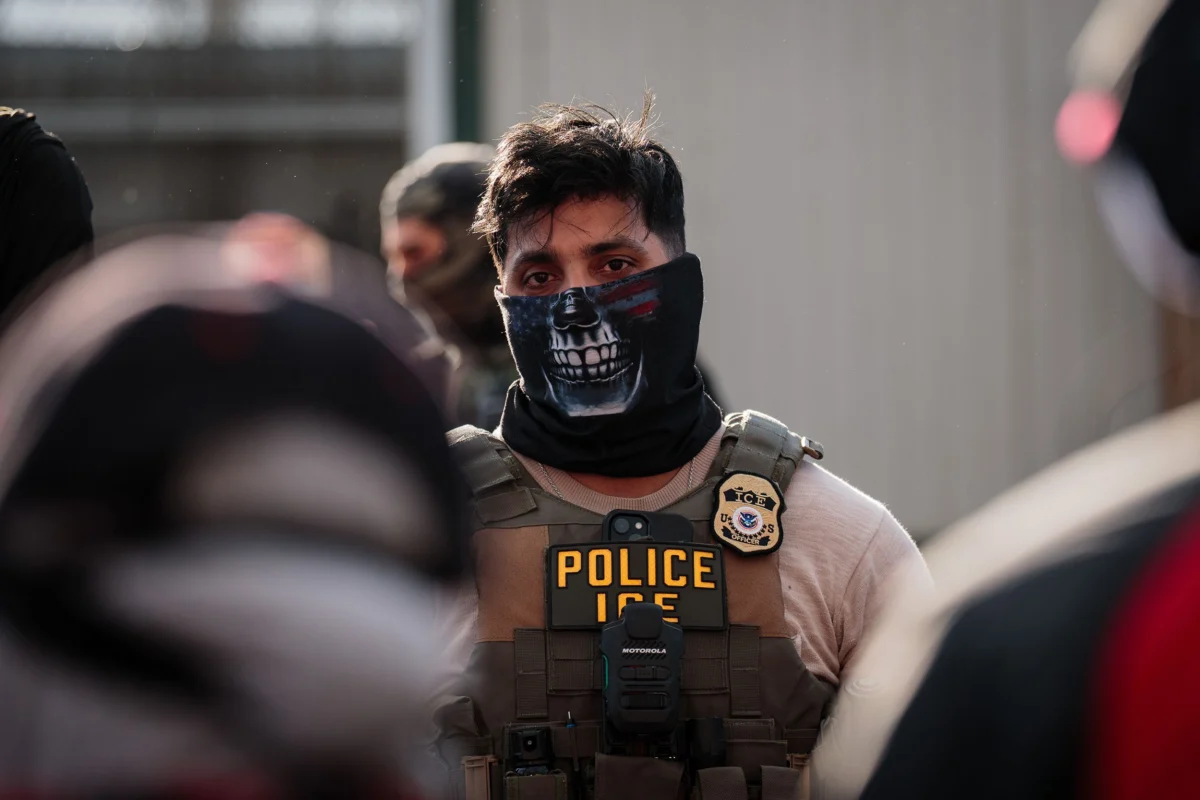
The United States Department of Justice has initiated a series of high-stakes legal challenges against at least five states and the city of Philadelphia, marking a significant escalation in the ongoing constitutional friction between federal immigration enforcement authorities and state-level legislative bodies. At the heart of these lawsuits is a growing trend of state legislation designed to mandate transparency and accountability for law enforcement officers operating within their jurisdictions. These laws, which vary in their specific requirements, largely demand that officers—including those from Immigration and Customs Enforcement (ICE)—refrain from wearing concealing masks during operations and maintain clearly visible individual identification while on duty.
The federal government’s legal strategy hinges on the assertion that such mandates compromise the safety and operational integrity of federal agents. Attorneys representing the Trump administration argue that by forcing agents to display their faces and personal identifiers, state laws expose federal personnel to the risk of targeted harassment and doxing. The DOJ’s filings specifically highlight concerns over the use of facial recognition technology and online platforms, such as the art project ICESpy and the accountability initiative ICE List, which the government characterizes as malicious tools designed to facilitate the identification and intimidation of federal officers.
The Technological Disconnect: Analyzing the Government’s Claims
The DOJ’s reliance on the threat posed by projects like ICESpy has met with significant skepticism from technology experts and the creators of the tools themselves. According to artist Kyle McDonald, the developer behind ICESpy, the software’s effectiveness is vastly overstated in federal filings. The project operates on a database of information aggregated from LinkedIn profiles that date back nearly a decade. A review of the data confirms that the overwhelming majority of the 700 entries relate to administrative, legal, or executive roles, rather than the field agents currently conducting immigration enforcement raids.
Furthermore, the scale of ICE’s expansion complicates the federal argument. In January 2026, the agency reported a significant workforce surge, effectively doubling its personnel from 10,000 to 22,000 agents in a matter of months. Because the data used by these projects relies on historical, self-reported professional information, the vast majority of the current, expanded workforce is entirely absent from these databases.
Data regarding the utilization of these platforms further undermines the government’s narrative of a widespread "doxing" epidemic. Activity logs for ICESpy analyzed between June 30 and July 6, 2026, revealed a negligible amount of traffic—only 84 page views in a seven-day period. Of those, only two attempted face-match queries were recorded, neither of which yielded a successful result. McDonald and other observers have characterized the government’s focus on these tools as a diversion from the more systemic issues of police accountability.
Legislative Friction and the Push for Transparency
The legal battles are currently unfolding in New York, Virginia, Connecticut, New Jersey, and Philadelphia. These jurisdictions have passed or proposed legislation aimed at ensuring that law enforcement actions are subject to public oversight. In Virginia, for example, the federal government successfully obtained an injunction to pause SB 352, a law that restricted the use of masks by law enforcement.
State legislators argue that these measures are essential to maintaining public trust and democratic accountability. Virginia State Senator Saddam Salim has been vocal in his opposition to the federal intervention, suggesting that the DOJ’s resources would be better directed toward investigating internal misconduct and systemic failures within federal agencies.
This tension is exacerbated by recent high-profile incidents. In July 2026, the fatal shooting of 25-year-old Johan Sebastián Durán Guerrero in Maine by an ICE agent ignited public outcry. The agent involved, David Brouillette, was later identified through the efforts of community-led initiatives, including the website ICE List. While the DOJ frames such identification processes as "doxing," supporters of the site maintain that it serves as a necessary accountability mechanism, particularly when federal agencies fail to disclose information or provide adequate oversight regarding the use of force.
The Role of Internal Oversight and Body Camera Policies
A critical component of the ongoing dispute is the lack of standardized body camera usage by ICE. Despite growing calls from civil rights organizations and legislators for federal agents to adopt body-worn cameras, such equipment is not consistently utilized during enforcement operations. This absence of objective, visual documentation makes it exceptionally difficult for investigators to reconstruct events during fatal encounters, such as the recent shootings in Maine and Texas.
The federal government’s reluctance to release information has led to significant judicial intervention. In several cases, including the deaths of Renee Good and Alex Pretti in Minnesota, the Department of Justice initially refused to release evidence to state investigators, only providing the requested materials after being compelled by federal court orders. These patterns of behavior have led state lawmakers to conclude that they must take proactive steps to ensure that federal agents operating within their borders remain subject to the same standards of accountability as local police.
Broader Implications for Federalism
The conflict represents a broader struggle over the limits of federal authority in the realm of domestic law enforcement. State officials, such as Connecticut Senator Bob Duff, emphasize that states possess the sovereign right to protect their residents and ensure that law enforcement actions adhere to constitutional standards. From the state perspective, the federal government’s attempt to override local identification mandates is an overreach that prioritizes agency secrecy over the principles of transparency and justice.
Conversely, the DOJ maintains that federal law enforcement operations are inherently dangerous and that personnel protection is a matter of national security. Spokesperson Kiersten Pels stated that federal agents are being subjected to harassment, asserting that tools used to identify them change domains and evolve to evade detection. However, the DOJ has yet to provide concrete evidence linking these specific tools to a substantiated pattern of physical harm or a legitimate, ongoing threat to the safety of ICE agents.
Chronology of Recent Escalations
- January 2026: ICE announces a massive recruitment effort, increasing its agent count from 10,000 to 22,000.
- Early 2026: Various states, including New York and Virginia, introduce or pass legislation requiring law enforcement officers to display identification and refrain from mask-wearing during public interactions.
- Mid-2026: The Department of Justice files lawsuits against multiple states and the city of Philadelphia, citing the danger posed by online tools like ICESpy and ICE List.
- July 2026: Fatal shootings involving ICE agents in Maine and Texas draw attention to the lack of body camera usage and the difficulty of conducting independent investigations into federal misconduct.
- July 2026: Courts grant an injunction against Virginia’s SB 352, halting the implementation of the state’s transparency requirements.
Conclusion: The Accountability Gap
The standoff between the Trump administration and these states is unlikely to reach a swift resolution. It sits at the intersection of evolving technology, the rise of digital-age activism, and the traditional, often strained, relationship between federal agencies and state governments.
The core of the dispute remains the "accountability gap." As federal immigration enforcement has expanded in scale and presence, the mechanisms for oversight have, in the eyes of many state legislators, failed to keep pace. While the DOJ continues to seek federal supremacy in the management of its agents, the states remain committed to the idea that no law enforcement officer, regardless of their federal status, should be immune from the basic transparency requirements that maintain public order and trust in the rule of law.
As the litigation proceeds, the courts will be forced to weigh the federal government’s interest in officer safety against the states’ authority to regulate the conduct of all law enforcement personnel operating within their borders. Whether through court mandates or legislative compromise, the outcome of these cases will likely set a lasting precedent for the oversight of federal agencies in the years to come. For now, the debate serves as a stark reminder of the profound disagreements regarding the extent to which federal enforcement can operate within states that demand a higher standard of public accountability.

Related Posts

The Las Vegas Cybersecurity Summit and the Escalating Threat of Autonomous Digital Exploitation

New York City Council members and privacy advocates launch legislative campaign to ban biometric facial recognition at public entertainment venues