Senator Rand Paul Warns Against Hormuz Militarization, Cites Impasse in Iran Nuclear Negotiations Amid Calls for De-escalation
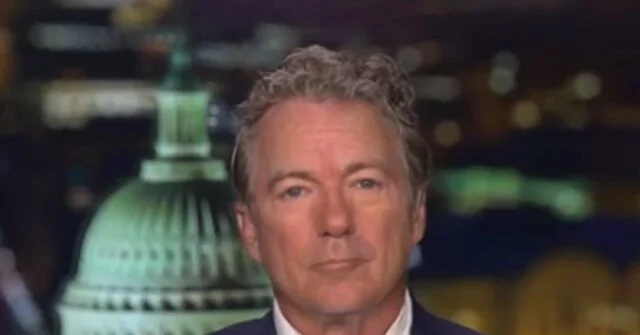
On Tuesday’s broadcast of Bloomberg’s "Balance of Power," Senator Rand Paul (R-KY) delivered a stark assessment of the escalating tensions surrounding the Strait of Hormuz and the ongoing diplomatic stalemate with Iran. The Senator contended that any genuine attempt to militarily control the critical waterway would necessitate an immense deployment of ground forces, a commitment he believes the current administration is disinclined to undertake, a fact he suggests is well understood by Tehran. Paul’s remarks underscore a growing concern within Washington regarding the efficacy of current strategies and the increasing militarization of a region vital to global energy security.
Paul critically questioned whether the United States finds itself closer or farther from achieving a demilitarized environment in the Persian Gulf. He argued that the present situation, marked by heightened military postures and frequent confrontations, represents a significant deterioration compared to the period preceding recent escalations. "Before the war," Paul posited, "there had been a discussion, but never had been a militarization before. People have talked about it for decades, but it never happened. So, now the Strait of Hormuz is militarized. So, that, I would argue, we’re worse off." This perspective challenges the notion that increased pressure necessarily yields better outcomes, instead suggesting that it has exacerbated instability.
The Senator also expressed skepticism regarding the effectiveness of current leverage in compelling Iran to abandon its nuclear weapons ambitions. He observed that Iranian officials appear to be "dragging their heels and being sly and clever," confident that the United States is unwilling to commit the substantial ground troops required for a full-scale military intervention. Paul reiterated his estimate that controlling the Strait of Hormuz would demand "a couple hundred thousand troops," a scenario he deemed highly improbable under the current presidential leadership. Despite this grim outlook, he voiced hope for a diplomatic resolution, specifically advocating for a trade-off where sanctions relief would be granted in exchange for Iran’s removal of enriched uranium. However, he concluded, "I don’t think we’re closer to that. I think we’re actually farther away," acknowledging an alternative argument that some believe the U.S. is in a better negotiating position for such a deal.
The Strategic Importance of the Strait of Hormuz
The Strait of Hormuz, a narrow waterway connecting the Persian Gulf with the Arabian Sea and the Gulf of Oman, stands as one of the world’s most critical maritime chokepoints. At its narrowest point, it is only 21 nautical miles (39 kilometers) wide, with the shipping lanes themselves a mere two miles (3.2 kilometers) wide in each direction. This geographical constraint makes it highly vulnerable to disruption, an ever-present concern given the geopolitical volatility of the region.
Economically, the strait is unparalleled in its significance. According to the U.S. Energy Information Administration (EIA), approximately 20% of the world’s total petroleum liquids consumption and around 30% of all seaborne-traded crude oil passed through the Strait of Hormuz in 2022. This translates to an average of about 21 million barrels per day (b/d) of crude oil, condensate, and petroleum products. Furthermore, a substantial portion of the world’s liquefied natural gas (LNG) also transits this route, primarily from Qatar, a major global LNG exporter. Any significant disruption to traffic through the strait would have immediate and severe repercussions on global energy markets, leading to sharp price increases, supply shortages, and potential economic downturns worldwide. Nations heavily reliant on Middle Eastern oil and gas, particularly those in Asia (China, India, Japan, South Korea) and parts of Europe, are acutely sensitive to the security of this waterway.
Historically, the Strait of Hormuz has been a flashpoint for regional tensions. During the Iran-Iraq War (1980-1988), it was the site of the "Tanker War," where both sides attacked commercial shipping to disrupt the other’s oil exports. More recently, Iran has repeatedly threatened to close the strait in retaliation for international sanctions or military threats, underscoring its strategic leverage.
A Decade of Escalation: Iran, Nuclear Deal, and Regional Instability
The current state of militarization and diplomatic impasse highlighted by Senator Paul is the culmination of a complex and often tumultuous relationship between the United States and Iran, marked by cycles of confrontation, negotiation, and renewed hostility.
The Pre-JCPOA Era (Pre-2015): For decades leading up to 2015, Iran’s nuclear program was a source of intense international concern. Despite Tehran’s insistence on its peaceful nature, many nations, including the U.S. and its allies, suspected Iran was pursuing nuclear weapons capabilities. This led to multiple rounds of United Nations Security Council resolutions, unilateral sanctions from the U.S. and European Union, and a significant military buildup in the Persian Gulf, aimed at deterring Iran and protecting vital shipping lanes. Discussions about potential military action, including securing the Strait of Hormuz, were common, though large-scale intervention remained hypothetical.
The Joint Comprehensive Plan of Action (JCPOA) (2015-2018): A landmark agreement, the JCPOA, also known as the Iran nuclear deal, was signed in July 2015 between Iran and the P5+1 group (China, France, Germany, Russia, the United Kingdom, and the United States), plus the European Union. Under the terms of the JCPOA, Iran agreed to significantly curb its nuclear program, including reducing its enriched uranium stockpile, limiting enrichment levels, and allowing extensive international inspections, in exchange for the lifting of multilateral and national sanctions related to its nuclear activities. This period saw a reduction in immediate tensions and a cautious optimism for de-escalation in the region, though underlying geopolitical rivalries persisted.
U.S. Withdrawal and "Maximum Pressure" (2018-2020): In May 2018, the Trump administration unilaterally withdrew the United States from the JCPOA, arguing that the deal was flawed and did not adequately address Iran’s ballistic missile program or its regional malign activities. This move was followed by the re-imposition and expansion of stringent U.S. sanctions under a "maximum pressure" campaign, aimed at crippling Iran’s economy and forcing it to negotiate a new, more comprehensive agreement.
Iranian Retaliation and Renewed Tensions (2019-Present): Iran responded to the U.S. withdrawal and sanctions with a strategy of "strategic patience" initially, followed by gradual breaches of its JCPOA commitments. From mid-2019, tensions in the Gulf escalated dramatically.
- May-June 2019: Multiple attacks on oil tankers in the Gulf of Oman, including vessels belonging to Norway, Saudi Arabia, and Japan, were widely attributed to Iran, though Tehran denied involvement.
- September 2019: Drone and missile attacks on Saudi Aramco oil facilities at Abqaiq and Khurais temporarily halved Saudi Arabia’s oil production, sending global oil prices soaring. The U.S. and Saudi Arabia blamed Iran.
- January 2020: The U.S. assassinated Qassem Soleimani, commander of the IRGC’s Quds Force, in Baghdad, leading to Iranian retaliatory missile strikes on U.S. bases in Iraq and further heightening fears of a broader conflict.
- 2021-Present: Iran has continued to incrementally increase its uranium enrichment levels, surpassing JCPOA limits and accumulating significant stockpiles of highly enriched uranium. There have also been several incidents of Iranian forces seizing commercial vessels in the Strait of Hormuz and Gulf of Oman, ostensibly for alleged violations or in retaliation for U.S. actions. For instance, in April 2023, Iran seized a Marshall Islands-flagged oil tanker in the Gulf of Oman, escalating maritime security concerns.
The Biden administration, while expressing a desire to revive the JCPOA, has faced significant hurdles, with indirect talks repeatedly stalling. The current situation is characterized by a dangerous impasse: Iran continues its nuclear advancements, sanctions remain largely in place, and regional military activities maintain a high state of alert, validating Paul’s concern about the "militarization" of the Strait of Hormuz.
Military Realities and Economic Stakes
Senator Paul’s assertion that controlling the Strait of Hormuz would require "a couple hundred thousand troops" is not an exaggeration when considering the scale of a potential military occupation or sustained ground operation in the region. Such an undertaking would far exceed the scope of previous limited interventions and bear closer resemblance to the initial phases of the Iraq War in 2003, which involved over 150,000 U.S. troops, or the protracted conflict in Afghanistan.
Force Requirements and Logistical Challenges: A ground invasion to "control" the Strait of Hormuz would likely involve seizing significant portions of Iran’s southern coast, dismantling its coastal defense systems, and establishing a long-term presence. This would necessitate massive logistical support, including naval and air superiority, extensive intelligence gathering, and the ability to sustain a large force in a hostile environment. The costs in terms of personnel, equipment, and financial resources would be astronomical, potentially running into trillions of dollars over an extended period. Furthermore, the human cost, both in terms of military casualties and civilian impact, would be devastating, making such an operation politically untenable for most U.S. administrations.
U.S. Military Presence and Deterrence: The United States maintains a robust military presence in the Middle East, primarily through the U.S. Central Command (CENTCOM) and the U.S. Fifth Fleet, headquartered in Bahrain. This presence includes naval assets, air force contingents, and ground forces in allied nations. The primary mission of these forces is deterrence, freedom of navigation, and regional security cooperation, not occupation or direct control of Iranian territory. While capable of rapid response and defending against attacks on shipping, this force is designed for limited engagements and maintaining a strategic balance, not for a full-scale invasion of Iran.
Iranian Asymmetric Capabilities: Iran’s military strategy, particularly in the Gulf, relies heavily on asymmetric warfare. Its naval forces, primarily the Islamic Revolutionary Guard Corps Navy (IRGCN) and the regular Iranian Navy (NEDAJA), possess a large fleet of fast attack craft, missile boats, and advanced anti-ship cruise missiles (ASCMs) capable of targeting large vessels. Iran has also invested significantly in naval mines, coastal defense batteries, unmanned aerial vehicles (UAVs), and ballistic missiles that could reach targets across the Gulf. This array of capabilities, combined with its mountainous terrain and deep-seated nationalistic resolve, would make any large-scale conventional invasion exceptionally costly and protracted. The goal of Iran’s asymmetric capabilities is not necessarily to defeat a superior force outright but to inflict unacceptable costs, thereby deterring intervention or raising the stakes of conflict to an unbearable level.
Global Economic Fallout: Beyond military considerations, the economic implications of a conflict or closure of the Strait of Hormuz are catastrophic. A sustained disruption would immediately trigger a global energy crisis. Oil prices would skyrocket, potentially reaching unprecedented levels, leading to global recession. Shipping insurance premiums would become prohibitive, further disrupting trade. The ripple effects would extend to supply chains for all goods, not just energy, impacting manufacturing, transportation, and consumer prices worldwide. The economic stability of nations from Europe to East Asia would be severely undermined, demonstrating the immense economic stakes involved in maintaining freedom of navigation through the strait.
Divergent Views from Washington and Tehran
Senator Paul’s assessment, while reflecting a libertarian perspective on foreign intervention, aligns with broader concerns about the viability of military options and the need for diplomatic solutions, though official stances from various stakeholders diverge.
U.S. Administration’s Stance: The Biden administration has consistently stated its commitment to preventing Iran from acquiring nuclear weapons and to ensuring freedom of navigation through international waterways. While publicly asserting that "all options are on the table," including military ones, senior U.S. officials, including those at the State Department and Pentagon, consistently emphasize a preference for diplomacy. The State Department has repeatedly called for de-escalation, urging Iran to return to compliance with the JCPOA and engage in good-faith negotiations. The Pentagon, while maintaining a robust regional presence for deterrence and defense, has shown no public inclination towards a massive ground invasion. Their focus remains on protecting U.S. interests, allies, and international shipping through existing deployments and multilateral exercises, avoiding direct confrontation where possible, yet prepared for defensive actions. They would likely refrain from commenting on hypothetical troop numbers, instead focusing on current operational readiness and strategic objectives.
Congressional Perspectives: Within the U.S. Congress, views on Iran policy are diverse. While some, like Senator Paul, advocate for a cautious, non-interventionist approach and prioritize de-escalation through diplomatic means, others, particularly hawkish voices, argue for stronger military deterrence, more stringent sanctions, and even pre-emptive action to neutralize Iran’s nuclear program or regional influence. These differing perspectives reflect a broader debate on American foreign policy and the role of military force.
Iranian Official Responses: Iranian leaders, including Supreme Leader Ali Khamenei and President Ebrahim Raisi, consistently reject U.S. demands to renegotiate the nuclear deal under pressure. They reiterate their right to a peaceful nuclear program, condemn U.S. sanctions as economic warfare, and often frame any U.S. military presence in the Gulf as an act of aggression. Iran has repeatedly threatened to close the Strait of Hormuz if its own oil exports are blocked by sanctions, viewing this as a legitimate defensive measure to protect its economic sovereignty. The Islamic Revolutionary Guard Corps (IRGC) frequently issues statements affirming its readiness to defend Iran’s national interests and maritime borders, often conducting military drills in the Gulf to demonstrate its capabilities.
International Reactions: European allies (E3: France, Germany, United Kingdom), signatories to the JCPOA, have consistently expressed alarm over the erosion of the deal and Iran’s nuclear advancements. They advocate for a diplomatic solution, urging both the U.S. and Iran to exercise restraint and return to compliance. The United Nations and the International Atomic Energy Agency (IAEA) monitor Iran’s nuclear activities and call for adherence to international non-proliferation commitments, emphasizing dialogue over confrontation. Regional allies, such as Saudi Arabia and the United Arab Emirates, while deeply concerned by Iranian aggression and regional proxy activities, rely heavily on the U.S. security umbrella and also advocate for freedom of navigation, often supporting tougher stances on Iran while simultaneously exploring de-escalation pathways.
Geopolitical Ramifications and the Path Forward
The situation in the Strait of Hormuz and the broader U.S.-Iran relationship carries profound geopolitical ramifications, extending far beyond the immediate region. The current impasse not only exacerbates regional instability but also poses significant threats to global economic stability and the international non-proliferation regime.
Regional Instability: The heightened tensions fuel proxy conflicts across the Middle East, including in Yemen, Syria, and Iraq, where Iranian-backed groups and U.S.-aligned forces or allies are often on opposing sides. A miscalculation or accidental escalation in the Strait of Hormuz could quickly spiral into a wider regional conflict, drawing in multiple actors and destabilizing an already fragile geopolitical landscape.
Global Economy: The persistent threat to the Strait of Hormuz keeps global energy markets on edge. Even without a full closure, the increased risk premium for shipping, higher insurance costs, and uncertainty contribute to price volatility and investment hesitation in the energy sector. A major disruption would undoubtedly trigger a global economic crisis, impacting every nation.
Nuclear Proliferation: Senator Paul’s concern about Iran "dragging its heels" on nuclear disarmament is central to the global implications. As Iran continues to enrich uranium to higher purities and expand its stockpile, the risk of it developing a nuclear weapon increases. This could trigger a dangerous nuclear arms race in the Middle East, as regional rivals might seek their own deterrent capabilities, further undermining the Nuclear Non-Proliferation Treaty (NPT) and increasing the likelihood of nuclear conflict.
Diplomatic Stalemate: The challenges in reviving the JCPOA are substantial. Both Washington and Tehran face domestic political pressures that limit their flexibility, creating a vicious cycle where mistrust deepens. Senator Paul’s suggested path of "sanctions relief for removal of enriched uranium" represents a potential diplomatic off-ramp, but its implementation is fraught with difficulties. Iran demands a guarantee that any future U.S. administration will not unilaterally withdraw from a deal again, while the U.S. seeks a broader agreement addressing ballistic missiles and regional behavior, which Iran refuses to discuss under sanctions. The complexity of these demands means that a genuine breakthrough remains elusive, leaving the door open for continued militarization and the risk of confrontation.
In conclusion, Senator Rand Paul’s candid assessment highlights the perilous state of affairs in the Strait of Hormuz and the intractable nature of the U.S.-Iran nuclear standoff. His warning about the prohibitive military cost of controlling the strait, coupled with his skepticism about the current diplomatic trajectory, underscores the urgent need for a nuanced, de-escalatory approach. The choice between continued militarization and a genuine diplomatic resolution remains critical, with the security of a vital global waterway and the stability of the entire Middle East hanging in the balance. The path forward demands not only strategic foresight but also a realistic understanding of the immense military, economic, and human costs associated with unchecked escalation, validating Paul’s concern that the world is currently "farther away" from a peaceful resolution.

Related Posts

Democratic Candidates Must Moderate to Win General Elections, Says Rep. Greg Stanton
Lisa Demuth Secures Republican Gubernatorial Nomination in Minnesota, Defeating Trump-Endorsed Mike Lindell