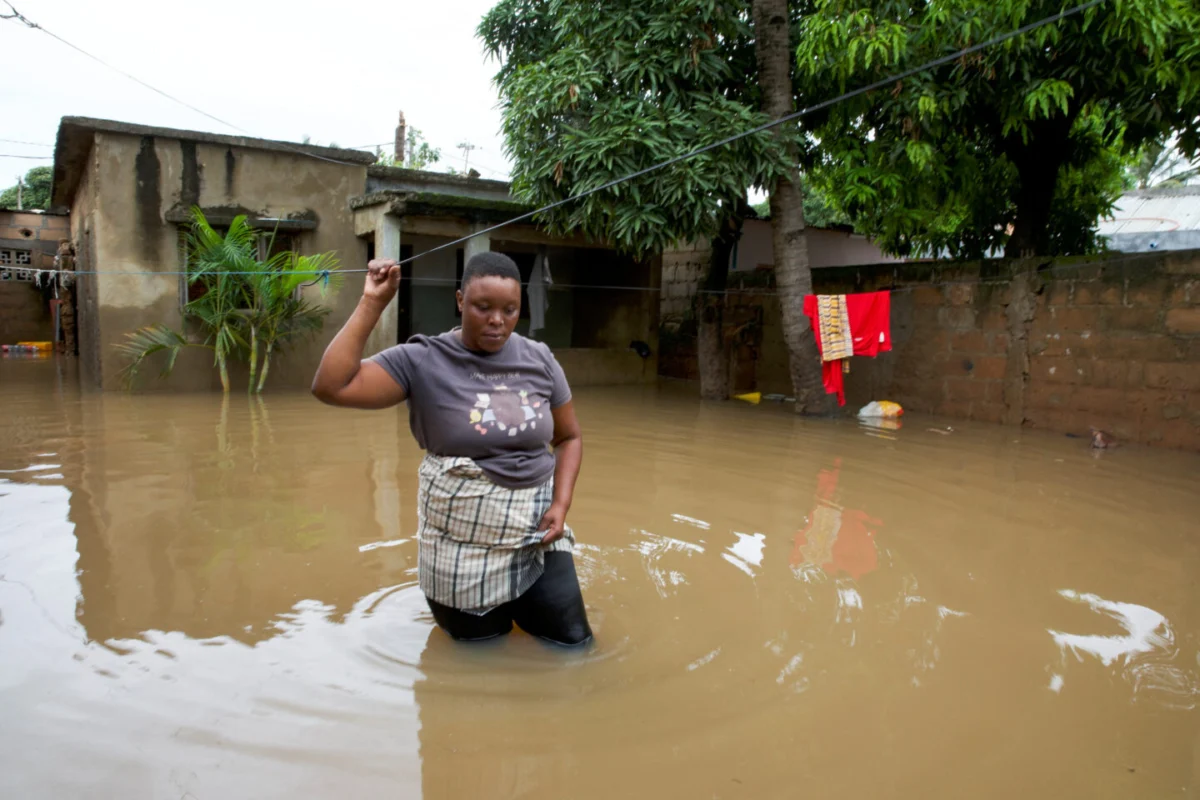
Climate Change and Rapid Urbanization Fuel Devastating West African Floods as Scientists Warn of Increasing Future Risks
The convergence of human-induced climate change and unchecked urban expansion has significantly amplified the severity of recent floods across West Africa, leading to a humanitarian crisis that has claimed dozens of lives and displaced thousands. A comprehensive study released by the World Weather Attribution (WWA) group reveals that the torrential rains, which have battered coastal regions from Côte d’Ivoire to Nigeria since May, were not merely a seasonal anomaly but a direct consequence of a warming planet. The report underscores a grim reality: what were once considered rare meteorological events are now becoming frequent occurrences, exacerbated by a lack of resilient infrastructure and the encroachment of residential zones into natural floodplains.
According to the WWA, a global consortium of scientists who specialize in quantifying the link between extreme weather and global warming, the intensity of the rainfall experienced in recent weeks has been increased by roughly 5% to 10% due to the current level of global warming. While this percentage may appear modest, its impact on the ground is exponential. In a region where drainage systems are often outdated or non-existent, even a slight increase in precipitation can overwhelm local capacity, turning streets into rivers and informal settlements into death traps.
A Chronology of the 2024 West African Monsoon Season
The 2024 rainy season in West Africa began with typical patterns in late April, but by mid-May, the intensity of the downpours shifted into a catastrophic gear. The coastal belt, spanning from the Atlantic shores of Côte d’Ivoire through Ghana and Togo to the southern states of Nigeria, became the epicenter of a series of flash floods that caught many communities off guard.
In late May, Abidjan, the economic capital of Côte d’Ivoire, witnessed some of its heaviest rainfall in decades. Entire neighborhoods built on the city’s undulating hillsides were subjected to mudslides, while lower-lying districts saw water levels rise above the roofs of single-story dwellings. By early June, the weather system moved eastward, drenching Accra, Ghana, and Lomé, Togo. In Accra, the perennial problem of clogged primary drains led to the submergence of major transit arteries, paralyzing the city’s economy for days.
The peak of the devastation arrived in late June and early July. Reports from Nigeria’s southern coastal states indicated that the combination of heavy rainfall and rising sea levels led to unprecedented inland flooding. By the time the WWA began its rapid attribution study in July, the official death toll across the region had surpassed 70, with local NGOs suggesting the actual figure could be significantly higher due to unreported incidents in remote or informal areas.
Scientific Findings: The Fingerprints of Climate Change
The WWA study utilized peer-reviewed methods to compare the current climate—which has warmed by approximately 1.2 degrees Celsius since the pre-industrial era—with historical climate models. The findings were stark. The researchers focused on a three-day period of maximum rainfall, which is often the primary driver of flash flooding in urban environments.
The models indicated that the volume of rain falling in these concentrated bursts is now significantly more intense than it would have been in a world without human-driven greenhouse gas emissions. Specifically, the scientists noted that the specific "three-day downpour" event that triggered the most recent floods can now be expected to occur every two to four years. In a pre-warming scenario, such an event would have been a once-in-a-decade occurrence, if not rarer.
Friederike Otto, a professor of climate science at Imperial College London and a lead author of the study, emphasized that the danger is no longer a distant threat. "The event is not rare already today and therefore the flood risk is certainly not going away but will increase in particular with additional pressures from growing populations and urbanization," Otto stated. Her analysis points to a feedback loop where a warmer atmosphere holds more moisture—roughly 7% more for every degree of warming—leading to more violent releases of precipitation.
The Urbanization Trap: Why Cities are More Vulnerable
While climate change provided the meteorological fuel for the disaster, the rapid and often unregulated expansion of West African cities provided the tinder. The WWA report highlights a critical socio-economic factor: the conversion of natural landscapes into "concrete jungles" has stripped the land of its natural ability to absorb water.
In cities like Abidjan and Lagos, the population has exploded over the last two decades. This demographic surge has outpaced municipal planning, forcing millions of residents into informal settlements. Many of these settlements are located in low-lying "thalwegs" or floodplains—areas that naturally serve as drainage basins for the region’s river systems. When these areas are paved over with concrete and asphalt, or when their natural vegetation is replaced by subsistence farms, the "sponge effect" of the earth is lost.
Furthermore, the expansion of agriculture on the outskirts of these cities has reduced the presence of wetlands and forests that once acted as buffers. The report notes that in countries like Togo and Ghana, the loss of mangrove forests along the coast has removed a final line of defense against both inland flooding and storm surges from the Atlantic Ocean.
Data and Economic Impact
The humanitarian toll is accompanied by a staggering economic burden. While total damage assessments are still ongoing, preliminary data from regional economic planners suggests that the 2024 floods have caused hundreds of millions of dollars in losses.
- Infrastructure Damage: Thousands of homes have been destroyed or rendered uninhabitable. In Côte d’Ivoire alone, the government reported that over 300 households were completely displaced in a single week in June.
- Agricultural Loss: In the rural-urban fringes, smallholder farmers have seen their crops washed away. This is particularly devastating for local food security, as these farms provide the bulk of the fresh produce for city markets.
- Public Health Risks: Stagnant floodwaters have led to an immediate spike in waterborne diseases. Health officials in Nigeria and Ghana have issued warnings regarding cholera outbreaks and an increase in malaria cases as breeding grounds for mosquitoes expand.
- Disruption of Trade: Major ports and transport corridors were blocked, delaying the movement of goods across the Economic Community of West African States (ECOWAS) region.
Official Responses and the "Thorny Problem" of Protection
Governments in the affected nations have responded with a mix of emergency relief and long-term warnings, but the "thorny problem" mentioned by scientists remains: how do you protect the poorest citizens who have nowhere else to go?
In Côte d’Ivoire, the government has intensified its "Operation Clean Sweep," which involves the forced demolition of homes built in high-risk zones. While officials argue this is necessary to save lives, human rights groups point out that without providing alternative affordable housing, these measures simply relocate the vulnerability rather than solving it.
In Nigeria, the National Emergency Management Agency (NEMA) has called for better adherence to building codes and the clearing of drainage channels. However, critics argue that these localized fixes are insufficient against the systemic challenge of rising sea levels and more intense rainfall.
The WWA report suggests that "early warning systems" are a vital but underutilized tool. While some countries have improved their meteorological forecasting, the "last mile" of communication—getting the warning to a resident in a slum in time for them to evacuate—remains a significant hurdle.
Broader Implications and the Path Forward
The findings of the WWA serve as a clarion call for international climate policy. The disaster in West Africa exemplifies the "Loss and Damage" debate that has dominated recent UN Climate Change Conferences (COPs). Developing nations in Africa contribute the least to global carbon emissions yet are among the most vulnerable to its catastrophic effects.
The implications for the future are clear: West African nations must pivot from reactive disaster management to proactive urban resilience. This includes:
- Green Infrastructure: Integrating parks, wetlands, and permeable surfaces into urban design to manage runoff naturally.
- Managed Retreat: Developing long-term strategies to move populations out of the most dangerous floodplains, coupled with the construction of low-cost, resilient housing in safer areas.
- Regional Cooperation: Since weather systems and river basins cross national borders, a coordinated regional approach to water management is essential.
As the planet continues to warm, the 2024 floods may eventually be viewed not as an extraordinary catastrophe, but as the new baseline for the region. The scientific consensus is that without radical changes in both global emissions and local urban planning, the cycle of devastation will only accelerate. The tragedy across West Africa’s coast is a stark reminder that the cost of inaction is measured not just in dollars, but in the lives and livelihoods of the world’s most vulnerable populations.

Related Posts
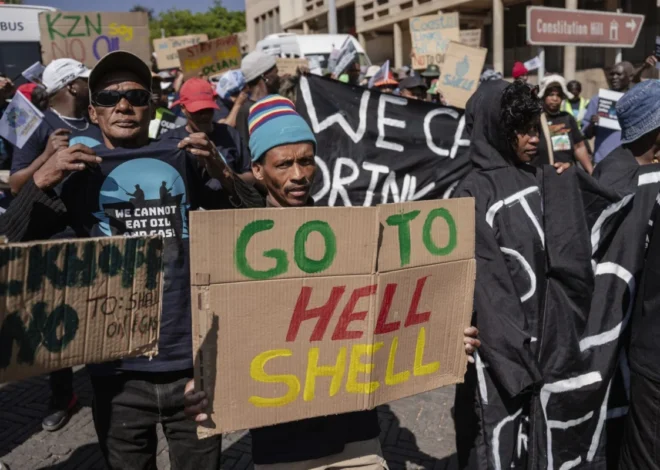
Constitutional Court of South Africa Bars Shell Oil Exploration in Landmark Victory for Environmental and Community Rights
The Battle for Saldanha Bay: South Africa’s Ambitious Ocean Economy Strategy Faces Legal and Environmental Reckoning